By Matija Šerić
The shockwaves from the spectacular arrest of Nicolás Maduro and his wife Cilia Flores are still reverberating. As dramatic as it was, the new reality is clear. After roughly 13 years as Venezuela’s president, Maduro has become a prisoner in one of the most dangerous American jails, accused of narco-terrorism. The luxurious daily life of the presidential palace Miraflores has been replaced by the prison lifestyle at the Metropolitan Detention Center (MDC) in Brooklyn, New York.
Maduro – the Biggest Loser of Venezuelan Political Drama
Although it is still unclear how events in and around Venezuela will unfold, there is no doubt that Maduro is the number one loser. Everyone else, including members of his ruling United Socialist Party of Venezuela (PSUV) and the opposition, still has cards to play, while nearly all of his avenues have sunk. The fate of Maduro and his wife is highly uncertain. If found guilty of all charges, he could even face the death penalty. The trial is expected to take years, but the ousted Venezuelan leader has other worries as well.
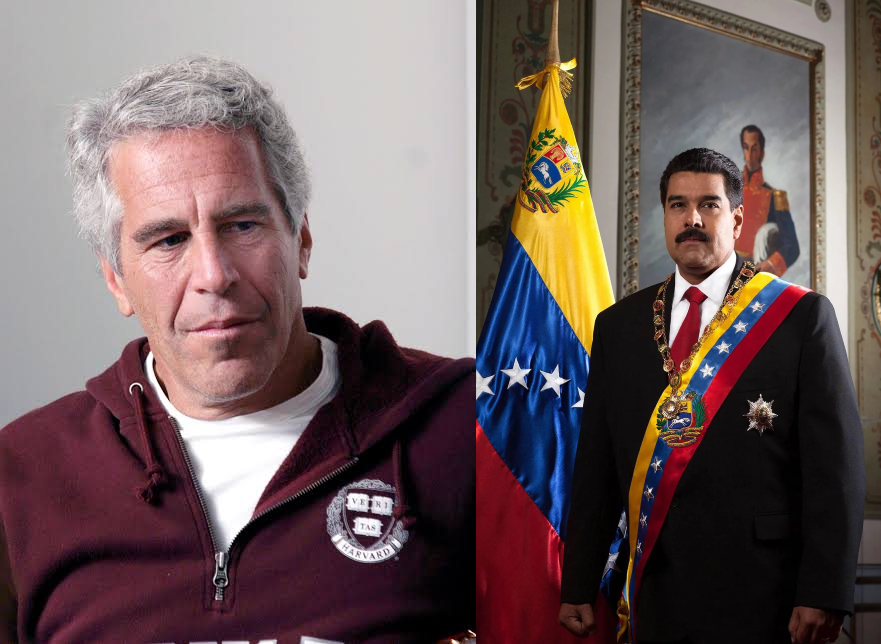
While most experts believe that U.S. authorities will not allow another Jeffrey Epstein case (formal suicide, though many suspect murder), in today’s unpredictable world, almost any scenario is possible. Maduro is a figure many would prefer not to exist, making it necessary to consider scenarios in which he could be “mysteriously” killed during his trial.
The Notorious New York Jail
Since January 3, Maduro and Flores’ home has been the MDC in Brooklyn. This infamous prison complex has been operational since 1994 and is rightly infamous. Numerous horrifying incidents have occurred there, including murders, sexual assaults, and beatings. Living conditions are far below U.S. federal prison standards. Two years ago alone, two inmates were killed by fellow prisoners with improvised weapons. Similar incidents have happened repeatedly.
Cells are poorly heated, air circulation is inadequate, and air conditioning is outdated. There are occasional power outages, and the facility is understaffed. Prisoners sleep on extremely thin mattresses only a few centimeters thick, placed on metal slabs, and are given a single wool blanket. The facility is infested with rodents and reeks of sewage. Medical care is insufficient. Many legal experts and NGOs have called for the prison’s closure, which is objectively a disgrace for the United States. Inmates’ complaints are constant. Sean Cheney, an artist who spent 15 months in MDC, described the treatment and conditions as “a level of disregard for human life that should shock the conscience of any decent person.”
Maduro’s New Daily Life
The U.S. Federal Bureau of Prisons has not publicly disclosed the exact location of Maduro and his wife within the prison (understandable for security reasons). Experts suggest they are separated from the general population and each held in a private cell, isolated to prevent attacks. The only time the couple might be together is during consultations with their lawyers.
According to the Federal Bureau of Prisons manual, the life of inmates separated from the general population includes waking at 6 a.m., scheduled attorney visits, five hours per week for outdoor exercise, daily medical checks, and limited phone access. Maduro could spend 23 hours a day in his solitary cell, with just one hour allowed for recreation in a confined space. Whether this will actually happen is uncertain, as high-profile inmates often receive exceptions. The entire prison went into lockdown ahead of Maduro’s arrival.
Prison of the Famous
Currently, MDC houses around 1,300 other inmates awaiting trial, including two celebrities. The first is Luigi Mangione, suspected of murdering Brian Thompson, the CEO of the American health corporation UnitedHealthcare. The second is the popular rapper 6ix9ine, real name Daniel Hernandez, serving a three-month sentence for racketeering.
In the past, other famous figures have been there, including: former Honduran president Juan Orlando Hernández, convicted of drug trafficking (recently pardoned by Trump), American rapper P. Diddy (awaiting trial for prostitution charges), R&B star R. Kelly (convicted of pedophilia), Ghislaine Maxwell (Epstein’s close associate in the pedophile network), and former Trump attorney Michael Cohen (convicted of tax evasion).
Before considering a potential Maduro assassination at MDC, it is important to note that Jeffrey Epstein did not end up in this prison, but in the Metropolitan Correctional Center (MCC) in Manhattan, which was subsequently closed. Although Maduro is a far more significant prisoner than Epstein and authorities would presumably want to ensure his safety, that does not guarantee protection. During his political career, particularly since becoming president in 2013, Maduro has made numerous enemies who would like to see him dead.
Suicide
Maduro could also pose a threat to himself. Although he spent the past 13 years finding legal and illegal ways to remain in power and enjoy a luxurious life, the situation has now changed. Maduro is a prisoner labeled as the leader of a drug cartel, not the head of a sovereign state. The shock of imprisonment is surely immense. For someone who has enjoyed all privileges, facing serious charges and a likely long prison sentence, possibly even death, depression and despair could lead him to consider suicide.
Even if he attempted it, many would doubt the official explanation. How could he commit suicide? He likely does not have access to lethal chemicals like cyanide, and he has surely been thoroughly searched. Yet a resourceful person can improvise weapons from almost anything. A suicide outcome is unlikely, but it cannot be entirely ruled out.
Ordinary Criminals
MDC is known for brutality among the inmate population. Many are “ordinary criminals” experienced in murder, rape, and torture. Some may come from Latin America and harbor resentment toward Maduro for the humanitarian and economic disaster he brought to Venezuela. Such inmates could wish to kill him for revenge, but his privileged status and isolation make attacks difficult. Opportunities would mostly arise during corridor passages or emergencies like medical visits, fires, or power outages. While possible, the odds are low.
The Venezuelan Opposition
Many in the Venezuelan opposition would like to see Maduro not just removed from power but dead. Roughly two-thirds of Venezuelans reportedly dislike him for good reason. Beyond his economic failures, Maduro violently suppressed anti-government protests throughout his tenure, leaving thousands imprisoned, injured, and hundreds dead. Those who lost loved ones might seek vengeance. Moderate opposition leaders, like María Corina Machado and Edmund González, would not want Maduro killed, but some extremists might.
Chavistas
While Maduro has been removed, his regime still holds power in Venezuela. A triumvirate consisting of Vice President Delcy Rodríguez (acting president), Interior Minister Diosdado Cabello, and Defense Minister Vladimir Padrino López now dominates. It is suspected that elements within his regime facilitated the U.S. operation, raising questions about potential betrayal. Some Chavistas who have never accepted Maduro might consider eliminating him to remove obstacles to easing relations with the U.S. or to reshape the narrative as “good Chávez, bad Maduro,” echoing the Soviet distinction of “good Lenin, bad Stalin.” Such action would likely involve corrupt prison guards or ordinary Venezuelan criminal lawyers who could smuggle poison.
Drug Cartels
Drug cartels could pose the greatest danger to Maduro. He has been accused of collaboration with Tren de Aragua and the so-called Cartel of the Suns—charges recently removed by U.S. federal prosecutor Pam Bondi. Those familiar with U.S. prosecutions of Cosa Nostra and other cartels know that defendants may cooperate with authorities to reduce sentences in exchange for testimony. Maduro might eventually disclose information implicating powerful individuals in Latin America and the U.S., potentially endangering lives. Drug criminals are experts at assassination, though penetrating prison security remains a major obstacle.
Trump and Trumpists
If Trump wanted Maduro dead, he could have ordered it already, though such an order would be illegal under U.S. laws prohibiting assassination of foreign leaders. Maduro alive serves as a political trophy and media spectacle for Trump. Killing him would bring no benefit and generate new scandals. However, Trump might change his stance if Maduro holds evidence that could implicate him—e.g., connections with Russia during the 2016 election or links to Jeffrey Epstein’s global network. Certain MAGA radicals could also be motivated to target Maduro, though this is a small minority.
Maduro – a Test of American Democracy
Other groups and individuals could also be threatened by Maduro’s testimony. While the likelihood of assassination is low, it cannot be ignored. He requires maximum protection. This situation is a real test for the U.S. federal government, and whether it passes remains to be seen. We live in a time when the impossible often becomes possible. The treatment of dictator Maduro has thus become a test of American democracy and the rule of law.