By Bruno Rukavina
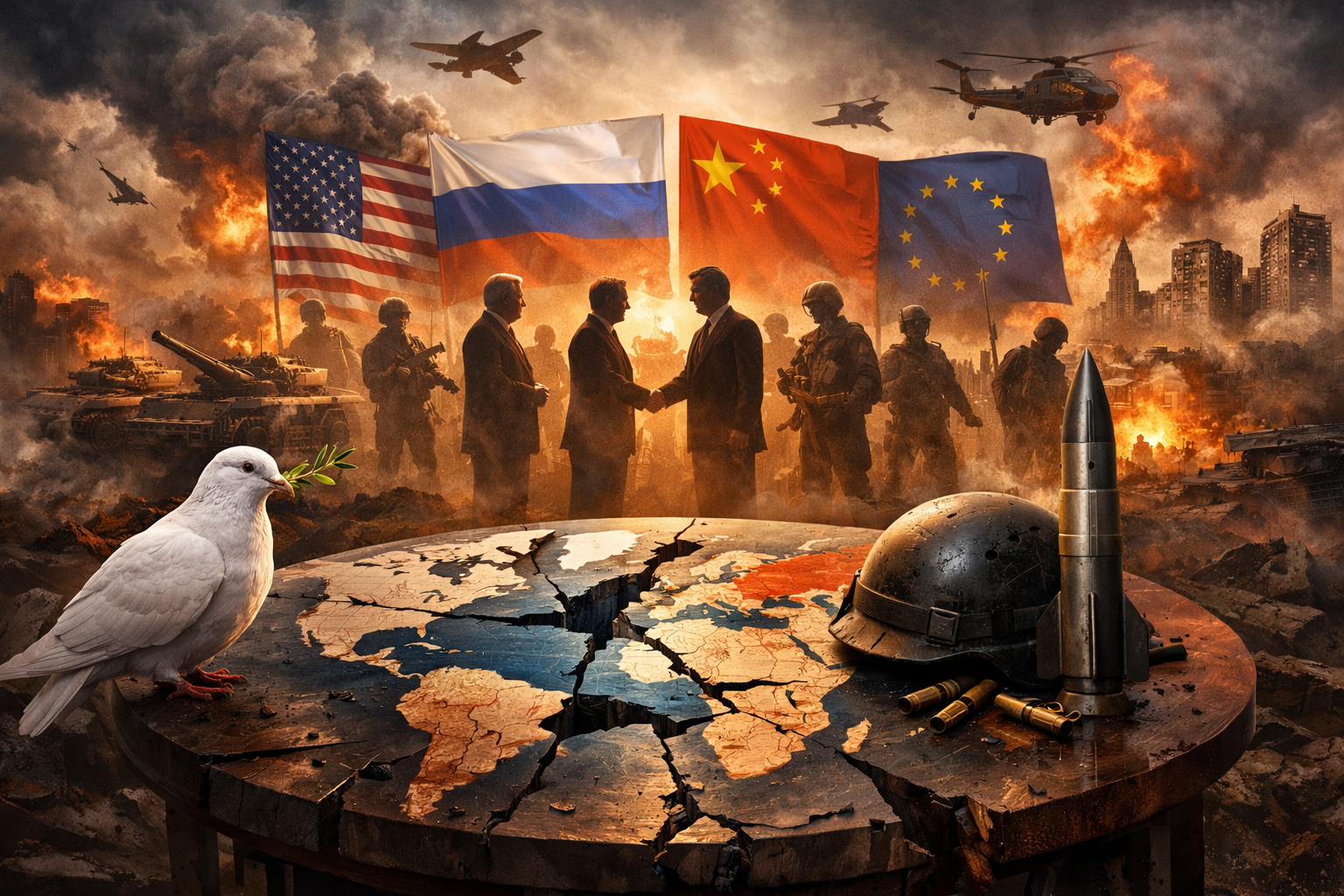
In this analysis, political scientist Bruno Rukavina explores how numerous wars have become so easily accepted over the past decade and why diplomacy struggles to resolve them. The analysis also examines the latest crisis of liberalism and why the idea of peace has become unacceptable to certain political elites.
Crisis of Diplomacy
Diplomacy, as a fundamental instrument for the peaceful resolution of disputes in international relations, is today facing a series of structural, political, and normative limitations that reduce its effectiveness in ending modern armed conflicts. As a result, it is often criticized without a proper understanding of how diplomacy actually functions—as the implementation of foreign policy decisions made by a state’s political leadership.
Diplomacy alone cannot solve problems without political backing, meaning a clear mandate from foreign policy centers (governments and ministries of foreign affairs), where many challenges originate. Several factors explain the contemporary inefficiency of diplomacy.
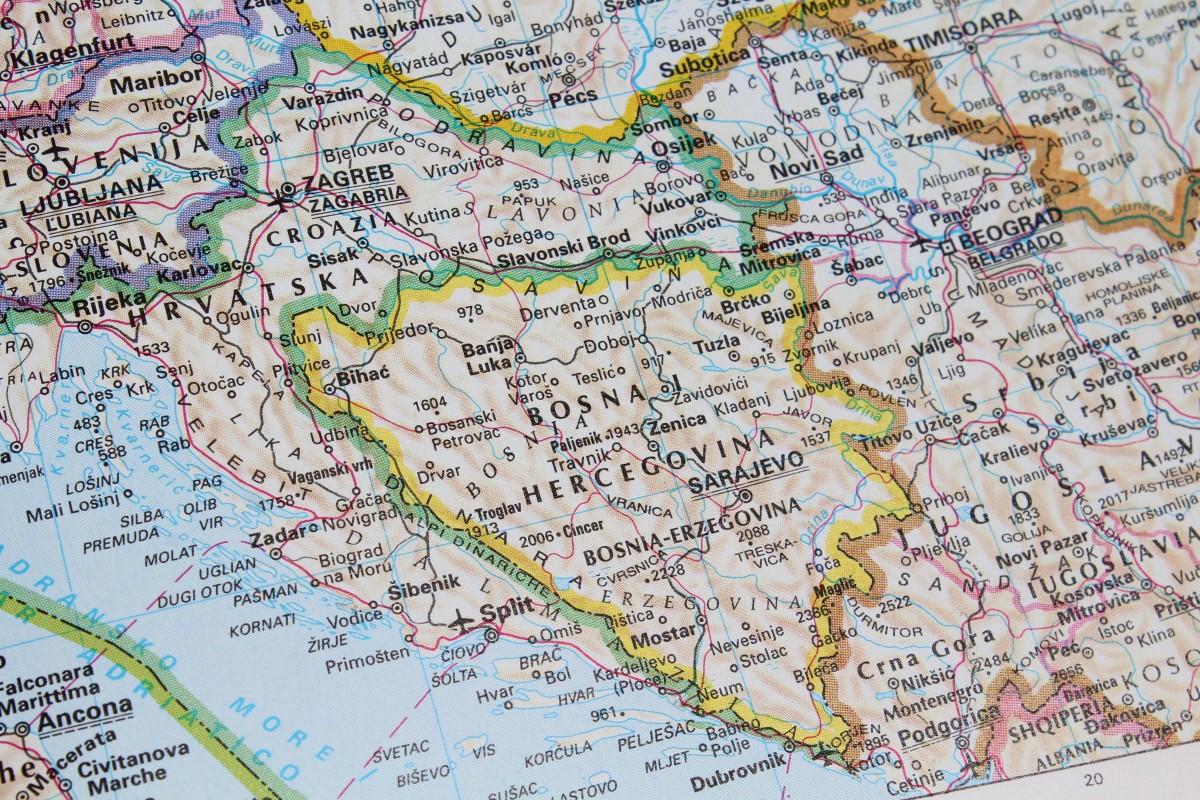
First, the nature of the international system has changed. The weakening of the liberal (unipolar) order and the rise of multipolarity and/or multivector dynamics make consensus among key actors more difficult. Conflicting geopolitical visions of major powers often lead to paralysis in international institutions, particularly the United Nations, where mechanisms such as veto power block peace decisions. For instance, the wars in Croatia and Bosnia and Herzegovina ended in 1995 largely because the five permanent members of the UN Security Council supported peace. Today, however, the Security Council is ineffective regarding Ukraine and Iran due to mutual vetoes.
Second, modern conflicts are increasingly asymmetric and involve non-state actors, including multinational and transnational corporations that profit significantly from war and often finance political actors who “decide” on war and peace. This complicates diplomatic processes, as there is often no clearly defined negotiating partner or unified decision-making hierarchy capable of implementing agreements—illustrated by the Minsk Agreements, which Kyiv refused to implement for years. Additionally, hybrid warfare blurs the line between war and peace, turning diplomacy into a continuous bureaucratic activity with limited crisis-management effectiveness.
Third, identity, ideology, and religion play a growing role in conflicts, further complicating compromise. When conflicts are framed through existential narratives or sacralized goals, space for pragmatic negotiation shrinks, and leaders face internal pressures that limit willingness to compromise.
Fourth, the erosion of trust among states and the instrumentalization of international law for national interests weaken diplomatic mechanisms. Norms that once formed the foundation of the international order are now applied selectively, undermining legitimacy and reinforcing perceptions of inequality.
Fifth, domestic political factors play a crucial role. Governments often use external conflicts to consolidate power or divert attention from internal crises. Media dynamics and the information environment further polarize societies and shape perceptions. As noted in political science literature, political reality can be divided into three categories: objective reality, subjective perception, and constructed media reality, the latter shaping public opinion most decisively.
Thus, modern diplomacy struggles because it operates in an increasingly complex and fragmented global environment shaped by interconnected political, economic, and technological elites for whom war has become the “newest normal.” Limited diplomatic effectiveness reflects deep transformations of the global order and a lack of political and economic will for peace.
Moreover, political elites are often unwilling to abandon failed policies, as doing so would be perceived as admitting mistakes. Continuing conflict allows them to maintain hope for a future reversal that could retroactively justify present decisions. In this context, prolonging conflict becomes a tool for preserving political credibility.
The Era of the “Newest Normal”
Applied to the Russia–Ukraine war, this perspective suggests that some European elites see continued support for Ukraine as necessary not only for security reasons but also to maintain consistency in their policies. Had more effort been invested in implementing the Minsk Agreements in 2022, Ukraine might have remained a neutral state balancing between geopolitical spheres.
Similarly, the conflict involving Israel, the United States, and Iran reflects a preference for power struggles over diplomatic coexistence. Despite potential for a negotiated modus vivendi, the logic of weakening or eliminating the Iranian regime prevailed. Some analysts view this conflict as part of a broader pattern resembling earlier Gulf Wars, aimed at long-term regime destabilization.
The Middle East remains a region defined by both complexity—numerous fragmented actors—and simplicity, as many conflicts ultimately revolve around resources such as oil, gas, territory, and water. It is one of the most geopolitically significant regions in the world.
Some analysts argue that China may be the ultimate beneficiary of both the Ukraine and Iran conflicts, as prolonged wars drain the power of involved actors. If conflicts persist, they weaken both Russia and the United States, while states focused on stability—such as China—gain influence. Combined with demographic growth in Asia and Africa, this may signal a shift toward an “Afro-Eurasian” century.
Most contemporary conflicts serve to redefine or preserve power, while their consequences primarily affect ordinary people. Although some claim a new world war has already begun, it is difficult to prove, and such a war—if it exists—would be fundamentally different from those of the 20th century.
The “newest normal” is characterized by increasing control, digitalization, reduced privacy, and societal polarization. Conflicts are not only about resources but also about shaping new ways of life. Modern individuals are deeply dependent on infrastructure—electricity, the internet, supply chains—making them vulnerable in times of crisis.
Ultimately, this “newest normal” aims to maintain control through fear, division, and conflict, shaping perceptions through media and technology. In this sense, humanity may be closer than ever to living in Plato’s cave, surrounded by constructed realities.
Conclusion on Diplomacy, Liberalism, and the “Newest Normal”
For those driving the “newest normal,” wars are not only a source of profit but also a means of controlling global populations and maintaining elite power. Criticism of this system is therefore a call for peace and coexistence—even with adversaries.
The Cold War ended through diplomacy, negotiations, and détente, yet liberal democracies are now undermining that legacy through interventionism. The West risks losing credibility by favoring military solutions over diplomacy.
The European Union, for instance, has not positioned itself as a genuine force for de-escalation in Ukraine. Its stance—refusing negotiations with Russia—raises questions about the feasibility of diplomacy under such conditions.
Peace in Ukraine, the author argues, must be achieved through negotiations, not preconditions. Diplomacy should serve as a tool for achieving interests, not be abandoned in favor of military solutions.
In short, the current global order reflects a fragmented, unstable system lacking a clear vision of the future—leaving smaller actors, including states like Croatia, uncertain about their direction.
The key challenge for the future is not the past, but what lies ahead—what will remain of states and societies in 2041 or 2091 if current trends continue.