The global economy in the 21st century is highly dynamic, unpredictable, prone to turbulence, yet increasingly interdependent and open to innovative solutions. Recent months have been marked by the Iran-Israel conflict, wars in Gaza and Ukraine, East-West tensions, Trump’s unconventional economic policies, and the rise of BRICS. Major and regional powers are striving to secure the best possible status and position within the global economy.
What would a potential reconciliation between Iran and the United States mean for the world economy? What is the purpose of Trump’s tariffs, and is BRICS truly the power bloc of the future? We discussed these questions with the renowned Croatian economist, Professor Mladen Vedriš.
– If Iran and the United States reconcile, what positive effects could Iran’s active inclusion in global trade bring? The Islamic Republic of Iran is a large country with vast resources such as oil, gas, minerals, textiles…
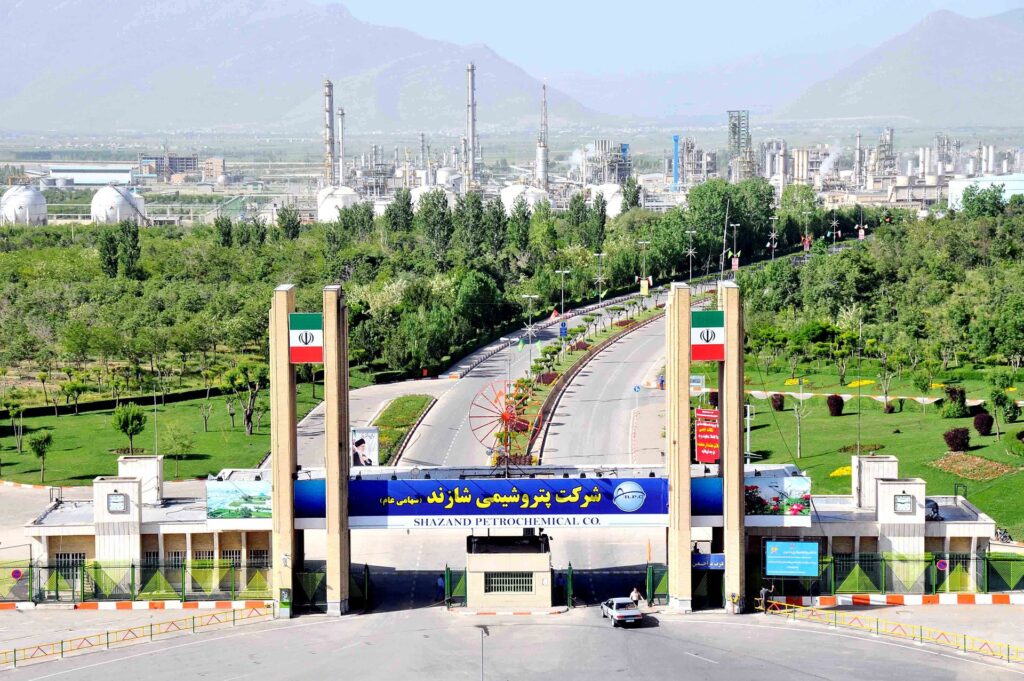
Iran is undoubtedly a large country with significant potential, primarily in gas and oil, and to some extent in textiles. Iranians will re-enter global trade in a manner similar to before the recent conflict. Sanctions will not be lifted immediately, but normal life will continue. Iran already has energy markets—China and Russia—and these countries do not pay much attention to sanctions, so that segment of trade will function. The real question is about energy price levels. China and India purchase oil products at very favorable prices from both Russia and Iran, and part of this later flows into global markets. Iranians will suffer more in terms of pricing than in trade itself.
It is also important to consider that Iran will need substantial financial resources for its military budget and to repair the damage left by Israeli and American bombings. Iran will continue to pump oil for its regular customers and the grey market and will partially increase exploitation. However, since the Americans largely control oil trade, it is to be expected that there will be some form of agreement in the triangle of Iran, the United States, and Israel, which will involve significant compromises regarding the limitation of Iran’s nuclear development in exchange for America enabling Iran’s access to foreign markets. This will likely take the form of a backstage agreement.
– How do you view the drastic tariffs imposed by Donald Trump on trade with other countries? Has Trump lost touch with reality, considering that the U.S. economy is deeply connected with the rest of the world, particularly with Canada, Mexico, China, and the EU? Some would say that Trump is “bluffing” in order to eventually secure more favorable trade deals for the U.S.
Donald Trump has not lost touch with reality; rather, he is acting according to the famous phrase: “Let’s be realistic, let’s demand the impossible” to secure what is possible. By applying heavy pressure, Trump creates a stronger negotiating position for himself. However, he is not invulnerable. The United States imports a range of goods—from medical products and certain rare metals to technological solutions—and cannot sustain its economy without these imports. High tariffs primarily serve as a tool of pressure, and when the focus shifts to specific industrial sectors, negotiations on particular tariff items open up, where Trump, but also Europe and China, each have their leverage.
China, for example, imposes tariffs on goods like grain imports from U.S. states that support Trump, aiming to impact his voter base. The tariff game is merely the frontline of deeper economic relations that Trump aims to establish. However, as “The Economist” has noted, “there is no going back” to the old industrial model. New industries and technologies have emerged. It is likely that a circle of people around Trump is advising him to try to bring certain industries back to the U.S. in the name of national security—particularly pharmaceuticals. When it comes to technology and other areas, the question arises: what level of interdependence exists within the global economy, and what can be defined as self-sufficiency in a narrower sense?
Large countries (the U.S., China, Russia) have the advantage of meeting two fundamental conditions for self-sufficiency: food and energy. These countries (continents) have large production capacities, which are sufficient for basic needs. However, people today do not live solely on food, driving cars, and heating; there is a much more developed circle of goods and services that we all use, creating global interdependence. Nonetheless, balance is always achieved; the only question is at what level. If we reduce it to a low level of meeting basic needs, the U.S., Russia, and China hold certain advantages, but the standard of living (especially in democratic environments like America and Europe) requires much higher standards of goods and services than mere survival.
– In your view, is BRICS as an economic-trade bloc a “paper tiger” or a serious organization that could surpass the European Union?
BRICS as an organization faces a similar problem, although perhaps to a lesser extent, as the European Union. It is not a single state with a unified policy where decisions are made jointly; rather, consensus is required. When decisions are made, each country considers how it will affect them bilaterally. For example, when the Germans negotiate with the Americans, they are careful about what will happen to their automotive industry; the French watch over high fashion and cognac, which is a specific item in negotiations with the U.S.; the Italians are concerned about textiles and the food industry. There are heterogeneous interests within the EU, and it is no different within BRICS.
No matter how ideologically sound the organization may appear, like the Non-Aligned Movement, with a good narrative (“let’s do this, let’s do that”), when it comes down to concrete interests, it is not quite the same. What China, India, and perhaps some other BRICS countries primarily have in common in relation to the West is that they relatively resist classical climate restrictions (on fossil fuels). They claim that what Western countries did a century ago cannot simply be banned for them overnight. Regardless of this, India and China (and perhaps no one is as balanced as the Chinese) are developing green energy sources in parallel with traditional energy sources.
I do not believe that BRICS will become a unified power with a single negotiating position in the near future.
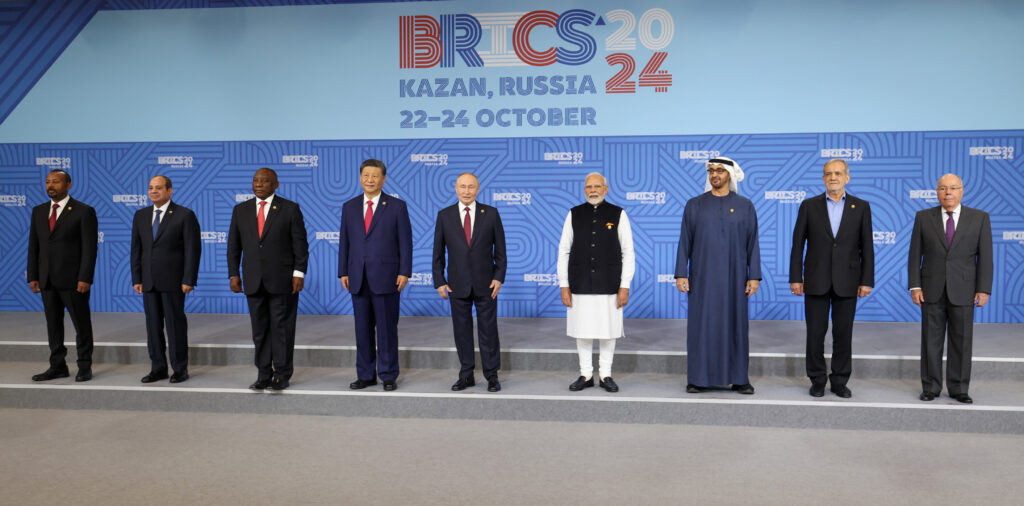
– Which currency could become dominant in international trade in the coming years? Can the U.S. dollar maintain its supremacy? Some experts claim that a potential joint BRICS currency (which is being discussed) or perhaps the Chinese yuan could become dominant. Is this realistic at all?
The strength of a currency comes from the strength of the economy, the strength of the country, geopolitics, and so on. Looking at trends, there may be periods when the role of the dollar is relatively diminished. However, the dollar will still remain relatively the strongest.
Anywhere in the world—whether it is Bosnia, Africa, Asia, or here with us—you will find people keeping euros under their mattress (in Croatia, euros are kept slightly more), but in a large part of the world, if someone has some cash, it is dollars; they will not be keeping yuan under their mattress. China, in its bilateral trade with Russia, may use the yuan as a unit of account. However, once you step onto the global market, the dominance of the dollar will not be absolute, but the dollar will still be by far the strongest.
When have you ever heard of someone saving in yuan? People are more likely to hold something exotic like cryptocurrencies and see how it goes rather than hold yuan.
Interview conducted by Matija Šerić.