By Ivo Kokić
At the end of June 2016, citizens of the United Kingdom of Great Britain and Northern Ireland went to the polls in a referendum on leaving the European Union. As an interesting fact, it should be noted that the Caribbean island of Saint Barthélemy has not been part of the EU since early 2012 (although it remains part of France) (Vanholme, 2017). Nevertheless, Brexit represents the first case in which a member state decided to withdraw from the EU.
The Historical Relationship between Britain and Europe
Great Britain was not among the founding members of the European Economic Community (EEC, which has been known as the EU only since 1993), but joined it in 1973 (European-union.europa.eu). Moreover, Britain has always retained the pound sterling as its currency and did not commit to introducing the euro.
When Britain joined the EEC, the decision was made solely by Parliament, without holding a referendum. Only two years later (in 1975), a referendum was held on whether the public agreed that Britain should remain in the EEC under the terms on which it had been admitted. The Labour government organized the referendum to allow citizens to decide whether they supported membership or preferred withdrawal. Even within the ruling party, there was no unified position: the left wing of the Labour Party advocated withdrawal, while the more moderate faction supported remaining in the EEC. The opposition Conservative Party (then led by Margaret Thatcher) strongly supported remaining in the EEC. Ultimately, two-thirds of voters supported continued membership (Chuarchivestories.uk).
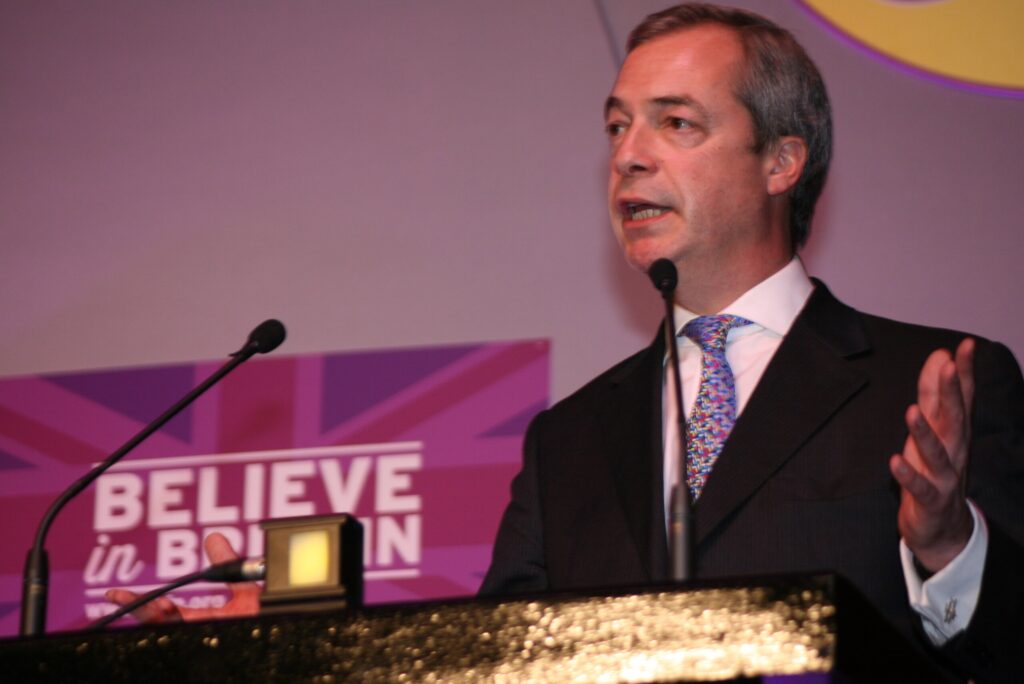
As for the 2016 referendum, the leader of the Brexit campaign was European Parliament member Nigel Farage, who had been fighting for this goal for nearly two decades. Farage was the then-president of the UK Independence Party (UKIP).
Consequences of Brexit for American Politics
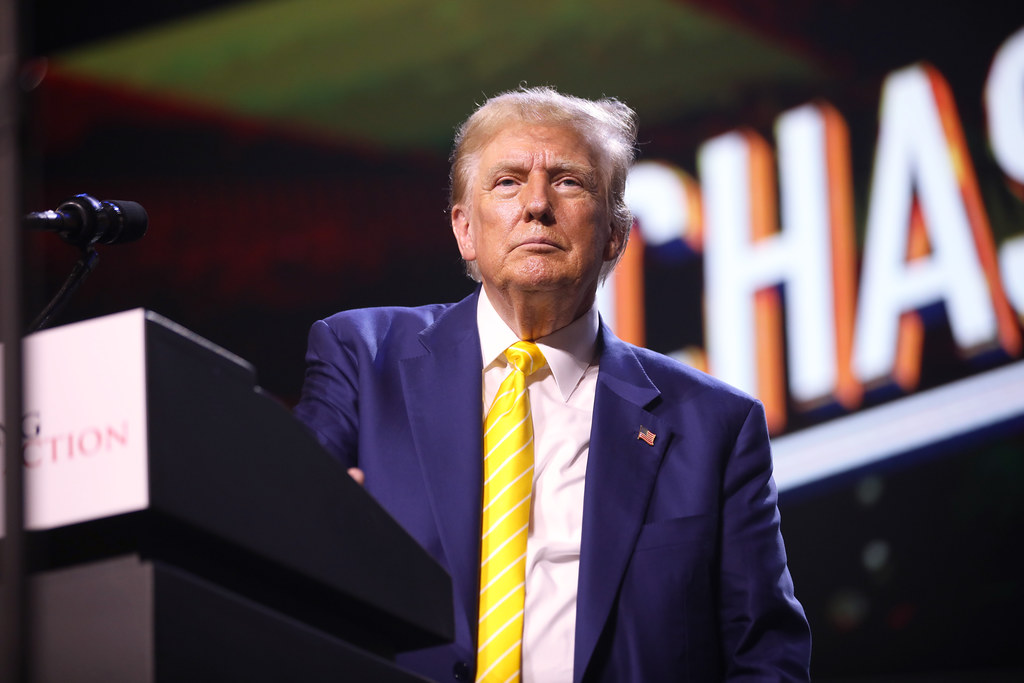
The success of the Brexit referendum gave a significant boost to Donald Trump in the U.S. presidential elections in November 2016, as he openly sided with those advocating Brexit.
Continuity of this stance can also be observed during Trump’s second term. The 2025 U.S. foreign policy strategy emphasizes not only the need to improve relations with Russia, move away from NATO, and end the American military presence in Europe, but also devotes significant attention to the EU itself. The strategy highlights the importance of abandoning alliances with the EU, actively working toward its dissolution, and providing U.S. support to all European parties, movements, and politicians advocating their countries’ exit from the EU. In other words, while the strategy promotes good relations with European states, it views the breakup of the EU as a prerequisite for such relations (Myers, 2025). It should be noted that this strategy is not directed against European citizens, but rather claims to aim at their liberation. Just as during World War II U.S. policy was not directed against European peoples but against German occupation, a similar parallel is drawn today.
The latest U.S. National Security Strategy states that Europe is on the path to complete civilizational decline. Beyond Europe’s demographic collapse due to low birth rates, the current U.S. administration identifies three main objections to European policies: the undermining of democracy and suppression of free speech, the active blocking of any attempt at peace in Ukraine, and the refusal to establish strategic stability with Russia (Whitehouse.gov, 2025).
Reactions to the Referendum
Hrvoje Jurić, one of Croatia’s most left-wing philosophers, published the book Euphoria and Euthanasia in 2019. In it, he argues for the abolition of both the EU and NATO as neo-totalitarian imperialist constructs. The book is a collection of his essays on the subject. He described EU policy as “anti-democratic democratism” (Jurić, 2019). The following section will analyze how closely Jurić’s observations align with the EU’s approach to the Brexit process.
Before doing so, however, it is important to recall an earlier case in which the EU also demonstrated its attitude toward those who oppose it. In the 2015 parliamentary elections in Greece, the left-wing party Syriza won. Instead of formal congratulations and wishes for successful governance, many EU officials immediately confronted the newly elected Prime Minister Alexis Tsipras “with hostility,” making it clear what kind of treatment awaited him upon taking office (Dw.com, 2015).
Similarly, in the case of Brexit, the EU demonstrated its inability to deal with the will of the people when that will conflicted with its interests. In early 2019, then-President of the European Council Donald Tusk stated that Britain should remain in the EU and that cancelling Brexit was the only correct choice (Bbc.com, 2019). Thus, nearly three years after the referendum, EU policy still implied that the will of the people should be overridden because it did not align with institutional interests.
In 1795, Immanuel Kant wrote his seminal work Perpetual Peace. One of the conditions for lasting peace, according to Kant, is that the law of nations should be based on a federation of free states (Kant, 2000). From this perspective, the EU represents the opposite of Kant’s idealistic vision of a world in which states have the right to choose freedom.
History of Brexit
The Behavior of the Defeated Side in Britain
Under British law, the outcome of a referendum is not legally binding. Parliament has the right to reject it. Consequently, numerous protests erupted immediately among those who refused to accept defeat in the referendum. Millions of people in Britain protested in an attempt to persuade Parliament not to accept the referendum results (Dettmer, 2016). These individuals were not perceived as a threat to democracy, nor were they portrayed negatively in the media. They faced no serious consequences for their political activities.
Here, a key comparison should be made with the 2020 U.S. presidential election. Just as the British Parliament has the right not to confirm a referendum result, the U.S. Congress has the right not to ratify election results. This option is legal under a law dating back to the 19th century. If such an option were exercised, the new president would be elected under a “one state – one vote” model. Defeated Democrats attempted several times to use this option, and there was nothing controversial about it. Everything changed when Trump attempted to use this same legal mechanism in 2020. This led not only to unprecedented reactions from the media, social networks, and politicians, but also to a judicial precedent. In 2023, the U.S. Department of Justice indicted Trump, with one of the charges being his attempt to overturn the election results. In other words, he was prosecuted for something that is, in itself, legal and that others before him had also attempted (Kokić, 2025).
Let us imagine that in Britain, for example, the Johnson government had prosecuted those who attempted to block the Brexit process through legal mechanisms. What would have been the reaction of the media and the public? It is evident that only one side is allowed to refuse to recognize democratic outcomes—and to portray such refusal as a fight for democracy. This same behavioral pattern can be observed in Britain, the United States, and the EU.
Comparing Brexit with Croatia’s Struggle for Independence
In 1991, Croatia voted in a referendum for independence from Yugoslavia. That same year, the Croatian Parliament confirmed independence, and in 1992 Croatia received international recognition and membership in the United Nations. Within its national legal framework, Croatia effectively achieved independence immediately after the decision, including border control, administrative organization, severing ties with political institutions in Belgrade, and a clear awareness of fighting on the right side during the Homeland War. Although the struggle was difficult, no serious international actor claimed (three years after the Croatian referendum) that returning to Yugoslavia was the only correct path.
By comparison, Britain in 2016 was not only an internationally recognized state, but also a permanent member of the UN Security Council and one of the most influential global powers. Yet it achieved full and actual independence from the EU only on January 1, 2021. Three years after the referendum, Britons were still voting in European Parliament elections, sending representatives to an institution from which they had decided to secede. The Brexit process was long and slow, and throughout those years there were strong attempts to reverse it. These efforts did not come exclusively from Brussels; a significant portion of British public opinion also applied pressure. The EU did not wage an aggressive military war against Britain, but instead employed more subtle methods, skillfully wrapping its true intentions in the cellophane of noble ideals.
It was easier for (then internationally unrecognized) Croatia to gain independence from Yugoslavia—which attempted to prevent it by force—than it was for Britain to navigate the myriad legal obstacles necessary to leave the EU. Therefore, something is seriously wrong with the narrative of the EU as an oasis of democracy.