By Ivo Kokić
The collective euphoria following victory in the “Great Patriotic War” (the Russian term for the successful defense and victory on the Eastern Front in World War II) did not, however, bring a more relaxed social atmosphere. According to one interpretation, Soviet industry reached its pre-war production levels by 1947. Despite this, the standard of living declined, harvests were poor, famine was frequent, and strikes occurred in factories.
Economic Crisis
A similar state of economic collapse could be felt across Europe, as it had been exposed to massive wartime destruction. Therefore, U.S. Secretary of State George C. Marshall devised a financial aid plan offered to all European countries. Marshall announced it in June 1947 under the name “European Recovery Program,” commonly known as the “Marshall Plan.” It was even offered to the Soviet Union, but Stalin rejected the offer and pressured his allies to do the same (which caused dissatisfaction in Poland and Czechoslovakia). The USSR feared that accepting the plan would expose the economic superiority of the United States, allowing America to dominate areas under Soviet influence. As a result, the Marshall Plan was largely implemented in Western countries and marked the beginning of Europe’s division into blocs.
The Marshall Plan
It is an exaggeration to claim that the plan brought Europe the level of economic prosperity often portrayed in Western narratives, but it did represent an invaluable psychological turning point. Funds from the Marshall Plan began arriving in 1948. Interestingly, by that time, most Western European countries had already achieved GDP growth compared to previous years. The only exceptions were Germany, which saw a significant decline, and Italy, which experienced a slight decrease in capital compared to the pre-war period—unsurprising given their status as defeated nations.
Soon, Western allies realized that the economic recovery of Germany was essential for the recovery of Europe as a whole. Therefore, it is no surprise that the European Recovery Program had the strongest impact in West Germany, Italy, and Austria. This helped transform the perception of these countries from defeated enemies into integrated parts of a shared vision of Europe’s long-term development.
Over a four-year period, European countries received more than twelve billion U.S. dollars. Although the Marshall Plan significantly boosted the reputation of the United States, debates about its true nature continue. Some argue it was a selfless effort to save Europe from economic collapse and revive the continent. Others see it as a political tool, with economics serving merely as a means—essentially a weapon to strengthen countries that accepted it. Accepting the plan also implied alignment with the American side.
Formation of NATO
As part of a joint strategy to defend against a potential attack from the East, Western countries decided to establish a military alliance. The idea was that all member states would intervene in defense of any member that came under attack. Since the United States was expected to be the primary military power within this organization, conditions were created for the continued presence of American troops in Europe. Thus, in 1949, the North Atlantic Treaty Organization (NATO) was formed.
Military considerations clearly demonstrate how the creation of a defensive bloc against communism was a priority. The U.S. often justified anti-communism as a fight for democracy. However, this did not prevent Portugal—ruled by António de Oliveira Salazar since 1932—from being a founding NATO member and a recipient of Marshall Plan aid. In other words, lack of democracy was not an obstacle as long as a regime was anti-communist.
A similar situation can be observed in Greece, which was not only a NATO member but also received support from the CIA during its civil war, where royalist forces fought against communists. Likewise, Spain under Francisco Franco was comfortably placed within the American sphere of influence. Although Spain was not a NATO member, a 1953 agreement allowed U.S. air and naval bases on Spanish territory in exchange for military aid.
West Germany joined NATO in 1955. In response, the Soviet Union established the Warsaw Pact the same year. Named after the Polish capital where it was signed, the pact brought together states under Soviet control. It later proved to be a unique alliance, as its primary function was joint military intervention against member states that rebelled against Soviet authority—such as Hungary in 1956 and Czechoslovakia in 1968.
The Yugoslav Phenomenon
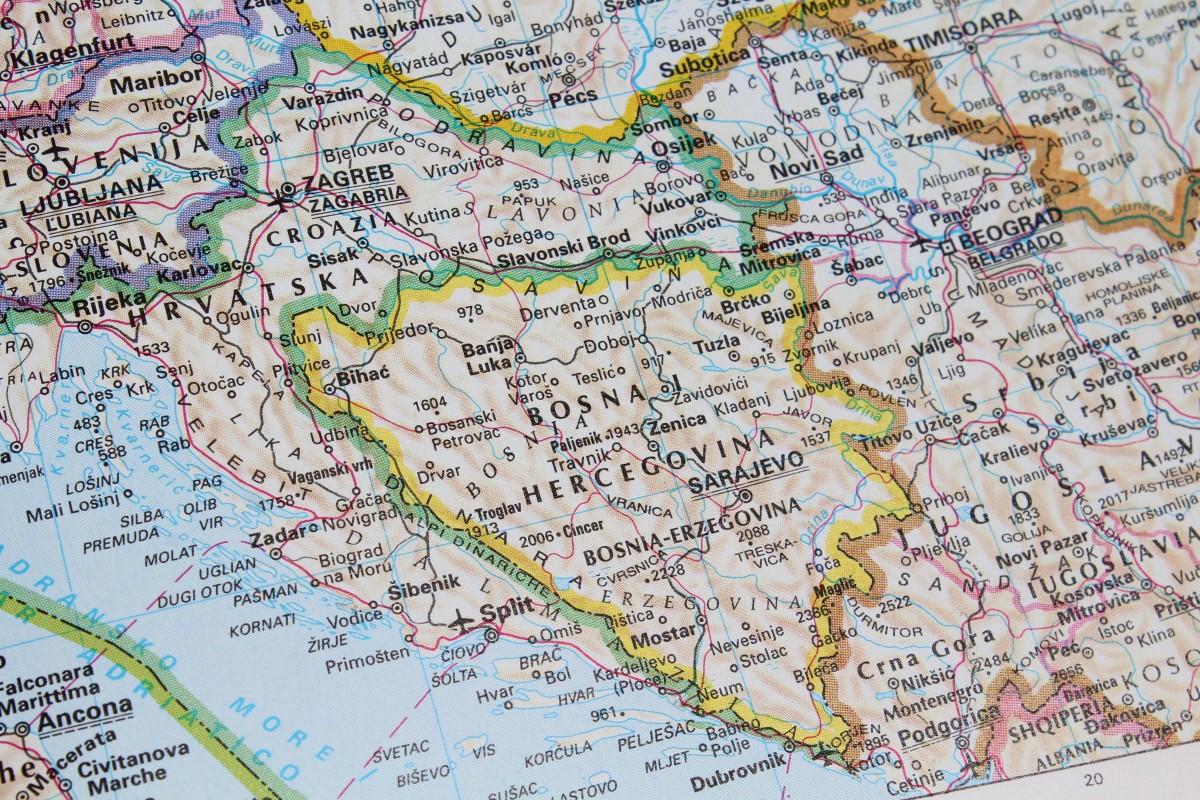
An interesting process unfolded in Southeastern Europe in the early postwar years. Re-established Yugoslavia (reorganized along communist lines) was initially the most loyal Soviet satellite, with Josip Broz Tito as one of Stalin’s closest allies. The communist government in Yugoslavia had greater freedom to implement its policies than other Eastern European states. This was largely because the Yugoslav Partisans, led by the Communist Party, had largely liberated the country on their own. This gave the new leadership legitimacy and reduced the perception of being imposed by Soviet forces.
However, Tito’s insistence on holding Trieste was not to Stalin’s liking. Since Yugoslavia was within the Soviet sphere of influence, such actions could be interpreted as Soviet expansion. Stalin did not want to provoke a crisis with the West that might escalate into a global conflict. Additionally, Yugoslav support for Greek communists during the civil war concerned Stalin, as it risked provoking Western powers.
The Tito–Stalin Split
Due to Tito’s independent stance, Stalin decided to break ties. In June 1948, the Cominform expelled the Communist Party of Yugoslavia. Stalin expected this to lead to Tito’s downfall, but no such large-scale internal rebellion occurred. On the contrary, Tito remained firmly in power.
As President of Yugoslavia, Tito later joined leaders such as Gamal Abdel Nasser (Egypt), Jawaharlal Nehru (India), Sukarno (Indonesia), and Kwame Nkrumah (Ghana) in hosting the first official conference of the Non-Aligned Movement in Belgrade in 1961. The idea behind the movement was to pursue an independent path without aligning with either of the two dominant global blocs.
Conclusion
The beginning of the Cold War was deeply rooted in the outcomes of World War II. Areas occupied by American and British forces became part of the political West, generally characterized by higher levels of democracy compared to regions under Soviet influence. However, alignment with the West did not necessarily guarantee democratic governance, as seen in Greece.
Nevertheless, the concept of democracy was effectively used as a moral tool by the West to position itself above Soviet-controlled states. Fear of communism often led to inconsistencies in foreign policy, including tolerance of non-democratic regimes as long as they were anti-communist, as well as undemocratic practices toward suspected communist sympathizers within the United States.
Meanwhile, the Soviet Union built its postwar influence on its role in defeating Nazi Germany. In contrast, the British electorate replaced Winston Churchill despite his wartime leadership, illustrating a different democratic dynamic.
As for the Marshall Plan, neither extreme interpretation is entirely accurate. It is unlikely that the United States invested over twelve billion dollars without expecting returns. At the same time, it was not merely a tool of covert economic domination—otherwise, it would not have been offered to the Soviet Union. More realistically, it was a long-term investment: providing aid with the expectation of future economic benefits through a revitalized European market, while also aiming to prevent the spread of communism.
Such a plan required immense resources—available only to a country that had not suffered wartime destruction on its own soil. Ultimately, the situation in Europe and the world at the beginning of the Cold War shaped the contours of a polarized global order that would define the next four decades.