By Matija Šerić
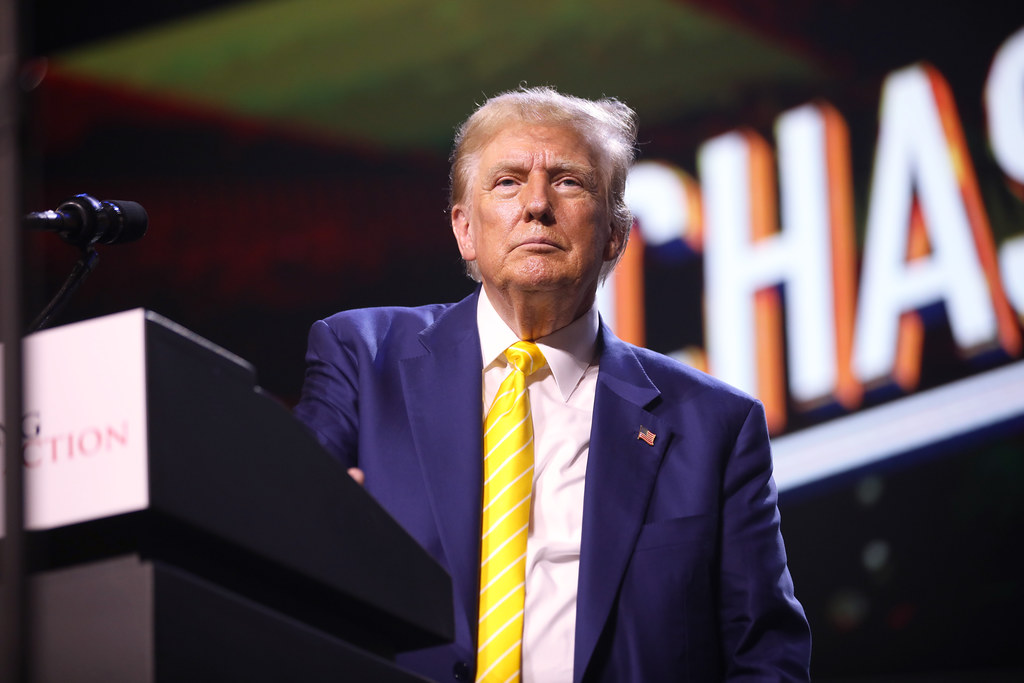
After Donald Trump took office in January, the issue of the Panama Canal was once again brought to the forefront. Trump has, on multiple occasions, expressed his intention for the United States to regain control over the canal from Panama. It is worth recalling that under the Panama Canal Treaty of 1977, the U.S. relinquished control of the canal to Panama. The agreement was signed by U.S. President Jimmy Carter and Panamanian dictator Omar Torrijos and came into effect in 1999. According to the treaty, passage through the canal had to remain free, and the U.S. retained the right to defend its neutrality.
Disputes Over the Panama Canal
However, Trump has expressed a desire for America to take back control of the canal, arguing that U.S. ships are being “heavily” taxed and claiming that China has effectively taken over the canal’s administration. This is not entirely true, as the canal is managed by the Panama Canal Authority (ACP), an agency of the Panamanian government responsible for operating and maintaining the waterway. Nevertheless, China does have significant influence over the canal. Chinese companies, such as Hutchison Ports, control key ports near the canal, increasing China’s presence in the region. China is a major trading partner of both Panama and the U.S.
The Trump administration, led by Secretary of State Marco Rubio, exerted considerable pressure to exempt U.S. ships from transit fees and to persuade Panama to withdraw from China’s Belt and Road Initiative. The question remains whether any of these proposals will materialize. It is possible that the fees for American ships may be reduced while Panama and China continue their cooperation, even if Panama formally withdraws from China’s grandiose project.
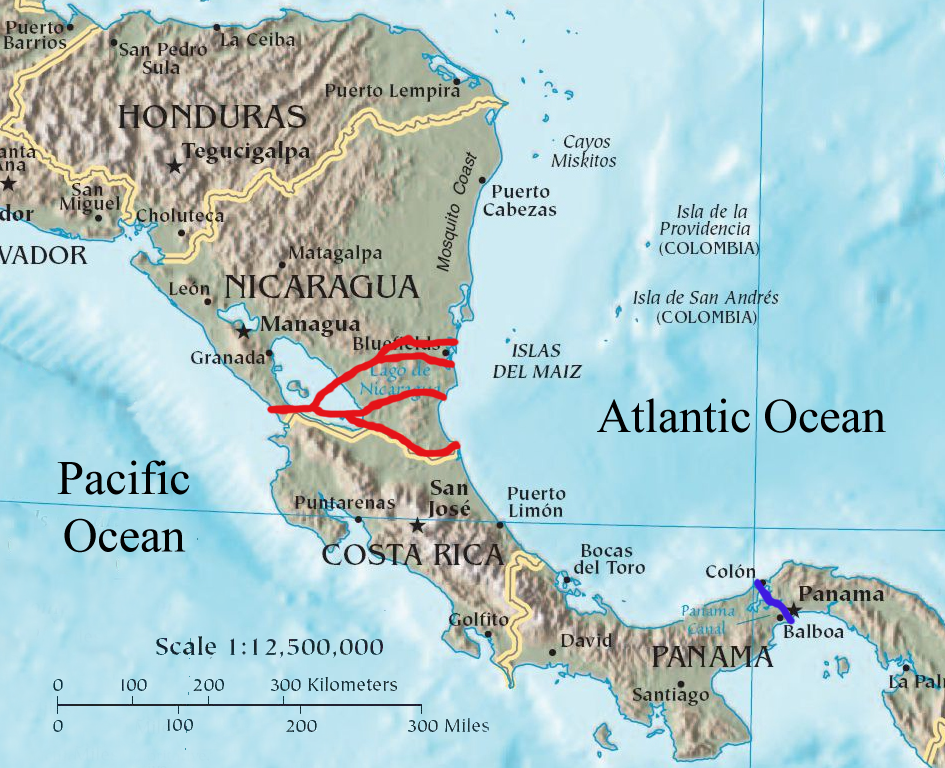
Panama is a stable Latin American democracy and an important U.S. partner in the region. This was evident in Panama’s 2024 announcement to curb illegal immigration through the Darién Gap between Panama and Colombia. Additionally, Panama refused to recognize Nicolás Maduro as the president of Venezuela. However, the disputes over the Panama Canal open up the possibility of finally realizing an alternative maritime passage connecting the Pacific and Atlantic Oceans: the Nicaraguan Canal.
Nicaragua – A Socialist Dictatorship of One Family
Unlike Panama, Nicaragua is its complete opposite. While Panama is a democracy aligned with the U.S., Nicaragua is not. It is essentially a one-party state where absolute power is concentrated in the hands of President Daniel Ortega, who leans towards the East. The leftist president has been in power since 2007, and as of this year, he serves as co-president alongside his wife, Rosario Murillo. Many observers label Ortega a dictator, which he essentially is, given that he has consolidated control over all aspects of governance. The fact that his wife is co-president speaks volumes—it is a de facto family dictatorship.
Ortega is a former Sandinista guerrilla who served as president from 1980 to 1985. During that time, he fought against the Contra rebels, who were financed and trained by the United States. In 1990, he lost the elections but returned to power 17 years later, securing a decisive electoral victory. Ortega’s triumph was part of the so-called “Pink Tide,” led by Hugo Chávez. Nicaragua aligned itself with the leftist bloc of Latin American nations and joined organizations such as CELAC and ALBA.
The positive aspects of Ortega’s regime include advancements in social programs, poverty reduction, and increased access to healthcare and education, which have improved the standard of living for many citizens. Infrastructure projects, such as new road construction and investments in the energy sector, have been key to the country’s development. Ortega has garnered support from parts of the rural population who have benefited from agrarian reforms and subsidies.
Ortega’s Repression and Eastern Alliances
However, over time, Ortega’s regime has become increasingly repressive. Waves of mass street protests erupted across Nicaragua from 2014 to 2020. The government violently suppressed these demonstrations, resulting in hundreds of deaths and injuries. Dissidents were imprisoned, and it is estimated that more than 30,000 citizens fled to Costa Rica and other countries. Ortega amended the constitution to ensure his political survival, and in 2021, he won another election—one widely condemned internationally for its lack of transparency and suppression of the opposition.
Although Ortega frequently invokes socialist ideals, critics accuse him of personal enrichment and close ties to corporate interests. His government maintains strong relationships with Venezuela, Cuba, Russia, and China while distancing itself from traditional Western allies. In foreign policy, Ortega consistently opposes U.S. influence, while domestically, he controls most media outlets and restricts access to independent information. Despite these criticisms, Ortega’s regime continues to enjoy support from the country’s poorer populations.
Initial Attempts to Build the Canal
The idea of a canal through Nicaragua has been considered for centuries but has never materialized. The U.S.-Panama conflict creates new opportunities, especially if Panama succumbs to U.S. pressure and restricts Chinese interests. The concept of constructing a canal through Nicaragua to connect the Pacific and Atlantic Oceans dates back to the colonial era. The earliest proposals for such a canal can be found as early as the 16th century. The Spanish colonial administration recognized that such a canal would facilitate trade between Europe and the western part of South America and strengthen control over colonial territories. Although the Spanish conducted surveys in the mid-16th and 18th centuries, construction never began due to Spain’s financial difficulties. In fact, the Spanish crown was in severe financial distress. The Federal Republic of Central America drafted a canal route through Nicaragua in 1825 and sought funding from the United States. However, the U.S. refused due to the region’s political instability and concerns that the British might seize control of the passage.
In the mid-19th century, French ruler Napoleon III proposed constructing a canal using the San Juan River as an access route to Lake Nicaragua/Cocibolca. Around the same time, American businessman Cornelius Vanderbilt also considered building the canal, but the project was thwarted by civil war and the occupation of Nicaragua by American adventurer William Walker. In the early 1890s, an attempt to construct the Nicaraguan Canal was led by the American company Nicaragua Canal Construction Company. However, as workers cleared the land along the canal’s planned route, many fell ill and were hospitalized due to tropical diseases such as malaria.
In 1899, the U.S. government established a Canal Commission to examine two possible routes—one through Nicaragua and the other through Panama. The commission’s report, published in 1901, favored the Nicaraguan route. However, the U.S. Senate voted for the Panamanian route, largely due to the declining property value of land owned by the French company New Panama Canal. Additionally, the completion of the railway in Panama between 1904 and 1914 increased Panama’s appeal.
Featured image: Wikimedia Commons