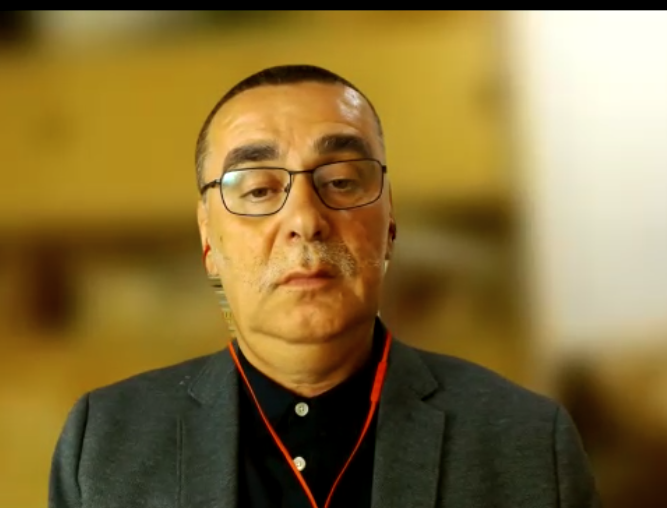
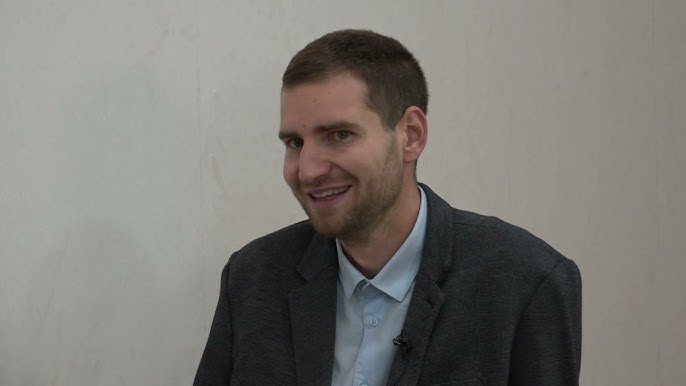
The 21st-century world is not just one of social, technological, and scientific development, but also a world of great challenges. The problems are numerous, with environmental pollution, climate change, over-urbanization, food shortages, poverty, and disease standing out. However, behind all these issues lies a political background. Today, numerous wars are being waged across the planet, and many societies are affected by terrorism. We discussed the endangered state of global security and the phenomenon of terrorism with political science PhD and terrorism expert Mirko Bilandžić, professor of security studies at the Department of Sociology, Faculty of Humanities and Social Sciences in Zagreb.
– How do you assess the state of global security in 2025? We are living in the most advanced stage of human development, and yet wars, conflicts, hybrid forms of warfare, and terrorism are still widespread.
The development of civilization is a prerequisite for wars, that is, it carries destructive potentials that call civilization into question. War is not something outside of civilization; it is precisely a product of civilization. The development of civilization brings potentials for a blow to civilization. It is not inversely proportional. War is not a product of anti-civilizational action, but a product of the development of civilization. The reasons why it occurs are another matter.
We have an international order in the modern era that is increasingly complex, with increasingly intricate relations. There is a process of questioning the existing order. We are in a continuous state of upheaval. There is a crisis of order, a crisis of leadership within that order, and a constant situation of destruction of the foundations upon which that order was built. In other words, we are witnessing a state of hypocrisy within the international order. We are destroying the foundations on which we are built while invoking those same foundations. At the same time, there is an institutional crisis of that order, with different types of relations from unipolarity, bipolarity, to multipolarity, accompanied by a crisis of multilateral organizations that should be addressing these issues.
In addition, we are seeing a change in the nature of threats to the order. In earlier periods, the state (military-political blocs) was the stable subject of threat, manifested as interstate armed conflict/war. Then there was a shift toward threats to peace through non-military actions. Now we have all of the above, plus the return of something called international armed conflict. At the same time, this order is facing a number of crisis situations that manifest through various types of threats, all part of these processes. One of them is, of course, terrorism.
In any case, we are dealing with a rather complex and turbulent situation, and from the standpoint of outcomes, a rather uncertain situation when it comes to international security. The world has not been in such a state of complex uncertainty regarding security for a long time.
– Who do you consider to be the main culprit for the decline in global security over the past few decades?
I don’t think we can pinpoint a main culprit. I would say we are witnessing changes in the world that are part of a continuum, while at the same time, we are seeing the deconstruction of various orders in the world, raising the question of whether these solutions were based on what we might call zero-sum or non-zero-sum games. If the games are such that everyone wins, then that’s a positive situation. But if we have situations where someone is a loser and someone else a winner, then we have the roots of future conflicts.
Simultaneously, we are witnessing new forms of order, different from what existed before. Previously, we had something stable and enduring, however potentially destructive, because it was based on nuclear terror, intimidation – the Cold War. After the Cold War, we again have a “Cold War,” but in a changed context. We are seeing Cold War elements where foreign states are considered sources of existential threats, though the conflict is no longer ideological as before. However, its key elements are identical: major powers (superpowers) officially declare each other as sources of existential threat in their national security strategies.
We are once again seeing the drawing of spheres of influence and division – the key characteristics of the Cold War. But now, the post-Cold War model with Cold War elements is not global in character as before. Instead, we have different types of “Cold Wars.” On one hand, we have a hegemon – the USA – with a number of challengers for various reasons. Now we have multiple “Cold Wars” just with different means. If we take U.S.-China relations, it is nothing but a Cold War in the geo-economic domain. If we take U.S.-Russia relations, what else is that but a Cold War in the geostrategic and geopolitical domain? And now it’s not just on a global level, but on regional levels too, with pronounced dimensions of proxy wars – for example, the Middle East.
– Is there probably still a culprit?
I wouldn’t say there is a single culprit. I would say that we are truly facing changed social conditions, relationships, and mechanisms compared to earlier periods. Previously, we had security as a strategic issue, but in the post-Cold War period, everything that had been suppressed outside the scope of potential Cold War conflict (nuclear confrontation) came to light: from ethnic conflicts to financial crises, climate change, migration crises, proxy wars, terrorism, cultural-identity conflicts, new types of wars – everything has surfaced. Yet all the mechanisms in place are traditional (multilateral). The question is: can they respond to new crises, whose subjects are also non-state actors?
What does an institutional mechanism mean is best seen in the example of the European Union. If it is a union, there must be a unified policy regardless of different frameworks of authority. Do we have that in the EU? No, we don’t. We have political conflicts within the EU because of it. What has been effective is the shared economic interest – the economic community. The more we move toward a union, the bigger the problem becomes. Secondly, this points to the core issue. Take the EU again: the EU, according to its original idea, is a welfare state. To be a union, it must have a common foreign, security, and defense policy. But how can the EU have that when it was created as the opposite of a war state, to prevent war from ever happening again, and moved toward a welfare state? And now that Europe, in changed conditions, must create the conditions to once again move toward building the defense sector and back toward a war state. That is an institutional problem; these are dramatic structural changes.
Ultimately, everything presented above are causes that led to the decline of global security. I would say there is no single cause. Certainly, a mix of all these elements led to the decline of global security. The world has found itself in a situation where, among other things, the famous phrase of German sociologist Ulrich Beck applies – that we are a risk society. That means that social development as a whole also generates risks and that these risks are no longer separate from the social development itself. Certainly, the social development of the EU (institutional problems) led to the EU crisis. Certainly, development (regardless of its nature) led to the financial crisis. Certainly, development led to climate change. Certainly, development led to terrorism becoming a part of everyday life. I would say that we are all collectively to blame. Some more, some less. Of course, security should be a universal, non-competitive, and non-rivalrous good. If it becomes a particular, rivalrous good, then we have a problem. If we have one orientation, but behavior based on interests regardless of the appropriateness of the means used is something entirely different, then we have a problem. It seems to me that this is what is currently most present.
– When it comes to terrorism, do you think the main culprits are Al-Qaeda, ISIS, Al-Nusra Front, and similar groups? I assume that if they didn’t exist, the global security situation would be significantly better?
That’s a simplified focus. Terrorism is something that has persisted. In its persistence, terrorism has taken on different statuses in terms of being recognized as a problem. And in that varying recognition, there has been differing awareness of terrorism. There have been various approaches to understanding terrorism. Terrorism is not something new, but constant.
If we look at the most influential social theory that explains what terrorism is — particularly social or non-state terrorism, or anti-state terrorism — it suggests we are now in the fourth wave of terrorism. This fourth wave is most marked by its religious dimension. Geopolitically, this type of terrorism is shifting, following a logic, from Western spheres toward the eastern parts of the world. Today, it is primarily located in the Middle East, as a source of political Islam or Islamism.
Secondly, if we look back, we’ll see that terrorism existed before, even in those regions, but it wasn’t marked by Islamism. It had a dominant ethno-nationalist character. Terrorism related to the Palestinian issue is not new. There have been secular Palestinian organizations pursuing the same goals as Hamas (which is Islamist), and these organizations have existed and functioned for 60 years. I would say that awareness has increased and that many crisis hotspots exist. Scientific data today tells us there are approximately 2,300 instances of terrorism worldwide, meaning 2,300 crisis points. These hotspots have surfaced, and the way they are dealt with often involves asymmetric conflict, where one side resorts to terrorism to try to resolve the conflict.
What causes all this? Today, there’s a dominant focus on non-state terrorism. But historically, we’ve had state terrorism too — for example, in totalitarian regimes. However, the problem lies in publicity: such acts weren’t presented as terrorism. This means that a higher number of crisis points leads to a clear escalation of terrorism — both in terms of the number of terrorist actors and the number of incidents. Greater awareness and media attention have highlighted the destructive potential of terrorism. When terrorism is framed as an existential threat, the response is securitization — applying extraordinary measures and emergency states.
The entire 21st century can be seen as the era of anti-terror governance, where counterterrorism has become a key security issue. Historically, there have been varied approaches to dealing with terrorism. In the past, it was considered insignificant or marginal. When the third wave of terrorism (ideological terrorism) appeared in the 1960s — and dominated Europe for decades — it was treated as a non-political issue, an ordinary criminal act. Such acts weren’t seen as threats to national security, just violations of certain societal values. Later, we witnessed an escalation of terrorism and a shift in how it was treated — as a security issue. After September 11, 2001, a dominant American approach emerged, framing terrorism as a war issue: it justified the use of secret operations, military force, and special forces. Europe started partially adopting this model too.
However, terrorism remains primarily a political and social issue. In the last 20–25 years, terrorism has evolved from being an ordinary crime — ignoring its political causes and consequences — to a war-like threat that can endanger the survival of societies and states, prompting states to use emergency powers in response. This gives terrorism a huge disproportion between its statistical incidence and how it’s perceived. Statistically, in terms of security, terrorism is minor — but a single terrorist event can have enormous consequences, potentially disrupting an entire order. Today’s focus is on Islamist terrorism, but statistically and empirically, terrorism has many causes beyond political Islam. While political Islam is expansive and accounts for many terrorist groups, if we look at terrorism in Europe last year, we see that the number of incidents quadrupled, but only one-third were linked to Islamist motives.
There is a rise in ethno-nationalist and separatist terrorism. In Europe, most terrorist acts last year were linked to separatist or nationalist issues, such as Corsican nationalism, along with the Irish and Basque conflicts, all with ethno-nationalist roots. This proves that terrorism has causes. There’s no such thing as random terrorism, random terrorists, or random attacks. Every act of terrorism has causes. Historically and currently, the most common cause is ethno-nationalist issues — questions of statehood. The Kurds, for instance, reflect an ethno-nationalist issue. What are Hamas and Fatah? They exist because of the idea of a Palestinian national state. What type of state they want differs: Hamas wants an Islamist state, Fatah a secular one.
So, in the fourth wave of terrorism we live in, there is no doubt that religion — or more precisely, the abuse of religion — plays a part. Islam is a religion, while political Islam is a strategy that has nothing to do with faith, but is rather a political use of religion. Terrorism exists in all religions, but is currently most prominent in the framework of what we now call the political strategy of Islamism. Statistically, we see a balanced distribution of various types of terrorism. The media, however, highlight Islamist terrorism as the headline, which doesn’t mean that other types don’t occur. On the contrary — they are expanding and incidents are rising.
Last year in Europe, the most prominent form of terrorism was ethno-nationalist separatism. There were four major statehood-related cases:
- The Kurdistan Workers’ Party (PKK) — due to a large Kurdish diaspora and the idea of an independent Kurdish state.
- The Irish Republican Army (IRA) — linked to the concept of a united Ireland.
- The ETA — related to the independence of the Basque Country.
- Corsican nationalism.
All of these are nationalist movements that have nothing to do with religion.
– Do European countries have a concrete cure for Islamist terrorism, or is it true what former French Prime Minister Manuel Valls said in 2016—that France will have to learn to live with terrorism?
The response to terrorism is always specific. It has two or three dimensions. The first is eliminating the causes. If the causes are removed, there is no terrorism. Concretely, let’s give the Palestinians the state they are entitled to, and there will be no Palestinian terrorism. The second dimension is that solving the causes of terrorism leads to structural and societal changes. The question is how to operationalize that. For instance, Irish nationalists want a united Irish state covering all 32 counties of the island, which once existed. Now, those counties are divided between two states: Northern Ireland (United Kingdom) and the Republic of Ireland. That’s a structural change. The question is whether some cases of terrorism can be structurally resolved. Can two states exist on the same territory? They cannot. If they can’t, then we know what awaits us in the future. One thing is the cause—if you don’t solve the causes, then you can only deal with the consequences: preventing future terrorist attacks. It’s like medicine. Doctors can’t treat a disease without a diagnosis and without removing the root cause. If they try, they can only treat the symptoms, but that’s not a cure.
What we know today is that the world has a certain characteristic—there is no universally accepted document at the global level that defines what terrorism is. If the world hasn’t defined terrorism—and it won’t, because agreement is impossible—then terrorism isn’t a matter of science or expertise, but politics. Ultimately, it’s a social construct based on interests. For some, terrorists are terrorists; for others, they are something else. That’s the first rule. If the world can’t agree on a definition of terrorism, it can’t agree on its causes either. And if we can’t agree on the causes, then all we can do is deal with the consequences of terrorism: the terrorist attacks.
Given the escalation of attacks and the choices of methods and means used, the question is: can they be stopped? In the past, we had a traditional approach of denying the causes of terrorism (ignoring them), but today we have the concept of radicalization, which is actually the transfer of terrorism from the macro level to the micro level. Radicalization refers to the process by which individuals become terrorists. That means they radicalize within a certain social environment—whether virtual or physical, that’s another matter. The point is that they radicalize. And how? It’s a process, and if it’s a process, it has causes, a duration, and an endpoint when something happens. So, what has happened? At the macro level, we deny the causes of terrorism, but at the micro level, we acknowledge them. Everyone radicalizes for a reason.
We’ve now reached a situation where it’s clear that counterterrorism strategies are ineffective. That means something needs to change. On the other hand, if we can’t eradicate radicalization, then we must move to the level of risk reduction—or, as French leaders have said, accept that terrorism is part of our lives. And then we must adapt to it. The problem now is that terrorism has various dimensions—cultural, psychological, and so on. What does adaptation mean in Palestine, Israel, the broader Middle East, or in the West or Scandinavia? How will societies that haven’t previously experienced terrorism adapt?
– Hardly or not at all.
Societies that have experienced terrorism or live with it adapt differently. The statement by French leaders either shapes reality or acknowledges it, but the real question is: what does it mean to get used to terrorism? Getting used to it means, for example, looking at Northern Ireland, which is in the heart of Europe. There was a period in Northern Ireland where people lived with terrorism every day. In 1972, there were 479 people killed in terrorist attacks. In 1998, a peace agreement was signed, and the number of attacks and casualties significantly decreased.
So, what does a society get used to? The period before or the period after? That’s why the concept of getting used to something is very fluid. It’s indisputable that terrorism is a part of our lives and that it is here to stay, and there are no indicators suggesting it will disappear. Empirically, it is evident that counter-terrorism strategies are ineffective or insufficiently effective, which means the only thing left for us is to live with it as a phenomenon within the framework of risk reduction. We inevitably have to adapt to the fact that terrorism happens and that it can happen anywhere. Terrorism always occurs in a contingent way—dependent on the circumstances.
– Can you explain a bit more what it means that terrorism is dependent on circumstances?
That means that in two identical social situations, terrorism occurs in one and not in the other. Why yes in one and no in the other—science doesn’t know. If it did, we would be able to prevent it. We have two identical situations—social, political, economic. The causes are the same. Take, for example, Catalonia and the Basque Country. Both want independent states. The Catalans never turned to terrorism. The Basques, the first thing they did was create a terrorist organization and turn to terrorism. They live next to each other, many things are the same or similar, they share the same goal, but the outcomes are different. So, there is no predictive mechanism that can tell us whether terrorism will occur. What we do have, and what we are capable of, is explaining what happened—after it happens.
– Do you think artificial intelligence and advanced technology can eliminate terrorism, or will terrorism adapt regardless of how sophisticated the technology becomes?
Terrorism is an incredibly innovative mechanism. Among all social groups, terrorists perhaps have the greatest capacity for analyzing the social environment, adapting to innovations, and applying them. If that weren’t the case, they would have been eradicated by now. They used to rely on certain types of socialization that led to radicalization. Today, we have virtual socialization. We have terrorists who become terrorists virtually. That is innovative, because previously radicalization mostly occurred in groups—the technical term is “bimodal symmetry”—which involved the formation and strengthening of resilience within terrorist organizations as structured entities. Today, we see individual radicalization happening in cyberspace.
Terrorists are innovative strategic actors. First, they have consistent goals they do not abandon until they are achieved. Second, they conduct detailed analyses of the social environment. They study state capabilities and behaviors, and societal reactions. Third, they always apply a cost-benefit approach in their operations—the benefit must outweigh the cost. They are rational players, maximalists, but they choose the most appropriate means to achieve utility.
They are innovative in terms of the modus operandi of terrorist attacks. When airplanes and air travel became common, terrorists hijacked planes en masse. Once states began protecting planes, terrorists went to Madrid and bombed a train station. Then states began protecting train stations, so terrorists went to Beslan and kidnapped children from a school. Then states began protecting schools, and terrorists went to a theater and took the audience hostage during a performance. States began protecting such venues as well, so terrorists developed suicide terrorism. They told the state: “You can prevent everything except our will to kill ourselves in the name of a higher cause.” That is altruistic suicide.
Then counter-terrorism mechanisms were developed to prevent even that, and terrorists began using everyday items to attack everyday life—and not as organized groups anymore, but as ad hoc individuals. That means people are walking along the promenade in Nice, and someone drives a truck into the crowd and commits a terrorist attack. People are sitting in a café, and someone walks in and kills them. No organization, no preparation. Everything is accelerated. Terrorists have professionalized in a way by eliminating the most demanding professional elements. The most significant elements in planning a terrorist attack are: the preparation of the attack and the escape from the attack site. In suicide terrorism, there is no escape and no complex preparation. In “no-return missions”—which are similar to suicide terrorism but not the same—there is minimal preparation. They take a truck and drive into people. They take a knife and stab people in a crowd. The chance of escape is very small. Yet the impact and the state’s response are the same. This is also why we are seeing the rise of pro-state right-wing terrorism, which is greatly threatening public order.
– So essentially, are you saying that terrorists are a kind of elite criminals, like mafia members?
They’re not criminals—they’re politicians. That’s the issue. Everything they do is for political goals, i.e., for a higher good. They have no material goals, and that’s why they enjoy legitimacy and support. Hamas wouldn’t survive without support from the Palestinians, nor would the IRA without support from the Irish. You can call them anything except criminals. Criminals deny the unlawfulness of their actions for material gain. Terrorists, on the other hand, admit their actions are unlawful and take responsibility because they act in pursuit of higher, altruistic interests. There is no greater goal than the creation of a nation-state. That’s why groups like Hamas, Fatah, the Kurdistan Workers’ Party, ETA, and the IRA exist.
– So far, Croatia has mostly been spared terrorist attacks. Will that continue in the future, or will it eventually face what’s happening in the West?
Croatia and Croatian interests have been targeted by terrorist attacks even in this century, but those were isolated incidents. Generally speaking, Croatia is a safe country, and terrorism is a rational strategy—it is not irrational. Croatia maintains an enviable level of security when it comes to terrorism. Terrorism, in relation to Croatia, remains at the level of a generalized threat. There is indeed a conflict between Islamism and the West, and the West is the target of Islamist terrorism. Croatia is part of the West, and that constitutes a generalized threat. It is persistent, but there is no direct threat. Comparatively, Croatia is at a low level of risk as a target of Islamist terrorism.
What’s unique about terrorism is that the transition from danger to threat doesn’t necessarily have to happen—but it can happen instantly. That’s a unique feature of terrorism from a risk assessment perspective. Of course, there are other reasons that can lead to terrorism, and we’ve seen those in Croatia too. These include internal structural conditions that led to the attack on the Croatian government building in 2021. A third dimension that generates a generalized threat is the regional environment. From the regional environment—through different types of interactions and various types of historical developments in both war and peace—different types of terrorist attacks have originated.
In the current destabilized regional situation, I don’t think we can ignore indicators that point to a regionalized threat of potential terrorism coming from this complex environment. And that environment is multifaceted—from Islamist threats, dysfunctional states, and ethnic divisions to the legacy of war and the presence of today’s paramilitary elements. We also face the dimension of global crises that could be exported into the context of spheres of influence in Southeast Europe, potentially creating conditions for different forms of terrorism used as tools of influence or destabilization.
Interview conducted by Matija Šerić.
Featured image: www.narodni-list.hr