By Matija Šerić
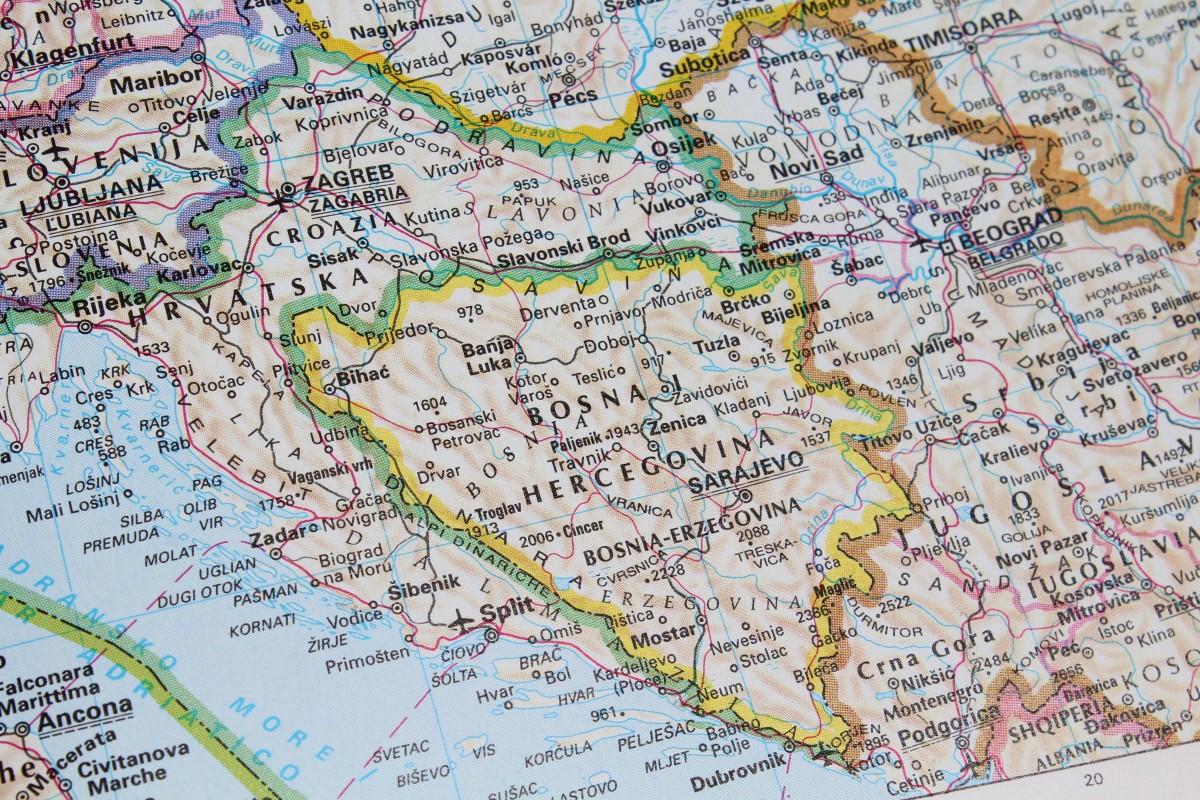
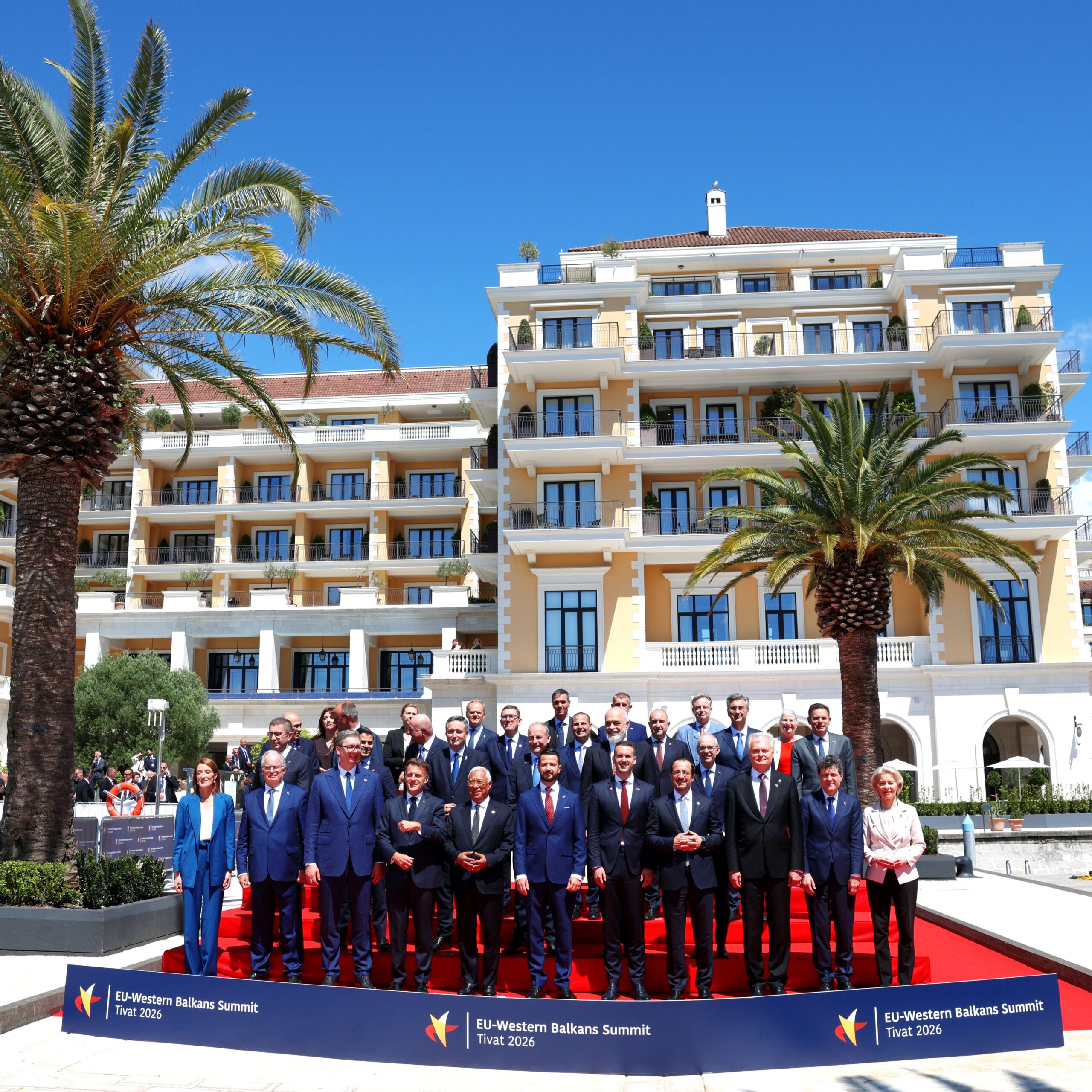
Today, the coastal Montenegrin city of Tivat is hosting the multilateral EU–Western Balkans Summit. The event, accompanied by enormous media attention (the largest political gathering ever held in independent Montenegro), is expected to bring major changes for the six Western Balkan countries—Montenegro, Serbia, Bosnia and Herzegovina, North Macedonia, Kosovo, and Albania—which have long been pursuing membership in the European Union but have yet to join.
Among those expected to attend are some of Europe’s most influential leaders, including Ursula von der Leyen, Emmanuel Macron, Friedrich Merz, and Giorgia Meloni, along with more than thirty other high-ranking officials. The summit’s primary objective is to further integrate the six Balkan states into the EU’s single market, a step that should theoretically accelerate their path toward full membership.
The EU’s Sluggish Enlargement Policy in the Western Balkans
All of this sounds promising. However, despite the grand rhetoric, it is difficult to expect any revolutionary changes regarding EU enlargement. Looking at the broader picture—both recent history and the current geopolitical environment—it becomes clear that the European Union is unlikely to expand rapidly in the near future. Montenegro and Albania currently appear to be the frontrunners, with a possible accession around 2030, unless some dramatic shift occurs.
The process of bringing the Western Balkan countries closer to the European Union has already lasted three decades, and at times it feels even longer due to the sluggishness and inertia of the process itself. The former Yugoslav republics, together with Albania, with the exception of Croatia, have remained outside the EU for three key reasons.
Strict Criteria for New Member States
The first reason is that, following the accession of the former Eastern Bloc countries in 2004, and Romania and Bulgaria in 2007, the EU introduced much stricter conditions for future enlargements. Croatia’s experience illustrates this well: its accession process lasted ten years, from its application in 2003 to full membership in 2013.
Beyond Slovenia’s blockade during negotiations, Croatia had to harmonize its legislation and institutions with the extensive body of EU law, encompassing more than thirty negotiation chapters. The process was further delayed by the need for deep reforms in the judiciary, anti-corruption measures, and the strengthening of the rule of law.
The Western Balkan countries must undergo the same process, but many of them face unresolved constitutional issues and are themselves sources of geopolitical instability. Bosnia and Herzegovina and Kosovo are, in many respects, still international protectorates rather than fully sovereign states. North Macedonia continues to struggle with a constitutional dispute, as Bulgaria has vetoed its EU accession process until the Bulgarian minority is formally recognized in the country’s constitution. At the same time, the status of the Albanian minority remains politically sensitive due to recurring secessionist aspirations.
The EU Does Not Really Want New Members
The second reason is that Brussels itself lacks genuine enthusiasm for admitting new member states. The European Union is burdened by numerous internal challenges that it has struggled to address effectively. Economic concerns are perhaps the most significant.
Following the global financial crisis of 2008 and the migration crisis of 2015, the Union became far more cautious about enlargement. On one hand, wealthier member states fear they would have to contribute more money to EU development funds supporting poorer regions. On the other hand, many are concerned that their labor markets would be flooded by workers from the Balkans, increasing competition for jobs.
Yet the issue extends beyond economics. Xenophobia and prejudice toward Southeastern Europeans remain present among parts of the Western European public. Persistent stereotypes portray Balkan populations as less productive and overly dependent on social welfare systems.
There is also an institutional problem. Many EU decisions still require unanimous approval from all member states, meaning that every new enlargement increases the potential for internal blockages. This has already been demonstrated in recent years, with Hungary and Slovakia delaying aid packages for Ukraine, while Greece and Cyprus have repeatedly used their veto power in matters concerning Turkey.
The Western Balkans Are Not Entirely Sincere Either
The third reason is that many political elites—and to some extent the populations themselves—are not entirely committed to joining the European Union.
Many Serbs in Serbia, Montenegro, and Bosnia and Herzegovina maintain strong anti-Western sentiments and view Russia, China, and other Eastern powers as their preferred geopolitical partners. Similarly, many Bosniaks regard countries such as Turkey, Iran, and Saudi Arabia as political or cultural role models, despite the fact that these states fall well short of European democratic standards.
Countries such as Serbia and Bosnia and Herzegovina often pursue EU integration for pragmatic reasons. They seek access to pre-accession funds, European loans, and subsidies, but many political actors appear reluctant to embrace the deeper political and institutional transformations that membership requires.
Albanians are generally more pro-Western in orientation, but democratic standards and institutional culture still require significant development. The only group that appears genuinely committed to European integration are the Croats of Bosnia and Herzegovina, although they alone cannot determine the country’s strategic direction.
In simple terms, the European Union serves as a financial lifeline for many Balkan states—a source of funds to patch budget deficits and encourage investment. What remains problematic are the very values that the EU is built upon: independent institutions, the rule of law, the fight against corruption and nepotism, and the protection of minority rights.
Much Ado About Nothing
Political events such as the EU–Western Balkans Summit in Tivat can only be fully assessed after several months or even years have passed. Nevertheless, all indications suggest that this is likely to be another public relations exercise filled with grand declarations but short on concrete outcomes.
If the EU were prepared to admit the Western Balkan countries as a package, or at least provide each aspiring member with a credible and fixed accession date, that would represent a historic breakthrough. Instead, this summit appears to be another attempt to portray the European Union as a significant geopolitical actor.
In reality, the principal players on today’s international stage remain the United States, Russia, and China. Only an agreement among these great powers—perhaps a kind of “Yalta 2.0″—would be capable of resolving major global crises such as those in Ukraine, Iran, Syria, and elsewhere.
Meanwhile, European bureaucrats are staging a political reality show in Montenegro, arguably designed to divert attention from the EU’s limited ability to shape global events. It would almost be amusing if the spectacle were not financed by millions of euros paid by European taxpayers.