By Ivo Kokić
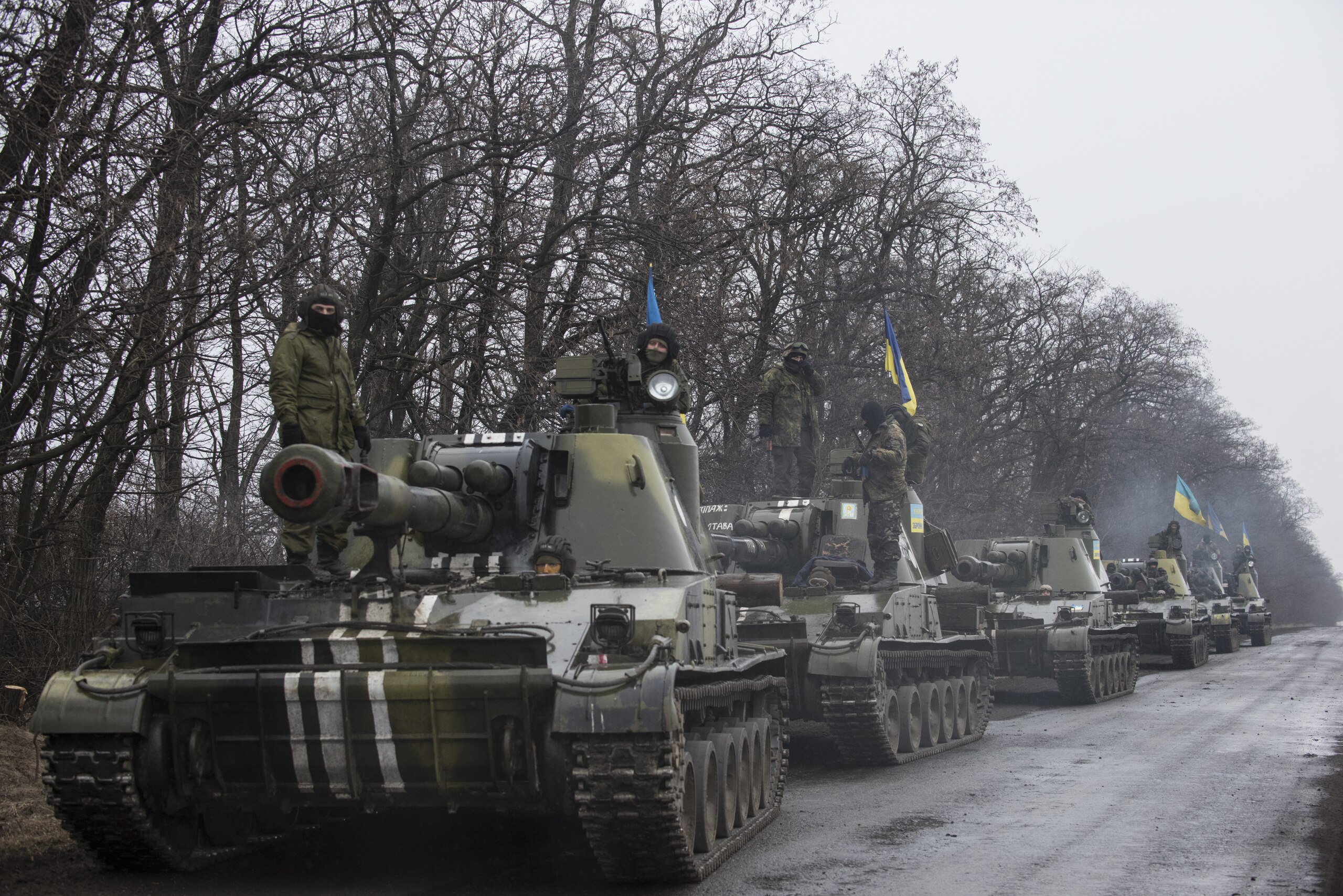
In February 2014, a coup d’état took place in Ukraine, overthrowing then-president Viktor Yanukovych. After that, war began in eastern Ukraine. It was fought between the Ukrainian army under the command of the new government and anti-government separatist forces. Although there were attempts to end it (the Minsk 1 and Minsk 2 agreements), it has not ceased to this day. On the contrary, it escalated at the beginning of 2022. Today it is highly topical and fills social, media, and political space. There is hardly a country in the world that is not involved in some way in the war in Ukraine. For several years now, this conflict has threatened to escalate into a Third World War. The conflict in Ukraine has irreversibly reshaped the world as we knew it.
Introduction
When the war in Ukraine first began, it was fought on a territory geographically known as Donbas. Administratively, Donbas is divided into two regions: Donetsk and Luhansk. During the first eight years of the war, armed clashes were conducted in these two regions. The overall period analyzed in this essay spans from early 2014 to early 2022. The main focus of the analyzed period is the beginning of 2022, with particular emphasis on February of that year.
As already stated, the Minsk 1 and Minsk 2 agreements (2014 and 2015) were supposed to establish peace in Ukraine, but they were never implemented. More precisely, after the failure of Minsk 1, the following year a (much more comprehensive and detailed) Minsk 2 agreement was signed. However, its failure lasted for years, while the war did not escalate. Therefore, it is clear that the non-implementation of these agreements was not the trigger for the escalation of the war. It is thus necessary to clarify what exactly happened at the beginning of 2022 that caused the conflict to flare up.
The intention of this essay is not, in some abstract sense, to debate who bears more or less responsibility for the outbreak of war in Donbas. For example, many analysts point to NATO’s eastward expansion as an important cause of the Ukrainian crisis. Nevertheless, this essay does not examine that issue, but focuses exclusively on the conflict in eastern Ukraine. The research objective is very concrete and material: to explain what happened at the beginning of 2022. It takes two to have a quarrel, but only one side is needed to start a war. In other words, it is necessary to clarify whose army carried out an armed attack on the mentioned territory in that period.
The essay draws on theories of realism and constructivism, various methods (historical method, case study, and induction), as well as the technique of content analysis. Of particular help will be reports on the ratio (percentage) of killed Ukrainian and Russian civilians, ceasefire violations, and the number of explosions on a daily basis.
The bibliography for this essay is based on literature (professional papers, scientific articles, newspaper articles, as well as encyclopedic entries) and primary sources. These sources include reports by the United Nations and the Organization for Security and Co-operation in Europe (OSCE). Credible online materials, political science analyses, and statements by relevant geopolitical actors are also included. The last category refers to statements by former German Chancellor Angela Merkel and former French President François Hollande.
Events in the world certainly influenced the situation in Donbas. However, this essay aims to focus as much as possible on the conflict in the Donetsk and Luhansk regions themselves. In this way, one can come closer to understanding the situation that was unfolding on the ground on a daily basis at the time.

The Beginning of the War, the Minsk 1 and Minsk 2 Agreements
As already mentioned, after the overthrow of President Viktor Yanukovych in February 2014, war began in the eastern Ukrainian regions of Donetsk and Luhansk (Brzica, 2022). The area they encompass is called Donbas. In order to stop the armed conflict, the Minsk Protocol was signed in September 2014. It later became known as Minsk 1, but at the time it was not yet known that there would be a need for another such agreement. The aim of the Minsk Protocol was to establish a ceasefire in eastern Ukraine. In other words, the intention was to ensure an immediate cessation of hostilities without addressing the deeper political causes of the war. It was signed by representatives of Ukraine, Russia, the OSCE, and rebel groups in Donetsk and Luhansk (Britannica.com).
However, this agreement established only a fragile ceasefire that was frequently violated. Moreover, it did not envisage the resolution of much deeper problems beyond the mere cessation of suffering. Therefore, in February 2015, the Minsk 2 agreement was signed. It was signed by Ukraine, Russia, Germany, and France. The aim of this agreement was to end the fighting, but also much more than that. Under it, Ukraine committed to a series of steps aimed at establishing genuine peace. Particular emphasis should be placed on: the delivery of humanitarian aid to war-affected areas in Donbas and constitutional reform in Ukraine. The latter refers to the decentralization of Ukraine and granting autonomous status to Donetsk and Luhansk. The other three states that signed the agreement were supposed to support such steps (Hurak, 2015).
What was signed was not implemented. The war (albeit of lower intensity) continued. Ukraine did not carry out what it had committed to. The decentralization of the state was not implemented, nor was autonomous status granted to Donetsk and Luhansk. In other words, the Ukrainian side did everything to prevent the war from ending, i.e., to prevent the fulfillment of the conditions that would lead to peace. The following section will explain why this was so and whether it was merely a simple non-implementation of the agreement or part of a much more complex plan.
At the beginning of December 2022, former German Chancellor Angela Merkel explained the true background of the Minsk 2 agreement (from a Western perspective). She stated that the goal of that agreement was not to halt the war in Ukraine, but rather the opposite—to buy time so that as much оружja as possible could be sent to Ukraine over several years and preparations made for a future war with Russia (Al Mayadeen.net, 2022).
At the beginning of April 2023, Russian pranksters called former French President François Hollande, with one of them posing as Petro Poroshenko. Poroshenko was the Ukrainian president from 2014 to 2019, meaning that he was the one who signed the Minsk 1 and Minsk 2 agreements. Hollande was also in power at the time and signed those agreements. The prank was successful because Hollande believed he was indeed speaking with Poroshenko. Several important lessons can be drawn from that conversation. The first is Hollande’s statement that the EU is a participant in the war in Ukraine, even though it is not formally a belligerent party. Even more important, however, are his statements about the Minsk agreements. Hollande told “Poroshenko” (in fact, a Russian prankster) that the West had been preparing and arming Ukraine for years for a war with Russia. He also confirmed that the Minsk 2 agreement was not signed in order to be implemented, but rather to buy time and prepare for a war with Russia planned for several years after the signing of that agreement. Hollande and “Poroshenko” expressed satisfaction that their governments had already begun that process (Prvan, 2023).

The Years-Long War in Donbas
As can be seen, the Minsk 2 agreement was signed, but a state of its constant non-implementation lasted for years. It is necessary to distinguish between two seemingly similar categories: the non-implementation of the Minsk 2 agreement and the continuation of the war in Donbas. Namely, the fact that Minsk 2 was not implemented only means that its provisions were not fulfilled (e.g., the decentralization of Ukraine). But that still does not mean that the war necessarily had to continue because of that. Ukraine could have failed to implement any of its obligations, yet the armed conflict could still have ceased. That would have meant that absolute peace was not established, but at least there would no longer have been fighting and suffering in Donbas—i.e., the situation on the ground would have been frozen.
Nevertheless, what happened is that the conflict (sometimes of greater, sometimes of lesser intensity) continued. Thus, the Minsk 2 agreement established a ceasefire in the area, but it was constantly violated. And who was violating the ceasefire and firing on the territory where peace was supposed to be established? Nothing is black and white, but a United Nations report clearly indicates which side the answer to the previous question leans toward. This refers to a UN report from January 2022, which addresses civilian casualties of the war in Donbas. On its second page are data from 2018 (one year before Zelensky came to power) to the end of 2021. According to those data, more than 80% of civilians killed in Donbas were killed by the Ukrainian army, i.e., they were killed in territories under rebel control (OHCHR, 2021). This percentage is crucial for any understanding of the situation in Donbas. It is not surprising that Western media have suppressed these data. The ratio of killed Russian and Ukrainian civilians is the best example of the extent to which our media have distorted the portrayal of the real situation there.
Minsk agreements explained
Intensification of the Conflict
The war in Donbas had periods of higher and lower intensity. Three major waves of increased intensity were recorded in April and November 2021 and in February 2022 (Rukavina, 2024). It is interesting to note that these three waves coincided temporally with Biden’s arrival in power in the United States.
During this period, even stronger militarization of Ukraine began. In 2021, the Biden administration sent Ukraine military equipment worth 450 million dollars. At the beginning of January 2022, the United States sent an additional 200 million dollars in military aid to Ukraine. In the same month, the United Kingdom and the United States sent Ukraine several thousand missile systems, more than 400,000 rounds of ammunition, etc. A massive transfer of Western weapons to Ukraine was planned for February, e.g., several million rounds of ammunition, a dozen attack drones, etc. The United Kingdom alone sent around 460 tons of weapons to Ukraine in January 2022 (Rukavina, 2025).
All this weaponry was not sent to Ukraine to gather dust. In January 2022, more than three thousand ceasefire violations were recorded in Donbas. On the first day of February, Putin warned that the United States and NATO intended to escalate the war in Ukraine. Based on the situation on the ground (increasingly intense fighting in Donbas and a growing influx of weapons to Ukraine), it was becoming increasingly clear that Ukraine was planning a ground offensive in the Donetsk and Luhansk areas. Such an action would be in direct contradiction to what that state had committed to under the Minsk 2 agreement. The other signatory states to that agreement should also have opposed such a scenario. However, as already stated, Germany and France did everything to make it happen (Rukavina, 2025).
Russia was the only signatory that truly advocated for peace under the terms that had been agreed upon at the time. It decided to guarantee that such a violation of the agreement would not occur. Namely, Russia neither could nor planned, nor was it obliged, to allow Ukraine to trample that agreement through a ground offensive in Donbas. Therefore, the Russian government attempted by all possible diplomatic means to reason with the Ukrainian side and convince it not to launch such an attack. Diplomacy can save millions of lives if there is willingness on both sides.
It should therefore be emphasized that Russia did not abandon attempts to de-escalate the conflict through peaceful means until the very end. Russia’s priority was at all costs to prevent the launch of a Ukrainian ground offensive in Donbas. Despite all peace efforts, Russia was aware that there was little reason for great trust in the Ukrainian side, after years of negative experience with the unimplemented Minsk 2 peace agreement. Therefore, the Russian government prepared an alternative (military) solution to this problem, in case Ukraine opted for war (Rukavina, 2025).