By Matija Šerić
History is full of surprising bilateral visits by major statesmen that have changed the dynamics of international relations. In 1909, U.S. President William Howard Taft visited Mexico, specifically El Paso, where he met Mexican President Porfirio Díaz. This was unthinkable at the time, as the two countries had previously been sworn enemies. In 1972, Richard Nixon made an even more unexpected move: he visited China, where he met its supreme leader Mao Zedong. The visit of the “leader of the free world” to a communist stronghold was something many could not have imagined. Something similar happened about ten days ago.
The Shift in Trump’s Policy Toward China
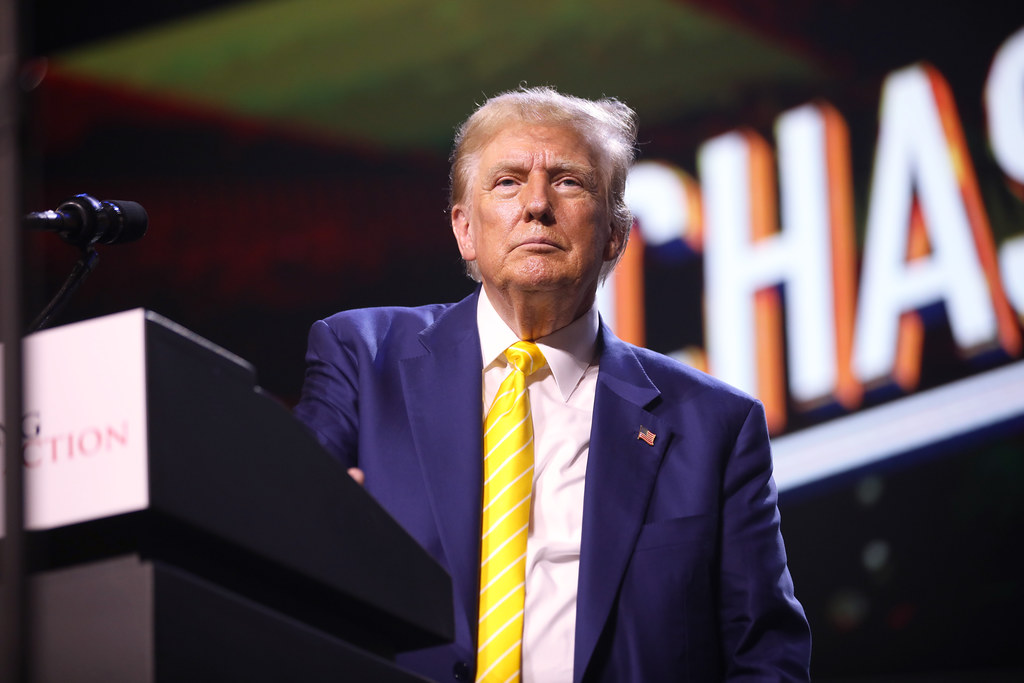
From May 13 to 15, we witnessed a visit by Donald Trump to the People’s Republic of China. On that occasion, the controversial American president and a large U.S. delegation met with Chinese President Xi Jinping and China’s political and economic elite. To be fair, meetings between leaders of countries with strained relations are not uncommon in the 21st century. However, given Trump’s firm anti-China rhetoric (in line with the America First and Make America Great Again agendas) and the heated trade war between the two countries, this move represents a kind of salto mortale. Trump considers China America’s greatest rival—the only country capable of dethroning the United States as the world’s leading power and reshaping the international order against American will. Yet he has now shown it great respect. It sounds paradoxical.
A Visit Full of Events
This was Trump’s first official visit to China since 2017. Xi and Trump held talks at the Great Hall of the People in Tiananmen Square in Beijing. The two leaders then visited the Temple of Heaven in the same city—a complex where emperors of the Ming and Qing dynasties performed rituals and prayers for good harvests and harmony between Heaven and Earth. Furthermore, Xi hosted Trump and the American delegation at a formal banquet in the Great Hall of the People. Finally, Trump visited the Zhongnanhai compound, which houses the headquarters of the Chinese Communist Party and the State Council.
The Strongest American Delegation Sends a Message
The importance of the visit for the U.S. is reflected in Trump’s entourage. Standing beside the president were Secretary of State Marco Rubio, Secretary of Defense Pete Hegseth, Treasury Secretary Scott Bessent, and numerous other high-ranking officials. Among corporate executives were Elon Musk (Tesla, SpaceX), Tim Cook (Apple), Kelly Ortberg (Boeing), and Jensen Huang (Nvidia). This was essentially the political and business elite of the United States. It is extremely rare for half of the U.S. government and most CEOs of its most powerful companies to accompany the president. Everyone saw an opportunity to benefit their businesses.
It can immediately be said that the United States has abandoned its policy of aggressive containment of China, tucked its tail, and admitted that China cannot be defeated through diplomatic, economic, or military pressure against its allies (Panama, Venezuela, Iran) or through trade and tariff wars. If relations with China cannot be resolved by force, perhaps they can be resolved through cooperation. Everyone came to China to pay respect to its de facto ruler Xi Jinping and his associates such as Premier Li Qiang, Foreign Minister Wang Yi, and Commerce Minister Wang Wentao. Interestingly, the Chinese business delegation was significantly smaller compared to the American one (as was the political one), though corporate leaders such as Yang Yuanqing (Lenovo), Lei Jun (Xiaomi), and Liang Rubo (ByteDance) were present. It appears that China believes it has less to gain from trade cooperation with the U.S. than the U.S. has to gain from China.
Stabilizing Relations – The Summit’s Main Goal
The key question is how much each side gained, which can be inferred from official statements and political commentary. Trump publicly called the visit “fantastic” and a “huge success.” He stated that views were aligned on Taiwan, trade, and the Strait of Hormuz. Xi announced that both sides agreed to establish constructive China–U.S. relations based on strategic stability. In this interpretation, the Chinese leader captured the essence of the meeting more accurately than Trump. The summit was not about resolving long-term disputes (Taiwan, the South China Sea, supply chains, tariffs, technological parity), but about easing immediate tensions.
The Tense Taiwan Issue
Regarding Taiwan, nothing strategic was agreed, only operational matters. Since 1979, the United States has followed a policy of “strategic ambiguity” toward Taiwan. The U.S. deliberately avoids stating whether it would intervene militarily if China invaded the island, which it considers an integral part of its territory. This policy aims both to deter China from invasion and to discourage Taiwan from declaring independence unilaterally, thereby preserving stability in the Taiwan Strait.
At the summit, Xi clearly defined Taiwan as a “red line” that the United States must not cross. In other words, if the U.S. recognizes Taiwan as an independent state, relations with China would collapse. Trump accepted this and stated he does not want an independent Taiwan or war with China, but rather de-escalation. He highlighted planned U.S. arms sales worth $14 billion to Taiwan (anti-drone equipment and air defense systems) as a bargaining chip that would not be realized if China cooperates economically. It is evident that both sides prefer the status quo regarding Taiwan, as do the Taiwanese themselves, who already have de facto independence without formal recognition. According to all available sources, freedom of navigation and Chinese claims in the South China Sea were not even discussed.
Everyone Supports a Flow Through Hormuz
Another important topic was the Middle East, particularly Iran. Naturally, the positions differ: the U.S. considers Iran a sworn enemy, while China sees it as a key ally, primarily due to oil. China purchases around 90% of Iranian oil exports. However, both sides agreed on the importance of keeping the Strait of Hormuz open and oppose Iran’s nuclear weapons program. Wang Yi called for the reopening of Hormuz once a permanent ceasefire is signed. Both sides want energy flows to continue in order to avoid global shortages, inflation, and recession.
Tariffs and Trade Remain Unresolved
No general agreement was reached on tariffs. China stated it expects the U.S. to maintain previously agreed tariff levels from the October 2025 Kuala Lumpur deal, averaging around 39%. Both sides agreed to consider a framework agreement on mutual tariff reductions for goods worth over $30 billion and to work toward overall tariff reduction. A one-year trade truce with a 10% tariff on all goods remains in place until November. Last year, Trump and Xi signed this deal to ease trade tensions. Whether it will be renewed remains unclear, although China has publicly expressed hope that it will be. Both sides also agreed to establish special bodies to manage trade and investment, while details are still being worked out.
China Gets Boeing, America Seeks Rare Minerals
China confirmed it will purchase 200 Boeing aircraft. In return, the U.S. pledged to ensure supply of aircraft engines and parts for China’s aviation industry. Boeing aircraft are needed to meet China’s huge demand for air travel, sustain its aviation sector’s growth, and gain access to advanced Western technology. This represents a major American concession important for China’s transport and technological development.
The U.S. expressed concern over possible shortages of rare earth minerals and processing technologies sourced from China, expecting this issue to be resolved. China, however, insists its export controls are legal, aiming to ensure that minerals are used for civilian (e.g., mobile phones) rather than military purposes. Clearly, Beijing does not trust Washington.
Agricultural Cooperation
China agreed to purchase at least $17 billion annually in U.S. agricultural products through 2028, while the United States granted broader access to Chinese exports, including dairy, fish, and ornamental bonsai plants. China will renew licenses for more than 400 U.S. beef processing facilities, lift suspensions, and resume poultry imports. This suggests that the trade truce could last longer, with mutual concessions on both sides.
Trade Asymmetry Still Favors Beijing
Based on available facts, conclusions can be drawn. Although both Trump and Xi praise the outcomes, the balance is uneven. China has positioned itself as equally important to the U.S., as demonstrated by the high-level American political and business presence. Moreover, the agreements benefit China more than the United States. The fact that hardline American conservatives effectively “bowed” to Chinese Communist leadership can be seen as a defeat for Trump’s anti-China policy.
Economic relations matter more than ideology. The U.S. trade deficit with China is around $200 billion. The U.S. exports about $100 billion in goods to China while importing around $300 billion. America relies on Chinese imports such as smartphones, computers, lithium-ion batteries, industrial equipment, and plastics. China, meanwhile, depends on American goods such as soybeans, semiconductors, petroleum products, automobiles, and aviation components. This interdependence helps prevent global conflict.
The imbalance will remain after the summit. China gains better access to American resources such as Boeing aircraft and agricultural goods, while U.S. access to Chinese rare earth minerals remains restricted, though some progress has been made. The 10% tariff agreement was not extended, reflecting mutual distrust.
Strategic Balance in China–U.S. Relations
China did not commit to pressuring Iran to lift the Hormuz blockade or move toward an agreement with the U.S., and it appears that covert military cooperation between China and Iran continues. The Taiwan issue remains frozen in a way that suits both sides, and Trump’s decision not to proceed with a large arms sale to Taiwan (at least for now) is another concession to China, as is silence on Chinese expansion in the South China Sea.
It is clear that Xi Jinping has achieved a strategic balance in relations between Beijing and Washington through this summit. The visit is recognition of China’s great power status, which has expanded from economics into global politics, technology, and security. China’s rise cannot be blocked, only possibly slowed. How successful Trump is in this effort remains uncertain. Xi is expected to visit the United States at the end of September, which could further shape the trajectory of relations after what may be a geopolitically very hot summer.