By Matija Šerić
The masses around the world face many problems on a daily basis. All our lives consist of personal and collective problems, whether major or minor in nature. Very few people have not experienced something unpleasant in life. Therefore, it is no surprise that negative news sells best and attracts the most attention. Crime sections are usually the most-read categories in newspapers and online portals.
In recent decades, negativity has entered politics and political discourse through the front door, becoming part of the philosophy of certain candidates. Negative election campaigning is the pinnacle of negativity in politics. It can be defined as a campaign in which candidates use a strategy based on exposing the weaknesses and flaws of their competitors. It is a strategy that tries in various ways to discredit the opponent’s goals and candidates.
Negativity – the key darkness of politics
Negative campaigning focuses on political messages aimed at destroying opposing positions and themes. Studies have shown that people remember the negative traits of candidates more than the positive ones. Since contemporary politics often relies on personalised campaigns to create a desired image, vilifying a person becomes a powerful political weapon. Negative or attack campaigns are especially characteristic of the United States, but such communication has spread to other countries as well.
Negativity brings political points
Although many political scientists, sociologists, and other experts are very concerned about the harmful effects of negative campaigning on citizen participation in politics, research and candidate experience indicate that such “nasty” campaigns can be more than successful. Scientists have concluded that negative information remains longer in memory than positive information and has a greater impact on individual behaviour. Moreover, an important factor in favour of negative messages is their complexity. Negative messages are longer and more detailed than positive ones, so voters pay more attention to them.
Negative information leads citizens to evaluate the targeted candidates as less qualified, less honest, less sincere, and so on. Voters who are dissatisfied with the work of politicians in power turn out in greater numbers than those who are satisfied. Dissatisfaction motivates people to remove candidates or groups they dislike from power, or prevent them from attaining office in the first place.
Negative – that is, attack – campaign strategies are mostly used through advertisements, and in more recent times via the internet. Naturally, Americans are masters of political marketing, including negative marketing.
For example, during the 2004 U.S. presidential election campaign, George W. Bush’s team sought to discredit Democratic challenger John Kerry through an online game called “Flip Flop Olympics.” Its purpose was to portray Kerry as unreliable. In the 2008 election campaign, the internet played an even larger role in spreading negative attacks against Barack Obama. Rumours and slander, some of the worst kind, were meant to belittle him as a candidate. To react quickly to attacks, Obama’s team created a website devoted to debunking false claims.
The dirtiness of campaigns
In the desire to gain or maintain power, political campaigns are becoming increasingly dirty and unfair. On the one hand, candidates try to present themselves in the best light, while on the other, they create the worst possible image of their opponents. Negative ads began to dominate once television became crucial to campaigning. The 1980s were especially a decade of dominant negative campaigning and smear tactics. In the 1988 U.S. presidential election campaign, between 60% and 70% of all political advertising consisted of negative ads.
Sometimes “agents” are even planted into rival teams to spy and collect information. As part of researching opponents’ campaigns, candidates’ appearances and message contents are constantly monitored. Thus, in the 1997 French parliamentary campaign, Socialist candidate Lionel Jospin repeatedly brought up unfulfilled promises made by President Jacques Chirac in his earlier presidential campaign.
Digging into the past
As part of negative campaigning, opponents’ pasts are often investigated. The aim is to uncover contradictions in an opponent’s campaign and any suspicious details from their past that could be used for denunciation. It’s not only rival teams who dig into candidates’ histories—media do so as well. Journalists seek to provide audiences with new, fresh, and juicy stories.
John Kerry described how the media dug into his past:
“Anticipating my candidacy, the Boston Globe investigated my family’s history. The newspaper found that, a hundred years ago, my paternal grandfather was an Austrian Jew named Fritz Hohn, who changed his surname to Kerry and converted to Catholicism shortly before emigrating to Massachusetts. One thing that did not change for me after this discovery is my Catholic heritage. I am a Catholic who believes and practices the faith, and I am married to a Catholic woman who also believes and practices the faith.”
Lifestyle habits
Besides campaign promises and past events, a candidate’s lifestyle habits can also become targets of investigation. The search often focuses on illegal activities, family scandals, and similar issues. A good example is Bill Clinton. Bush’s campaign team investigated Clinton’s forty-day journey to Northern Europe, the Soviet Union, and Czechoslovakia in 1969/70. Bush’s strategists even ordered American embassies in London and Oslo to thoroughly search their records for any information about those events.
The sleeper effect
Negative campaigns are also successful because of what psychology calls the sleeper effect. According to this effect, when people are exposed to a positive advertising message, they create positive associations with the object being advertised. Over time, however, those positive emotions fade and eventually disappear. Conversely, if the message is negative, people initially treat it with doubt and may reject it, but after some time they separate the message from its sender and vote against the targeted candidate—or in favour of the sender of the negative message.
There is also an interesting Italian example. In the 1994 election campaign, leftists strongly attacked Forza Italia candidate Silvio Berlusconi. They called him a “black knight,” a “small South American dictator,” a “backwards Robin Hood,” a “charlatan,” a “mafioso,” etc. Eventually, nine “progressive” directors created nine twenty-minute advertisement films shown in cinemas, aiming to discredit him. Philosopher Lucio Coletti, in his articles for L’Espresso, warned some left-wing figures, including the editor of La Repubblica, about the counterproductive nature of attacking Berlusconi: “Do not demonize the opponent, never give in to the urge to make him an enemy of the people. Smear campaigns can sometimes bounce back like a boomerang.” And indeed, Berlusconi triumphed in that election, paving the way for future success.
Presidential Debate: Hillary Clinton vs. Donald Trump
Trump vs. Clinton
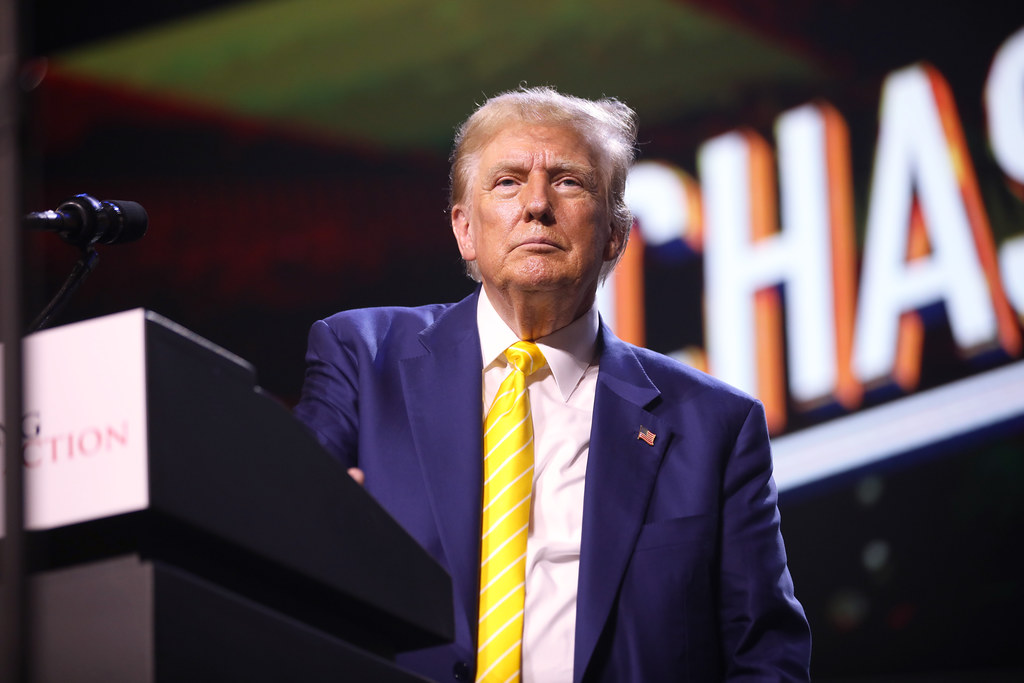
No analysis would be complete without mentioning the 2016 U.S. presidential campaign, in which Hillary Clinton and Donald Trump surpassed everything previously seen. It was the most toxic and horrifying campaign in America’s democratic history. Never before had candidates focused so heavily on their rivals and attacking them.
Clinton attacked Trump for chauvinism, racism, inconsistency, narrow-mindedness, incompetence, potential tax evasion…
“He has spent his entire campaign offering a dog-whistle message to his hateful supporters. He responds to tweets from white supremacists and spreads racially charged conspiracy theories. And believe me, it comes through loud and clear. Just a few days ago—please listen, because this has never happened with any other major-party candidate—Donald Trump was endorsed by the official newspaper of the Ku Klux Klan,” Clinton said near the end of the campaign.
Trump attacked Clinton over her use of unauthorized emails, her disastrous foreign policy as Secretary of State, her husband’s actions when he was president, her open immigration policies, free trade which “steals American jobs,” her soft stance on crime…
“I didn’t think I’d say this, but I will—although I hate to do it—but if I win, I will instruct my attorney general to appoint a special prosecutor to investigate your situation, because there has never been so many lies, so much deception—never anything like this. And we will have a special prosecutor,” Trump said to Clinton during a presidential debate regarding her use of a private server for emails.
Negativity – a universally accepted method
Negative campaigning has become a standard political tool around the world. Its moral justification is questionable, but it has political legitimacy. Still, there are negative campaigns that can be more or less distasteful. On the one hand, such campaigns can be useful because voters gain insight into the weaknesses and mistakes of candidates, as well as a possible outlook on events should they come to power. On the other hand, such campaigns are harmful because the topics of debates are not real-life issues, but personalities and their flaws. Social problems cannot be solved by denouncing candidates, but through reasoned discussion about concrete problems affecting citizens-voters.
Negative campaigns can be divided into two groups: those focused on political issues, and dirty campaigns focused on the candidate’s private life. The latter are never good. Technological development—especially the internet and smartphones—has enabled negative ads to be seen anywhere, making them highly influential on voter opinion. Therefore, it is to be expected that negative campaigns will continue in the future, especially after Trump and Clinton set new standards of negativity.
References:
Tomić, Z.: Politički marketing, Sveučilište u Mostaru, Mostar-Zagreb-Sarajevo, 2014.
http://edition.cnn.com/2012/01/02/opinion/lariscy-negative-ads/