By Bruno Rukavina
In a short analysis, the author takes a research-based look at the recently deceased Charlie Kirk and explains the importance of his work. After the recent tragic murder of Irina Zarutska, a young Ukrainian woman who came to the United States in search of a new life and what remained of what was once called the American dream (which had been incrementally disappearing over the past 24 years, starting from September 11, 2001), yesterday we witnessed the murder of one of the greatest names on the American conservative scene. In times of crisis, he stood up for truth and raised his voice primarily to invite people to dialogue, to break echo chambers/bubbles, and to listen to different views and arguments in order to build a national (American) community through communication (Communio – community). His method of action was above all Socratic, that is, to talk with everyone who found the courage to approach his microphone, just as Socrates walked through Athens and spoke with anyone willing to listen. Without delving into the biography of this Socrates of the 21st century, we will pause for a moment on the key ideological positions of Charlie Kirk.
Key Ideas of Kirk
As an American patriot, he primarily advocated the idea of American dominance and free markets, lower taxes and deregulation, and was critical of state interventions and certain (though not necessarily all) social programs—mainly because of their extremely poor implementation by the state apparatus (which, I believe, most of us can attest to; however, in the European continental context, there are no major tendencies toward deregulation and privatization, except perhaps in education and healthcare, which is a separate topic of research).
He opposed and was one of the loudest critics of woke ideology/culture, radical feminism, political correctness, and cancel culture (a modern form of ostracism). He championed traditional, family, Christian, and conservative values, strongly opposing abortion, same-sex marriage, and transgender rights. He also advocated a strict immigration policy, i.e., enforcement of American laws at the border, opposing illegal immigration which he argued threatens security, the economy, and American identity.
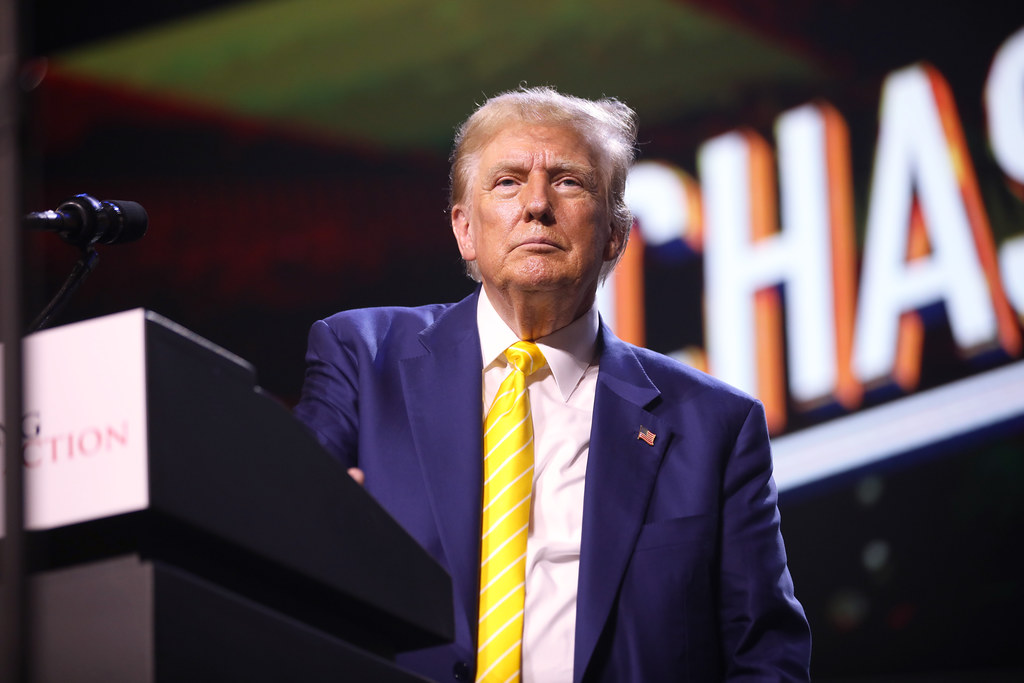
His foreign policy positions were realistic, in the spirit of Trump and America First, whom he supported, although he did not agree with him on all policies. In fact, he often emphasized during the 2024 campaign that around Trump had gathered a heterogeneous group of conservatives, liberals, libertarians (and people of other ideological positions) who did not agree on all issues, but believed that Donald Trump was the best choice for the United States compared to all Democratic candidates. Charlie Kirk was one of the most deserving figures for mobilizing young masses to vote for Donald Trump.
I would single out two terms that I was among the first in Croatia to try to explain scientifically and etymologically, and with which Charlie Kirk particularly wrestled: cancel culture and woke culture.
Cancel Culture
Cancel culture (or culture of exclusion/removal) refers to the practice or tendency of engaging in mass boycotting, isolating, or rejecting an idea, person, company, institution, state, or product as a way of expressing disapproval and social pressure. It is a process of ostracism, often carried out through social networks or public media, where calls are made to expel certain values, people, activities, products (through boycotts), states, and more from that culture.
It originated in protest movements in the U.S., such as the #MeToo movement, which fights for women’s rights to call out those who have harassed them in the past, and BLM (Black Lives Matter), a movement fighting against racism, discrimination, and inequality of the Black population.
Pippa Norris, a Harvard professor, argues that cancel culture is in a sense a double-edged sword—on one side, it gives a voice to marginalized groups, but on the other, there is a great danger of threatening freedom of speech, since there is always the risk of excluding someone who wishes to say something different but well-argued.
Furthermore, cancel culture leads to the erasure (or censorship) of certain figures and actors from the world of art and entertainment, such as Dr. Seuss books; J. K. Rowling, who disagrees with transgender ideology; the cartoon character Pepe, who within this culture has been recast as a rapist and abuser; and Captain Jack Sparrow from Pirates of the Caribbean, who was removed from the film franchise due to the trial of actor Johnny Depp, who portrayed him. That actor warned the world that this culture had spun out of control and that because of it, no one is safe. Some media outlets have even called this culture a new totalitarianism.
Besides the threat to freedom of speech—which is a particularly serious problem for the academic community, since we (as researchers) must be provocative and poke at the tissue we are studying in order to successfully test our hypotheses and arguments—there is also the danger of rejection instead of understanding, violent imposition of shame, herd effect, or emotionally driven masses led by irrationality. They share anger, rage, and frustration toward someone, which leads to the decline of a tolerant society, even as supporters of cancel culture demand tolerance for their own liberal manifestations.
Cancel culture destroys tolerance because tolerance means the existence of another, opposing view with which the individual does not agree, but still endures that view, that is, does nothing against it other than continuing the argument. People are becoming less tolerant because of cancel culture. It represents the opposite of Enlightenment, the foundation of modern society—especially Voltaire and his famous saying: “I disapprove of what you say, but I will defend to the death your right to say it.”
In 2022, Pope Francis also warned about the problem of cancel culture, describing it as “a form of ideological colonization, one that leaves no room for freedom of expression and that now takes the form of a cancel culture that invades many circles and public institutions.” Pope Francis condemned cancel culture and the “one-track thinking that seeks to deny or rewrite history according to today’s standards” (Pavlić & Rukavina, 2022: 13–14).
Woke Culture
Cancel culture is followed by woke culture, somewhat less known in Croatia, which refers to vigilance regarding issues of injustice in (primarily American/Anglo-Saxon) society, especially in cases of racism—“the act of being very pretentious about how much you care about a social issue.” The term itself is older and comes from African American vernacular.
However, today it has acquired a pejorative meaning, due to the so-called cult of social justice, which is closely tied to progressive left-wing socio-liberal policies, feminism, LGBT activism, racial equality issues, gender ideology, and the rights of marginalized groups.
What is problematic with this type of culture? Instead of opposing bad ideas or racial equality issues through discussion, debate, or protest, woke people aim to intimidate their opponents into silence. This goal is achieved through the tactics of exclusion under the banner of “hate speech” and by imposing progressive liberal ideologies on others, as well as destroying the reputation of anyone who holds different worldviews.
The relationship between hate speech and freedom of speech could be an interesting subject of future research, especially when studying woke culture and cancel culture.
Thus, cancel culture and woke culture go hand in hand and together are transforming society into a more progressive socio-liberal one, which underpins the profane (anti-foundationalist) ontologically alienated human being, and thereby pose a certain kind of challenge to today’s Judeo-Christian culture/civilization.
Hence, another interesting question for future works is whether there are in fact two civilizations under the single name “Western Civilization”: one ontologically foundationalist (to which the late Charlie Kirk belonged) and the other anti-foundationalist (Pavlić & Rukavina, 2022: 14–15)?
“To put it simply, the main question ontology seeks to answer is: does there exist a world out there that is independent of our knowledge of it? If the answer is positive, it is a fundamental/foundationalist (or essentialist) standpoint, meaning there is a world that is real and true, grounded in being. On the other hand, if the answer is negative, it is anti-foundationalism (or a kind of social constructivism), within which the world is socially constructed and there is no real, true world waiting to be discovered. The world is purely a product of our thoughts, feelings, and perceptions, and exists only in the reality within our own heads” (Rukavina, 2024a).
Charlie Kirk: A Life of Faith, A Legacy That Endures
Lack of Arguments = Path to Violence
Several points must be emphasized in this phase following Charlie’s tragic death. First of all, it is extremely sad and lamentable to see (once again) the recourse to violence in the absence of arguments—potentially (hypothetically, since at the time of writing this analysis the perpetrator is still being sought and the motives for the attack remain unknown) by a kind of extreme left, which has evolved into a Frankenstein ideology fusing certain elements of late 1990s liberalism and socialism with the British story of Giddens’s Third Way (the renewal of social democracy in the age of liberal globalization, after the fall of communism and the crisis of classical social democracy and neoliberalism). This synthesis attempted to discard ideological extremes under the motto “neither left nor right, but forward,” yet the result seems to be a new fused, totalizing liberal-social transhumanist extremism.
Every act of violence must be condemned as an unacceptable means in the political debates of a democratic society.
Just a few weeks ago, I warned precisely about the lack of debate, drawing inspiration primarily from the work of Charlie Kirk in the U.S., but also from John Mearsheimer. “In the Republic of Croatia over the last three years there has been almost no debate in a pro et contra format regarding the Russian-Ukrainian conflict, but also more generally in Croatian democratic society today there is hardly any platform on which one can hear debate and arguments from different perspectives on different issues. (The only exception might be the TV show Peti dan, though many arguments there are left unsaid for reasons unknown to the author, even though this show is perhaps the only one today that attempts to democratically open space to different viewpoints—aside from the many podcasts which are not debate-based but rather interviews with guests of various views and worldviews)” (Rukavina, 2025).
The only thing Charlie Kirk did was to encourage conversations (with utmost respect) with people he disagreed with. Therefore, Donald Trump rightly concluded in his address that the radical left has for years been comparing the conservative scene to Nazis and fascists, which is completely wrong and an intentional political labeling (conservatism and fascism/Nazism are, from a political science perspective, entirely different ideologies—first and foremost because fascism and Nazism are revolutionary ideologies, while conservatism is an Enlightenment-based anti-revolutionary ideology).
The motives for this crime will be determined in the days, weeks, or perhaps even months ahead. We hope his murder will be solved, that the perpetrator will be found, and that this case will not turn into another unresolved one like J. F. Kennedy’s. The address of the American president clearly underscores awareness of the dangers of demonizing political opponents—something I wrote about three years ago when the interstate Russian-Ukrainian conflict began (Rukavina, 2024), for whose swift resolution and peace Charlie Kirk himself advocated.
The ontological being of Christians dwells much more easily in a world where diplomats lose their tempers than in one where people lose their lives. Better a hundred years of diplomatic squabbling than one minute of war. And therefore, the senselessness of the Russian-Ukrainian conflict must be ended with peace (or a ceasefire) immediately, even though many malicious and tendentious people may regard such a solution at this moment as “meaningless.”
In order for (so far unsuccessful) reasoned and rational diplomacy to halt warfare, diplomats must be encouraged, activated, and made aware that the struggle is not against some evil or phantasmal forces, but against people who are the same as us, with their own interests and desires. Precisely because we are the same, it is necessary to sit down at the table and talk, at least to attempt to understand the other side—even if, at the moment, it is unimaginable and impossible to forgive all the atrocities that have been irreversibly committed.
The senselessness of war lies in the argument that war does not prove who is right, but only who will remain alive. And if we do not end this war, there is a fear of the (nuclear) possibility that it will end humanity as we know it (Rukavina, 2023). “Therefore let us pursue what makes for peace and for mutual upbuilding” (Romans 14:19).
The Rise of Assassination as a Political Tool
In the past 13 months in the liberal democratic West (member states of the Euro-Atlantic integrations: EU and NATO), we have witnessed several attempted political assassinations: the unsuccessful attempts on Donald Trump and Robert Fico, and the most recent, tragically successful one on Charlie Kirk. What all three had in common was their opposition to globalist liberal post–Cold War structures, their low level of trust in multilateralism, skepticism toward Western liberal military “humanitarian” interventions, and opposition to further military aid to Ukraine, calling instead for an agreement with Russia and an end to the conflict. Of course, these positions are not necessarily the motives for the murders (or attempted murders), but rather some of the political-ideological points of overlap among those against whom violence has been exercised.
This then raises the question: how can one be tolerant (the conservative right) toward those who are intolerant (the totalized liberal-social left) toward others, when the intolerant ones themselves initially usurp the term and concept of “tolerance,” perhaps precisely by inversion—presenting themselves as what they are not? The true face of tolerance in the world is Charlie Kirk, according to the scientific and etymological definition of the word tolerance, which means “to endure.” He openly endured disagreements, opening himself up to dialogue with American citizens and always fought to preserve their right to free speech. Let us repeat, tolerance can best be described in the words of Voltaire: “I disapprove of what you say, but I will defend to the death your right to say it.”
Charlie Kirk’s gift of speech and debate was violently taken from him—conversations always marked by deep respect toward those he spoke with, sincerely believing that they too were children of God, as he bore witness to his faith and said he wished to be remembered by it. We do not need to agree—which is, of course, democratic—but neither do we need to kill and attack simply because we hold different views of the world.
Dialogue – Kirk’s Most Important Legacy
The U.S. faces serious challenges ahead, above all domestic political ones it will have to confront. A special analysis would be required regarding the possibility of a new civil war in the U.S.—something that (unfortunately) many are already writing about, and which was even depicted last year in the film Civil War (2024), in which (spoiler alert) the assassination of the U.S. president is shown. Entering this discourse and narrative, as well as its appearance in popular culture, constructs—according to constructivist international relations theory—the image of a potential future.
At present, most conservative actors in the U.S., as well as Kirk’s close and regular collaborators, are expressing grief, support, and rejection of violence. Perhaps his death will become a factor of reconciliation for America’s antagonized divisions, making him a symbol of U.S. unity, or of resistance to the radicalization and totalitarianization of post–Cold War liberalism through transhumanism—advocating instead for further dialogue and communication, a sort of Kirkisation: a process of open dialogue with political opponents through debates and the confrontation of different opinions and arguments on key social and political questions.
This is the legacy of Charlie Kirk—the idea that genuine dialogue is both the guarantee of democracy and the path toward reconciliation.
What the world does not need is yet another conflict, but rather a path toward peace and prosperity, ending all open conflicts (ideally in a cold, rational, pragmatic, diplomatic–realpolitik manner by establishing a balance of power among the great powers), with peacemakers like Charlie Kirk. “Blessed are the peacemakers, for they shall be called children of God” (Matthew 5:9).
Paying Tribute
In conclusion, and in accordance with the messages and Christian activity that the deceased lived by, how can we pay tribute to Charlie Kirk?
Personally, I can point to three examples:
- Fight for the truth, regardless of how many in the world say you are wrong. If you know something is true, if you have evidence and arguments on your side, and are guided by reason and spirit—who can stand in your way? Even if your life is taken, as Charlie’s was, your words will continue to live on, as his do. As the popular song Happy Nation by the Swedish band Ace of Base says: a man will die, but not his ideas.
- Open and encourage dialogue, communication, and debate, just as Charlie Kirk did, never losing sight of the fact that across from us are human beings—children of God—with their own views, experiences, needs, and desires that are in many ways the same as ours. The goal of the assassination may have been, at a political level, to close dialogue in that format; therefore, what is needed is precisely the opposite—more Kirkisation.
- Prayer, meritocracy, entrepreneurship, and working on your own successful existence within your communities (with the family as the foundation).
Political opponents (and the assassin) may have rid themselves of one Charlie Kirk, but they may gain thousands more, because his death proved that in many ways he was right, and in his search and eternal dialogue for truth he inspired and motivated many.
Charlie Kirk, through his life, bore witness to the strength of faith, family, and country. He was the voice of the young, a defender of freedom and Christian values, a hero of our time. He will be remembered not only for his words, meritocracy, and fight for truth, but also for the courage with which he lived his convictions. May the Lord receive his soul, and may his example be a beacon for future generations.
Political scientist Bruno Rukavina is a specialist in foreign policy and diplomacy and a doctoral candidate at the Faculty of Political Science, University of Zagreb.
Pavlić, Richard and Rukavina, Bruno (2022) Relativization of the Sacred in Contemporary (Non) Culture. Riječki teološki časopis 51(1): 5–27. Available at: https://hrcak.srce.hr/clanak/426385
Rukavina, Bruno (2023) The Meaninglessness of the War Between the Russian Federation and Ukraine. Mi portal. Available at: https://miportal.hr/2023/01/03/besmisao-rata-izmedu-ruske-federacije-i-ukrajine/
Rukavina, Bruno (2024) Foreign Policy of the Russian Federation and the Conflict in Eastern Ukraine (2014–2022). Specialist thesis, Faculty of Political Science – University of Zagreb. Available at: https://repozitorij.fpzg.unizg.hr/islandora/object/fpzg:2538
Rukavina, Bruno (2024a) Prayer Protesters vs. Counter-Protesters – The Peak of Croatian Democracy. Mi portal. Available at: https://miportal.hr/2024/01/06/molitelji-vs-kontraprosvjednici-vrhunac-hrvatske-demokracije/
Rukavina, Bruno (2025) Bismarck Knew the Answer: ‘The Secret of Success in Politics? A Good Deal with Russia.’ Geopolitika News. Available at: https://www.geopolitika.news/analize/bismarck-je-znao-odgovor-tajna-uspjeha-u-politici-dobar-dogovor-s-rusijom/