The times we live in are anything but boring. On the global political stage, a conflict is unfolding between the West (USA, EU) and the East (Russia, China), while the Southeast European region is shaken by numerous turbulences. Serbia and Bosnia and Herzegovina are experiencing political instability that threatens to trigger an “explosion” of the Balkan powder keg. We discussed these dangerous political trends with Croatian journalist, foreign policy analyst, writer, and publicist Davor Dijanović.
How do you view the current state of world politics? On one hand, it seems the war in Ukraine is heading toward its end, which could result in a thawing of relations between the West and Russia; on the other hand, the U.S.–China trade war is intensifying.
A new development is that negotiations between the Ukrainian and Russian sides were held after three years. Throughout this time, there was no direct strategic dialogue between the warring sides. I think it’s more accurate to say that we might see a thaw in relations between the United States (USA) and Russia. It seems that the European Union (EU) is ready to continue supporting the war in Ukraine, even if Washington completely withdraws. On the other hand, if Ukraine failed to regain territories with American help, it will be even less able to do so if the U.S. truly pulls out.
True, the EU has announced a major rearmament and continued support for Ukraine, but a bureaucratic decision is one thing, and reality is quite another. That will take quite a bit of time. Every war eventually ends at the negotiating table or in the form of some kind of frozen conflict—the only question is, after how many casualties? I would like Ukraine to regain its territories, but I’m afraid that is completely unrealistic. The history of Europe is a history of rotten compromises and territorial concessions. We Croats know this all too well, whether we’re talking about the London Pact of 1915 or the willingness of some Western countries to recognize Serbia’s claim to parts of Croatian territory in the 1990s. I fear that Ukraine will ultimately pay the highest price.
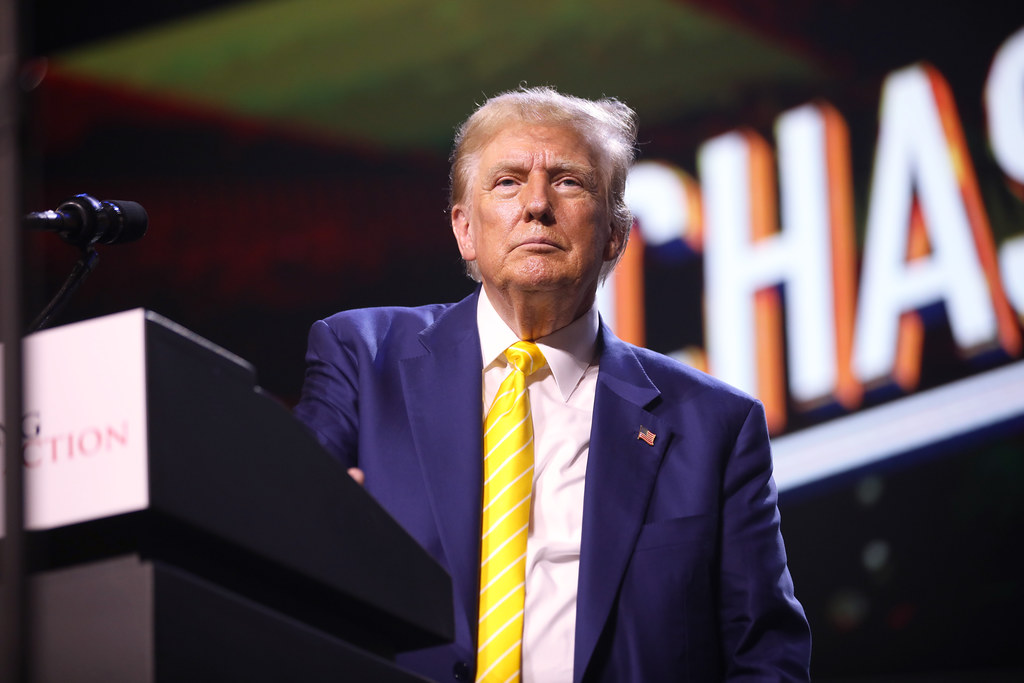
The U.S.–China trade war is just one aspect of the broader U.S.–China rivalry that will decisively shape international relations in the 21st century. There’s also the technological war, the arms race (Mark Rutte recently said that the rise of China’s military is “astonishing”), and potential flashpoints around Taiwan as well as in the South China Sea and East China Sea. Trump wants a kind of reverse Nixon-Kissinger maneuver by moving closer to Russia. If he can’t drive a wedge between Russia and China, he at least wants to prevent their unified anti-American stance—a scenario that Zbigniew Brzezinski identified as potentially the most dangerous in The Grand Chessboard.
There has been a shift in the geopolitical paradigm. While in the past, in Mackinderian terms, Eastern Europe was considered key to controlling the world, today that focus has moved to the Asia-Pacific region, where the center of global power is now located. Trump is aware of this and therefore identifies China as the main rival.
Can we use the term Cold War 2.0 for the current geopolitical situation?
I believe we can talk about a new Cold War—as I wrote in an academic paper as far back as six years ago—starting with Putin’s Munich speech in 2007. The war in Ukraine has only intensified it. This conflict is unfolding on political, diplomatic, intelligence, media-propaganda, military, and energy fronts. The new confrontation includes new proxy wars, and the differentia specifica of this new Cold War is the existence of a third global actor, the People’s Republic of China, which in recent years has been building a strategic alliance with Russia. Let’s hope this cold war does not become a hot war. After Donald Trump’s election as U.S. president, the likelihood of such a war has decreased.
– Can Donald Trump significantly change American foreign policy? Anyone familiar with history knows there is continuity in U.S. policy despite changes in ruling administrations. How realistic is it to expect a radical shift toward isolationism, unilateralism, and weakening of multilateral organizations such as NATO, the UN, the WTO, and the G7?
Continuity does exist, but the United States has at various times in history pursued isolationist policies, which, during periods when the global economic model of free markets wasn’t dominant, often brought economic benefits. There is no doubt that the election of Donald Trump as U.S. president further exacerbated the crisis of multilateralism—a crisis that was already simmering before his election and began with the 2008 economic crisis and the rise of China.
Trump’s policy is encapsulated in the slogan “America First.” This approach puts Trump at odds with the most important strategic partner of the U.S.—the European Union. Already during his first term, Trump withdrew from numerous multilateral arrangements and showed a preference for bilateral relations. He pulled out of the Paris Climate Agreement, the Iran Nuclear Deal, the UN Human Rights Council, initiated the process of withdrawal from the World Health Organization during the COVID-19 crisis, exited the Open Skies Treaty, and left the Intermediate-Range Nuclear Forces (INF) Treaty.
I would argue that Trump will not lead a policy of radical isolationism, and that under his leadership, America will remain involved in international affairs to the extent he deems beneficial for American interests. I believe he will avoid meaningless wars (which already represents a degree of discontinuity from previous administrations), and that the U.S. will stop acting as the world’s policeman. Instead, it seems we are returning to the foundations of classical imperialism, as seen in Trump’s (at least verbal) aspirations regarding Greenland, Panama, and Canada.
– If the U.S. adopts a more isolationist stance, can BRICS countries fill the vacuum and rise more prominently on the global stage?
The era of unilateralism, established after the fall of the Berlin Wall when there was only one “superpower,” is undoubtedly over. A multipolar world is emerging in which, as Emmanuel Macron once acknowledged, Western power is in decline. Logically, this leads to the strengthening of the East. As I’ve already mentioned, the center of global power is shifting to the Asia-Pacific region, and we’re witnessing attempts at economic and political emancipation by so-called Global South countries.
BRICS nations have long been showing a tendency to create financial and other alternatives to Western institutions. Given the large populations of these countries, it’s realistic to expect BRICS to gain more influence. On the other hand, the U.S. has repeatedly demonstrated its enormous capacity for political, economic, military, and intellectual mobilization, so I wouldn’t, like some analysts, write off what is still the most powerful country in the world.
In any case, competition in international relations will grow, which could be beneficial as it prevents the dominance of a single power—but clearly, it also means friction and potential wars. We are living in a time of disintegration of the existing international order. The old order is dying, and the new one has yet to be born. These are the most dangerous periods in history.
– Let’s turn to the regional context. What’s your take on the unstable situation in Serbia (student protests) and Bosnia and Herzegovina (Milorad Dodik’s sentencing)?
The so-called “Serbian World” is just a rebranded name for “Greater Serbia.” The geopolitics and ideology of the Serbian World still aspire to control other nations’ territories. Now-former Serbian Prime Minister Miloš Vučević took part in a video shoot in February last year where the flag of the so-called Republic of Serbian Krajina was prominently displayed. A propaganda war against Croatia is being waged daily in Serbian media. They lay claim to the Croatian language and literature, and they are erasing the identities of Croats like the Bunjevci and Šokci in Serbia. Serbia’s key geopolitical strategist, Dr. Milomir Stepić, has drafted a plan for redrawing borders in the region, including parts of Croatia. This plan may seem unrealistic now, but everything depends on the balance of power. Serbia is counting on the weakening of the West and the emergence of a post-American order dominated by Eurasian powers. It sees this as an opportunity to pursue its territorial aspirations.
In Croatian media, the protesters in Serbia—especially students—are often praised as representing a pro-Western Serbia. To begin with, that’s simply not true. The protests are dominated by nationalist iconography. But for Croatia, it makes no difference whether so-called pro-Western or pro-Russian politicians are in power in Serbia. Even Draža Mihailović was a pro-Western (British-backed) figure, yet, as we can agree, he brought no benefit to the Croatian people. The same goes for someone like Boris Tadić, who once gifted then-president Ivo Josipović the magazine Zenit in Vukovar—an edition whose editor, Ljubomir Micić, described Croatian culture as the “illegitimate child of an unnatural marriage between a trained monkey and a parrot.” Unfortunately, in Serbia, the ideology of Greater Serbia is so mainstream that most citizens don’t even recognize it as such—they see it as something self-evident.
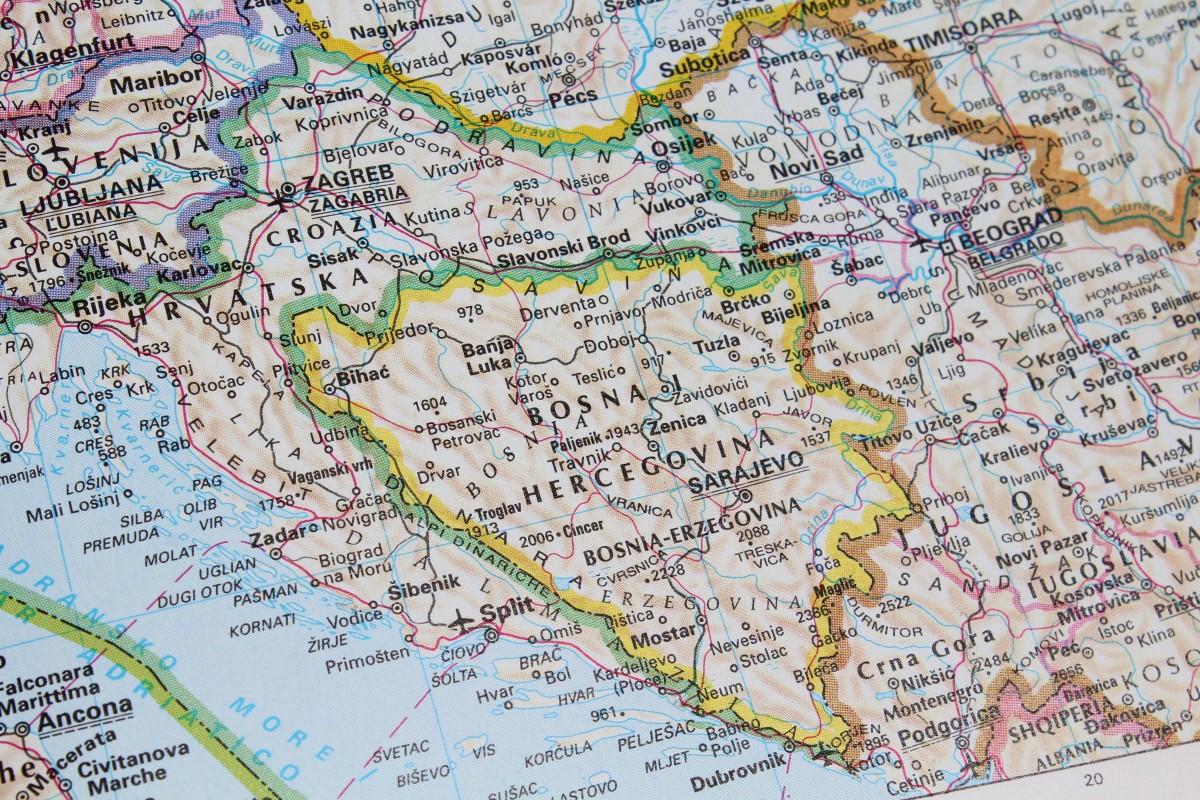
As for Bosnia and Herzegovina, the sentencing of Milorad Dodik only further inflames interethnic tensions. The country still faces the same unresolved issues it did 30 years ago when the Dayton Agreement was signed. Dodik is waiting for “better circumstances” and would gladly separate the so-called Republika Srpska. That isn’t realistic at the moment, but it could become so in the event of a total collapse of the international order and a new division of spheres of influence.
The problem isn’t just Dodik—it’s also the Bosniak nationalist policy, which first aims to fully convert the Federation of BiH into a Bosniak entity, turning Croats into a national minority, and then take control over the entire country. Croats in BiH are in the worst position, caught in a Procrustean bed between Serbian separatism and Bosniak unitarism.
– Do you believe serious unrest or conflicts, i.e., revolutions, are possible in Serbia, Kosovo, or Bosnia and Herzegovina?
At the moment, I don’t see such possibilities. What’s possible are low-intensity conflicts — for example, if there were an attempt to arrest Dodik or new incidents in northern Kosovo. The greatest potential for unrest lies in the transition of political power in Serbia, which must happen sooner or later. We know that in Serbia such transitions have often been accompanied by political assassinations and violence. Aleksandar Vučić has created a political monster, and the question is how political relations will unfold in the coming months and years.
– Why do you think a third (Croatian) entity is the solution for BiH? To me, that seems like a very controversial proposal (at least at first glance). For example, the Catholic Church in Croatia and Bosnia, as well as the Vatican, have never supported such a solution, which has been proposed for about thirty years.
There are other administrative solutions that could ensure equality and the rights of all three peoples. I believe that the external borders of Bosnia and Herzegovina should remain, as well as the status of the constituent peoples, but everything else should be built from scratch based on federalism. Internal administrative units could be cantons, provinces, districts, or counties, with either a monoethnic or multiethnic character. A national veto should be introduced in institutions such as the state government and parliament, or perhaps a council of peoples. Such a concept would be welcomed by Croats, but its rejection by Serb and Bosniak nationalists would expose their true intentions.
It is not normal for a country with three constituent peoples to be divided into two entities, one of which is Serb and the other de facto Bosniak. Three peoples and two entities is a recipe for dysfunction and instability. Your proposals are worth considering, but neither the Serb nor the Bosniak side would accept them. Their intentions have been known for a long time. We must raise the stakes and abandon minimalist concepts.
It is true that the idea of a third entity is rejected by all international actors, but the same was true in 1989 regarding the possibility of creating an independent Croatian state. The Croatian political factor must first have a clear goal and a well-developed strategy and must lobby on all relevant international fronts. One must strongly desire something in order to achieve it. There is no alternative.
Croatian identity in Bosnia and Herzegovina has been losing political, cultural, and demographic vitality for over thirty years. Continuing the current policies — which deny Croats the basic right to elect their own political representatives — will reduce Croatian presence to just a few enclaves in western Herzegovina. The formation of a third entity or some other form of political autonomy represents a matter of existential survival for Croats in Bosnia and Herzegovina. Of course, for such a project to be realistic, it must receive clear, unequivocal, and committed support from the Croatian state. Without that, the concept is unrealistic.
– Can Croatia become a geopolitically significant player? In my opinion, today Croatia is just a puppet of the EU and NATO that decides nothing on its own. However, practice shows that small countries such as Israel, Cuba, or the UAE can be independent and influential despite having small populations and territory.
I often say that if we can’t have a whole fist of sovereignty, we should at least have one finger. However, it seems that political structures are striving not to even have that one finger. Croatian politics mostly consists of carrying out Brussels’ demands, which sometimes are — but often are not — in Croatia’s national interest. We are a small country with a small population, but given Croatia’s transport and geopolitical position, it should have a more significant role in international affairs. That would require more statesmanship and a sovereignist attitude. We are a young country, lacking experience in statecraft and authentic political elites. I believe that over time, the situation will improve. The biggest problem is that Croatia, like all of Europe, is losing the demographic battle. A major population replacement is underway. Without the return of a culture of life, neither Croatia nor Europe has a future.
Interview conducted by Matija Šerić.