By Ivo Kokić
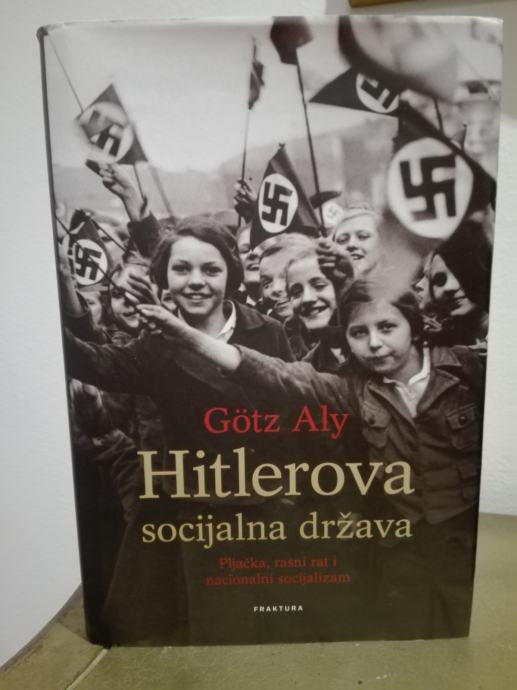
Dr. Götz Aly is a German historian and political scientist with a particular interest in the Nazi period, about which he has written numerous books. One of them, “Hitler’s Beneficiaries”, explores the economic policy of Nazi Germany. In it, the author examines—through a markedly different perspective—the impact of financial doctrines on the military and political processes of one of the most significant periods in history. This topic is intellectually relevant because, alongside the emphasis on nationalism, the socialist dimension of National Socialism is often overlooked. This work serves as an example of redefining that perspective. Its distinctive approach makes it stand out from most books dealing with this historical era. The central research problem of the book lies in contextualizing how Hitler’s fiscal policy toward occupied territories affected the economic situation in Germany.
Analytical Framework
Aly builds his key arguments on a wide range of sources: archival photographs, reports from foundations, subsidy tables, wage tax analyses, data on food supply, banking records (particularly regarding gold transfers), and calculations of German wartime revenues.
Structure of the Book
Although HITLER’S BENEFICIARIES / Plunder, Racial War, and the Nazi Welfare State (Zaprešić: Fraktura, 2012, 496 pages) appears chronologically structured, the impression is that the author prioritizes thematic organization over strict temporal sequencing. The book consists of an editor’s note, a foreword, four main chapters (each divided into sub-sections), a response to criticism, currency conversion tables, abbreviations and explanations, notes, bibliography, and an index.
Nazi Rise Rooted in Post-WWI Discontent
In the first chapter, Aly highlights the grand promises of a better life promoted by high-ranking members of the Nazi Party. He convincingly argues that the rise of the NSDAP can be understood through the lens of frustration caused by Germany’s defeat and crisis after World War I. He insightfully identifies the desire among many Germans for a system in which the state would genuinely belong to the people. The dictatorship that followed Adolf Hitler’s rise to power is presented not as a popular desire for total control, but as a mechanism through which the state would correct social inequalities through increased intervention.
However, one may argue that Aly could have engaged more deeply in theoretical debates on the economic foundations of National Socialism—such as contrasting the views of Gregor Strasser with classical economic theories. Similarly, references to earlier thinkers like Thomas Hobbes and his concept of the social contract could have been further elaborated.
Economic Relations with Occupied Europe
The second chapter examines the relationship between the German population and looted goods, as well as Germany’s treatment of occupied Western and Eastern European countries. Aly demonstrates that the core issue lay in excessive state spending—not only on wages but also on various benefits provided to citizens. While purchasing power increased, the supply of goods did not keep pace, leading to the expansion of black markets.
The key argument emerges here: Germany’s revenues were significantly supplemented not by domestic sources, but by exploitation of occupied territories. For example, Belgium’s fiscal contributions dramatically increased after occupation. Meanwhile, Eastern Europe was treated far more brutally—illustrated by the creation of a separate currency in occupied Ukraine and the widespread misappropriation of resources by Wehrmacht soldiers.
Germans as Both Beneficiaries and Victims
Although Aly presents Germans as beneficiaries of plunder, the review suggests that he may have overstated this claim. While looted wealth did support the Reich’s budget, it is important to note that the German population was also subject to heavy taxation, strict regulation, and state control—factors that limited economic freedom.
Exploitation of Jewish Property
The third chapter focuses on the economic dimension of anti-Jewish policies. The process of “Aryanization” extended beyond Germany, benefiting not only state officials but also private individuals who profited from confiscated Jewish property. The role of the Wehrmacht is highlighted as both a facilitator and justification for such actions across Europe.
Collaboration and Local Dynamics
Aly also examines collaboration between occupiers and local populations, citing examples from Greece and other regions. In some cases, local actors directly benefited from confiscated property, while German forces extracted monetary value.
Terror for Profit
In the fourth chapter, Aly introduces a controversial perspective: framing the Holocaust partly as a financially motivated enterprise. He argues that material gain was a significant driver behind Nazi policies, although this claim remains debatable.
“Silent Debt” Mechanism
A particularly striking concept is “silent debt,” whereby the Nazi government temporarily used citizens’ bank deposits without their knowledge. Aly suggests that even before the invasion of Poland, Germany’s financial situation was unsustainable without external plunder.
Critical Reflection
While Aly presents a compelling and well-documented argument, the claim that material profit was the primary reason for the lack of resistance among Germans is questionable. Other factors—such as fear, propaganda, and gradual totalitarian consolidation—played crucial roles.
Conclusion
Ultimately, the book demonstrates that the financial exploitation of occupied territories was central to sustaining the Nazi state. Germany’s apparent economic success was largely an illusion, dependent on continuous expansion and plunder.
Despite some shortcomings—such as limited engagement with free-market critiques by thinkers like Friedrich Hayek and Ludwig von Mises—this work remains a highly valuable contribution. It serves as a warning that economic systems reliant on external extraction are fundamentally unsustainable, whether in the context of wartime empires or modern states dependent on foreign aid.