By Matija Šerić
Biogas
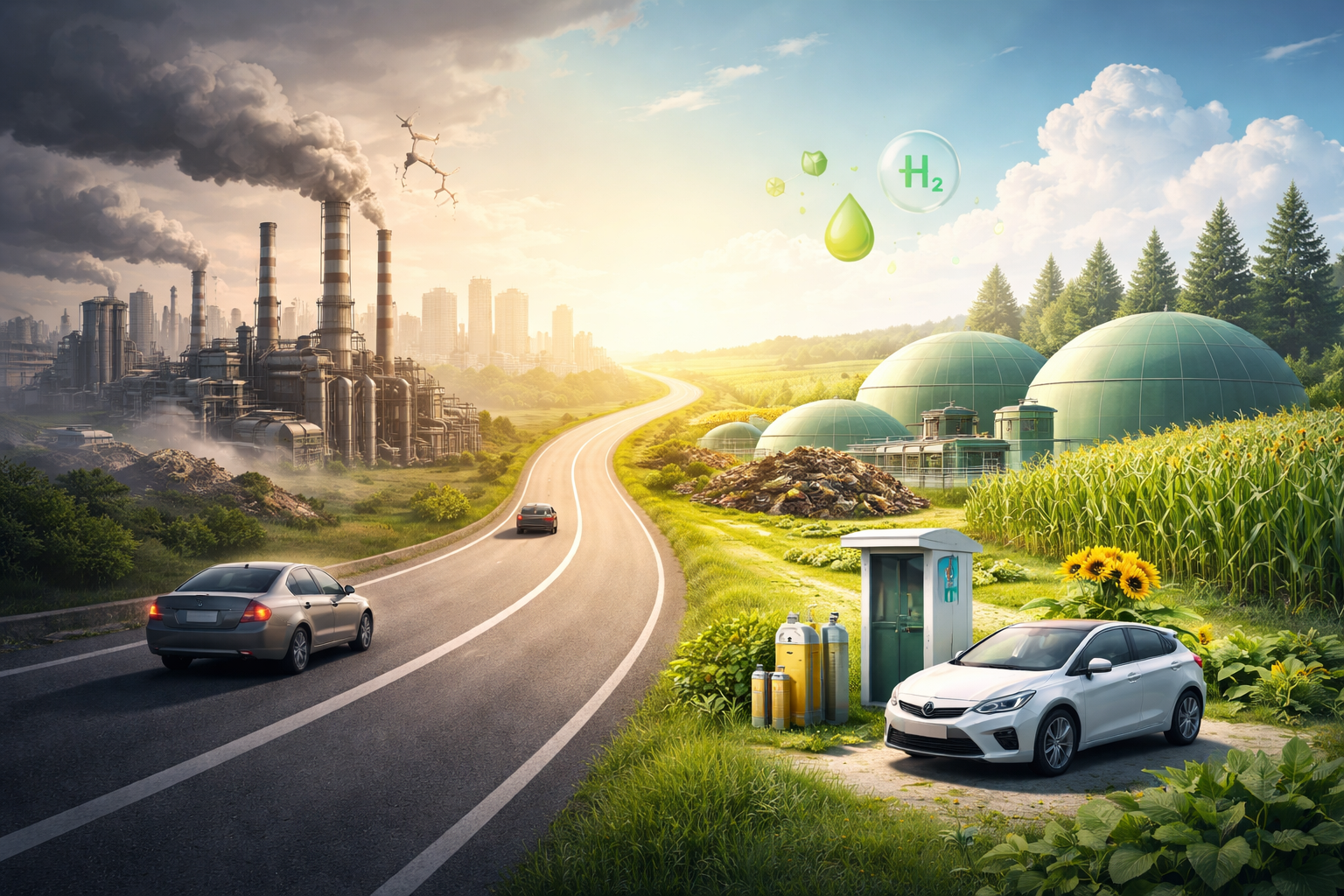
Biogas is a gaseous fuel produced from biomass, i.e. from the biodegradable portion of waste, which can be purified to the quality of natural gas in order to be used as a biofuel. Biogas is considered a renewable energy source and represents a gaseous fuel obtained through anaerobic fermentation (without the presence of oxygen), i.e. the decomposition of organic matter (farm bio-waste, municipal bio-waste, sewage sludge, residues from the food industry, etc.). The smallest share of biogas is obtained from industrial waste, while the energy yield is approximately equal from agricultural waste and landfill waste.
Hydrogen
Hydrogen can be used as a fuel in two ways: by combustion in internal combustion engines or as a fuel for fuel cells that generate electricity and thus power electric motors in vehicles. The main challenges with hydrogen are storage, as well as the requirements for cooling and sealing. Concept hydrogen-powered vehicles can achieve a range of up to 700 km. Hydrogen is certainly the cleanest fuel in terms of harmful emissions, as it produces none—the only byproduct is water vapor. However, challenges remain: high vehicle costs and a lack of infrastructure for hydrogen production and refueling.
Alcohols
Alcohols as alternative fuels for road motor vehicles have been the subject of numerous studies from technical, economic, and environmental perspectives. From an economic standpoint, methanol (a type of alcohol) has many advantages as an alternative fuel. Ethanol can be used in internal combustion engines either independently or as an additive blended with gasoline. Air pollution is reduced by mixing gasoline and ethanol in different ratios. The advantage of ethanol lies in its origin—it is potentially a sustainable energy source because it is produced from crops such as sugarcane or corn.
The most important example is Brazil, which has developed a vehicle fuel strategy based on alternative fuels and is considered the most successful alternative fuel project in the world. Brazil produces its bioethanol from sugarcane. Brazilian manufacturers produce vehicles that can run on gasoline or alcohol, enabling a sustainable transport system that is less dependent on oil imports.
Brazil is able to cultivate large quantities of sugarcane due to its vast territory and extensive agricultural land. As early as 1976, Brazil introduced mandatory use of blended fuels in vehicles, and today gasoline and alcohol are available at nearly every fuel station. In more than 90% of light vehicles in Brazil, drivers can use pure alcohol, pure gasoline, or standard blends such as E25 or E20, which contain 25% or 20% alcohol respectively. The price of alcohol at fuel stations is approximately half the price of gasoline.
Biodiesel
Biodiesel shares similarities with alcohol-based fuels, as it is produced from vegetable oils derived from crops such as sunflower, rapeseed, or soybeans. Biodiesel is a fuel obtained from biological sources and can be used in unmodified diesel engines as a substitute for conventional diesel fuel. Additionally, many modern engines can use pure biodiesel without negative consequences. Its cleaner combustion compared to traditional diesel is due to its higher oxygen content. There are many reasons for using biodiesel: reduced environmental pollution, up to 50% cleaner exhaust emissions, lower carbon dioxide levels, and reduced fuel costs. It also decreases wear on high-pressure pumps and extends engine lifespan.
Conclusion
The highlighted characteristics of all alternative fuels are highly promising and generally acceptable to the majority of the population. Therefore, it is reasonable to ask whether liquefied petroleum gas, biogas, biodiesel, and other fuels will replace gasoline and diesel. Unfortunately, this will not happen in the near future. The automotive industry is closely tied to the oil industry, and it is in the interest of both sectors to continue using conventional fuels for as long as possible. It is more profitable for the automotive industry to produce more expensive gasoline-powered engines than to transition to alternative fuel vehicles.
The widespread adoption of alternative fuels will begin only when political, industrial, and economic elites decide so. Alternative fuels will cease to be “alternative” when centers of power make that decision. Unfortunately, such a decision will not be driven by environmental or public health concerns, but by profit. This is a harsh reality that must be acknowledged, while still hoping for positive progress.