By Matija Šerić
The Chinese National Bureau of Statistics has just released the economic report of the People’s Republic of China for July. The results are more than positive. It can be stated that the Chinese economy continues to grow despite the challenges posed by the global economy in 2025. China’s industrial production (manufacturing, energy sector, and mining) in July increased by a significant 5.7% compared to the same period last year and by 0.38% compared to June. The main drivers of industrial growth were the equipment manufacturing and high-tech sectors, which recorded growth of 8.4% and 9.3%, respectively.
Consumers and investments – drivers of development
Retail sales, often taken as the main indicator of consumer habits, were 3.7% higher in July compared to the same month last year, a slightly weaker result compared to the 4.8% growth in June. Infrastructure investments rose by 1.6% in the first half of the current year, which is somewhat slower growth compared to 2.8% recorded in the first half of 2024. The urban unemployment rate was 5.2% in July.
A vibrant economy
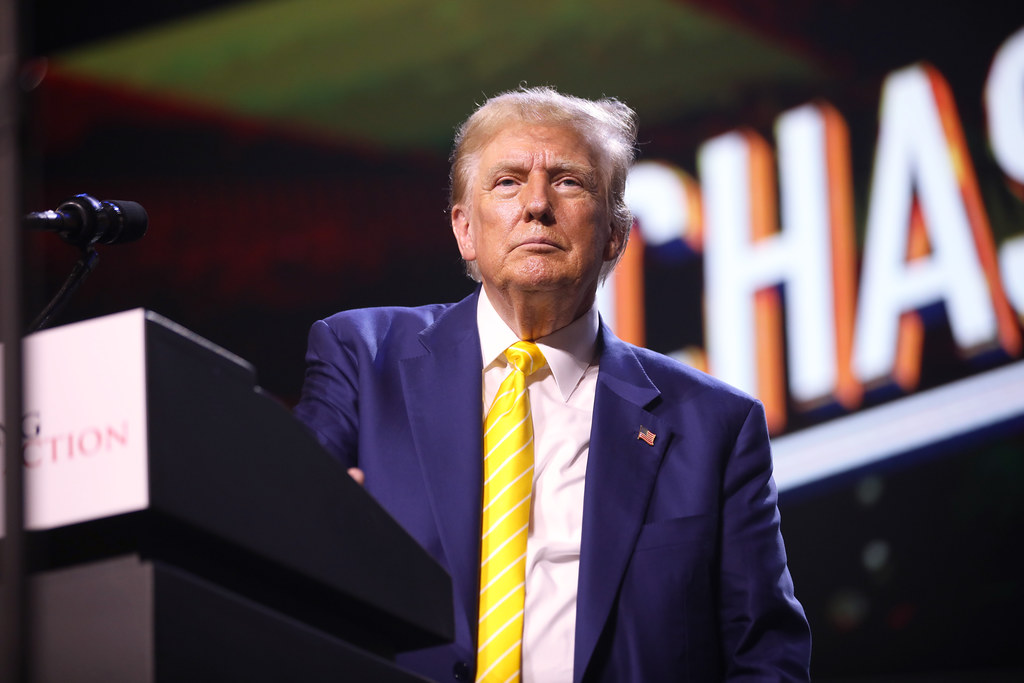
Statistical data clearly show that despite major instabilities and fluctuations in global markets and the negative impact of adverse weather conditions in China, the Chinese economy remains vital, dynamic, and maintains steady momentum. Global market instabilities are primarily the result of Trump’s tariffs, implemented according to his “America First” foreign policy agenda. The US–China trade war peaked in April when Washington imposed 145% tariffs on Chinese goods, and Beijing retaliated by raising tariffs on American goods to 125%.
US-China trade war explained
Trump hits with tariffs, but China wins in the long run
Trump had to back down a few months later after executives of leading American retail companies warned him that further escalation would lead to drastic price increases and shortages of consumer goods. There was a real threat that basic food products (soybeans, pork, rice, beer, and milk) and everyday necessities (clothing, footwear, computers, furniture…) would disappear from American supermarket shelves. In May, tariffs were temporarily reduced from 145% to 30% (Chinese goods in the US) and from 125% to 10% (American goods in China) for 90 days.
On July 29, the two countries agreed to extend the tariff pause for another 90 days while adhering to the stated rates. The final agreement on tariffs is expected to be reached at a summit between Presidents Xi Jinping and Donald Trump. This naturally favors the Chinese economy. The Chinese economy is less dependent on American goods than the US is on Chinese goods. This is a factor that supports China’s current economic growth.
Climate change puts China to a major test
In June and July 2025, China was hit by extremely severe weather, including record heat, heavy rains, floods, and droughts. In June, China experienced Tropical Cyclone Wutip and a tropical depression, causing floods, landslides, and evacuations. In Guizhou, rivers overflowed into cities, destroying infrastructure and causing significant damage.
In July, China recorded the highest electricity consumption in its history, exceeding 1.5 billion kilowatts due to heat waves affecting almost the entire country. Temperatures in some areas reached up to 46°C.
During the same month, heavy rains caused floods in northeastern and southern provinces, including Beijing and Hebei. Beijing recorded the heaviest rainfall in decades. At least 38 people died, and more than 80,000 were evacuated. In some provinces, such as Henan and Shandong, a combination of drought and floods negatively affected agricultural production.
China’s Biggest Megaprojects Completing in 2025
Socialism with Chinese characteristics works
Despite extreme weather—consequences of climate change—the Chinese economy continues to move forward like a ship sailing safely through a storm. Strong domestic demand, strategic state investments (in line with the model of Socialism with Chinese characteristics, i.e., state capitalism), and rapid industrial adaptation allow the Chinese to overcome agricultural losses and supply chain disruptions. The technological and service sectors act as engines of development, ensuring stable and dynamic growth even when nature is hostile.
The “Chinese Dragon” shows its strength
The Chinese National Bureau of Statistics, in its report, confirmed the commitment to the effective implementation of policies aimed at maintaining stability in employment, business activity, markets, and expectations. And in this, the Chinese are successful. Their economy is an economy of a “rising dragon,” driven by a combination of innovation, industrial strength, and strategic investments. This is why it is highly resilient to crises. China is capable of simultaneously maintaining growth, promoting technology, and asserting its global influence. Formally, China has the world’s second-largest economy, but in reality, it is the world’s number one economic superpower. This is something that irks many in the West, even though Western countries contributed to China’s economic rise about half a century ago.