By Ivan Toth
Operation Market Garden began shortly before midnight on Saturday, 16 September 1944, when 200 Lancaster bombers and 23 Mosquito fighter-bombers from RAF command took off and bombed four German airfields in northern Netherlands. This was followed by bombing by 822 B-17 bombers (“Flying Fortresses”) from the 8th Air Force, targeting 117 identified anti-aircraft positions along the route through which troop movements were planned, as well as airfields near Eindhoven, Deelen, and Ede. They were supported by 54 Lancaster bombers and 5 Mosquito fighters, while another 85 Lancasters and 15 Mosquitos attacked the island of Walcheren. Allied losses were minimal, and the Germans treated the attacks as “routine” since the Allies held air superiority.
Allied landings
Sunday, 17 September dawned sunny and clear. Airborne troops boarded their aircraft towing gliders, and the first planes took off around 09:30, with C-47 Dakotas following shortly after. The 101st Airborne Division entered the southern route into the Netherlands, while the 82nd and 1st Airborne Divisions landed along the northern route. The two air formations stretched 150 kilometers in length and 5 kilometers in width. In total, there were 1,051 transport aircraft carrying troops and 516 gliders and towing aircraft (a total of 2,083 aircraft). Escort included 371 fighter aircraft (Spitfires, Tempests, and Mosquitos) on the northern route, and 548 fighters (P-47 Thunderbolts, P-38 Lightnings, and P-51 Mustangs) on the southern route.
The 117 anti-aircraft positions along the Market Garden route were again bombed and strafed, along with German military installations around Nijmegen, Deelen, Ede, and Kleve. German resistance was minimal, with only slightly stronger opposition near Eindhoven. The Allies lost 68 aircraft, 71 gliders, as well as two RAF and 18 US fighter aircraft. The first gliders of the 1st Airborne Division landed shortly after noon, followed by divisional artillery and infantry.
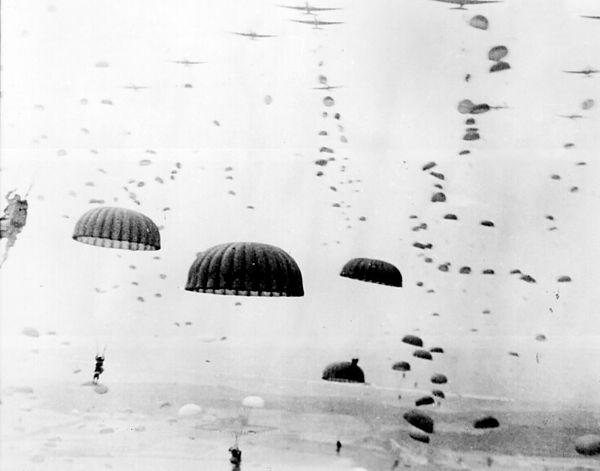
First wave of aircraft lands largely successfully
Glider losses were negligible, with most landing in England and arriving the next day. The only major failure was the failure of two gliders to deliver two anti-tank guns. The 101st landed north of Eindhoven; the 501st Parachute Infantry Regiment landed within its designated drop zone south of Veghel, except for the 1st Battalion, which mistakenly landed near Heeswijk, about 4.8 km away on the wrong side of the Willems Canal and the River Aa. The 502nd and 506th Parachute Battalions landed with headquarters north of the Sonsche Forest.
The 82nd Airborne landed with minimal losses of two Dakota aircraft. The 504th Parachute Battalion landed near Grave (together with the 2nd Battalion, which landed west of the bridge), while the 505th and 508th Parachute Battalions landed on the Groesbeek heights together with the 376th Parachute Field Artillery Battalion (this was the first time artillery had been delivered to the battlefield by air). The headquarters of the 1st Airborne Corps landed near the village of Groesbeek around 13:30, while the 1st Parachute Brigade landed around 13:53 west of Arnhem, thus completing the British landing.
Around 20,000 soldiers, 511 vehicles, 330 artillery pieces, and 590 tons of supplies arrived safely at their destinations. As the transport aircraft departed, Brereton returned to his headquarters at Eastcote to oversee the departure of the second wave of aircraft. When the second wave commenced, the Market phase of the operation would be complete, ending his role, meaning there was no one in England coordinating ground troop movements and air forces; additionally, there was no reserve plan.
The operation begins at dawn
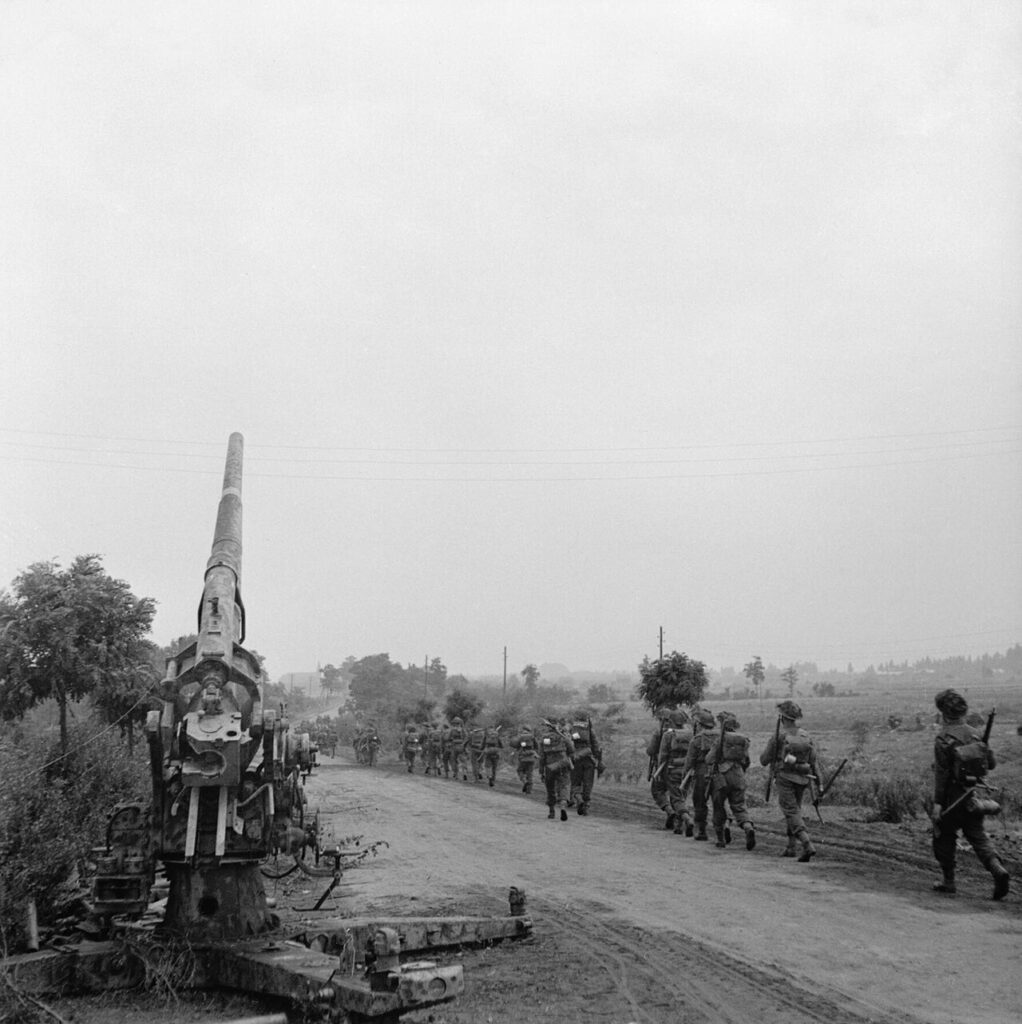
At 14:00 on 17 September, 408 guns from XXX Corps opened fire to support the initial assault on Joe’s Bridge. The Irish Guards battle group, under Major J. Vandeleur, advanced on a broad front while infantry from the 231st Brigade (Northumbrian 50th Division) kept pace. The initial breakthrough went well, as Kampfgruppe “Walther” was unable to withstand Allied firepower.
The Guards Armoured Division, under Major General A. H. Adair, halted at Valkenswaard at 19:30.
XII Corps, under Major General N. M. Ritchie, attacked Kampfgruppe “Chill” in the north, together with the Scottish 15th Division and the Welsh 53rd Division, but made little progress. The 101st Airborne had secured most objectives by 16:00, while the 501st Parachute Battalion secured railway and road bridges near Heeswijk and Veghel; the 502nd seized the bridge at St. Oedenrode. However, bridges at Son were destroyed before the 502nd arrived, and the advance of the 2nd Battalion of the 502nd south toward another bridge at Best was repelled by the Germans.
Student’s response
At this point, General Student, observing developments from his headquarters in Vught, ordered the German 59th Infantry Division from the 15th Army to reinforce LXXXVIII Corps near Best. General Otto Sponheimer (LXXXVIII Corps) moved the 719th Coastal Division east toward Turnhout. Meanwhile, the 508th and 505th Parachute Infantry Regiments established defensive positions on both sides of Groesbeek, while the 504th seized the bridge at Grave.
Unfortunately, two of the three bridges over the Maas-Waal Canal were destroyed by the Germans before the 504th and 505th arrived. As a result, the Americans secured the bridge near Heumen. A platoon from 1/508 attempting to establish a pontoon bridge over the River Waal was stopped by Kampfgruppe “Henke.”
Model’s response
Model, upon learning of the airborne landings, left Hotel Hartenstein and relocated to Terborg, about 50 km east. He immediately took direct control of II SS Panzer Corps within the German forces in the Netherlands. Despite Bittrich advocating the destruction of both bridges, Model refused, arguing they would be needed for a counterattack.
Hitler recognizes the threat and German strategic response
After learning of the Allied airborne assault, Adolf Hitler prioritized operations against the Allies. Nearly the entire Luftwaffe air strength in the sector—around 300 aircraft—was placed under Model’s command, along with reserves and cadets from Wehrkreis VI, as well as forces in transit or on leave near Wesel, totaling around 3,000 men.
German Army command forces in the Netherlands under General Friedrich Christiansen promised reinforcements under Generalleutnant Hans von Tettau. The II SS Panzer Corps was also expected to receive reinforcements within 48 hours.
The type of combat plan required was exactly what Model excelled at—improvisation—so by the time of the initial Allied landing, his response plan was already in motion.
General Student was to lead operations near Eindhoven using Kampfgruppe “Chill” against XII and XXX Corps, while the 59th Infantry Division and the 107th Panzer Brigade were to act against the 101st Airborne. Forces from Wehrkreis VI under General Kurt Feldt, together with the II Parachute Corps advancing from Cologne, were to seize Groesbeek from the 82nd Airborne.
SS Kampfgruppe “Frundsberg” was to advance over the Arnhem bridge toward Nijmegen to block any Allied crossing, while SS Kampfgruppe “Hohenstaufen” was to hold the British west of Arnhem.
By mid-morning, the 1st Airborne Brigade had begun securing drop zones west of Arnhem and was already engaged with the 16th SS Panzergrenadier Battalion under Hauptsturmführer Sepp Kraft, remnants of the SS NCO training school at Arnhem, Luftwaffe troops from Deelen within Kampfgruppe “Weber,” and the Dutch SS Wach Battalion III—around 1,200 men under HSSPF Northwest. The first 47 German prisoners came from 27 different units.
British advance toward Arnhem and formation of German defensive line
The 1st Parachute Brigade, under Brigadier G. W. Lathbury, advanced toward Arnhem along three routes: “Lion” (3rd Para with brigade HQ) toward Oosterbeek, “Leopard” (1st Para) to the north, and “Tiger” (2nd Para) to the south.
Radio communication was initially good but began to deteriorate as smaller units became separated from the main force.
A false rumor that most of the special gliders carrying Captain C. F. H. “Freddie” Gough and his reconnaissance squadron had not arrived led Urquhart to personally investigate the situation.
By the time the brigade reached Oosterbeek, the Germans had reinforced SS Kampfgruppe “Spindler,” which formed a strong defensive line and blocked much of the 1st Parachute Brigade’s advance toward the high ground and central bridge.
The exception was 2nd Para under Major John Frost, who advanced into the city center after finding the bridge destroyed and secured the northern end of the bridge, later linking up with other brigade elements.
When elements of SS Kampfgruppe “Frundsberg” under Brigadeführer Harmel attempted to cross the bridge toward Nijmegen, Allied forces blocked them, halting further advance.
Deteriorating weather
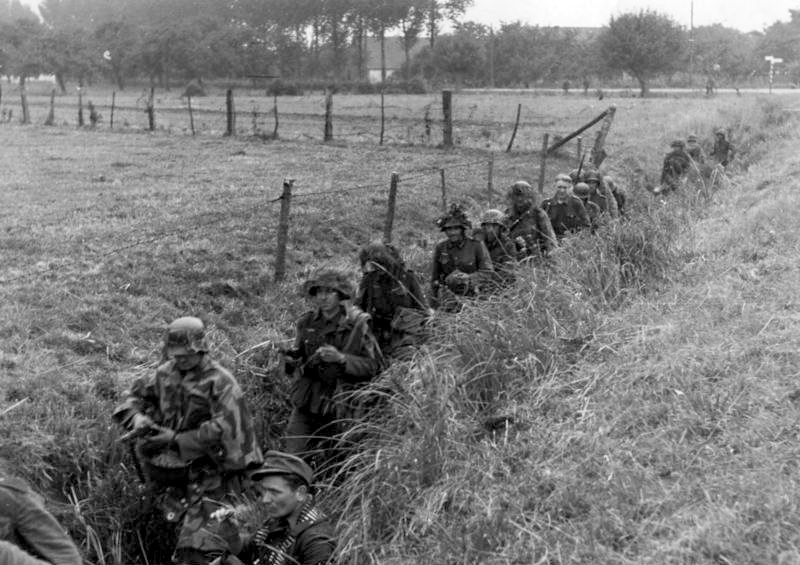
Allied meteorological forecasts proved overly optimistic, as weather on Monday 18 September deteriorated sharply, hindering most airborne operations and delaying the second wave of aircraft from England.
Air support was significantly reduced due to weather and Browning’s failure to designate liaison officers between RAF and USAAF for the British 1st Airborne Corps, as well as Brereton’s insistence that aircraft in Belgium remain grounded while his own were airborne.
Market Garden became the only operation in the Northwest European campaign where the Allies did not maintain air superiority, largely due to Allied coordination failures.
First serious cracks in the Market Garden plan
The advance of the Irish Guards Armoured Division, with the 2nd Household Cavalry Regiment leading, continued while the 231st Brigade remained at Valkenswaard.
The Guards Grenadier battle group took the lead while the Welsh Guards battle group opened a second route (“Heart”) toward Helmond, though progress was halted by Kampfgruppe “Walther.”
The 506th Parachute Battalion cleared Eindhoven of minor German presence, allowing Guards units to advance toward the destroyed Son bridge, where Bailey pontoon bridge construction began.
German LXXXVI Corps under General Hans von Obstfelder, with the 176th Infantry Division and the “Erdmann” Division, arrived between Weert and Helmond.
Attempts by the 2/502 and 3/502 to seize the bridge at Best failed due to its destruction by the German 59th Infantry Division, making success dependent on rapid completion of the Bailey bridge at Son.
At Nijmegen, the 1/508 and 3/508 repeatedly attempted to seize the road bridge but were repelled each time.
German reinforcements tighten the noose around Arnhem
SS Kampfgruppe “Frundsberg” began ferrying troops and equipment across the Pannerden Canal toward Nijmegen.
Elements of Feldt Corps (406th Landesschützen Division) arrived and attacked Groesbeek.
Kampfgruppe “von Tettau,” reinforced by additional German units, launched attacks on the 1st Airborne Brigade from Renkum.
3rd Para continued fighting Kampfgruppe Spindler, reaching within 2 km of the bridge and engaging in urban combat.
Urquhart’s forces were cut off after Lathbury was wounded, and Brigadier Hicks assumed command of the division, sending reinforcements from 2nd South Staffs to support the advance toward the bridge.
At Arnhem, 2nd Para encountered SS Kampfgruppe “Knaust” (elements of Hohenstaufen) and required artillery support to dislodge them.
Elements of the 9th SS Reconnaissance Battalion returning from Nijmegen attempted a breakthrough to reach Frost’s position but failed with heavy losses.
Frost’s battalion had supplies and ammunition for only 48 hours, and all attempts to link up with 2nd Para failed as Kampfgruppe Spindler pinned them down.
German reinforcements continued to arrive, including Flak Brigade “Von Swoboda,” steadily strengthening German positions.
Browning loses control of the battlefield
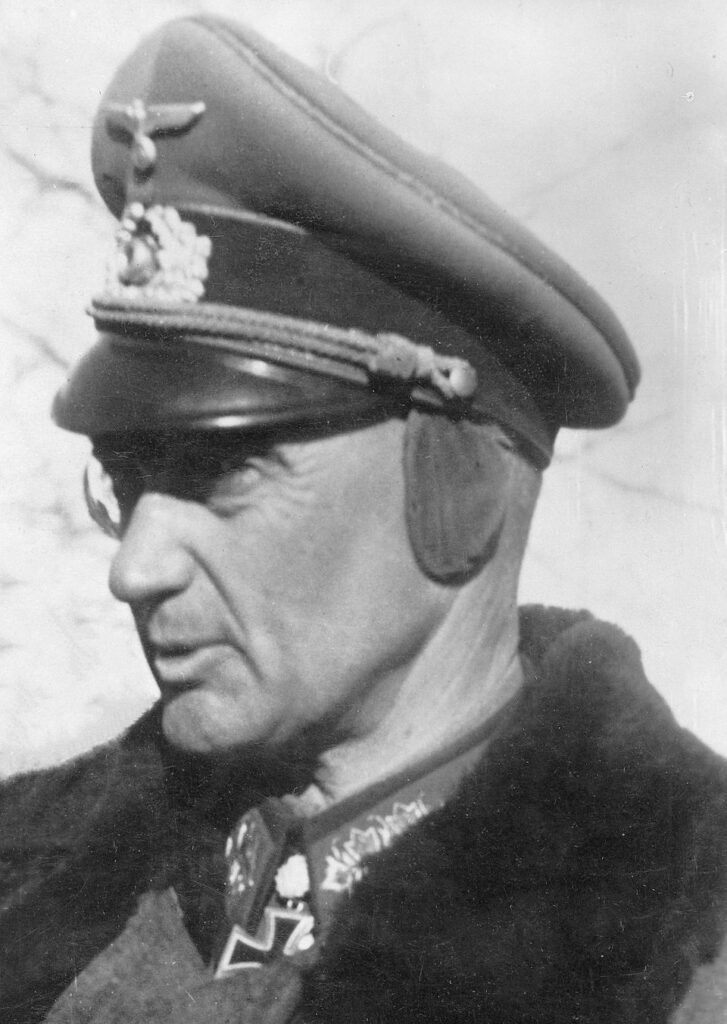
Browning, operating from an administrative command role, struggled to maintain battlefield control.
Radio communication failures were widespread, though Browning blamed the signals unit while ignoring alternative communication systems such as GHQ liaison units and BBC-linked sets.
The 1st Airborne had direct communication with 2nd Para and corps headquarters at Moor Park, though they too struggled to reach Browning.
Dutch resistance relayed coded warnings to the 82nd Airborne about communication breakdowns extending south toward Son and the 101st.
Problems were not solely due to communications but also poor staff work and inexperience. For the crucial first two days, Browning failed to establish full operational control.
The delayed second wave eventually arrived from England, but only two battalions of the 327th Glider Regiment reached the 101st.
The 502nd Parachute Battalion, supported by British tanks, attacked the German 59th Infantry Division near Best, capturing around 1,000 prisoners. The 59th attempted a counterattack toward Veghel but was forced to retreat.
At the same time, Feldt Corps attacks overran parts of the 101st drop zones but were repelled by the 509th Parachute Battalion after artillery landed.
Both American airborne divisions also received supplies from B-25 Liberator aircraft of the 8th Air Force.
End of surprise and beginning of German counteraction
The British second wave (elements of the South Staffordshires, divisional troops, and the 4th Parachute Brigade, along with 10th, 11th, and 156th Parachute units) arrived just as the 1st Airborne Brigade was engaged with the 3rd Dutch SS Police Battalion, which then withdrew.
Allied aircraft delivered supplies, but drop zones were still in German hands, so most supplies failed to reach British forces.
Hackett, upon arrival, was informed that Hicks was commanding the division and wanted to send remaining South Staffs and 11th Para to reinforce the Arnhem push, while also supporting the brigade.
Hackett protested, requesting to see the plan, arguing it would be better for his brigade to proceed to its original objective of securing the high ground. After discussion, Hicks agreed to delay the decision.
At the same time, there was concern about the bridge over the Lower Rhine floodplain; had Hicks abandoned the advance toward Arnhem, he could have secured high ground on both sides of the Heveadorp ferry crossing and awaited XXX Corps.
With the arrival of XXX Corps to the 101st and 82nd Airborne, the 101st came under XXX Corps command, while the Northumbrian 50th Division was transferred to VIII Corps under Lieutenant General Richard O’Connor.
The delayed assault across the Meuse-Escaut Canal near Lille St. Hubert began.
At this point, the situation was turning against the Allies: airborne troops had lost surprise, XXX Corps was stalled at Son, and flank support attacks had little effect.
There was also a lack of reliable intelligence, no available reserves, and meanwhile Model was preparing the German response.