By Matija Šerić
The economic situation in Cuba over the last few decades has been poor, to put it mildly. Moreover, the Republic of Cuba is one of the poorest countries in the world, with an uncompetitive economy that still largely adheres to socialist principles which hinder growth. In addition, the U.S. embargo, enforced over many decades, has devastated the Caribbean island. However, in recent years, under the presidency of Miguel Díaz-Canel, the situation has worsened even further. Homeless people and beggars are now clearly visible on the streets—something that was not common before because the state had developed a system of subsidies and various other aids that greatly eased life for the poor. That has now changed.
Resignation of the Controversial Minister
On Tuesday, July 15, the Minister of Labor and Social Security, Marta Elena Feitó Cabrera, was forced to resign after denying the existence of beggars and homeless people in the country just a day earlier during a session of the National Assembly committee. She claimed that those on the streets were either drunks asking passersby for money to buy alcohol or resellers digging through garbage to resell items without paying taxes. This arrogance was too much even for the communist authorities, and the president dismissed her from office. Díaz-Canel wrote on his X profile: “The lack of sensitivity in approaching the vulnerable is very questionable. The revolution must leave no one behind; that is our motto, our militant responsibility.”
“No Beggars in Cuba” – Minister Resigns After Outrage Sparks Nationwide Backlash
Poverty Dominates Cuban Streets
In 2025, the streets of Havana and other cities are home to homeless people, beggars (especially the elderly), and other impoverished individuals who can be seen rummaging through garbage or asking passersby for small jobs (such as washing windshields or shining shoes) to earn a few Cuban pesos. The Cuban state budget has shrunk during and after the coronavirus crisis, and the government no longer has the capacity to assist its citizens as it once did. It can be said that the communist island has once again experienced an economic collapse similar to that of the 1990s. However, this time the situation is very alarming and may result in a change of government—that is, the collapse of the communist system.
Five-Year GDP Decline
On July 14, the government released official data revealing that the national GDP fell by 1.1% last year. Over the past five years, Cuba’s economy has contracted by 11%. By sectors, there was a 53% drop in primary activities (agriculture, livestock, and mining), 23% in secondary activities (manufacturing and sugar industry), and 6% in tertiary activities, which include public services such as tourism, trade, and education. Since these are official figures from the communist government, it is assumed that the actual GDP decline is even greater.
Those Without Relatives in the U.S. Face Hunger
The country constantly lacks general revenue, foreign currency, infrastructure projects, and suffers shortages of energy (electricity, fuel), food (bread, milk), medicines, and other essentials. Inflation last year was 24%. The average pension for retirees is about 2,000 Cuban pesos per month, roughly equivalent to five U.S. dollars on the black market. That amount cannot even buy a single carton of eggs. Cubans who do not receive financial aid from family abroad face hunger.
Export Decline and Growth of the Private Sector
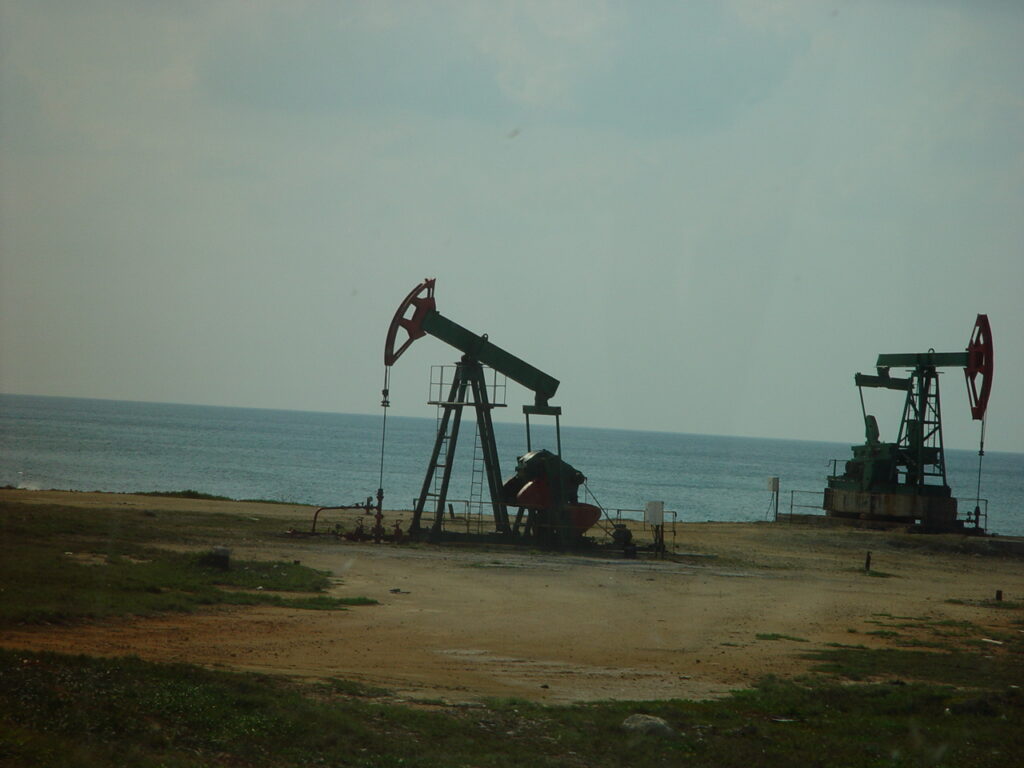
In the first half of this year, Cuban exports decreased by 7%. This year’s government export plan was fulfilled at 62%, down from 78% last year. Tourism dropped by as much as 18% compared to last year. Cuba managed to recover sectors such as tobacco and lobster but recorded declines in other important areas like nickel, honey, shrimp, and biopharmaceutical products due to shortages of raw materials, energy, fuel, and logistics.
The government is trying to stimulate exports and production through foreign currency self-financing projects. So far, 29 such projects have been approved in sectors like mining, coal, honey, and aquaculture, but results have yet to stop the overall economic decline. Interestingly, exports outside of state companies have increased. Private sector exports grew by 30%, generating 21 million dollars, led by small and medium enterprises exporting IT services and coal.
Poor Management by Communist Economic “Experts”
At this point, Cubans can romantically recall the period before 2020 when life was better. It was still difficult then, but certainly better than today. The Minister of Economy and Planning, Joaquín Alonso Vázquez, when releasing the dismal figures, blamed the U.S. embargo and external factors such as the pandemic and global economic crisis but also admitted the presence of “internal errors, deviations, and negative trends” resulting from poor macro- and microeconomic management. The minister explained that the current situation creates structural imbalances reflected in high inflation, fragmented foreign exchange markets, and serious restrictions on access to foreign currency, energy, and fuel, which slow down production, services, and industry as a whole.
A Combination of Unfortunate External Circumstances
Besides poor management by Cuban economists, the causes of the severe crisis include:
- Health and economic consequences of the coronavirus crisis (destruction of tourism, lack of medicines and medical equipment);
- The poor economic situation in main partner Venezuela (reduction of cheap oil and foreign currency inflows);
- The rise of right-wing governments in Latin America that are hostile to Cuba (even some left-wing governments like Chile, Mexico, and Brazil show limited willingness to cooperate);
- US sanctions on Cuba were intensified during both Biden’s and Trump’s administrations;
- The disinterest of Russia and China in providing stronger economic assistance to their Caribbean partner (despite shared opposition to the U.S., financial injections were lacking).
Mass Protests Reflect Growing Discontent
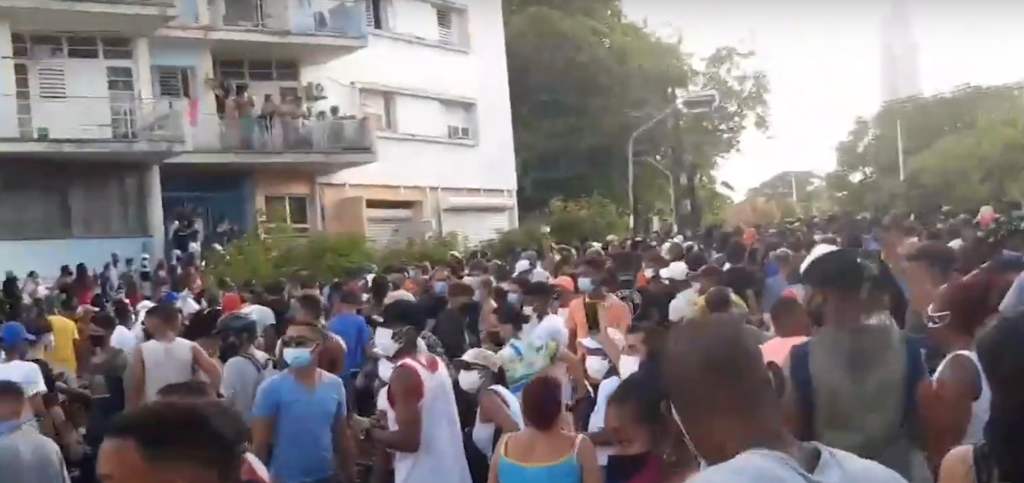
Due to the severe economic situation in recent years—especially in 2021 and 2024—Cuba witnessed mass protests that would have been unthinkable during the times of Fidel and Raul Castro. The people found courage and took to the streets to express their dissatisfaction with the lack of basic necessities and the shortcomings of daily life. These protests represent a rare and very significant expression of civic discontent in a country with a decades-long one-party system.
Cuba at a Historical Crossroads
In 2025, Cuba stands at a crossroads. The question is how the communist government can overcome the deep economic crisis that seriously threatens the stability of its regime. Despite numerous attempts by the government to halt the GDP decline and revitalize the economy, growing poverty and occasional mass street protests clearly show that previous measures have been insufficient. If Díaz-Canel and his associates do not undertake urgent and thorough economic reforms (somewhat similar to those of China and Vietnam), it is possible that the current five-year crisis will lead to major unrest and even the complete collapse of the one-party communist system that has been in power for over six decades. This will not be easy since the Communist Party still controls all levers of power such as the military and police.
However, if conditions worsen, it is questionable whether ordinary Cubans who support the regime will continue to fulfill their role. The future of Cuba depends not only on internal factors. A major question is whether Cuba’s partners (Beijing, Moscow, Caracas, Mexico City, and others) will seriously come to the aid of the Havana government or remain on the sidelines watching what happens. External factors such as U.S. sanctions, geopolitical upheavals, and global economic trends could be decisive in determining the country’s direction.