By Matija Šerić
Terrorist attacks carried out by members of the radical movement Islamic State (ISIS or ISIL) are part of the organization’s global strategy to establish its theocratic Islamist rule over the entire world. Although it is clear to any reasonable person that terrorist attacks throughout history have never solved any political or religious issue, and that the idea of the entire world becoming Islamic is pure utopia, fervent supporters of jihadist, i.e., Salafi-Wahhabi organizations repeatedly carry out attacks, hoping that terror will bring about a turning point. To better understand such irrational actions in political, theological, and other contexts, it is necessary to examine the ideology of ISIS.
Selective Interpretation of Early Islamic Texts
As Islamic theologians worldwide dispute whether the Islamic State is an Islamic organization at all, the question arises: how Islamic is it? Without a doubt, ISIL is an Islamic organization that, however, selectively interprets sacred Islamic texts (the Quran and Hadiths) to create its radical doctrine. The organization’s radicalism is unacceptable to the vast majority of Muslims worldwide, but for a narrow base of fervent followers, it is inspiring and welcome. ISIS members reject any form of modernism and adhere to canonical Islamic texts, which they selectively interpret to define their ideology. In other words, for radical Sunni Islamists, the 21st-century world should look like the 7th-century world that existed during the time of Prophet Muhammad. All the rules, laws, customs, and traditions of medieval Arabia should be implemented within today’s technologically developed world.
The End Times – A Reality for Islamic State Fighters
The Islamic State believes that the end of the world is near and that after Caliph Abu Bakr al-Baghdadi (who ruled from 2014 to 2019), there will only be four more legitimate caliphs. This belief that the end of the world is on the horizon is one of the main arguments used to recruit new fighters globally. The leaders of the Islamic State see themselves as the vanguard in the fight against the “Antichrist,” with the goal of their struggle being the ultimate victory of Islam and the coming of the Mahdi.
The Mahdi is a key figure in Islamic eschatology, believed to appear during the End Times. He is expected to be a descendant of Prophet Muhammad, appearing shortly before the return of Jesus (as a Muslim), and will lead the Muslim community (ummah) to liberate the world from evil and injustice. The Mahdi and Jesus will defeat their enemies (Gog and Magog), conquer the world, and establish the caliphate. The Mahdi will die after 7 to 13 years, while Jesus will die after 40 years. After their deaths, society will once again descend into corruption before the final Day of Judgment. This eschatological view, and even more so the belief that these events will occur in the near future, fuels not only ISIS but the global jihadist movement.
Documentary about ISIL
A Medieval Ideology
Leaders of ISIL, such as the late leader al-Baghdadi, consciously ignore centuries of interpretations of canonical texts and take only what suits them. This is an outdated method of learning Islam, slowed down by the majority of Islamic schools. Ideology is the key element that continuously breathes new life into Islamist organizations, not individual leaders. This is the main difference between ISIL and other radical political movements such as Marxism and fascism, with which it is often compared.
ISIL’s worldview is millenarian, allowing no differences in opinion, which is typical of religious rather than political organizations. After all, ISIL rejects classical political organizing and seeks to create a theocratic society according to the laws of medieval Arabia. For ISIL, any Muslim, including jihadists, who does not recognize the authority of its caliph is a traitor deserving of death or exile.
Sayyid Qutb – The Father of Global Jihadism
The Islamic State, like other similar movements that have emerged since the 1970s, shares common roots. They all refer to several of the same sources. Egyptian Islamic theologian Sayyid Ibrahim Husayn Qutb is considered the “father of the jihadist-Salafi movement.” Qutb was an Islamist revolutionary, poet, and leading member of the Egyptian Muslim Brotherhood during the 1950s and 1960s. In 1966, he was convicted of planning the assassination of Egyptian President Gamal Abdel Nasser and was executed by hanging. He authored 24 published books and wrote another 30 that were never published due to state repression. He wrote at least 581 articles, including novels, literary critiques, and other works.
He is best known in the Muslim world for emphasizing the social and political role of Islam. Although most of his writings were critical of Muslim states, Qutb also strongly condemned American society and culture, which he viewed as materialistic and obsessed with violence and sexuality. He advocated offensive jihad, which included violent actions, and proposed the implementation of the doctrine of Hakimiyya – God’s sovereignty over all aspects of life. This was to be achieved by overthrowing modern nation-states through armed jihad, followed by the establishment of an Islamic order modeled after Prophet Muhammad and his companions. For these reasons, Qutb is regarded as a pioneering figure for Al-Qaeda, Egyptian Islamic Jihad, and the Islamic State.

Three “Holy” Books of the Global Jihadist Movement
In addition to the canonical Islamic texts, which they interpret as it suits them, jihadists base their actions on certain books by Islamic scholars. It should be noted that ISIS does not have its own theorists but instead refers to the books and articles of other authors or falsely presents the works of others as their own. The three “holy” books for the Islamic State are:
- “Management of Savagery” by an author using the pseudonym Abu Bakr al-Najji;
- “Introduction to the Jurisprudence of Jihad” by Abu Abdullah al-Muhajir;
- “Foundations of Belonging (for Jihad)” by Sayyid Imam al-Sharif, also known as Abdel-Qader Ibn Abdel-Aziz or Dr. Fadl.
“Management of Savagery” is a manifesto that appeared in 2004 and spread online in PDF format. The book provides strategic instructions on how to establish a unified Islamic caliphate, the likes of which has not been seen in modern times. The true author remains unknown.
“Introduction to the Jurisprudence of Jihad” calls on members of the Salafi movement to do everything they can to create a unified Islamic state. “Killing infidels and fighting them in their own lands is necessary even if they do not harm Muslims.” It does not matter whether the killed enemies are combatants or non-combatants because the main reason for “killing them and seizing their property” is that “they are not Muslims.” Its author, al-Muhajir, is an Egyptian citizen who fought in Afghanistan alongside Osama bin Laden and Ayman al-Zawahiri.
“Foundations of Belonging (for Jihad)” explains the theory and practice of jihad in Islam and became a foundational text used to train jihadists. Its author, Dr. Fadl, admitted that he wrote the manifesto in the late 1980s to serve as a textbook for training in camps that would become Al-Qaeda training grounds. He was also a close associate of al-Zawahiri. The book argues that jihad against the “near enemy,” meaning any Muslim ruler who governs by non-Sharia law, is an obligation for every Muslim aged 15 and above. Anyone who avoids jihad in the path of God betrays God, the Prophet Muhammad, and Islam.
Through Savagery and Violence Towards a Global Caliphate
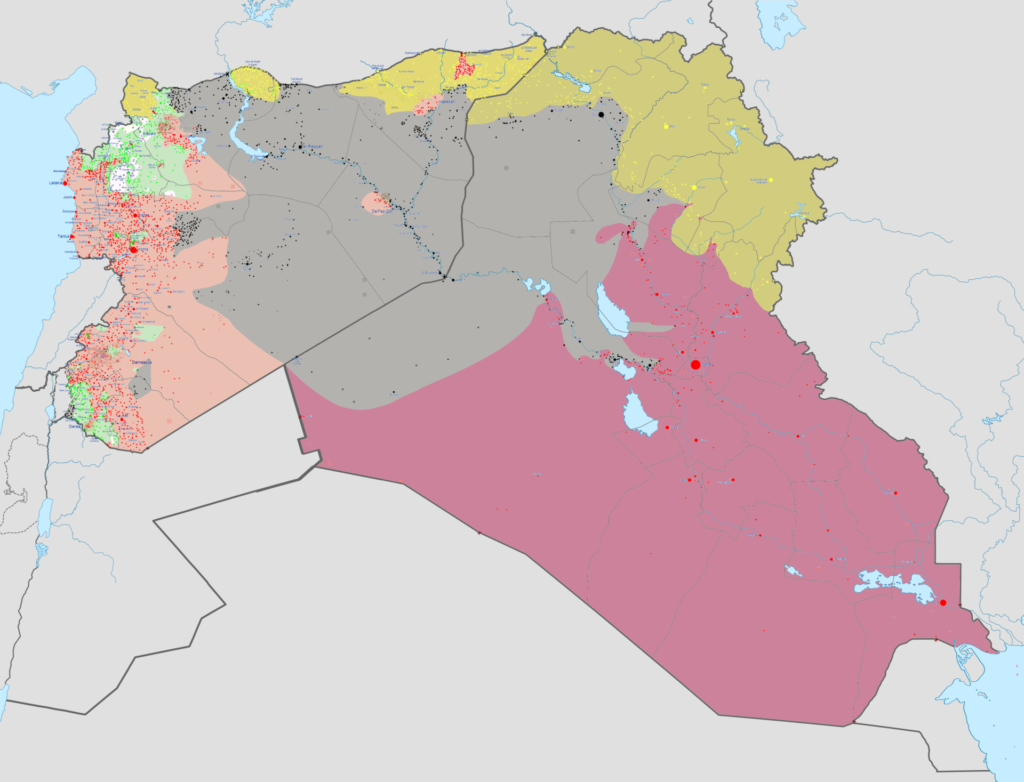
These three manifestos are key because they serve as motivation and fuel for both new and veteran jihadists. Despite some differences, they provide the theoretical foundation upon which their actions are based. While there are differences among the books, all advocate offensive jihad and total war, as opposed to the defensive jihad accepted by most Muslims. The goal is to kill the enemies of Muslims and thereby spread fear. The idea propagated is that the establishment of Sharia law, that is, an Islamic order, is impossible to achieve gradually—through elections and political struggle—and must instead be accomplished by force, that is, through revolution. The authors reject the possibility of establishing an Islamic order within existing (infidel) political systems. They particularly emphasize the necessity of fighting against heretical Muslim rulers who do not adhere to Sharia.
And perhaps most importantly, these works give both leaders and ordinary members of radical organizations the green light to kill anyone standing in the way of establishing a caliphate without consequences. According to the three authors, in doing so, they are simply following the policy of the Prophet Muhammad, who dealt harshly with his opponents and those who disobeyed him. They highlight selected events from the 7th century to support their claim that excessive use of violence leads to the achievement of the goal, which is the subjugation of the enemy.
The End Justifies the Means
Jihadist theorists believe that relentless savagery and violence are the recipe for success, while tolerance and coexistence are a formula for failure. They adhere to the concept that the ultimate noble goal—the establishment of an Islamic world and the golden age of Islam—justifies the inhumane means used to achieve it. “Inhumane means” is, in reality, a euphemism for trampling all standards of humanity. Such justification for mass crimes, including genocide against entire non-Muslim populations, greatly resembles the apologists of Marxism-Leninism. Whether Abu Bakr al-Najji, Abu Abdullah al-Muhajir, and Dr. Fadl copied this justification from communist apologists or devised it independently will remain a mystery.