By Matija Šerić
Tottenham Hotspur is one of the giants of English football, but the club has endured very difficult times over the past two seasons. Although they won the Europa League last season, they finished 17th in the Premier League—the last position that ensures survival. This season, while they secured direct qualification to the Champions League Round of 16, they are only 16th in the Premier League after 29 matches with 29 points, just one point above 18th place, which leads to the Championship.
The Club’s Toughest Moments
For this reason, some fans have claimed online that the club is experiencing its toughest moment in history, and relegation should not be ruled out. They are not far from the truth.
In addition to the challenges posed by injuries to key players (Kulusevski, Kudus, Porro, Danso, Udogie, Maddison, Bergvall, Betancour, Odobert) and poor form, Spurs were expected to secure wins—but that hasn’t happened. Shockingly, Tottenham has not won a single Premier League match in the 2026 calendar year and has led in only 13 minutes! Firing Thomas Frank and bringing in Igor Tudor on February 13 did not help either.
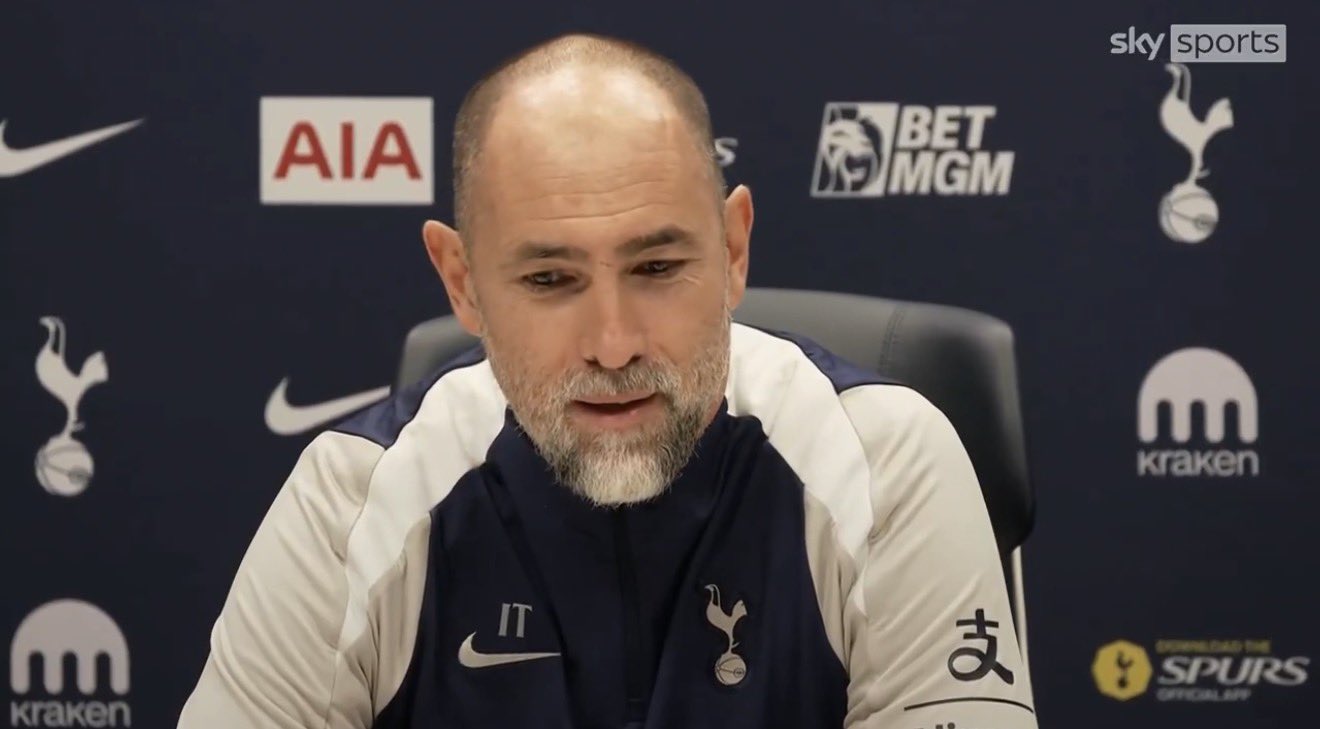
Tudor Steps into the Hornet’s Nest
Under Tudor, there have been three defeats: 1-4 at home against Arsenal, 2-1 away to Fulham, and 1-3 at home against Crystal Palace. Calls for Tudor’s dismissal are growing louder. Critics argue that he has never managed an English club before and is unfamiliar with the situation. Supporters claim he merely inherited chaos and disorder. It may only be a matter of time before he receives an extraordinary sacking.
It’s worth noting that the Croatian coach aims to instill an aggressive and dynamic style in his teams. He has often emphasized that he wants his players to play brave, intense football that is not solely defensive. His goal is to entertain fans and leave them satisfied with what they see on the pitch. Surely, he wants the same with Spurs. However, reality is harsh. The three matches so far have revealed the clear limits of Tottenham’s capabilities.
Convincing Defeat Against Arsenal
Although Spurs would like to play attacking football, they were unable to do so against the league leaders, Arsenal. They lined up in a 3-5-2 formation, with three center-backs to counter Arsenal’s forwards. Yet Arsenal dominated with 60% possession, 20-6 shots on goal, and six big chances, while Tottenham created none. The 1-4 result was justified.
Tottenham’s biggest problem was poor defensive organization and the inability to control Arsenal’s attacks. Arsenal capitalized on defensive mistakes, with Eze and Gyökeres scoring twice each. Defenders Palhinha, Dragusin, and van de Ven looked completely uncoordinated—unsurprising, as Palhinha is not a natural center-back. Spurs struggled with overall quality and intensity, while Tudor admitted that Arsenal showed his team how much they still need to improve to compete at the top level. Wing-backs Spence and Gray were ineffective, and Xavi Simons and Kolo Muani were largely isolated from the rest of the team.
Unpleasant Fulham Strengthens the Crisis
Even Spurs’ harshest critics would admit that losing to Arsenal, on their way to the title, was understandable. A more realistic expectation was to get a result at Craven Cottage. However, Fulham, playing admirably this season, did not allow it. Wilson and Iwobi scored in the first half, while Richarlison only netted a consolation goal in the 86th minute. Fulham controlled the game with 54% possession and dominated in shots (18-13) and big chances (3-1).
Tottenham’s crucial problem was weak physical and tactical competitiveness in duels and slow reactions in play. Fulham dominated the first half, quickly took the lead, and often reached the ball first, while Spurs won only around 40% of duels, highlighting their lack of intensity and aggression. Even the classic 4-4-2 formation did not help offensively. Tottenham struggled to organize attacks and create scoring chances, with Xavi Simons, Kolo Muani, and Palhinha particularly underperforming in midfield.
Debacle Against Crystal Palace
Fans and neutral observers expected a third time’s the charm against Crystal Palace, who are much weaker this season than last. Yet another heavy defeat, 1-3, occurred. Tudor opted for an offensive 3-4-3 formation. To be fair, before van de Ven’s red card in the 38th minute, the team looked decent. Solanke scored in the 34th minute to put Spurs ahead, but van de Ven received a completely unnecessary red card for a foul on Ismaïl Sarr in the box. Palace converted the penalty to equalize and took full control.
Tottenham immediately collapsed defensively—Strand Larsen and Sarr scored again in added time of the first half, making it 1-3. Tudor’s side failed to stabilize with ten men, as static defending and poor reactions allowed the visitors to comfortably preserve their lead. Porro, Tel, and Muani were the most disappointing individually.
Structural Crisis of the Team
Looking at the defeats against Arsenal, Fulham, and Crystal Palace, a common pattern emerges. In all three matches, Tottenham struggled with defensive stability, duel intensity, and possession maintenance, allowing opponents to easily create chances and take the initiative. Defensive mistakes, weaker reactions under pressure, and lapses in concentration during critical moments proved to be the team’s biggest structural weaknesses.
High Ego and Indiscipline
It’s evident that some players have ego issues (van de Ven, Vicario, Kolo Muani…) and assume that league survival will be easy—which is not necessarily the case. Discipline is a problem. Captain Cristian Romero served a four-match ban after a direct red card against Manchester United (four red cards total in the Premier League), and van de Ven also received a red card in the latest match. Clearly, Romero cannot lead the team with such performances, and someone more responsible should take that role. Despite having fantastic players, Tottenham’s roster would be title favorites in any league outside England, but team chemistry is still lacking.
Desperate Fight for Survival
The joke is over, and Spurs still need to fight for Premier League survival. Survival remains in their own hands. In the next Premier League round, they host Liverpool, while survival rivals Nottingham Forest and West Ham face Fulham and Manchester City, respectively. Before that, Tudor’s squad travels to Estadio Metropolitano in Madrid to play Atlético Madrid in the first leg of the Champions League Round of 16. Overall, Tottenham has a slightly easier schedule than their survival rivals over the last nine matches: Liverpool, Forest, Sunderland, Brighton, Wolverhampton, Aston Villa, Leeds, Chelsea, and Everton.
Opta’s supercomputer gave Spurs an 84% chance of surviving in the Premier League after the Palace defeat. According to these calculations, Tottenham would need 38 points in total—they currently have 29. But these are just estimates. Football, especially English football, is highly unpredictable. If Spurs do not unite as a team, relegation could become a reality.