By Matija Šerić
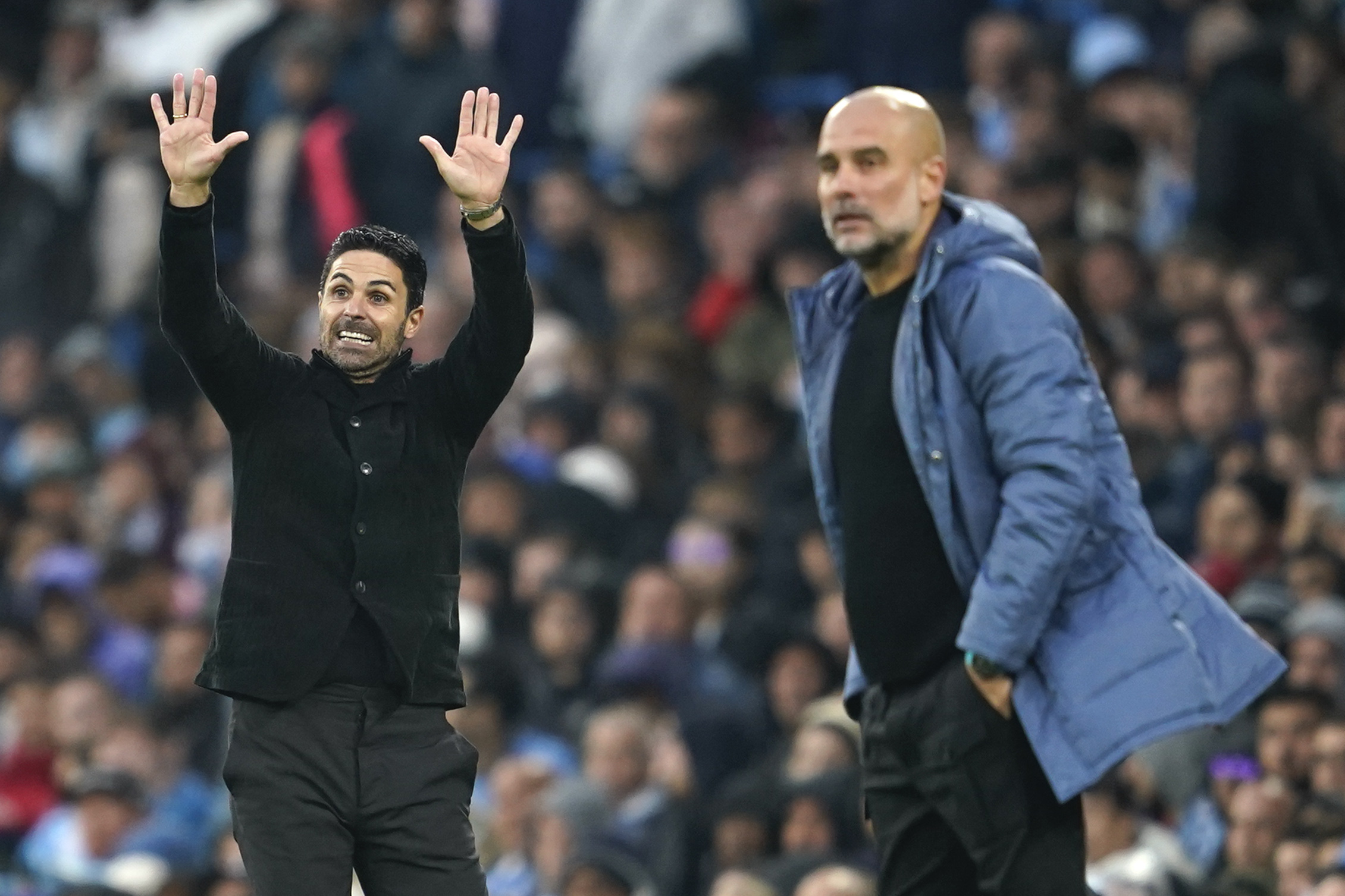
Sunday 19 April and Wednesday 22 April could turn out to be the days when the Premier League champion was decided. First, in the derby of round 33 – effectively the title-deciding clash – Manchester City beat Arsenal 2:1 at the Etihad, and then three days later the Citizens won 0:1 away at Burnley. Although Arsenal spent 208 days at the top of the table and had as much as a nine-point lead at the start of April, everything has melted away like snow from last year. After 33 rounds, with five games remaining, Manchester City have overtaken Arsenal. Both teams are on 70 points with the same goal difference of +37, but City are first due to more goals scored (66 compared to Arsenal’s 63).
Manchester City become title favourites
Many experts believed this would finally be the year Arsenal would end their 22-year title drought and win the Premier League, but that now looks highly uncertain. The crown is slipping away. Everything they built over months has been lost.
To make matters worse, in their last five league matches Arsenal have three wins (Chelsea 2:1, Brighton 0:1, Everton 2:0) and two defeats (Bournemouth 1:2, City 1:2), while Manchester City have three wins (Chelsea 0:3, Arsenal 2:1, Burnley 0:1) and two draws (Nottingham Forest 2:2, West Ham 1:1). In terms of form, momentum is clearly with City, who despite an inconsistent season could still claim the most prestigious domestic title.
Pep outsmarts Arteta
The Sunday derby exposed Arsenal’s weaknesses and City’s strengths. Pep Guardiola set his team up in a 4-2-3-1 formation. Donnarumma was in goal, with Nunes, Khusanov, Guehi and O’Reilly in defence. Rodri and Bernardo Silva played as double pivot, with Semenyo, Doku and Cherki behind striker Haaland.
Mikel Arteta lined up his side in a 4-3-3. Raya was in goal; Mosquera, Saliba, Gabriel and Hincapie in defence; Odegaard, Zubimendi and Rice in midfield; and Madueke, Eze and Havertz in attack.
At first glance, City were better structured. They had solidity in midfield (Rodri and Silva) and width (Doku and Semenyo). In contrast, Arteta’s decision to play with only one defensive midfielder (Zubimendi) looked naive. It may have been better to include a second holding midfielder, such as Nørgaard.
Arsenal’s high press brought little reward
Arsenal started the match with a high press from Havertz to the full-backs, even the centre-backs, trying to force City into mistakes. However, City resisted easily. Silva and Rodri dropped deep to receive the ball alongside Khusanov and Guehi. Arsenal then faced a dilemma – if Rice and Zubimendi followed them, space opened in midfield; if they stayed, Rodri and Silva had time to turn and find free teammates.
City found the right balance, and Cherki, Doku and Haaland constantly operated between the lines, creating chaos in Arsenal’s defence. Cherki scored in the 16th minute after a slaloming run that dismantled the defence. Arsenal equalised two minutes later, but only due to a Donnarumma mistake forced by Havertz’s pressing – the only real benefit of Arsenal’s approach.
City’s tactics pay off
In the second half, Rodri and Silva continued to dominate midfield. As time passed, Arsenal tired and City gained more space. Possession stabilised at around 55–60% for City, which proved decisive.
In the 65th minute, Doku, O’Reilly and Haaland combined brilliantly down the left side to score the winner. O’Reilly, with Doku’s help, exposed Mosquera. Arsenal had chances, hitting the post twice, but these were individual efforts rather than structured attacks.
Arsenal’s April collapse
It is clear that April has been a disastrous month for Arsenal. They lost their Premier League lead and were also knocked out of the FA Cup by second-division Southampton.
A major blow was Bukayo Saka’s injury on 23 March, keeping him out until 20 April. Without him, Arsenal lack creativity and width. Fatigue is also evident after competing in four competitions.
Psychological strain is another factor – defeat in the League Cup final to City and FA Cup elimination affected morale. There is also the so-called “April collapse”, a recurring issue under Arteta, with April historically accounting for 18% of their seasonal defeats.
Tactically, Arteta’s system has been figured out by opponents, and Arsenal lack a striker capable of scoring 20+ league goals. Gyökeres has 18 goals in all competitions, but it is not enough.
City’s April resurgence
City, meanwhile, have a perfect April so far – wins over Liverpool (FA Cup), Chelsea, Arsenal and Burnley. Across a broader sample, they have 14 wins in 18 matches.
Pep Guardiola remains crucial, providing tactical clarity and confidence. City are adaptable, able to escape pressing traps and force opponents into mistakes through positional rotations. Their possession rate of around 60% is also key.
Despite injuries, City’s squad depth is a major advantage. They can win even when not playing at their best, as shown against Burnley. Erling Haaland remains decisive – arguably the best striker in the world – requiring very few chances to score.
Experience in title races is also vital, as City have been here many times before.
Slight favourites – Manchester City
So who will win the title? The schedule is known.
Arsenal face Newcastle, Fulham, West Ham (away), Burnley and Crystal Palace (away). They also have two Champions League semi-finals against Atletico Madrid.
City play Everton (away), Brentford, Bournemouth (away), Crystal Palace and Aston Villa, plus an FA Cup semi-final against Southampton.
Every match matters. One slip-up could decide the title. Based on form, City are slight favourites. They have overtaken Arsenal, who now must chase while balancing Champions League commitments.
However, the race is not over. One mistake could still change everything. This is the unpredictability only English football can offer – to our great delight.