By Ivo Kokić
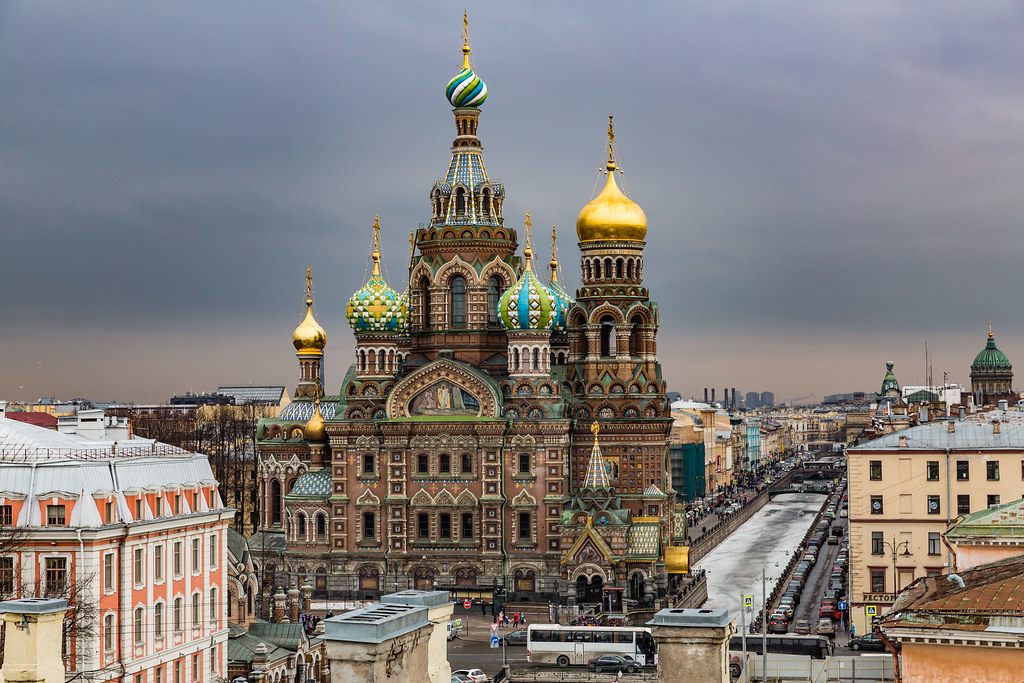
Saint Petersburg is undoubtedly one of the most impressive cities in the world. Its splendor and grandeur reflect the fact that it was the capital of Imperial Russia. The aim of this article is to analyze the political influence of Saint Petersburg as the Russian capital up until the end of the World War I (the “long” 19th century). During the 19th century, processes and cultural achievements reached their peak, through which Russia emerged as a creative civilization. It should be noted that Saint Petersburg was founded only at the beginning of the 18th century. However, soon after its establishment, it managed to replace Moscow (which had been the Russian capital since the 14th century). Geographically and culturally, the city represented Russia’s “window” to Europe. Its architecture clearly reveals strong French influence. In general, many Russian cities were adorned with neoclassical buildings, reflecting Western influence. The rivalry between Moscow and Saint Petersburg remained a constant in Russia’s national landscape for a long time.
Foundation
Saint Petersburg was founded during the reign of Tsar Peter I the Great (1682–1725), and its appearance reflected modernization processes and a turn toward Europe. Peter the Great personally laid the foundation stone of the Peter and Paul Fortress in 1703. The city quickly developed into a trading center and first became the Russian capital in 1712. After alternating with Moscow, it permanently assumed that role in 1732.
Context of the City’s Development
At the beginning of the 18th century, Peter the Great returned to Russia after traveling across Western Europe. These journeys inspired him to introduce numerous administrative reforms aimed at positioning Russia as a key European actor. A crucial step in this direction was the creation of a new capital whose location symbolized openness to Europe. Thus, in 1703, construction began on the banks of the Neva River near Lake Ladoga.
Residents of Moscow resisted losing their city’s primacy, but their opposition proved futile. In 1732, Empress Anna of Russia permanently transferred the royal residence to Saint Petersburg. The city thus became a symbol of Russian modernization, while Moscow remained the embodiment of traditional Russia.
Saint Petersburg was modeled after Amsterdam and was originally named Sankt Piter Bourkh. Renowned architects from Italy, the Habsburg Monarchy, and Germany participated in its construction. Because the city was built on marshy terrain, wood had to be replaced with stone as the primary building material. To solve the shortage of stone, construction in stone was banned elsewhere in Russia, and anyone entering the city was required to bring stone or money for its purchase. Many Finns worked on its construction, and by the mid-18th century, most residents spoke Russian, German, and Finnish.
Industrial and Strategic Development
The 19th century was a period of rapid urbanization and industrialization, especially in its second half. Saint Petersburg ranked alongside cities like Vienna and Berlin, serving both as a political capital and a major industrial center. Concentrating political, economic, and administrative power in one location significantly enhanced its political importance.
Its advantageous position on the Neva River, with access to the Baltic Sea, connected it to European coastal states. Unlike Moscow, which lay deep within the continent, Saint Petersburg had direct access to international trade routes, making it a gateway for both Russian expansion into Europe and European capital entering Russia.
Railways and Urban Network
The city’s development was supported by a network of surrounding settlements. For example, Petrozavodsk supplied Saint Petersburg with metal products due to its nearby iron mines.
Railways further accelerated development. The city was connected to Moscow by the Nikolaev Railway, with travel times ranging from 15 to 23 hours depending on the type of train.
Political Processes
From the beginning of the 19th century, Saint Petersburg was the stage for major political events. In 1801, a conspiracy led by Count Peter Ludwig von der Pahlen resulted in the assassination of Tsar Paul I of Russia, who was succeeded by his son Alexander I of Russia.
The importance of controlling the capital became evident—seizing power in Saint Petersburg often meant controlling the entire empire. This logic also guided the Decembrist Revolt of 1825, when reform-minded officers sought to establish a constitutional monarchy and abolish serfdom. Though unsuccessful, the uprising highlighted the city’s central political role.
In 1881, members of the revolutionary organization Narodnaya Volya assassinated Tsar Alexander II of Russia, ironically a reformer who had abolished serfdom in 1861. The act failed to dismantle the regime but led to severe repression.
Revolution and Transformation
During World War I, the city’s German-sounding name became politically problematic, and in 1914 it was renamed Petrograd.
In 1917, Saint Petersburg became the epicenter of two pivotal revolutions. The February Revolution overthrew the tsarist regime, while the October Revolution, led by Vladimir Lenin, established the world’s first communist state. The revolution began with a signal shot from the cruiser Aurora, marking a turning point in global history.
Monumentality and Symbolism
Saint Petersburg’s grandeur is embodied in landmarks such as the Hermitage Museum, one of the largest art museums in the world, and the Winter Palace, built by Catherine the Great. Other notable sites include the Peterhof Palace, inspired by Versailles, and the Kazan Cathedral, modeled after St. Peter’s Basilica in Rome.
The city also housed the Alexander Nevsky Monastery, founded by Peter the Great and dedicated to Alexander Nevsky, symbolizing the integration of state and church.
Conclusion
As the capital of Imperial Russia, Saint Petersburg held immense political significance in the 19th century. The concentration of power within the city meant that controlling it often equated to controlling the entire state. This was especially evident during the revolutions of 1917.
Beyond politics, the city symbolized Russia’s connection to Europe in cultural, economic, and diplomatic terms. Its monumental architecture and institutions, particularly the Hermitage, stand as lasting testaments to its historical importance.