By Matija Šerić
On Tuesday, February 17, the Chinese, not only in the People’s Republic of China but all over the world, began celebrating the Chinese New Year. I say “began” because the length of the celebration depends on the region. Most often it is celebrated for two weeks (from the new moon to the full moon), a period known in China as the Spring Festival. This is the perfect opportunity to take a peek into this somewhat mysterious Chinese holiday.
Mysterious Origins
The origin of this holiday is shrouded in mystery. According to a widely accepted Chinese legend, thousands of years ago, a monster named Nian (“Year”), which lived in the mountains or in the depths of the sea, would attack villagers at the beginning of each new year. These attacks occurred during the night. In addition to crops and livestock, children and the elderly were the most vulnerable.
The monster feared loud noises (explosions), bright lights, and the color red, so people used these means to scare it away and protect themselves. Red lanterns and couplets were placed on doors and windows to prevent Nian from entering homes. Crackling bamboo (later replaced by firecrackers) was set alight to frighten the monster away. In other words, the Chinese began celebrating the New Year as a way to protect themselves from evil.
Millennia-Long Continuity of Celebrations
The exact beginning of the celebration is unknown. Some believe it dates back to the Shang dynasty (1600–1046 BC), when sacrificial rituals were held at the beginning or end of each year to honor gods and ancestors. The holiday was formally established during the Zhou dynasty, and the date was fixed during the Han dynasty. Altogether, the celebration has lasted around 3,500 years. After the establishment of the Republic of China in 1912, the holiday was abolished and replaced with the Gregorian calendar. However, after the communist victory in 1949, the Chinese New Year was reinstated under the name Spring Festival. Two years ago, the holiday was included on UNESCO’s list of intangible cultural heritage of humanity.
A Cultural-Civilizational Phenomenon Spreading Across Asia and the World
The Chinese New Year is also called the Lunar Chinese New Year because it is determined according to the lunar cycle. According to the Western calendar, the first day of the Chinese New Year falls between January 21 and February 20. Besides China, it is celebrated in neighboring countries with significant Chinese populations, such as Singapore, Thailand, Cambodia, Brunei, Indonesia, Myanmar, the Philippines, and among the diaspora on all continents, particularly in the U.S. (notably in New York, San Francisco, and Los Angeles).
The existence of the Chinese New Year influenced the development of other national New Year celebrations in neighboring Asian countries, such as Vietnam (Tet), Tibet (Losar), Korea (Seollal), or Japan (Shogatsu and Ryukyu). The holiday is called the Spring Festival, even though it formally falls in the middle of winter. This is because it marks the end of winter and the beginning of spring. The Spring Festival celebrates the desire for new life, as spring symbolizes renewal.
The World’s Largest Human Migration
Since the 1990s, the Chinese government has granted several days off (officially four, but practically seven) so people can rest. Factories across China temporarily close, and workers return to their hometowns to spend time with family. The holiday results in the world’s largest annual human migration. In a country of around 1.4 billion people, about three billion travel during the New Year holidays to spend time with loved ones.
Folk Traditions
This holiday is essentially China’s equivalent of Christmas. During the old and new year, feasts take place in homes, featuring dishes believed to bring good luck, such as fish, dumplings, noodles, and pudding. Windows and doors are decorated with red paper ornaments symbolizing happiness, joy, wealth, and longevity. Traditional customs include lighting fireworks and giving money in red envelopes, bringing blessings and abundance for the new year. Among superstitions, breaking dishes is believed to bring bad luck, so many prepare meals a few days in advance, and the first day should avoid even cleaning the house.
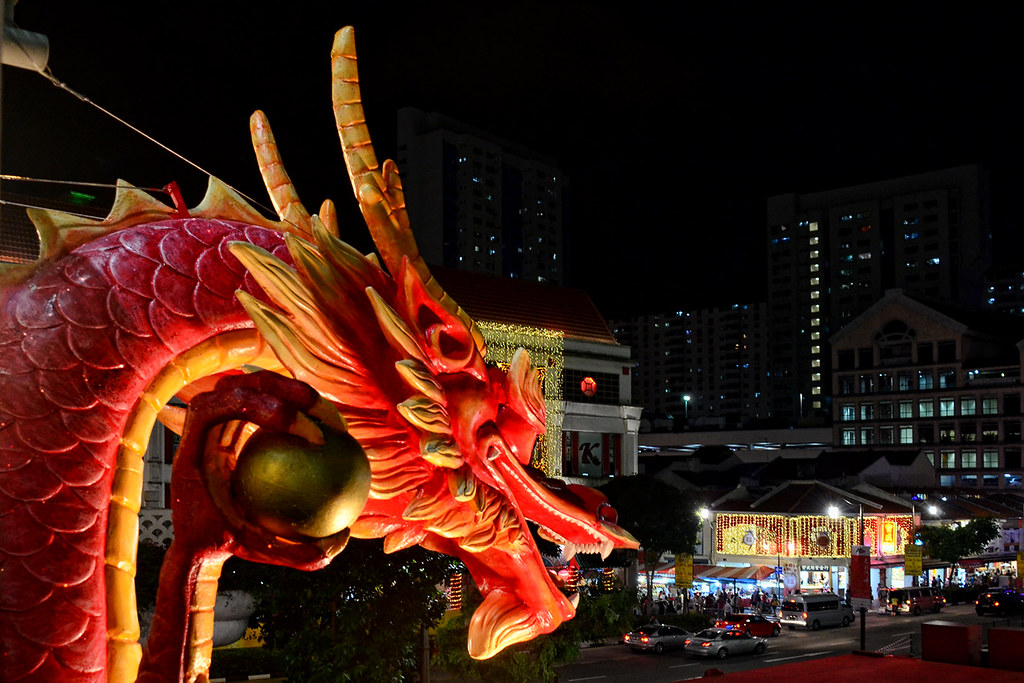
The New Year celebrations conclude with the Lantern Festival (late February or early March), during which people hang illuminated lanterns in temples or carry them in nighttime processions. As the dragon is a Chinese symbol of luck and prosperity, the dragon dance is a central feature of celebrations in many regions. Participants form a long, colorful dragon in the parade.
The Year of the Fire Horse
The current Chinese year is the Year of the Fire Horse. This is no coincidence. Each year is associated with an animal in the Chinese zodiac, of which there are 12: rat, ox, tiger, rabbit, dragon, snake, horse, goat, monkey, rooster, dog, pig. In the Chinese horoscope, the year of birth influences a person’s character and determines their destiny. The Chinese take their zodiac seriously, unlike the casual horoscopes in Western newspapers. Some signs, like the dragon, are considered the luckiest, associated with power and success. Some couples even plan to have children in the year of the dragon, believing that children born in those years will have the best chances of success in life. Overall, the current Year of the Horse is considered a year of activity, progress, and change—ideal for starting new projects, traveling, or pursuing personal ambitions.
A Promising Year Ahead
Currently, the Chinese are facing challenges such as the need for economic transformation, an aging population, social inequalities, climate change, and hostile U.S. policies. According to the Chinese horoscope and the Year of the Horse, overcoming these challenges should be easier. Knowing China’s history, it is evident that the country will find solutions to these challenges. Ultimately, the Chinese have historically emerged victorious from problems sooner or later.