By Matija Šerić
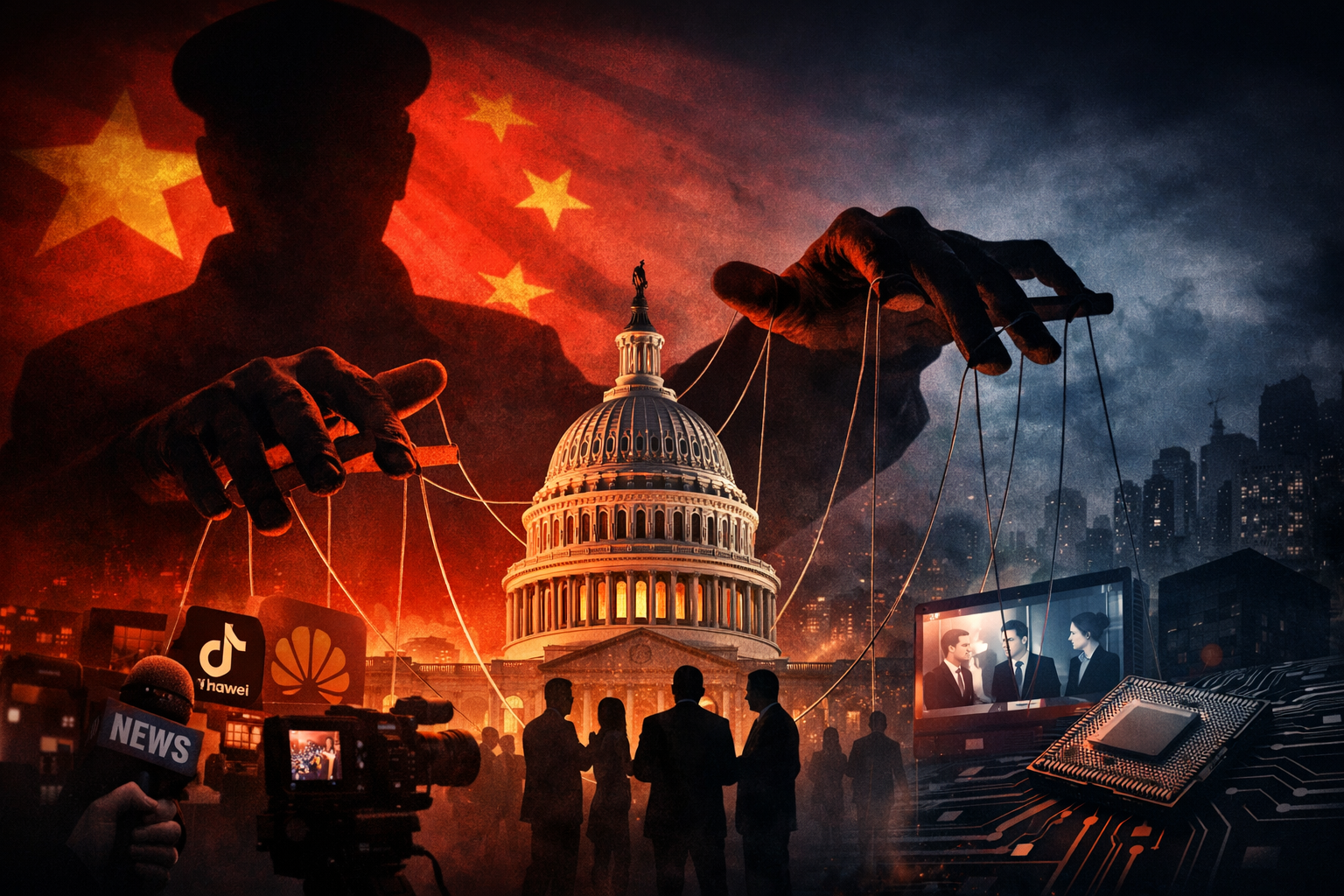
The Chinese business lobby is most visible through Chinese multinational corporations operating in the United States. Among the best-known Chinese companies are Huawei, Tencent, Alibaba, ByteDance (owner of TikTok), ZTE, and others. These companies lobby to secure favorable conditions for doing business on the U.S. market, such as reducing tariff barriers and exempting Chinese products from sanctions. They employ American lobbying and law firms to ensure political support and to influence the legislative process.
A Dynamic Business Lobby
Chinese companies invest in U.S. technologies, real estate, manufacturing, and energy, with these investments serving as levers to strengthen Chinese influence. For example, Chinese acquisitions of U.S. technology companies—particularly those involved in artificial intelligence or semiconductor development—enable China to gain access to sophisticated technologies. In addition to Chinese firms, it is also important to highlight the role of American companies with significant business interests in China.
Apple, Boeing, General Motors, Tesla, and other U.S. corporations invest billions of dollars in the Chinese market. They often lobby against policies that could threaten their operations in China, such as sanctions or restrictive trade measures. Furthermore, American business nonprofit groups, such as the U.S.-China Business Council and the National Committee on U.S.-China Relations, represent the interests of 200 or more American companies that do business with China.
Cultural-Academic Lobby
The cultural-academic lobby manifests itself through the promotion of Chinese culture, language, and history via various programs, educational institutions, and cultural centers. The most well-known example is the Confucius Institutes, which are present at numerous American universities. They were officially established to promote language and culture and are directly sponsored by the Chinese government. Although at first glance these institutes appear to be cultural organizations, they have been criticized for their ties to the Chinese Communist Party (CCP) and for spreading pro-Chinese propaganda. Many American politicians believe that Confucius Institutes serve as tools for monitoring and controlling topics related to Chinese history and politics, such as Tibet, Taiwan, and the repression of Muslims in Xinjiang. Due to these accusations, many university campuses have closed their Confucius Institutes, while others have subjected them to stricter oversight.
The Chinese government also encourages academic exchanges and scholarships to promote intellectual and cultural ties with American universities. Chinese students make up one of the largest groups of foreign students in the United States, and many of them continue to work in high-tech institutions after completing their studies. However, student activities are under increased scrutiny by U.S. intelligence services, which claim that China uses them as spies.
Political-Diplomatic Lobby
The Chinese government uses a network of diplomatic missions, non-governmental organizations, and think tanks to directly influence U.S. policy, aiming to shift it in a pro-Chinese direction. To this end, they engage American lobbying firms and law offices to represent their interests. Lobbying firms frequently lobby members of Congress and other government agencies to ensure that Chinese interests are taken into account in the legislative process.
Although the Chinese government cannot directly finance political campaigns in the United States, Chinese companies and individuals with Chinese business interests often financially support American political candidates within legal limits (through donations). Chinese companies such as Huawei and ZTE have used lobbying campaigns in attempts to soften bans on access to the U.S. market.
Chinese diplomacy often focuses on specific issues such as Taiwan, Hong Kong, North Korea, and the South China Sea. Chinese diplomats contact American politicians, business leaders, and media outlets to promote China’s stance on these sensitive issues. The Chinese government and companies also frequently lobby major U.S. corporations, such as Apple and Boeing, to enlist them as intermediaries in protecting Chinese interests.
Media Lobby
Media are one of the main tools for shaping public opinion in the United States. Chinese media outlets such as China Global Television Network (CGTN), China Daily, and Xinhua actively disseminate the Chinese perspective on global events through their channels. In addition, Chinese state media companies cooperate with American media to promote narratives aligned with the interests of the People’s Republic of China. In recent years, China has increasingly relied on social networks and digital platforms to spread its propaganda. Platforms such as WeChat and TikTok play a key role in disseminating content that supports the Chinese government, sometimes subtly and sometimes more openly. Although these activities are subject to criticism (the banning of TikTok in the U.S. is underway), they are part of a broader Chinese strategy.
Non-Traditional Lobby Activities
It should be emphasized that the Chinese lobby is not always exclusively a demonstration of China’s soft power; sometimes it involves classic hard power. This can be seen in the case from May 2022, when the U.S. Department of Justice charged Wang Shunjun and four agents of China’s Ministry of State Security with repressive activities targeting Uyghurs and Tibetans in the United States. Moreover, cyber operations, such as cyberattacks, represent a sophisticated way in which China uses technology to achieve its goals.
Chinese online spies target American institutions and companies to steal sensitive information, particularly related to technology and security. These operations complement China’s broader effort to strengthen its influence in key technological sectors. Therefore, it is not surprising that American companies and the government accuse Chinese firms of appropriating innovations and technologies through illegal means.
American Politicians in the Service of the Lobby
Many prominent American politicians are believed to be in the service of the Chinese lobby, whether consciously or unconsciously. The recently deceased Henry Kissinger, known for his role in normalizing U.S.-China relations in the 1970s when he was Secretary of State, remained active until recently in promoting ties with China through his advisory work. For this reason, many analysts considered him the chief Chinese lobbyist in America. Likewise, the recently deceased long-serving Democratic senator from California, Dianne Feinstein, was under scrutiny due to her long-standing ties with China. Her driver and aide was accused of being a Chinese spy, raising concerns about her closeness to Chinese political and business circles.
Eric Swalwell, a Democratic congressman from California, was investigated for his connection to a Chinese operative known as Fang Fang or Christine Fang. She allegedly had ties with American politicians, including Swalwell, to gather information. Swalwell claimed he was unaware of her role and was not charged with any collaboration with the Chinese lobby, but the case sparked controversy.
Influential Republican Senator Mitch McConnell faced criticism over the business ties of his wife, Elaine Chao—an American of Chinese descent—and her family (who own a shipping company) with China. Chao, who served as Secretary of Transportation in the Trump administration, and her family have long-standing business relationships with the Chinese government, raising questions about conflicts of interest. Hunter Biden, the son of former President Joe Biden, was the subject of controversy due to his business ties with Chinese companies. The allegations related to his work with Chinese enterprises while his father was Vice President of the United States. Although these accusations were the subject of political debate, it has not been proven that Hunter Biden directly acted as an agent of Chinese interests; nevertheless, questions about potential conflicts of interest remain.
Conclusion
The Chinese lobby in the United States is one of the most influential foreign lobbies in the country, second only to the Israeli lobby. Its presence affects nearly every aspect of U.S. policy toward China, from defense, foreign trade, and technological cooperation to relations with Taiwan, Hong Kong, and Xinjiang. While the Chinese lobby brings many benefits to the United States, such as strengthening economic ties and cultural exchange, it simultaneously creates challenges and risks for the American political system, especially for foreign policy decision-makers. As a result, there are growing calls for a tougher approach toward the Chinese government and organizations under Chinese influence (e.g., Secretary of State Marco Rubio). In the future, ensuring transparency and accountability in lobbying will be crucial to preventing Chinese interests from outweighing the interests of American citizens and the United States.