-

By Matija Šerić
We all know very well that Donald Trump is an unconventional politician willing to make unexpected moves, but day by day the American president continues to shock the public with his bizarre decisions. Since he first became recognized as a celebrity himself (a real estate tycoon and tabloid star) during the 1980s—long…
Continue reading… -

By Bruno Rukavina
The burden of the past in today’s discussions in Croatia is visible through speeches and narratives about the so-called fascization of Croatia or Yugoslavization of Croatia, while in political science terms neither is actually occurring, except perhaps partially in the semantic and symbolic sense among certain individuals or narrow groups within…
Continue reading… -

By Bruno Rukavina
The goal of this analysis is to draw historical lessons on the occasion of the 1100th anniversary of the Croatian Kingdom, the 80th anniversary of victory in the Second World War, and the 30th anniversary of the magnificent victory in the Homeland War. It also aims to highlight the key challenges facing…
Continue reading… -

By Matija Šerić
“You have to go where the oil is. I don’t think much about political instability,”said Dick Cheney at a meeting of Texas oilmen in 1998, while he was still CEO of Halliburton, the world’s largest oil infrastructure company. The American administration led by George W. Bush and Vice President Cheney, which…
Continue reading… -

By Matija Šerić
“Rare Exports: A Christmas Tale” (2010)
The fact that many quality Christmas-themed films have been made outside of Hollywood is proven by this Finnish film, which involved co-producers from Norway, Sweden, and France. It is an unusual fantasy-horror comedy. Director and screenwriter Jalmari Helander let his imagination run wild, and the results…
Continue reading… -

By Matija Šerić
To successfully launder the money earned from drug trafficking, the Cali Cartel heavily invested its profits into legitimate business ventures as well as various companies and trades to disguise the illegally obtained funds. For example, it is believed that in 1996 the cartel was earning 7 billion dollars from drug trade in…
Continue reading… -

By Matija Šerić
Organized crime—that is, illegal mafia activities—has been present throughout the entire history of humanity, and in the modern world narcotic cartels attract particular attention. Illegal drug trafficking has become the main engine of organized crime. Most states today struggle to cope with narcotics distribution, and in many countries the use of soft…
Continue reading… -

By Matija Šerić
Time passes rather quickly. As we grow older, the feeling of time slipping away only becomes stronger. We have entered deep into autumn and the Advent season, and Christmas is just around the corner. Although the meaning of the Christmas holidays should be rooted in Jesus Christ — after all, Christmas is…
Continue reading… -

In the 12th episode of the Actualitica Podcast, the guest is geneticist, evolutionist, molecular biologist, and Christian apologist Assistant Professor Dr. Petar Tomev Mitrikeski.
The topics of this episode cover Christianity, science, society, and geopolitics. Although we live in a modern age dominated by technological wonders, the world is still marked by wars and…
Continue reading… -

By Ivan Toth
The Northern Part of Iwo Jima
Despite losing Mount Suribachi on the southern part of the island, the Japanese firmly held their positions in the north. The rocky terrain favored the defenders even more than Suribachi, which was within range of naval artillery and therefore an easier target for bombardment. Combined with…
Continue reading… -

By Ivan Toth
Amphibious Landing, 19 February 1945
During the night, a large naval force of carriers and escorts, Task Force 58 under Vice Admiral Marc A. Mitscher, arrived at Iwo Jima. Also in this fleet was Admiral Raymond A. Spruance, overall commander of the invasion, who was aboard the flagship, the heavy cruiser Indianapolis…
Continue reading… -

By Matija Šerić
Stocks (also known as shares or equities) have become so commonplace that we often take them for granted. We hear about them in the news, in casual conversations at cafés, in political speeches and analytical reports – as if they have always been an integral part of our world. Yet behind this…
Continue reading…
-
Friendly Fire: A Problem of Modern Wars
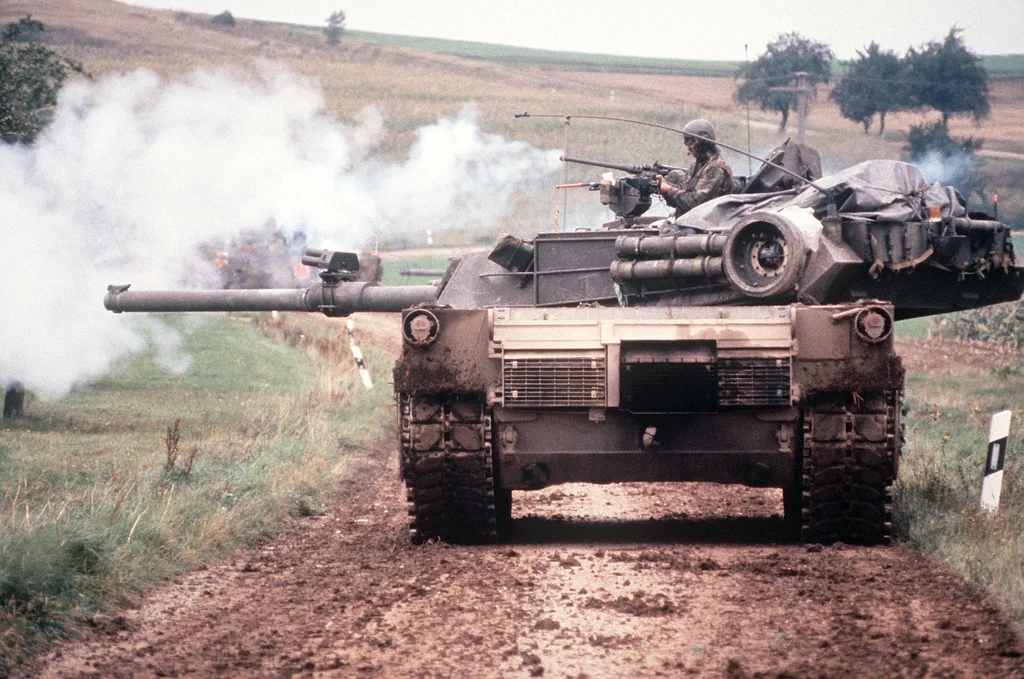
By Matija Šerić Friendly fire represents an extremely serious aspect of armed conflicts. It refers to situations in which military forces—members of the same army or allied troops—unintentionally open fire on one another. The United States Department of Defense has formally defined friendly fire as “a circumstance in which members of U.S. or allied military…
-
Friendly Fire: A Problem of Modern Wars
By Matija Šerić Friendly fire represents an extremely serious aspect of armed conflicts. It refers to situations in which military forces—members of the same army or allied troops—unintentionally open fire on one another. The United States Department of Defense has formally defined friendly fire as “a circumstance in which members of U.S. or allied military…
Hello,
Actualitica.com

is a newly established magazine dedicated to objective research and analysis on various topics. The main goal is to provide unbiased information and a true reflection of events.