By Matija Šerić
Friendly fire represents an extremely serious aspect of armed conflicts. It refers to situations in which military forces—members of the same army or allied troops—unintentionally open fire on one another. The United States Department of Defense has formally defined friendly fire as “a circumstance in which members of U.S. or allied military forces are mistakenly or accidentally killed or injured in action by U.S. or friendly forces actively engaged with the enemy or directing fire at what is believed to be enemy forces.”
Friendly fire should not be confused with the term fragging, which refers to the deliberate attempt to kill fellow soldiers or officers within one’s own ranks. Fragging was particularly present among U.S. troops during the Vietnam War, as troop morale declined and combat intensity increased—no fewer than 527 such incidents were recorded between 1969 and 1971.
A Byproduct of Warfare
However, while intentional attacks on one’s own soldiers can be prevented through discipline, friendly fire is far more difficult to limit—and even harder to eliminate. It is a byproduct of modern warfare and accompanies virtually every conflict to some degree. It is almost certain that friendly fire will occur sooner or later in any war. Although unintentional targeting of one’s own forces has existed since ancient and medieval times, it was rarely given much attention unless a high-ranking officer was involved.
While friendly fire has existed since the earliest human conflicts, its frequency has increased alongside advances in military technology. This phenomenon has severe and far-reaching consequences—not only for the soldiers directly involved, but also for military strategy, troop morale, and political leadership.
The world’s most powerful military, that of the United States, has been seriously studying this phenomenon over the past three decades. “The fact that the percentage of friendly fire casualties from World War I to Vietnam has been extremely low does not make accidental killing or wounding of one’s own troops any less tragic,” stated a 1982 U.S. Army report. “There is reason to believe that losses attributable to friendly fire in modern warfare constitute a statistically insignificant portion of total casualties (perhaps less than 2%).”
Rising Numbers of Casualties Within Own Ranks
As warfare has become more advanced—with improved weaponry and longer engagement ranges beyond soldiers’ line of sight, and with the ability to track who targeted whom—friendly fire has emerged as a growing problem. It appears that the number of casualties is far higher than the previously mentioned 2%. Modern weapon systems often operate faster than the human reaction needed to control them.
During the First Gulf War in 1991, 24% of U.S. soldiers killed in combat died due to friendly fire. Additionally, 77% of American military vehicles were destroyed by U.S. forces themselves. According to one study, 10–15% of American casualties in all wars of the 20th century were caused by friendly fire—amounting to between 177,000 and 250,000 U.S. soldiers mistakenly killed by their own side.
Causes of Friendly Fire
Friendly fire can arise from a wide range of causes, including imperfections in military technology, communication errors, human factors, and insufficient training. Limitations in identification systems become especially evident on complex battlefields with rapidly shifting dynamics. The complexity and speed of maneuvers make accurate identification of friendly versus enemy forces extremely difficult.
“While modern weapons have enhanced the firepower of military forces, the technology that helps combat personnel maintain situational awareness and distinguish friend from foe under difficult combat conditions has lagged behind,” noted a U.S. military document from 1992.
Accurate communication between different military units is crucial to preventing friendly fire. Errors in transmitting information, misunderstandings, or failures in communication systems can lead to misidentification and unintended attacks. In modern conflicts—where complex weapon systems and rapid response are essential—the risk of human error increases significantly.
Identifying the enemy in dynamic and chaotic environments is highly challenging, and rapid decision-making can result in unintended engagement with one’s own forces. Psychological factors such as stress, fatigue, and lack of concentration also play a critical role, often leading soldiers to make fatal decisions in chaotic situations.
Insufficient training in recognizing friendly forces and applying proper protocols further increases the risk. Technical malfunctions in weapons, vehicles, radar, or other equipment can also trigger unintended fire or explosions. If military units lack accurate, up-to-date information about the positions of friendly and enemy troops, the likelihood of misidentification rises. In addition, identification systems—such as light signals or markers—can fail or become unreliable in complex environments.
Friendly Fire in World War II
In World War I, approximately 75,000 French casualties were caused by French artillery. During World War II, friendly fire became more widespread and noticeable on a larger scale. It appears that the Allies made more such errors than the Axis powers.
Among German incidents, the sinking of the destroyers Leberecht Maass and Max Schultz by the Luftwaffe in the North Sea in February 1940 stands out. Above Tobruk in June 1940, Italian anti-aircraft fire shot down an Italian aircraft carrying Italo Balbo, the Governor of Libya and a prominent Fascist leader considered a potential successor to Mussolini.
Some examples of friendly fire would be almost absurd if they were not tragic. During the American-Canadian invasion of the Aleutian Islands in 1943—specifically the island of Kiska—28 Americans were killed and 50 wounded even though all Japanese forces had already withdrawn. During the Allied invasion of Sicily, on the night of July 11, 1943, American ground and naval forces mistakenly fired upon U.S. transport aircraft (C-47s), shooting down 23 planes and damaging 37 others, resulting in 318 casualties, including 60 aircrew members and 81 paratroopers.
Friendly Fire in Recent Wars
In more recent times, friendly fire has most frequently occurred in the wars in Vietnam, Afghanistan, Iraq, and Syria. It was a serious issue during the Vietnam War (1955–1975), where dense jungles, difficult environmental conditions, and rapid combat dynamics contributed to frequent incidents. Approximately 5% of total casualties in that war were caused by friendly fire.
During the Iraq War (2003–2011), friendly fire incidents resulted from the complexity of urban warfare, the presence of guerrilla forces, and rapidly changing tactical situations. Similarly, in Afghanistan (2001–2021), complex terrain, insurgent activity, and high operational tempo contributed to the problem.
In April 2002, four Canadian soldiers were killed when a U.S. Air National Guard pilot dropped a 226 kg bomb on them during a nighttime exercise in southern Afghanistan. In August 2007, three British soldiers were killed when a U.S. Air Force F-15 bombed their position during a firefight with Taliban forces in Helmand Province.
Earlier still, during the Soviet-Afghan War in the 1980s, friendly fire incidents were frequent among Soviet troops, who were unfamiliar with Afghanistan’s vast and complex terrain, including mountains, plateaus, hills, and river valleys. The ongoing war in Syria, marked by extreme complexity and the presence of numerous domestic and foreign armed groups, has also seen frequent cases of unintended engagements among allied or friendly forces.
The Death of Andrija Matijaš “Pauk”
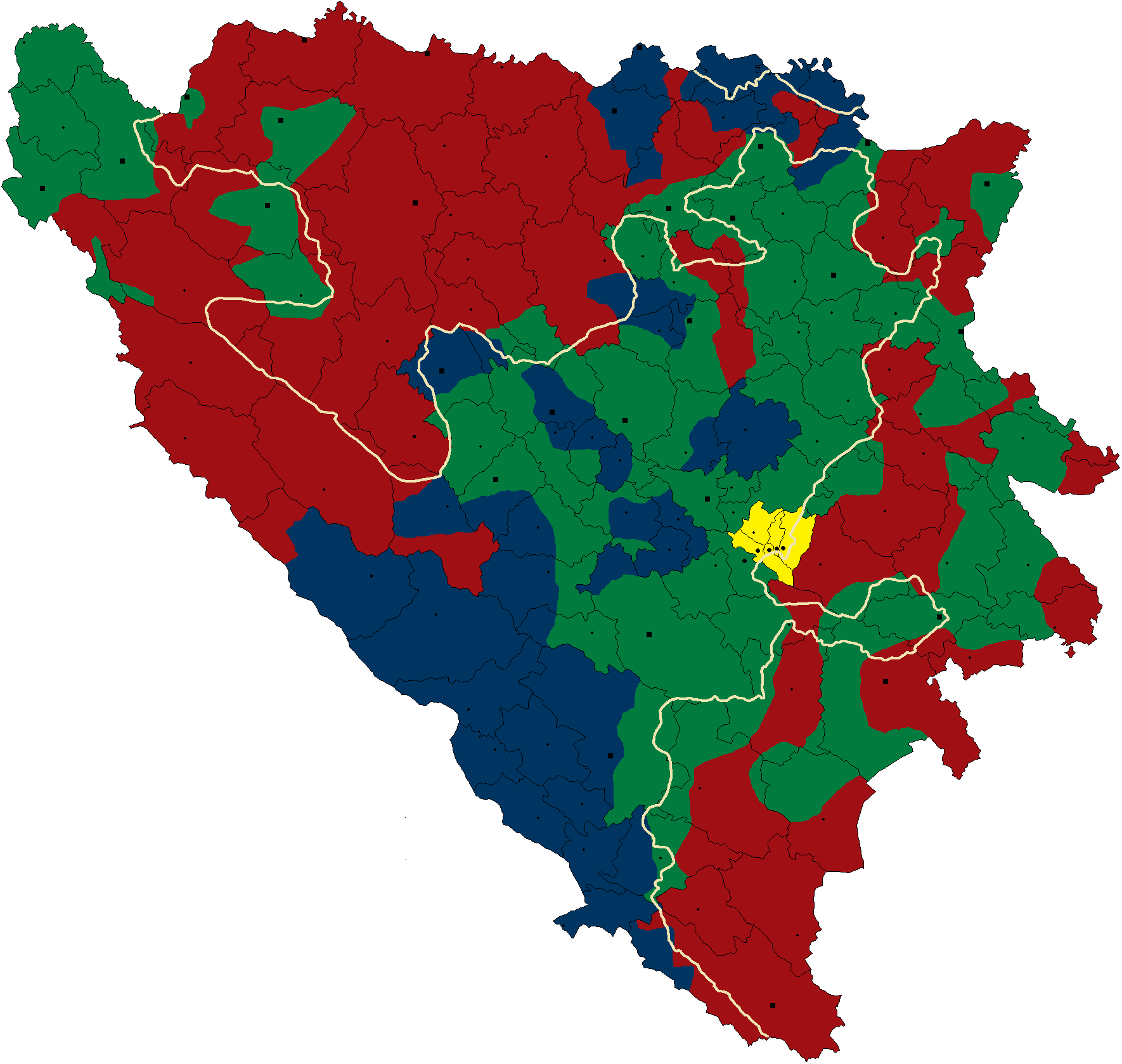
During the final stages of the war in Bosnia and Herzegovina, a legendary Croatian military commander, Major General Andrija Matijaš “Pauk,” was killed by friendly fire. Operation Southern Move (October 8–15, 1995) was the last offensive by Croatian forces (HV and HVO), which pushed Serbian forces to within 23 km of Banja Luka.
In the chaos of battle near Mrkonjić Grad, Croatian and Serbian troops and armored vehicles became intermixed and were often visually similar. Matijaš was tragically killed by friendly fire while leading his tank units in an assault—a role he frequently took on, as he was an expert in armored warfare. His death was concealed for several days to avoid demoralizing troops. Although the operation was a major victory, it left a bitter aftertaste due to his loss.
Unwanted Consequences
The consequences of friendly fire are severe and long-lasting. Loss of life and serious physical and psychological injuries are often irreparable. Such incidents can undermine trust within military units, negatively affecting morale, coordination, and combat effectiveness.
Tactically and strategically, friendly fire can disrupt operations and force changes in planning. Enemies may exploit the confusion created by such incidents. Politically, these events often attract media and public attention, potentially placing military leadership and governments under scrutiny if such incidents occur frequently.
Similarity to Accidental Civilian Casualties
The phenomenon of friendly fire closely resembles the unintentional killing of civilians in war. The key difference lies in how these cases are perceived. Civilian deaths are often labeled as “civilian casualties” or, more commonly, “collateral damage.” However, military leaders are rarely held accountable for such unintended outcomes.
One notable case occurred during World War II, where a trial was held over the accidental bombing of civilians. It is best known because the presiding judge was the American actor and colonel James Stewart.
On March 4, 1945, six USAAF B-24H bombers dropped 12.5 tons of high explosives and 12 tons of incendiaries on Zurich, killing five people. The intended target was Aschaffenburg near Frankfurt, 290 km to the north. The crews mistakenly believed they were bombing Freiburg. The pilot and navigator were tried but ultimately acquitted, with blame attributed to poor weather and equipment malfunction.
In modern times, civilian casualties have been particularly high in the Israeli-Palestinian conflict, the Syrian civil war, and the wars in Afghanistan, Iraq, and Bosnia and Herzegovina.
Preventive Measures
Preventing friendly fire has become a priority for modern armed forces. The development of advanced identification and tracking technologies, improved communication systems, and better training in recognizing allied forces are key factors in reducing risk.
Military units conduct simulations and joint exercises to enhance coordination and understanding between different branches. Advances in autonomous systems, artificial intelligence, and identification technologies offer new possibilities for reducing errors. However, these innovations also require careful ethical use.
U.S. military officials emphasize that, alongside technology and training, military doctrine—how and when to apply force—is equally crucial in minimizing losses from friendly fire.
Conclusion
Friendly fire remains a significant challenge in modern warfare, with the potential to cause serious strategic losses. Reducing its occurrence requires continuous improvement in technology, training, and operational protocols.
The ability of military forces to accurately identify, communicate with, and coordinate among their own units is essential for preventing such incidents. Ultimately, the lives of soldiers are the most valuable resource any military possesses. Despite all technological advancements, infantry remains crucial for securing and defending territory on the ground.