By Matija Šerić
Modern capitalism has become the generally accepted form of economic organization in the contemporary state. Although it has proven to bring many benefits because it is based on the free market and competition, capitalism is also synonymous with the exploitation and oppression of workers and with social inequality. Profit is important and welcome for states and companies, but it should not come at the expense of workers. Unfortunately, this principle is violated to a greater or lesser extent everywhere in the world where so-called market principles dominate. Workers are almost always the greatest losers and the social class that profits the least. A look into history reveals why this is so.
Capitalism as an economic system in Europe and the wider world did not begin developing in the 18th and 19th centuries, as is often mistakenly believed, but rather emerged in the 15th and 16th centuries with the rise of cities, trade, and a money-based economy. Early modern capitalism arose as a direct descendant of the medieval economic system. During the Middle Ages, feudalism prevailed, which is why medieval society is often called feudal society. Even the modern world of the 21st century remains deeply marked by that era and by habits that never truly disappeared.
The Roots of Feudalism
Feudalism emerged from the need to organize society in conditions of constant chaos and continuous military conflict. Its roots can be traced to the final centuries of the Western Roman Empire and the beginning of the Migration Period in the 4th and 5th centuries. During this era, the centralized authority of the Western Roman Empire weakened significantly due to internal crises and invasions by barbarian tribes from northern and eastern Europe. Germanic, Slavic, Hunnic, and other tribes attacked and settled along the empire’s frontier territories. This led to the rapid decline of cities, the collapse of trade, and a return to an agrarian economy. Money was replaced by barter and the exchange of goods.
In such unfavorable circumstances, local lords increasingly assumed responsibility for defense and the maintenance of Roman authority in particular regions. The population became ever more dependent on local elites because the Roman army was no longer capable of protecting distant territories. The decentralization of power enabled local leaders — military commanders and tribal chiefs — to become de facto rulers and laid the foundations for the future feudal system.
The roots of feudalism can also be found in the systems of Germanic tribes such as the Angles, Saxons, Franks, and Goths, whose social and legal relations emphasized loyalty to a ruler, the granting of land, and military service. The comitatus system among Germanic tribes required warriors to serve a leader in exchange for protection and rewards in the form of land or wealth. This practice later became the basis of feudal relations between vassals and lords.
The Emergence of Feudalism
Feudal society emerged in the Early Middle Ages (8th and 9th centuries) within the Frankish Kingdom and gradually spread across Europe. Under the Carolingian dynasty, feudalism began to assume its recognizable form. The most powerful Frankish ruler, Charlemagne, who ruled from 768 to 814, established authority over much of Western Europe. To govern such a vast territory and secure military support, Charlemagne granted landed estates to military commanders, church dignitaries, and local nobles. These estates came with obligations: cultivating the land or providing military service.
The Fief – Foundation of Power
In the feudal system, the fief or estate was the fundamental measure of wealth and value because money was largely absent in medieval Europe. The fief became the key instrument of governance and control. Kings and nobles owned fiefs. In the Frankish Kingdom, all land formally belonged to the ruler, who granted it to nobles and warriors. Rulers also donated land to the Church.
Nobles received land in exchange for loyalty to the ruler and service in the army. A feudal estate included not only agricultural land but also forests, rivers, lakes, and villages. The owner of a fief had the right to benefit from the labor of the peasants (serfs) who lived on his estate, but he was also responsible for their protection.
The Vassal Relationship
The foundation of feudalism was the vassal relationship between the lord (senior) and the vassal. Nobles (feudal lords) were the ruling class, while serfs were dependent subjects living on the estate. The nobility formed a privileged minority, while the serfs constituted the oppressed majority of the population.
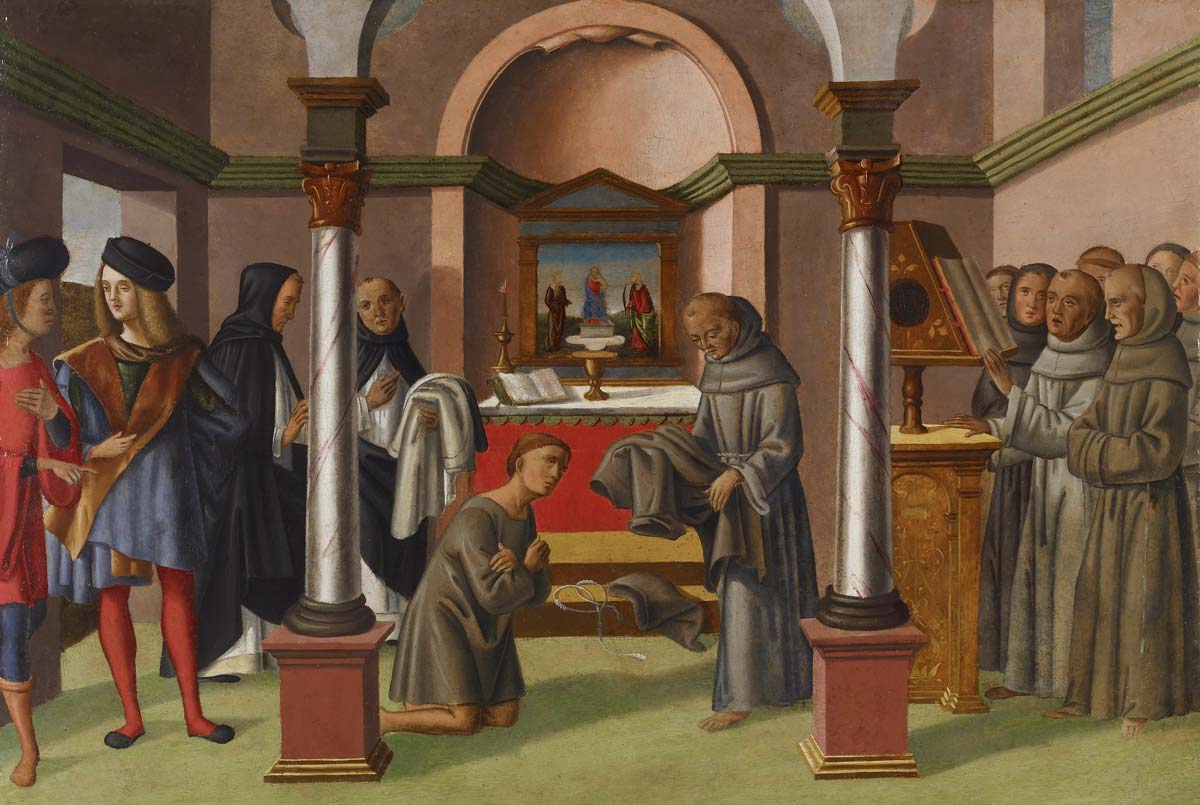
The vassal relationship was formalized through a ceremony of loyalty known as homagium. The vassal swore loyalty to his lord, promising feudal rent, military participation, and political support. In return, the lord guaranteed protection and the right to use the fief.
Relations between lords and vassals were often complex. One person could simultaneously be the vassal of several lords while also acting as a lord to his own vassals. The king stood at the top of this hierarchy. Great feudal magnates served as the king’s vassals and controlled large estates. These magnates further divided smaller lands among lower-ranking nobles who became their vassals.
The fief did not belong to the serfs, and their right to use it depended on fulfilling obligations toward the lord. Serfs had to cultivate the land, pay rents, and surrender part of their harvest, while having very limited opportunities for improving their social status. Feudal lords could judge serfs, serfs could not freely leave the estate, and even marriages often required the lord’s permission. In exchange, lords offered protection from bandits and invaders.
The allod referred to the most fertile section of the estate reserved for the feudal lord, while peasant holdings were the areas where serfs lived and worked.
Manorialism
Feudalism was closely connected to manorialism — a hierarchical medieval economic system in which peasants depended on their lords through rent and labor obligations. Large noble estates, known as manors, functioned as self-sufficient economic units containing farmland, peasant homes, mills, bakeries, and other infrastructure. Serfs worked on the manor and provided for the needs of the estate. The system was effective, though deeply inhumane.
Characteristics of Feudalism
Feudalism was highly decentralized. Although the king was formally the supreme ruler, real power was distributed among local lords. Nobles who controlled large estates often acted as autonomous rulers within their territories, maintaining their own armies and legal systems. While decentralization facilitated local governance and adaptation to regional conditions, it also encouraged conflicts among lords and weakened central authority. Regional wars between nobles were common, especially when royal authority was weak.
Local lords possessed substantial autonomy in administering justice. Feudal lords acted as judges on their estates, resolving disputes and punishing offenders. This legal autonomy enabled faster resolution of local issues but also produced inequality in the application of justice. Laws and punishments varied from one estate to another, and lower social classes were frequently exposed to the arbitrary rule of their lords.
Vassals were obligated to provide military assistance to their lord. This included participation in wars, supplying troops, or maintaining private armies. Knights formed a crucial part of this military force, and their status rested on martial skill and service to a lord. The chivalric code — emphasizing loyalty, bravery, honor, and the protection of the weak — became an important feature of feudal society.
Protection was one of the most important services provided by feudal lords. In the unstable and violent conditions of medieval life, lords ensured security through castles, fortifications, and local guards.
Feudal society in Croatia developed toward the end of the 11th century, especially in Slavonia, and to a lesser extent in Lika, the Croatian Littoral, and the Dalmatian hinterland. During the 12th century, powerful noble families emerged in Croatia. In Slavonia, most peasants were serfs, while south of the Sava River many free peasants still existed.
The Role of the Church
The Christianization of Europe further stimulated the development of feudalism. The Church, one of the most powerful institutions of the medieval world, played a crucial role in legitimizing feudal relations. It justified feudalism as part of God’s divine plan. Kings and lords were viewed as God’s representatives on Earth, and their authority was legitimized through sacred rites.
The Church itself owned enormous fiefs granted by rulers and nobles, worked by serfs. Peasants were required to pay a tithe — one tenth of their income or produce — to the Church, which further strengthened its economic power.
Bishops and monasteries often functioned as feudal lords, and many nobles regarded their authority as divinely granted. Monasteries operated like manors, producing food and goods while providing shelter and contributing to feudal self-sufficiency.
The Church also organized the Crusades, which carried both religious and political significance by mobilizing society for warfare. Although part of the privileged order, the Church also provided charitable assistance to the poor through monasteries and religious institutions.
Advantages of Feudalism
Feudalism had certain practical advantages. After the fall of the Western Roman Empire in 476, Europe faced invasions, raids, and warfare. The feudal system enabled local communities to obtain protection through decentralized authority and noble military resources.
The system also allowed large territories to be governed through local lords, which proved useful at a time when centralized governments could not effectively control distant areas. Manorialism relied on self-sufficient economies. Manors produced nearly everything required for survival, from food to basic tools, reducing dependence on fragile trade networks.
Feudalism established a clear hierarchy and division of responsibilities. Kings ruled, nobles governed land, knights fought wars, peasants worked the soil, and clergy prayed. This structure provided order, even if it was fundamentally unjust.
The Weaknesses of Feudalism
Feudalism was deeply flawed. Most importantly, it generated enormous social inequality. The majority of people, especially serfs, were tied to the land and had almost no opportunity for social advancement. Nobles enjoyed privileges while lower classes were subjected to exploitation and dependence on the will of their lords.
Serfs formed the majority of the population. They were required to pay rents and surrender portions of their harvests, which kept them in constant poverty. Their limited rights and obligations toward their lords made them highly vulnerable.
Although decentralization allowed local control, it also caused political fragmentation and frequent conflicts among nobles. Local rulers often acted independently, weakening central authority and obstructing the formation of stable states.
The feudal economy was overwhelmingly agrarian. Dependence on manorial self-sufficiency hindered the development of trade. The lack of competition and technological progress restricted economic growth and encouraged stagnation.
Feudal military structures also proved inefficient against large centralized powers such as the Ottoman Empire and the Mongol Empire.
The Collapse of Feudalism
Feudalism disappeared in its original form around the same time the Middle Ages ended, near the close of the 15th century. However, its decline stretched from the 14th to the 17th century. Its fall resulted from a combination of economic, political, and social changes.
The growth of cities and the revival of trade routes encouraged the rise of a market economy. Powerful commercial centers such as Venice and Genoa stimulated the spread of a money-based economy that replaced traditional feudal barter.
As monetary systems developed, vassals increasingly fulfilled obligations with money rather than military service or agricultural goods. Peasants began producing surpluses for market sale instead of solely for subsistence or their lords, gaining greater economic independence.
In the mid-14th century, Europe was devastated by the Black Death, which killed roughly 60 percent of the population. The resulting labor shortage increased the bargaining power of peasants. Many serfs abandoned estates in search of better opportunities in towns or on other lands, weakening the feudal order.
During the 14th and 15th centuries, Europe also witnessed numerous peasant revolts, including the English Peasants’ Revolt of 1381. Peasants demanded better working conditions, the abolition of serfdom, and lower taxes. These uprisings further undermined feudal authority.
Feudal Characteristics of Capitalism
Capitalism gradually replaced feudalism during the Early Modern period beginning in the 15th and 16th centuries. Capitalists emphasized private ownership of the means of production, the free market, competition, and the pursuit of profit.
Nevertheless, capitalism integrated many features of feudalism. This remains visible in the 21st century through enormous social inequality, worker exploitation, hierarchical class structures, institutional support for entrenched power, and conflicts between workers, business owners, and the state in the form of strikes and revolutions.
It may take a very long time before feudalism truly leaves the present and becomes nothing more than history.