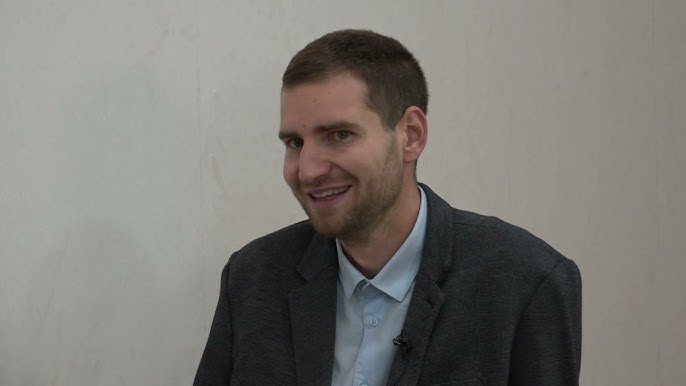
By Bruno Rukavina
The sacred in contemporary culture is facing significant challenges, rooted in the widespread profanization and secularization of society. Nevertheless, it still remains present—particularly in Western societies, which are based on the Judeo-Christian cultural tradition. Numerous contemporary social phenomena, such as cancel culture, can influence the formation of certain perceptions and attitudes toward the Sacred. This article explores the portrayal of the Sacred in popular culture, with a specific focus on its representation in 21st-century cinematography.
The reason for choosing the film industry as a case study lies in the growing popularity of this form of art, which possesses a remarkable ability to manipulate viewers—often subtly promoting particular values and attitudes through storylines and characters. Films reach into the hearts and minds of people and have the potential to shape a distorted view of the world. Various media can be used to relativize the Sacred and traditional values in general, including music, visual arts, literary arts, cinematography, and others.
The Words “Sacred” and “World”
The original etymological root of the word “sacred” (sveto) lies in the Proto-Slavic word svętъ, whose derivatives are still used in Slavic languages today, such as Czech (svatý) and Russian (svjatój / святой). The Russian version emphasizes that the word signifies our connection with the world. The very word “world” (svijet) shares the same Proto-Slavic root, which can denote “planet Earth, humanity, people, public opinion, a group of living beings in nature, or even the totality of physical and psychological phenomena.”
The fact that “world” and “sacred” share the same linguistic root indicates that everything around us is a sacred world—created by God for humankind—and therefore, this world is holy. The sacred can be represented in various ways in the world around us. Rudolf Otto emphasizes that there are expressive forms of the Sacred that can appear in art in many manifestations. These include structures (stone blocks, churches, cathedrals), jewelry, decorations, symbols, emblems, the Gothic artistic style, vast empty spaces (like steppes and deserts), as well as songs, sounds, and music (e.g., Bach, Beethoven, and Mendelssohn).
Mircea Eliade expands on Otto’s view, explaining that in different cultures, the Sacred can manifest as: space, symbols bearing religious significance, time, myths/stories/narratives, nature (water, earth/soil, trees/vegetation), symbols, and elements of life, death, and the human body (the body as the temple of the Holy Spirit and bodily activities such as intimacy). These examples of how the Sacred is represented can be studied in cinematography, where analyzing the context and narrative of the Sacred in specific scenes is essential.
What is Culture and Why does it Matter?
Homo Religiosus
In his works, Eliade emphasizes that a religious human being (homo religiosus), who is deeply rooted in sacred reality, can only truly live within that sacred world. This type of person possesses an unquenchable ontological thirst for being. It is the Sacred that constitutes our existence. It fundamentally alters a person’s position in the world—it demands a powerful, dramatic transformation and awareness of the sacred’s force as something real, meaningful, and potent, in contrast to everything that lacks such qualities. For homo religiosus, total profanity and desacralization represent the embodiment of non-being and give rise to the irreligious modern human.
This modern individual can only realize their potential by desacralizing themselves and the world, because the Sacred is perceived as an obstacle to freedom—a common theme in today’s popular culture. Such a person believes they will achieve their personal identity only by completely demystifying themselves; they will be truly free only once they have “killed the last god.”
Jukić also addresses a similar topic—namely, religious indifference in secular societies. In contemporary social science, indifference is defined as a deliberate withdrawal and distancing from church systems. It is a retreat into the private sphere, if not a complete closure into personal consciousness. Jukić refers to this modern irreligious person as an “indifferent Christian,” one who rejects God because they lack sufficient reason to believe in Him or belong to the Church—especially since, as they see it, “God did not even help His own Son on the cross.”
Among the many causes of rising religious indifference, Jukić highlights several key ones connected to modern culture:
- the influence of secular art, literature, and culture;
- the enormous impact of mass media, especially television and daily press;
- the absence of signs of God in the world and general societal secularization;
- the growing ignorance of both believers and non-believers regarding matters of religion and the Church.
Based on this, Eliade concludes that the Sacred is socially and culturally conditioned—that is, human reactions to Nature are often shaped by culture, and thus by History—which leads us to the next concept for analytical exploration in this paper: culture.
The Concept of Culture
Culture is also a very broad and comprehensive concept. Etymologically, the word culture derives from the Latin word colere, which meant to preserve, shelter, nurture, cultivate, or grow. Initially, it referred to the cultivation of land, plants, and generally agriculture, and later to the breeding of fish and plants. In the 18th century, the word culture took on the meaning of a desire to learn about civilization, while in the 19th century, it came to be viewed as the collective customs and achievements of a people (a nation), with a distinct form of collective intellectual development.
Today, however, culture does not refer only to the cultivation of land or the collective consciousness of a civilization; it also encompasses the shaping, development, and cultivation of the body and spirit, serving to refine human beings.
There has long been debate over whether culture influences art or vice versa. Culture influences art by shaping the worldview of the artist, who then conveys their message using symbols, images, and other artistic forms of expression—elements that are unique to their cultural heritage. Art is a part of culture—its expressive component—that simultaneously co-creates culture through its expression. Art transmits values but can also change them, since the act of creating art is a form of communication through which stories, images, or sounds are shared among people within a culture or across different cultures. The most accurate conclusion from such debates is that culture and art are mutually dependent and interconnected—two sides of the same coin. Art is an expression of the current state of society, which is imbued with a particular culture. Art reflects contemporary culture, and through its analysis, one can discern the Zeitgeist (spirit of the age) of the current cultural moment.
What are the challenges of today’s culture—and by extension, of art? Two challenges are particularly significant, as they involve (or perhaps more accurately, usurp) the word culture: Cancel Culture and Woke Culture.
How Cancel Culture Destroyed an Entire Generation
Cancel Culture
Cancel culture refers to the practice or tendency of engaging in mass boycotting, isolating, or rejecting an idea, person, company, institution, country, or product as a form of expressing disapproval and exerting social pressure. It is a process of ostracization, often carried out via social networks or public media, through which certain values, individuals, actions, or entities are “cancelled” from the cultural sphere (through boycotts, bans, and public shaming).
Cancel culture emerged from protest movements in the United States, such as the #MeToo movement—which advocates for women’s rights to call out those who have harassed them—and Black Lives Matter (BLM), which fights against racism, discrimination, and inequality toward the Black population. Harvard professor Pippa Norris notes that cancel culture is a double-edged sword: on one hand, it amplifies the voices of marginalized groups, but on the other hand, it poses a serious threat to freedom of speech, as there is a real danger of silencing those who express differing opinions, even when they are reasoned.
Cancel culture has led to the censorship or erasure of certain figures and works in the art world—for example, the banning of Dr. Seuss books, the backlash against J.K. Rowling for her disagreement with transgender ideology, the demonization of the cartoon character Pepe the Frog, and the removal of Captain Jack Sparrow from the Pirates of the Caribbean franchise due to actor Johnny Depp’s legal battles. Depp himself warned the world that cancel culture had spiraled out of control and that no one is safe from its reach. Some media outlets have referred to cancel culture as a form of new totalitarianism.
Beyond the danger it poses to free speech—especially problematic for the academic community, where researchers must provoke and challenge the subjects they study in order to test hypotheses—there is also the risk of rejection instead of understanding, the coercive imposition of shame, herd mentality, and irrational mass behavior. Cancel culture encourages public anger, outrage, and frustration directed at individuals, ultimately leading to the decay of a tolerant society, even though its supporters demand tolerance for their own liberal expressions.
Cancel culture undermines tolerance, because tolerance means allowing for the existence of opposing views—even if one disagrees with them—without acting against them, except through further argumentation. People are becoming less tolerant because of cancel culture. It runs counter to the Enlightenment, which is the foundation of modern society, especially the legacy of Voltaire and his famous quote: “I disapprove of what you say, but I will defend to the death your right to say it.”
In 2022, Pope Francis also addressed the problem of cancel culture, calling it a form of ideological colonization—one that leaves no room for freedom of expression and has evolved into a form of cultural cancellation that targets many public and institutional circles. The Pope condemned one-sided thinking that attempts to erase or rewrite history according to today’s standards.
Woke Culture
Closely tied to cancel culture is woke culture—somewhat less known in Croatia—which refers to heightened awareness regarding issues of injustice (primarily in American/Anglo-Saxon societies), especially in cases of racism. It often involves being overly pretentious or performative in how much one claims to care about a social issue. The term itself is older and comes from African American Vernacular English (AAVE). However, today it has acquired a pejorative connotation, particularly due to the so-called cult of social justice, which is closely aligned with progressive left-wing socio-liberal policies, feminism, LGBT activism, racial equality movements, gender ideology, and advocacy for marginalized groups.
What is problematic about this type of culture? Instead of confronting bad ideas or racial inequality through discussion, debate, or protest, woke individuals often aim to intimidate dissenters into silence. They use the tactic of canceling others under the pretext of “hate speech” while imposing progressive liberal ideologies on others. The concept of hate speech—set against freedom of speech—may become an interesting topic for future research, especially when studying woke and cancel culture, as there is still a lack of scientific literature on these subjects.
In conclusion, cancel culture and woke culture go hand in hand and together are transforming society into a more progressive, socially liberal model. This transformation represents a key challenge to the Judeo-Christian culture and civilization. An intriguing question for future work is whether there are two civilizations within what we call “Western civilization”: one ontologically foundationalist, and the other anti-foundationalist.
Douglas Murray explains what Woke is in 3 minutes
The Importance of Cinematography in Promoting Ideology
This article explores how the Sacred is portrayed in contemporary cinematography. Why cinematography? The reason this form of art has been chosen as a case study lies in its increasing popularity and its remarkable ability to skillfully manipulate viewers, subliminally promoting certain attitudes and values through storylines and characters. Films reach into the hearts and minds of people and have the potential to shape and promote behaviors that contribute to the creation of a profane, alienated human being.
Furthermore, the very term Cancel Culture originates from film—and not without a certain dose of irony. Considering that cancel culture is used to reject sexism, violence, and misogyny, it is ironic that the concept of “cancellation” shares its DNA with a misogynistic movie scene. One of the first references to canceling someone appears in the film New Jack City, where Wesley Snipes plays a gangster named Nino Brown. In one scene, after his girlfriend breaks down over the violence he causes, he harshly and violently dumps her, saying: “Cancel that bitch. I’ll buy another one.” In this way, a social movement that proclaims itself a “culture” and claims to fight violence and misogyny is, etymologically, rooted in a cinematic depiction of misogyny.
Cinematography in the modern world, as part of art—which itself is part of culture—not only reflects but also creates new patterns of behavior. People who consume this form of art often do not realize the full range of ideas and images being presented to them through film. This is precisely why this form of public manipulation is so insidious and worthy of future research—especially research that focuses on public awareness of the messages embedded and transmitted through films. Thus, cinematography can lead to profanization, desacralization, and the construction or cultivation of the modern irreligious human being. But how influential are films and series on people?
How Movies Are Affecting Society and Culture at Large
Films Shape Public Opinion
Various scientific studies have shown that films and series have a strong impression and influence on people of almost all ages. This influence is amplified by the fact that cinematography is a layered and complex art form, encompassing elements of music, visual arts, theater, and other art disciplines.
Research conducted by Tina Kubrak demonstrated that people—especially young people—can easily change their attitudes after watching a film. The attitudes they held prior to watching the film significantly influenced how their views were shaped afterward. If someone already has an affinity for or approves of something (a behavior, a stance, or an attitude toward certain people or actions), watching a film or series that affirms that stance increases their affinity. Conversely, if someone disapproves of something, and watches a film critical of that same thing, their negative stance will likely deepen.
Michelle Pautz arrived at similar conclusions in her research on student trust in government. Before watching Argo and Zero Dark Thirty—films about the work of the American intelligence community—participants had negative opinions about the U.S. government and authorities. However, after watching those films, their views shifted significantly, most often toward a more positive perception of the government and its institutions.
In conclusion, films are capable of changing the attitudes of those who consume them. They exert a strong influence on the subconscious and can implant values and views on certain issues. People who watch films become those films. Where the mind goes, the body will follow.
Films have the potential to draw viewers deeply into their narratives, enchanting them with the perceived similarity to their own lives—or to their imagined (desired) lives—so much so that viewers may begin to model not only their thoughts and values on the films they consume, but also their behavior. An intriguing question arises: to what extent does a certain type of neurolinguistic engineering occur through film?
An illusion is created—viewers believe they see themselves in films, they identify with the characters, and they become them, only in the real world.
Spec. pol. Bruno Rukavina is a specialist in foreign policy and diplomacy and a doctoral candidate at the Faculty of Political Science, University of Zagreb.
The full article was originally published in print in the Rijeka Theological Journal (Riječki teološki časopis), 2022, Vol. 57 No. 1, pp. 5–27.
The full article is available at: https://hrcak.srce.hr/clanak/426385