By Matija Šerić
The CIA coordinated arms and equipment deliveries into Afghanistan. CIA operative Howard Hart would hand these shipments over to Pakistan’s intelligence service, which acted as the intermediary between the CIA and the mujahideen. Before the weapons reached the Afghan resistance leaders in exile in Peshawar, east of the Khyber Pass, the Pakistanis would retain a significant portion for themselves.
The rebel leaders would also take their share before the weapons finally arrived on Afghan battlefields. Some of these weapons and equipment ended up on the black market or in the hands of criminal groups with no connection to the mujahideen’s political objectives. As a result of this corruption, many fighters on the ground received only limited supplies. Nevertheless, the CIA’s shipments continued, as the Americans and their allies believed that the overall volume of aid would eventually strengthen the mujahideen enough to exhaust Soviet forces.
Stockpiling Weapons for Other Purposes
“We weren’t trying to tell the Afghan rebels how to fight,” said CIA official John McMahon. “But when we saw Soviet successes against the mujahideen, I became convinced that not all the weapons we were supplying were ending up in the hands of Afghan fighters.”
McMahon traveled to Pakistan to meet with seven leaders of Afghan rebel factions, ranging from Parisian exiles in soft loafers to roughly dressed men from the mountains. “I told them I was concerned they were taking part of the weapons, either to stockpile them for later or, God forbid, to sell them. They just laughed and said: ‘You’re absolutely right. We are keeping some of the weapons. Because one day, the United States won’t be here, and we will have to continue the fight on our own.’”
Today, with the hindsight of what has happened since September 11, 2001, it is clear that “continuing the fight” became a euphemism for international terrorism—the activities of transnational Islamist organizations such as the Taliban, Al-Qaeda, and ISIS.

Radicals Receive the Best Weapons
Pakistani intelligence chiefs, who were responsible for distributing the CIA’s weapons and cash, prioritized Afghan factions that proved most capable in battle. These factions also happened to be the most committed Islamists. Levels of support varied across factions. Pakistan’s Inter-Services Intelligence (ISI) favored radical Islamist groups such as Gulbuddin Hekmatyar’s Hezb-i-Islami and the Haqqani Network, a position shared by some within the CIA. Others, however, supported more moderate Islamist leaders like Ahmad Shah Massoud.
A Diverse Arsenal of Deliveries
Over time, the CIA’s Afghanistan program consumed 80% of its overseas budget. The mujahideen received a vast and diverse range of weapons, including:
- FIM-92 Stinger man-portable air-defense systems (infrared-guided surface-to-air missiles)
- Soviet RPG-7 rocket-propelled grenade launchers
- American M72 LAW portable rocket launchers
- AK-47 assault rifles (Kalashnikov)
- Outdated British Lee-Enfield rifles
- American M16 rifles
- Soviet DShK 12.7mm heavy machine guns
- Soviet PK light machine guns
- American M60 light machine guns
- Howitzers, 82mm and 120mm mortars
- Anti-tank mines, grenades, and improvised explosive devices
- Trucks, jeeps, and radio equipment
The fact that the mujahideen used weapons of American, Soviet, and British origin underscores the efforts by the United States to conceal its involvement, sourcing some weapons from third countries or the black market to maintain plausible deniability.

A Secret Program Delivers Results
Unlike the CIA’s failures in other regions during the 1980s, such as Iran, Lebanon, and Nicaragua, Operation Cyclone was seen as a rare success, as the holy warriors of the mujahideen dealt fatal blows to Soviet forces. Armed with Stinger anti-aircraft missiles, Afghan rebels were able to kill Soviet soldiers, shoot down Soviet Mil Mi-24 attack helicopters, and boost their image.
Starting in 1986, the CIA supplied large numbers of Stingers to the insurgents. This delivered heavy blows to Soviet forces, as the otherwise lightly armed mujahideen could now effectively counter Soviet helicopters and aircraft landing in strategic areas. The Stingers became so infamous and deadly that, during the 1990s, the U.S. government launched a “buyback” program to ensure that unused missiles would not fall into the hands of anti-American terrorists. Anti-tank rocket launchers were used to destroy Soviet tanks and to attack Soviet military bases, alongside mortars and artillery.
A Short-Term Victory
On July 20, 1987, the Soviets announced their plan to withdraw from Afghanistan under the Geneva Accords, which would be signed the following year. The last Soviet troops left Afghanistan on February 15, 1989. During ten years of occupation, the USSR suffered over 14,000 killed or missing and more than 50,000 wounded. The CIA achieved what it set out to do: to give the Soviets their own Vietnam. “We were killing them one by one,” stated Howard Hart, who led the mission to arm the mujahideen from 1981 to 1984. A short-term victory was secured.
Documentary about Operation Cyclone
The Long-Term Consequence: Terrorism
However, no one could have imagined that these holy warriors would one day redirect their jihad against the United States and other Western countries. “In covert operations,” said CIA officer McMahon, “you always have to think about the endgame before you even start. And we don’t always do that.” The Americans did not consider the broader implications when supporting the mujahideen in the 1980s, failing to foresee that from these groups would emerge terrorist Islamist organizations such as the Taliban, Al-Qaeda, ISIS, Boko Haram, Al-Nusra, and Jaish-e-Mohammed.
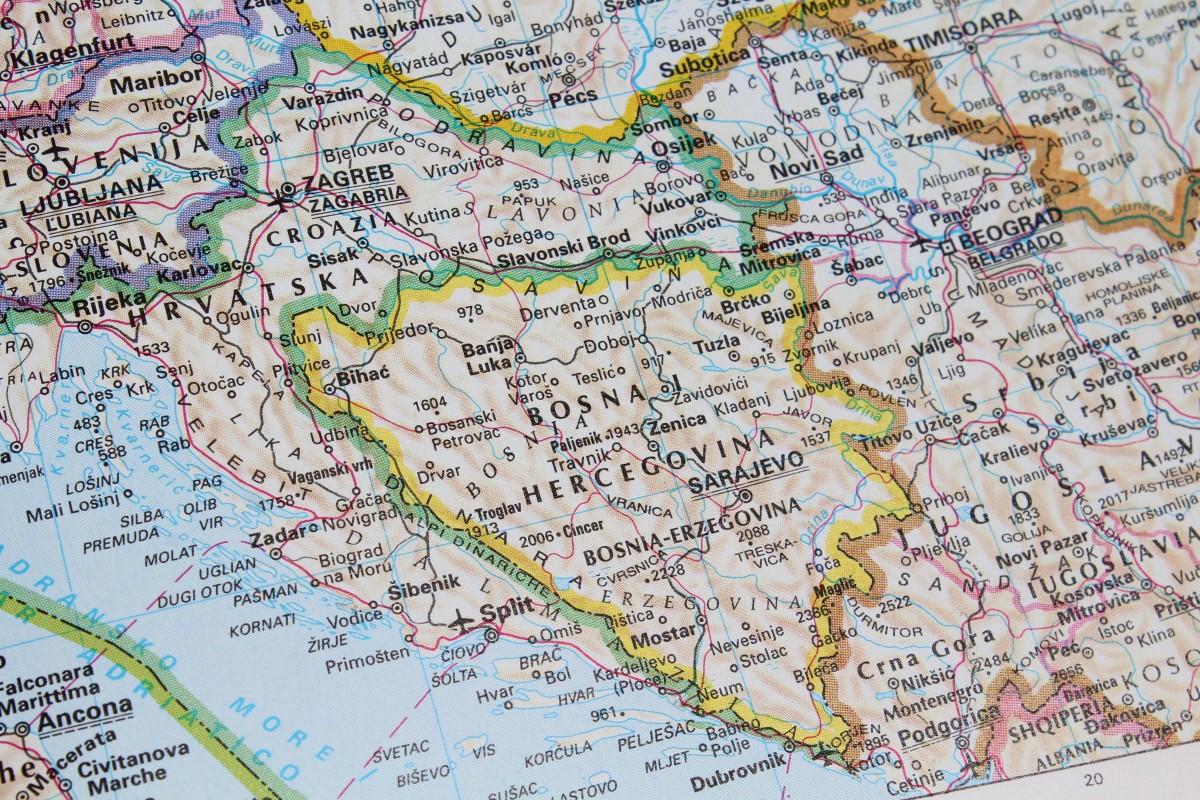
During the 1990s, when Croats in Bosnia and Herzegovina were victims of mujahideen war crimes, Western power structures showed little concern, just as they did not react to the terrorist attacks by radical Islamists against Christians in the Middle East and Africa. It was only after the September 11, 2001, attacks in New York that Western perceptions began to change, and the mujahideen were finally labeled as the “bad guys.”
Conclusion
Thanks to Operation Cyclone, Islamist terrorism evolved into a global problem. Terrorist attacks in Western cities such as London, Paris, Madrid, Berlin, Boston, and New York have become part of everyday life. After the 2015 terrorist attacks in Paris, which included assaults on the Charlie Hebdo office and the Bataclan theater, killing 130 people, French Prime Minister Manuel Valls stated that the French would have to learn to live with terrorism. Sadly, this is the reality that not only French citizens but also the people of the European Union, NATO, and the wider world must now face.