By Matija Šerić
Saturday evening was yet another inevitable demonstration of Tottenham Hotspur’s impotence. In the third round of the FA Cup, Spurs lost 2–1 at home to Aston Villa. Although they were beaten by the Villans, who are in the Premier League title race, this was another heavy blow to an already disastrous season for the North London club. The Lilywhites are languishing in a miserable 14th place in the league, have already been eliminated from the League Cup, and their FA Cup exit means the season could end in total debacle.
A Missed Opportunity
Had they managed to win the FA Cup (a difficult task in which they failed immediately), Spurs could have secured a place in next season’s Europa League. If they do not significantly improve their league form, their only chance of playing in Europe next season is by winning the Champions League. Although they are currently 11th in the league phase of that competition, lifting Europe’s most prestigious trophy sounds like an impossible mission.
A Constant Crisis
There is no doubt that Tottenham are in a major crisis—now for the second year in a row. Last season they finished as low as 17th in the Premier League, and their campaign was salvaged only by winning the Europa League. That, however, did not save then-manager Ange Postecoglou, who was dismissed, with the board placing their hopes in Thomas Frank. Despite high expectations for the Danish coach and a summer filled with major signings such as Xavi Simons, Mathys Tel, Randal Kolo Muani, and Mohammed Kudus, results have not followed. On paper, Spurs should be among the Premier League’s top five squads, yet they have sunk into mediocrity. Many are asking why.
A Glorious Anniversary That Didn’t Deliver a Dream Saturday
Some of the answers could be found in the match against Aston Villa. As the game marked the anniversary of Tottenham’s first FA Cup triumph in 1901, many expected it to provide a motivational spark and serve as a catalyst for a fresh start. One hundred and twenty-five years ago, Spurs became the first—and remain the only—non-league club to win the competition. That glorious past (the Lilywhites have won the FA Cup eight times in total, most recently in 1991) failed to ignite a glorious present.
Despite missing eight key players—captain Cristian Romero, Mohammed Kudus, James Maddison, Dejan Kulusevski, Yves Bissouma, Pape Matar Sarr, Rodrigo Bentancur, and Lucas Bergvall—Frank still had a strong squad at his disposal. He lined up in his favored 4-2-3-1 formation: Vicario; Porro, Danso, van de Ven, Davies; Gray, Palhinha; Odobert, Simons, Tel; Richarlison. On paper, it was a mega-team—one that most managers in England and across Europe’s top five leagues would envy.
Tottenham Didn’t Exist in the First Half
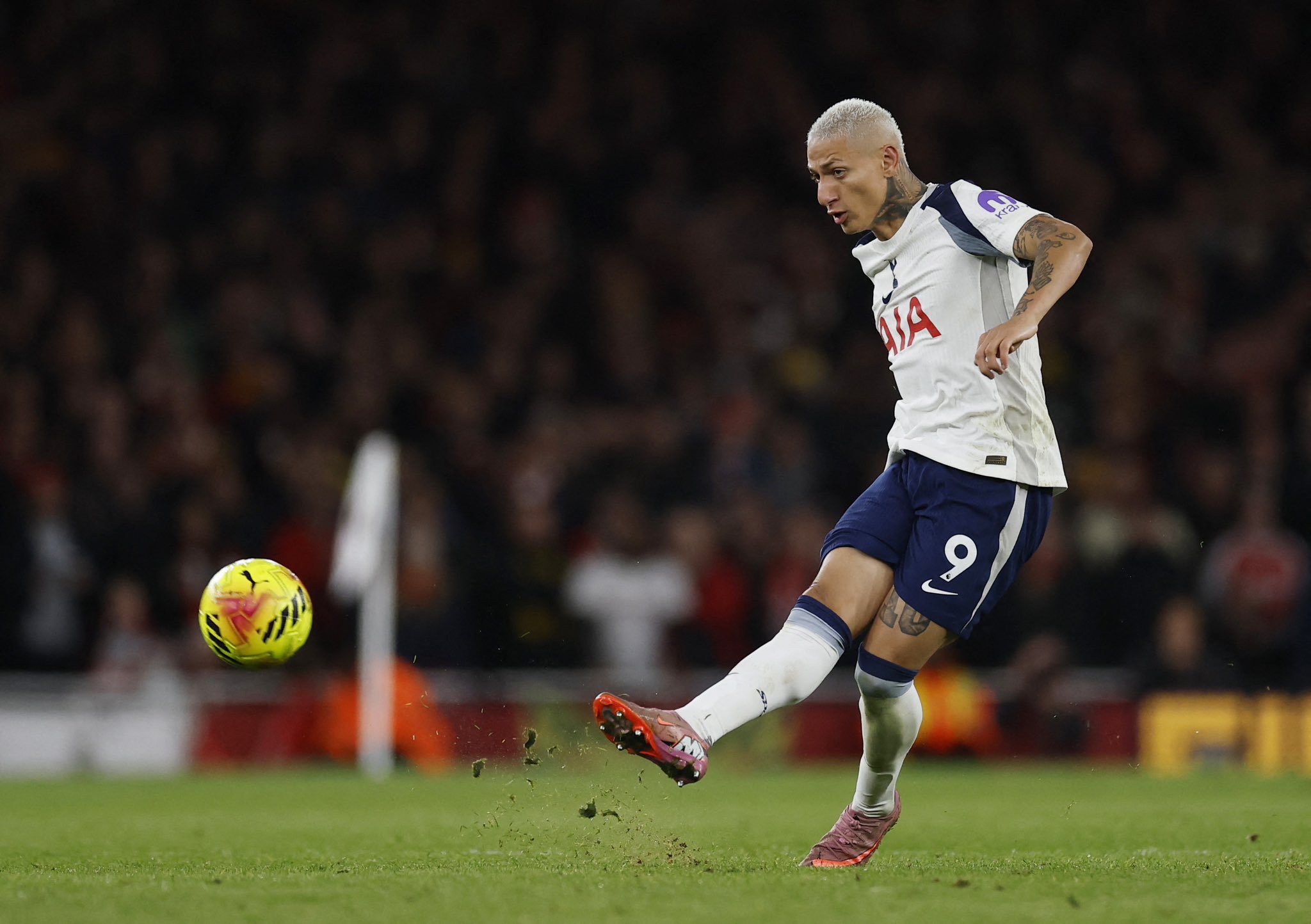
Despite the star power, the first half saw the hosts look completely lifeless. They were overrun and dominated in every aspect, with the match resembling a game played at Villa Park. An early injury to Boubacar Kamara, replaced by Youri Tielemans, did not disrupt the visitors. Villa enjoyed 63% possession, underlining their control. They turned dominance into goals through Emiliano Buendía in the 22nd minute and Morgan Rogers in stoppage time of the first half. To make matters worse, Richarlison was forced off with a hamstring injury.
A Second-Half Awakening
After the break, Spurs showed signs of life. Wilson Odobert scored in the 54th minute to make it 2–1, assisted by Kolo Muani, who had come on for Richarlison. Xavi Simons soon appeared to equalize at 2–2, again assisted by Muani, but the goal was ruled out for offside. Even with the return of Dominic Solanke in the 83rd minute, Tottenham failed to find another goal. They created no clear chances late on, relying mostly on inaccurate crosses and individual dribbles that failed to open up Villa’s defense.
Villa could have added a third goal and might have won more convincingly had they not relaxed early in the second half. By full time, the visitors held the statistical edge: 60% possession, 17–13 shots, 521–333 passes, 17–10 free kicks, and 6–4 corners. Standout performers for Villa included goalkeeper Bizot, McGinn, Rogers, and Buendía.
Individual and Tactical Weaknesses
Porro, Gray, Simons, Muani, and Odobert showed flashes of what they can offer and how Spurs should play going forward—at least on an individual level. The rest performed below their potential, particularly Danso and Davies. Defensively, gaps appear too easily, and the solidity that characterized Spurs earlier in the season is gone. Someone always makes a costly mistake. Palhinha has struggled to act as a playmaker and leader. Young Gray often dropped to center-back during buildup and attempted long passes forward—a clever idea, but the front four (Tel–Simons–Odobert–Muani) were so out of sync that the long balls yielded little. The attacking phase needs major improvement: attackers get in each other’s way, movement on and off the ball is poor, and even when they receive possession, the necessary dynamism to create chances is missing—despite all being top-level players. Set pieces are another major issue; Spurs are dreadful from corners and free kicks.
Frank – A Manager Who Could Soon Be Former
After the match, Frank said: “Of course it’s disappointing to lose. We’re all hurt. There’s nothing we want more than to get through to the next round, no matter who we face. We played at home, had a good opportunity… Unfortunately, we didn’t go through. We went with full strength in terms of what we could do. We all look back at the game and think we could do better in the first and second half.”
This was Tottenham’s fourth defeat in their last seven matches across all competitions. The next two games against West Ham and Burnley could be decisive for Frank—if he is not dismissed earlier. Many have already labeled him a “dead man walking.” It did not help that he was photographed last Monday drinking coffee from an Arsenal-branded mug, nor that back in November Djed Spence and Micky van de Ven publicly snubbed him by refusing to shake his hand after a loss to Chelsea (they later apologized).
Time to Sound All the Alarms
Spurs sit five to six points off the European places and must act immediately if they want to catch the last train. Once again, it has been shown that having excellent players and a good manager is not enough to succeed in the Premier League. While Tottenham boast a squad that would make them favorites to win the Bundesliga or Serie A, they are floundering in a dismal 14th place in England. This underlines just how complex football is—and just how strong English football truly is.