By Matija Šerić
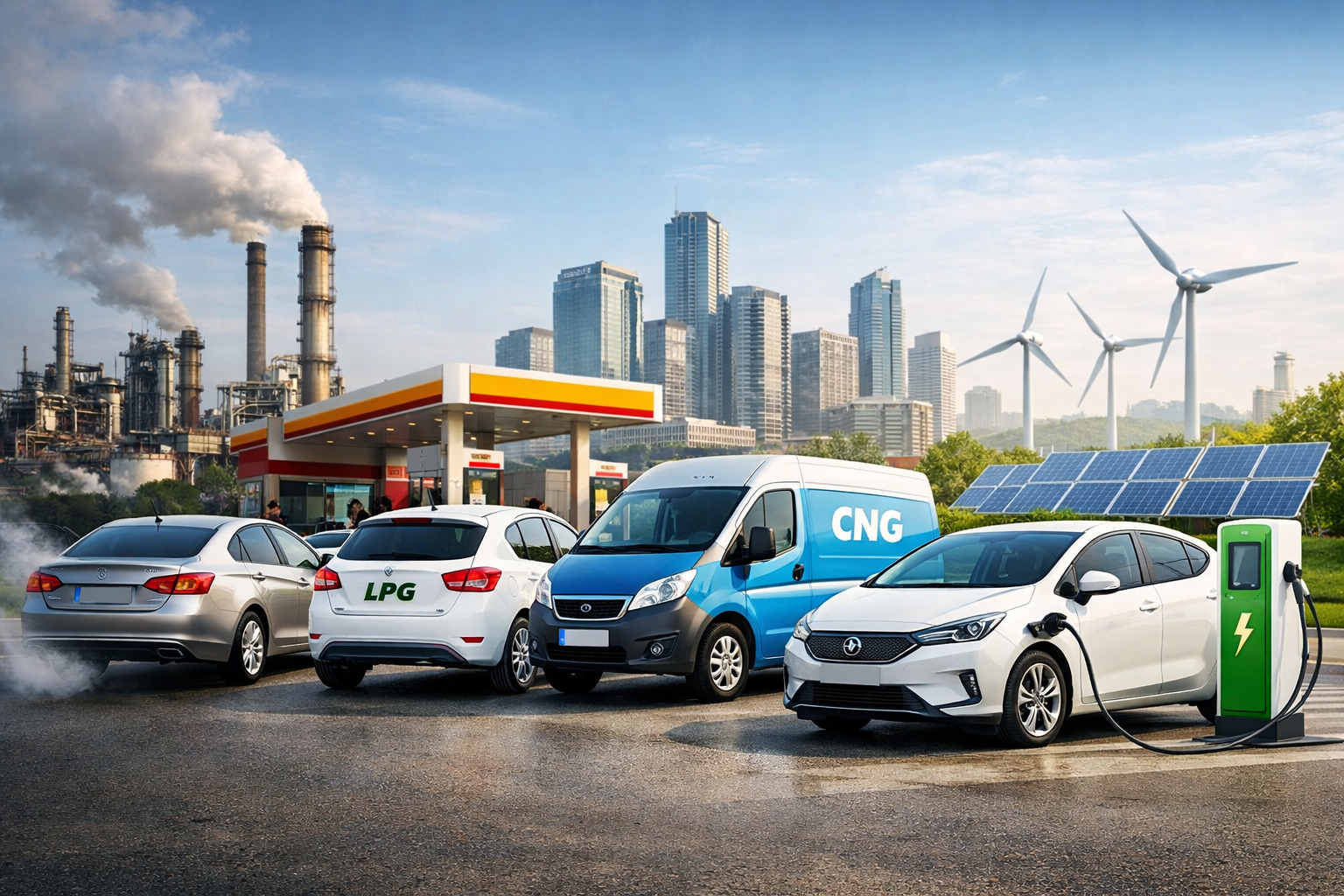
The use of fossil fuels, i.e. non-renewable energy sources, reached its peak during the 20th century. In particular, oil and coal were exploited to their limits. Their use continues today; however, awareness among populations around the world is increasingly growing that this way is no longer viable in the long term. Environmental pollution, contamination of water and air, damage to human health, climate change, the greenhouse effect, and acid rain are some of the main reasons why the use of fossil fuels is not acceptable in the long run. Therefore, in recent times, more and more efforts have been made to find alternative solutions.
Definition of Sustainable Development
Sustainable development is development that involves the use of resources to meet the needs of present generations while taking into account the needs of future generations. Sustainable development certainly includes the use of alternative fuels, i.e. fuels derived from alternative energy sources that serve as a substitute for gasoline and diesel fuel.
Traffic Congestion – A Generator of Multidimensional Problems
Traffic problems have a highly negative impact on human health, the environment, and urban space. Each of us has at least once experienced a negative situation caused by inhaling exhaust fumes, vehicle noise, or the lack of green spaces in cities for recreation. One of the ways to mitigate such experiences and make transport systems (especially road transport) more sustainable is the use of alternative fuels.
Alternative fuels can be considered drivers of sustainable development on planet Earth, as they possess untapped potential that has yet to be fully implemented. Hydrogen, alcohol, biodiesel, biogas, and other fuels can significantly reduce spatial, transport, economic, and social problems of today.
Liquefied Petroleum Gas (LPG)
Liquefied Petroleum Gas (LPG) is the most important gaseous alternative fuel. LPG is a fossil fuel in origin, like gasoline, and is actually a by-product of crude oil refining. Because of this, its production exceeds demand, making its price very low. Interestingly, gasoline was also once a by-product of refining before it began to be widely used in automobiles. LPG has excellent environmental properties. It burns completely without smoke, soot, unpleasant odors, or sulfur compounds, making it more environmentally friendly than other fossil fuels (except natural gas). On urban roads, a single diesel vehicle emits as many particulate emissions as 120 LPG vehicles and as much nitrogen oxides as 20 LPG vehicles.
LPG is a mixture of hydrocarbons and is compositionally identical to the gas used in household gas cylinders. It consists mainly of propane and butane, with small concentrations of other hydrocarbons. The basic characteristic of this gas mixture is that under atmospheric conditions it is in a gaseous state, but with a slight increase in pressure it becomes liquid. In this process, its volume is reduced by as much as 270 times. This property enables easier supply and transport in areas where there is no pipeline infrastructure, especially in geographically remote regions. Therefore, LPG can be transported by rail and road tankers, ships, and pipelines.
Compressed Natural Gas (CNG)
Compressed Natural Gas (CNG) is natural gas in gaseous form compressed to a pressure of 220 bar at 15°C, used as an alternative fuel for powering motor vehicles. CNG is a fuel that today offers the best compromise between environmental characteristics, resource availability, and technological development. Due to its simple chemical composition, its exhaust emissions are lower compared to other fuels.
CNG is much more environmentally friendly and ensures significantly cleaner combustion. Its advantages in vehicles are reflected in lower maintenance costs, longer engine life, and significant fuel cost savings compared to diesel and gasoline. CNG has very clean combustion, meaning there is no presence of carbon and acid in engine oil. It is considered one of the cleanest fossil fuels. When compared with gasoline, compressed natural gas shows a significant reduction in nitrogen oxides, carbon dioxide, and sulfur dioxide emissions.
Liquefied Natural Gas (LNG)
Liquefied Natural Gas (LNG) is natural gas converted into a liquid state through cooling to facilitate transport. It is purified natural gas, internationally abbreviated as LNG (Liquefied Natural Gas). To enable economical, faster, and easier transport to locations without pipeline infrastructure, natural gas is liquefied. In the liquefaction process, the volume of the gas is reduced by a factor of 614 compared to its volume under normal conditions. This process takes place at LNG terminals. LNG has an energy density twice that of CNG.
Specially designed cryogenic ships (LNG carriers) and cryogenic road tankers are used for transporting liquefied natural gas. Tankers transport LNG from countries such as Algeria, Qatar, and Indonesia to countries that demand this energy source, including Japan, South Korea, Taiwan, Spain, and France. LNG can be used in internal combustion engines. It is currently in the early stages of becoming a mainstream fuel. It has been tested in trucks operating on roads, off-road vehicles, ships, and trains. There are challenges related to fuel storage tanks and fuel delivery systems to the engine; however, despite these issues, the use of LNG as a transport fuel has begun.