By Lazar Baćović
From 2007 to 2017, Ecuador was governed by socialist president Rafael Correa. Following the principles of “21st Century Socialism,” Correa implemented a series of progressive reforms that significantly improved healthcare, education, and reduced social inequality in the country. After he left office in 2017, new right-wing presidents — Lenín Moreno (Correa’s former political ally who later turned to the right), Guillermo Lasso, and Daniel Noboa — dismantled the previous reforms and programs and transformed Ecuador into one of the key American strategic allies in Latin America.
The changes in Ecuador’s political, economic, and ideological orientation had a major impact on the country’s security situation and homicide rate. While at the beginning of the 21st century Ecuador was one of the most violent countries in Latin America, with a homicide rate of 18 per 100,000 inhabitants, a radical turnaround occurred under socialist rule. In 2017, only 957 murders were recorded in Ecuador, representing a rate of 5.8 homicides per 100,000 inhabitants. These results were the consequence of years of investment in social inclusion programs for marginalized sectors of society and reforms in the security sector. By 2017, Ecuador had become one of the safest countries in the Western Hemisphere.
Following the return of neoliberalism, the situation began to change dramatically. In 2023, the homicide rate reached an enormous 46 per 100,000 inhabitants, while by 2025 that number had risen to 51 murders per 100,000 inhabitants and a total of 9,216 killings. For comparison, the total number of people killed in the wars in Iran and Lebanon barely exceeds six thousand. These grim statistics place Ecuador among the deadliest conflict zones in the world, including even countries that are formally active war zones.
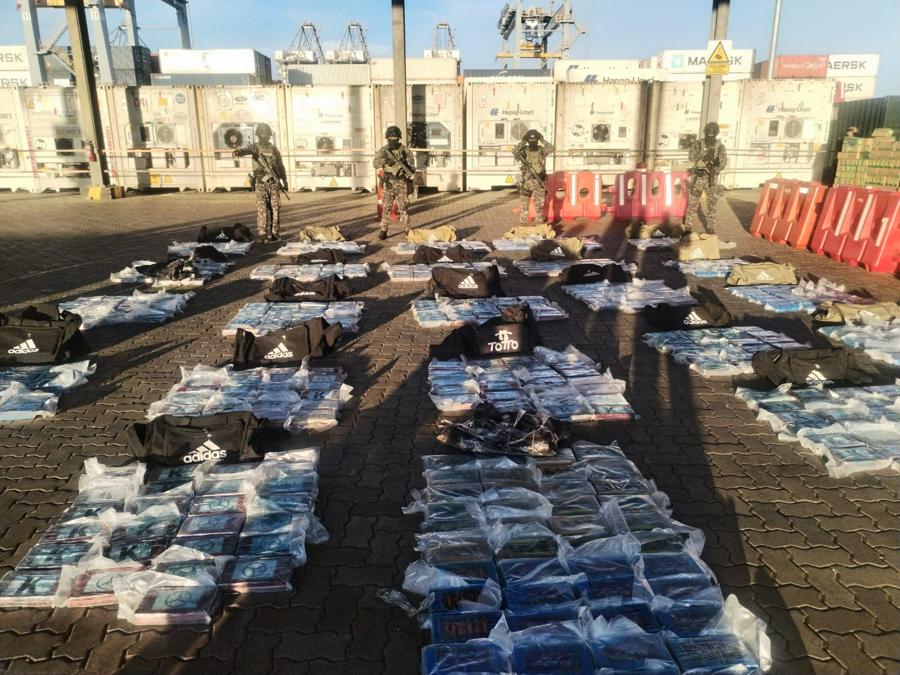
The usual explanation for the radical increase in murders is the fact that Ecuador lies between Colombia and Peru, the two largest cocaine producers in the world. As a key transportation hub in the international drug trade, Ecuador — especially its most important port city, Guayaquil — has become a battleground between international drug cartels fighting for dominance. However, this explanation is not entirely convincing. Cocaine smuggling was already taking place in Guayaquil in 2017, when violence was minimal. Furthermore, the murders in Guayaquil cannot explain the enormous rise in violence across the rest of the country, much of which is unrelated to conflicts over drug trafficking corridors. For example, Ecuador has also recorded an alarming 411 femicides. This type of crime is difficult to connect directly with cartels and cocaine trafficking.
As in countries such as El Salvador, Honduras, Brazil, and Venezuela, ruling regimes attempt to justify ruthless repression of the population by criminalizing entire social classes harmed by neoliberal policies. Instead of blaming leaders whose actions pushed millions into extreme poverty, governments resort to pointless moralizing and simplistic narratives about fighting “evil” drug cartels. The public is told that the only solution is a new Nayib Bukele who will use harsh repression to control gangs and cartels while ensuring a peaceful life for the upper and middle classes.
Nowhere is it explained why countries with major ports such as Uruguay, Costa Rica, and Chile are not war zones or strongholds of drug cartels, even though they are arguably more suitable for such a role than Ecuador or Honduras. Perhaps the answer lies in the fact that these countries possess social programs and socio-economic structures that make them far less attractive environments for the operation of drug cartels, since such organizations recruit primarily among the poorest layers of society.
Drug trafficking is a real phenomenon, but the dynamics of this global business depend on multiple factors. Cocaine and heroin are smuggled throughout Europe, Asia, and the Americas, yet only a handful of Latin American countries experience mass bloodshed. In the cases of Mexico, Ecuador, and Brazil, it could be argued that cocaine money merely intensified pre-existing social conflicts caused by decades of neoliberal economic experimentation, rather than creating them on its own.
Current Ecuadorian president Daniel Noboa comes from one of the wealthiest families in the country. Authoritarian, arrogant, and uncompromising, Noboa is a typical representative of the new wave of radical right-wing presidents in Latin America. A mixture of Javier Milei in economic policy and Nayib Bukele in security policy, the Ecuadorian president has effectively declared war on his own people — or at least on the poorer sectors of society. The country functions under a state of emergency, while the military and police operate without meaningful oversight. Under the pretext of fighting drug cartels and gangs such as Los Lobos and Los Choneros, numerous citizens and activists have been arrested or disappeared in security force operations.
It is estimated that the most powerful gangs in Ecuador possess tens of thousands of members, while their broader social base likely consists of hundreds of thousands of the most marginalized members of Ecuadorian society. If Noboa continues insisting on an exclusively military solution to the crisis, his regime could become effectively genocidal, as it would directly or indirectly destroy millions of Ecuador’s poorest citizens through killings and prison repression. Military repression may temporarily reduce cartel activity and violence, but it will not resolve the social problems that produce them, and it is only a matter of time before a new wave of violence erupts once again.