By Matija Šerić
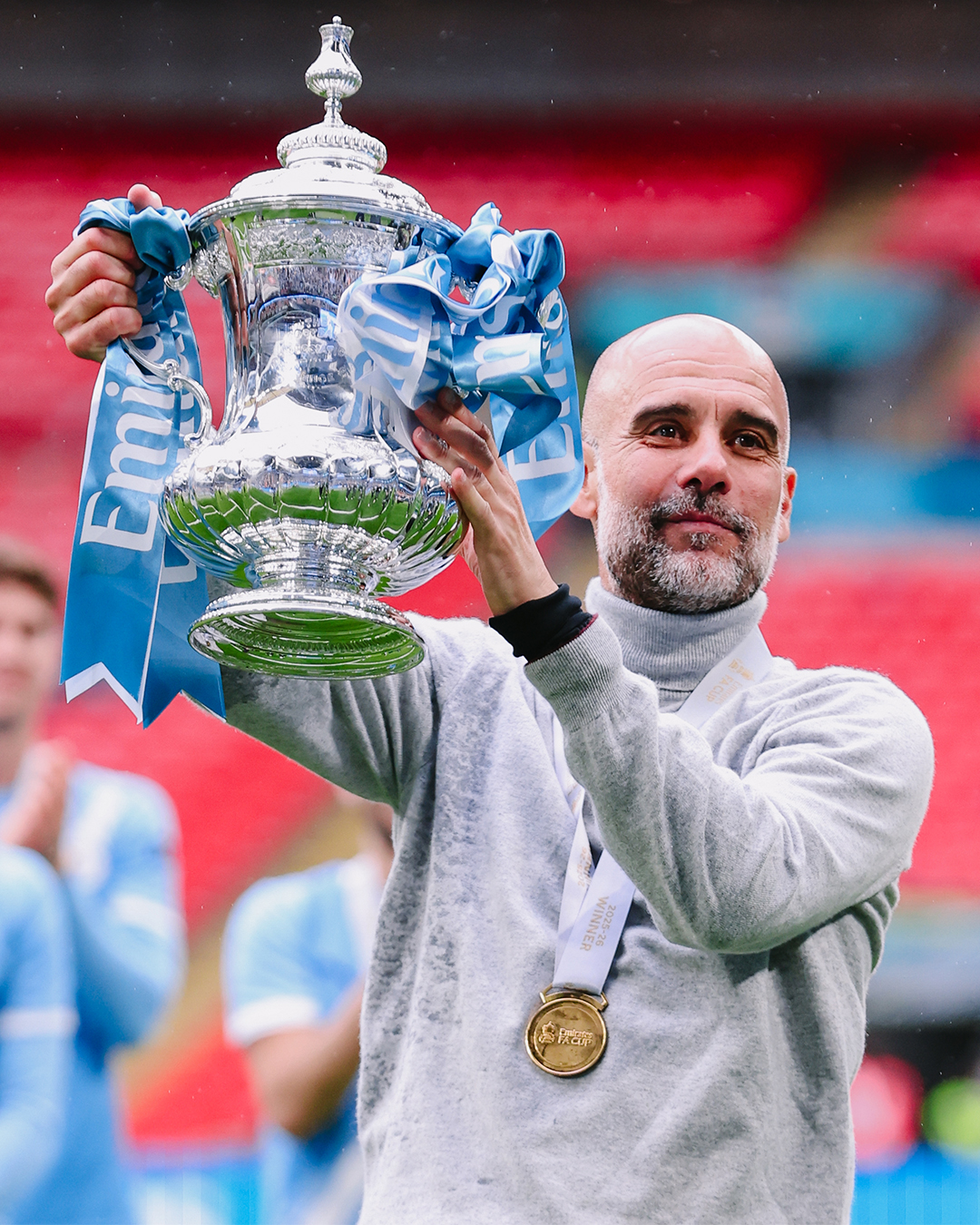
On Saturday, May 16, the final of the oldest football competition was played. The FA Cup, commonly known as the English Cup, has been contested since 1871, and there is nothing quite like it. The competition is unique for its competitiveness, dramatic upsets, and contrasting clashes between lower-league sides and elite Premier League franchises. The FA Cup often showcases a raw passion for football that is sometimes missing in the biggest squads. For players from smaller clubs, it is an opportunity to rise and secure a move to a more prestigious team. However, despite the efforts of so-called smaller clubs, two English giants—Manchester City and Chelsea—reached the final. The Citizens won 1–0 and claimed their second trophy of the season (the first being the Carabao Cup), but they had to work extremely hard for it.
An unconventional City lineup
Interestingly, Pep Guardiola opted for a 4-4-2 formation. Many would have said a decade ago that this system was extinct, but in recent years it has made a strong comeback. It is difficult to implement in today’s high-speed football, but Manchester City can do it. Trafford started in goal, while Nunes, Khusanov, Guehi, and O’Reilly formed the back line. Rodri and Bernardo Silva operated as double pivots, Semenyo and Doku played on the wings, and Marmoush and Haaland led the line as a striking duo.
Many were surprised to see Trafford and Marmoush start. However, Trafford, by agreement with Guardiola and the club management, plays in cup competitions while Donnarumma rests, and Marmoush was preferred over Cherki due to his disciplined play and explosive pace.
Chelsea’s defensive setup
Chelsea’s interim and recently appointed head coach—not manager—Calum McFarlane opted for a compact 3-4-2-1 formation. Sánchez was in goal, with Fofana, Colwill, and Hato as the three centre-backs. Gusto and Cucurella played as wing-backs, Reece James and Caicedo formed the double pivot, while Palmer and Enzo Fernández operated as wide attacking midfielders. João Pedro led the attack.
Some might say Chelsea looked as if it had been calibrated by Ruben Amorim, but McFarlane’s decision to use a back three was understandable in order to contain Haaland.
A blunt City initiative in the first half
The first chance of the match came in the 10th minute when Doku delivered a cross from the left, but Rodri and Haaland were sloppy in their touches. In the 14th minute, Semenyo sent in a cross from the right, but no one met it. In the 22nd minute, Fernández and João Pedro carried the ball from midfield into the box, but Pedro’s shot was weak.
In the 23rd minute, Haaland stole the ball from James but shot wide while attempting to set up Marmoush. In the 33rd minute, Semenyo dribbled well on the right but finished poorly.
The best chance of the half came in the 43rd minute when Guehi played a brilliant pass to Haaland, whose shot was saved confidently by Sánchez.
In first-half stoppage time, João Pedro intercepted Bernardo Silva near the edge of City’s box, and Khusanov brought him down in the penalty area. However, referee Darren England did not deem the contact sufficient for a penalty.
A disappointing first half
It was a first half below the level expected of a final. Many neutral viewers were disappointed. There were no clear-cut chances for either side. The high stakes seemed to reduce risk-taking. In reality, Chelsea executed their game plan well, while several City players underperformed.
Marmoush struggled badly
Deployed high up alongside Haaland, Marmoush was effectively lost in a role that did not suit him. Naturally a left winger or second striker, not a traditional number nine, the Egyptian was often poorly positioned. As a result, the connection between midfield and attack for City was frequently broken.
City lacked someone to link play and dictate tempo, allowing Chelsea to absorb pressure comfortably in a dull first half. It was no surprise that Guardiola substituted Marmoush at half-time, bringing on Cherki in search of creativity and cohesion.
McFarlane outsmarted Pep
Even at the start of the second half, there was little improvement from City—but much of that was due to Chelsea’s organisation. McFarlane’s decision to play with a back three was an excellent tactical move. Haaland was contained, Doku was double-marked, and midfield enforcers James and Caicedo dominated the centre.
After a shaky start, Chelsea gradually grew into the game and looked the more dangerous side early in the second half.
Chelsea’s defence neutralises City’s biggest threats
In the 47th minute, O’Reilly’s cross towards Semenyo ended in a shot over the bar. In the 55th minute, Reece James delivered a corner, Caicedo headed it goalward, Trafford looked beaten, but Rodri cleared off the line.
As the game progressed, City became increasingly nervous. Their possession was no longer dominant. Rodri was not at his best, Bernardo Silva was often isolated, and O’Reilly looked uncertain at left-back. Chelsea were exploiting City’s high defensive line effectively and looked closer to scoring during this phase.
Kovačić changes the rhythm
Rodri’s substitution in the 65th minute, replaced by Mateo Kovačić, was a smart decision by Guardiola. The Croatian brought stability and energy, and City’s midfield finally looked more structured.
In the 66th minute, Malo Gusto delivered a cross into the box, and Khusanov fouled João Pedro about seven metres from goal. Once again, the referee decided it was not enough for a penalty.
A moment of inspiration decides the final
A tight, cagey final increasingly looked destined to be decided by a single moment of inspiration—and that is exactly what happened in the 72nd minute.
Bernardo Silva found Erling Haaland, who delivered a perfectly weighted cross from the edge of the box. Antoine Semenyo met it with a delicate touch, finally breaking Chelsea’s defence. Colwill and Sánchez could do nothing.
Semenyo’s goal was outstanding and ranks among the best in FA Cup final history.
Chelsea’s wasted efforts
Chelsea did not give up. In the 74th minute, Colwill headed the ball to Fernández, who shot over from just four metres out in a difficult position.
Chelsea pushed forward, but struggled to create clear chances. At the other end, Nunes hit the post in the 84th minute. In the 91st minute, Malo Gusto crossed to Delap, who shot over the bar. That was it—the match ended 1–0.
An evenly matched contest
Statistics show the match was balanced. Manchester City had just one big chance, while Chelsea had none. City held a slight edge in possession (56–44), chances (9–7), and free kicks (15–13), while corners were even (4–4).
City’s best performers were Semenyo (7.5), Doku (7.2), and Guehi (7.6). Bernardo Silva (6.7) and Marmoush (6.4) were below expectations. For Chelsea, Reece James (7.2) and Enzo Fernández (7.2) stood out, while João Pedro (6.5) missed key opportunities.
Frustration for Chelsea
There was frustration for Chelsea’s staff, players, and fans, as they felt they had done much right but still lost. Their only real weakness was poor finishing from Pedro, Fernández, and Caicedo. They were also unhappy with referee Darren England, who did not award them a penalty despite several controversial situations.
The young Chelsea side lacked experience, especially in key moments. Scoring just one goal would likely have changed everything. Instead, they left empty-handed.
City chase the Premier League title, Chelsea aim for Europe
Manchester City now turn their attention to the Premier League title race and a trip to Bournemouth on Tuesday. Although this is a weaker season by their standards, they still have a chance at a treble. Leaders Arsenal are two points ahead with two matches remaining, and goal difference could prove decisive.
If this is Guardiola’s final season, it will still be successful even without the league title, having already secured two domestic cups.
Chelsea, meanwhile, sit 9th in the Premier League, two points off a Conference League spot and four from the Europa League. Had they won the FA Cup, they would have qualified for the Europa League. Now they must fight just to reach the Conference League—another disappointing season.
Newly appointed head coach Xabi Alonso, who takes over on July 1, will face major challenges. The squad will need experienced reinforcements in the summer to add stability and improve decision-making in crucial moments.