By Bruno Rukavina
In this analysis, spec. pol. Bruno Rukavina explores what Victory Day represents and how it can be interpreted through the prism of the current interstate Russian-Ukrainian conflict. The article explains the historical meaning of Victory Day, while the second part extracts different interpretations and perceptions of the Russian-Ukrainian war that are not immediately visible to many, as well as Russia’s anticipation of a new Day of Victory.
Victory Day – 9 May
The role of Victory Day (9 May) in contemporary Russia is one of the key instruments of historical policy and national identity construction. According to Professor Tihomir Cipek, with Vladimir Putin’s rise to power there was a deliberate replacement of the October Revolution with Victory Day as the central symbolic event that would serve as a unifying national holiday. This shift represents a transformation of the state’s identity foundation from the revolutionary legacy of the USSR toward a narrative of stability, unity, and patriotism—features present in and necessary for every nation-state.
During Boris Yeltsin’s rule, liberal policies of breaking with the communist past dominated, in which the October Revolution was delegitimized as a national tragedy (which is not far from the truth, as it opened the door to a bloody civil war in the territory of the former Russian Empire). However, such an approach failed to create a coherent identity due to deep societal divisions between Soviet nostalgia and imperial conservatism. The absence of a unified narrative resulted in symbolic and ideological fragmentation of Russian society.
Putin’s politics of history seek to overcome these divisions through reinterpretation of the past. In this context, Victory Day becomes the central holiday of modern Russia, symbolizing collective sacrifice, victory, and national unity. Unlike the revolutionary year 1917, which implies internal conflict and division, the victory in the Second World War provides an inclusive and mobilizing narrative that unites different historical phases—the imperial, Soviet, and modern periods—as parts of a shared legacy, since today’s Russians are descendants of all historical tragedies experienced by Russia.
Special emphasis is placed on the concept of national reconciliation, symbolically connecting “Reds” and “Whites.” This affirms continuity of Russian statehood while selectively interpreting historical actors: Lenin is marginalized as the initiator of revolutionary bloodshed (but also as someone who dismantled the Russian Empire into republics that later became independent states after the USSR’s collapse), while Stalin is partially rehabilitated as a symbol of state strength during the time when the Soviet people faced the threat of genocidal destruction during the Nazi-fascist invasion.
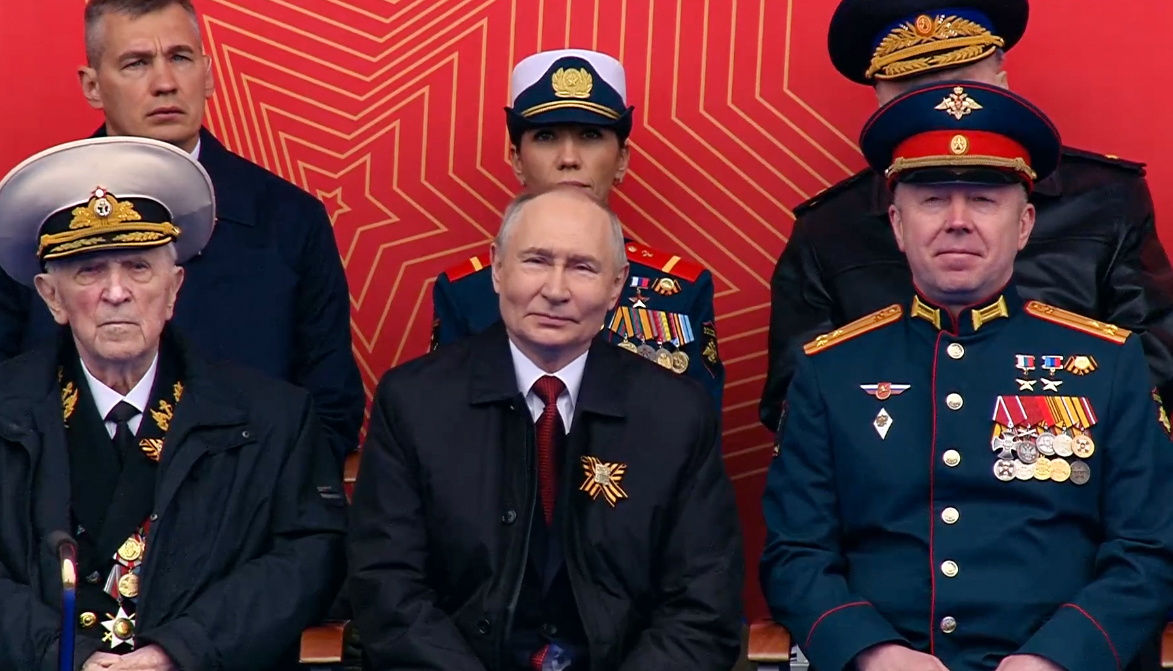
This approach is institutionalized through official cultural and political narratives, especially visible on Victory Day, which functions as a key mechanism of political integration and international positioning of Russia. Through state ceremonies such as military parades and commemorations, collective memory is shaped with emphasis on anti-fascism as a foundational value and legitimizing framework of modern Russian statehood.
Thus, politics of history becomes a tool of internal consolidation and projection of national identity globally, which is characteristic of almost every nation-state (Rukavina, 2025).
A potential short two-day ceasefire for Victory Day between Russia and Ukraine is presented as a logical step if respected by both sides, since both countries as part of the USSR contributed to the defeat of Nazi Germany. In this context, reference is made to Soviet collaborators of the Third Reich (Vlasovites, Banderites), who were defeated with the fall of the Reich, although some factions continued their activity after the war.
The issue of equating crimes is also addressed. In fascism/Nazism, crimes are ideologically grounded (racism, antisemitism), while in socialism/communism they more often stem from political paranoia, centralization of power, and repression of class enemies. Although similarities exist in totalitarian outcomes, the two systems cannot be equated due to different ideological goals, moral foundations, and historical roles. This does not diminish communist crimes but warns against historical relativization that may lead to revisionism.
The View of Victory Day from the European Union
In the European Union, particularly among pro-European segments of society, greater emphasis is sometimes placed on Europe Day, also marked on 9 May, symbolizing unity and peace in Europe. It commemorates the Schuman Declaration of 1950, which laid the foundations of European integration after the Second World War.
On 9 May 1950, French Foreign Minister Robert Schuman proposed the creation of a supranational institution to manage coal and steel production, key resources for warfare (Čehulić-Vukadinović and Vukadinović, 2011). This led to the European Coal and Steel Community, the embryo of the European Union.
These supranational narratives promoted from Brussels emphasize peace, unity, and integration after the devastation of war. However, there is a risk that Europe Day may overshadow the 1945 victory achieved through pragmatic alliance between the United States, the United Kingdom, the USSR, and resistance movements across Europe.
Victory Day and Europe Day are therefore complementary, as European unity is rooted in the anti-fascist victory in WWII, in which the Soviet Union bore the greatest human cost.
Victory Day in the Shadow of the Russian-Ukrainian War
The ongoing Russian-Ukrainian war (2022–present), which escalated from internal conflict (2014–2022), is interpreted as a strategic trap for Russia. Since the end of the Cold War, Russia faces a structural dilemma: either act as a “spoiler” and face sanctions for resisting NATO expansion, or submit to Western dominance as in the 1990s.
This creates a recurring aporia: any Russian reaction is interpreted as aggression, while restraint leads to strategic weakening. Similar patterns are identified in Georgia (2008), Crimea (2014), and Ukraine (2022), where Russia’s actions are framed as reactive responses to Western expansion or regional instability.
The conflict is thus seen as part of a broader cycle of reactive Russian foreign policy.
The article contrasts liberal and realist interpretations of international relations. Liberalism emphasizes democracy and moral binaries, while realism focuses on interests, security, and balance of power. This leads to fundamentally different interpretations of the same events.
The text also critiques liberal interventionism, arguing that democratization efforts in the Middle East and elsewhere have often led to instability rather than liberal order.
The central unresolved question remains: how can conventional war be sustained against a nuclear power that perceives existential threat?
If Europe fears Russian aggression, the author suggests it could pursue a non-aggression pact and a new security architecture. He also provocatively argues that threats to EU territorial integrity may not only come from Russia but potentially from the United States as well.
Conclusion
The article concludes that a realist, peace-oriented approach may be the only viable path toward European stability. Victory Day and Europe Day are seen as complementary symbols of peace after WWII, while contemporary ideological conflicts risk pushing Europe toward renewed confrontation.
The text ends with a paraphrase of the Communist Manifesto:
A spectre is haunting Europe—the spectre of post–Cold War liberal foreign policy. All European powers have united against it, while realist and conservative forces oppose it with a manifesto of peace, security, and life over abstract freedom.
The final message stresses that only a shift toward realism and diplomacy can prevent further escalation and preserve European stability.