By Ivo Kokić
The Non-Aligned Movement (NAM), in terms of the number of its member states, is the largest association of countries in the world after the United Nations. At one time, the Movement encompassed two-thirds of the world’s states. Today, this is less evident because the world is no longer divided into two ideological blocs as it was during the Cold War. However, it was in that very period that the Movement was created and reached the peak of its power and prestige. If we examine its members, we see that the Movement is not ideologically monolithic. For example, both North Korea and Saudi Arabia are part of it. Each state had its own reasons for joining; in the case of North Korea, the reason was the desire to establish foreign policy sovereignty in relation to the Soviet Union (USSR).
The aim of this article is to analyze the origin and development of the Non-Aligned Movement, including the First NAM Conference held in Belgrade in 1961. This topic is epistemologically relevant because the foundations of the Movement were laid during that period, and NAM was led by its first and most significant generation of leaders. The observed period spans from the end of World War II to 1961, while also touching upon certain events that occurred immediately afterward.
The Beginnings of the Movement
After the end of World War II, the world began to polarize between the United States and the Soviet Union. At the same time, the process of decolonization was underway, through which many new states in Africa and Asia emerged from former colonies of Western European countries. These newly formed states did not find it suitable to align themselves with either side in the global conflict of great powers. They did not understand why they should become involved in foreign conflicts from which they derived no benefit. Moreover, democracy, the liberal market, and communism were European ideas, while these states sought to create their own paths without European imposition of what should be considered correct. Additionally, the Cold War was most clearly reflected on the European continent through bloc division, while former colonies had only just freed themselves from European influence.
The term “non-aligned” was first used by Indian diplomat V. K. Krishna Menon at the UN in the early 1950s. The Indian philosophy of “Panchsheel,” based on peaceful coexistence, became crucial to the ideological foundation of the Non-Aligned Movement. These principles were based on mutual respect for territorial integrity and sovereignty, non-aggression, non-interference in the internal affairs of other states, equality and mutual benefit, and peaceful coexistence. India sought to demonstrate how different it was from the West by contrasting the Roman military leader Gaius Julius Caesar, who expanded his empire through military conquest, with Ashoka the Great, the ruler of the Mauryan Empire in the 3rd century BCE, who practiced a policy of non-violence. Such thinking can also be seen in the declaration of 29 states that gathered in 1955 in Bandung (Indonesia), at the initiative of President Sukarno. All participating states were from Asia and Africa, which is why the gathering is known as the Afro-Asian or Asian-African Conference. For this reason, Bandung can be considered the nucleus of the Non-Aligned Movement, although it would later become clear that alternative interpretations are also possible. The goal of those gathered in Bandung was not to create a third bloc, but to participate in the joint construction of a freer world in which no one would be isolated.
Yugoslavia’s Engagement
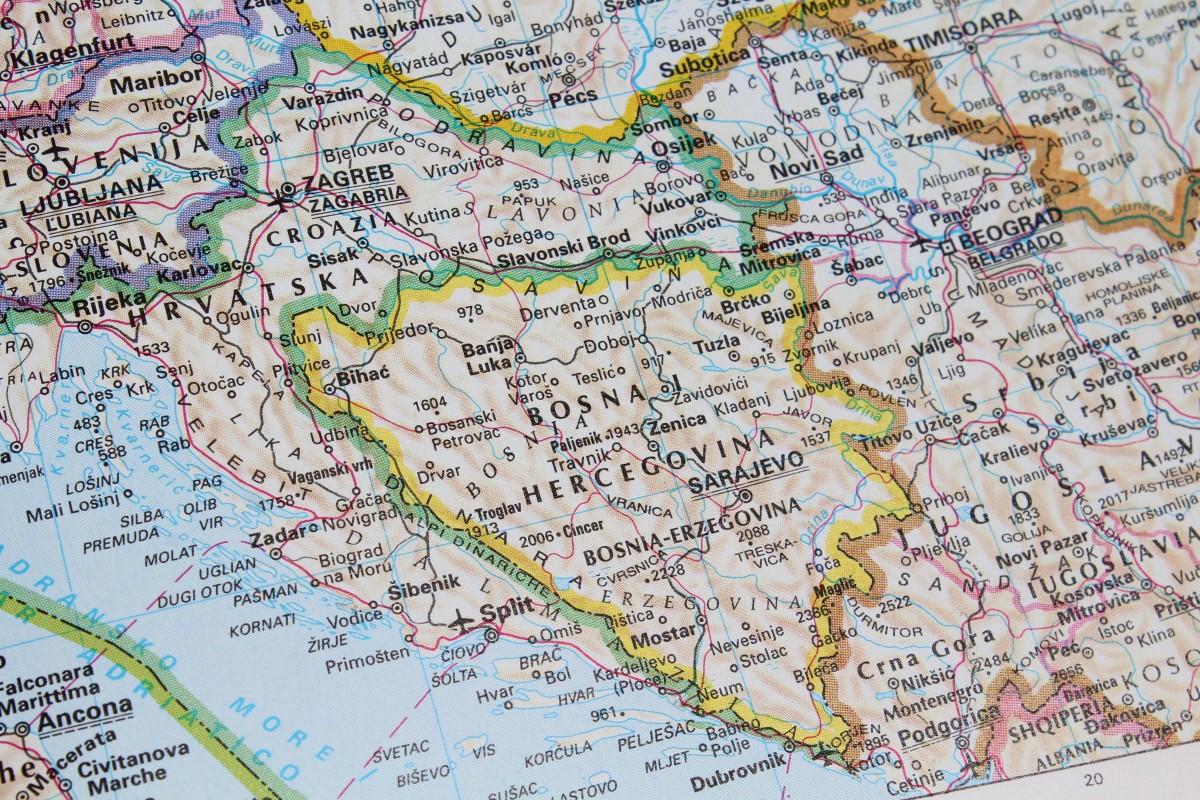
An interesting set of circumstances added a European country—Yugoslavia—to the Non-Aligned Movement. To analyze the reasons for its inclusion, it is necessary to go back to June 1948, when the Communist Party of Yugoslavia was expelled from the Cominform, which brought together most other European communist parties. This unique phenomenon exposed Yugoslavia to the threat of military conflict with Soviet satellite states on its borders. At the same time, it prompted the government in Belgrade to seek new allies through whom Yugoslavia could legitimize itself and gain support.
At a simplified political level, Yugoslavia could portray its conflict with Stalin as its own decolonization from the USSR. However, there are two key reasons why this cannot be equated with actual decolonization: Yugoslavia, unlike colonies in Africa and Asia, already existed as a state and was fighting for a degree of sovereignty from foreign influence; moreover, former colonies themselves demanded and fought for independence, while Yugoslavia was expelled from the Soviet bloc (although Tito’s policy significantly contributed to this outcome). Nevertheless, Yugoslavia was largely successful in presenting itself to newly formed states as a country that had undergone a similar process.
The Brijuni Declaration
In 1956, on the Brijuni Islands, Josip Broz Tito, Gamal Abdel Nasser (President of Egypt), and Jawaharlal Nehru (Prime Minister of India) held a meeting and signed the Brijuni Declaration. This event was later interpreted as the beginning of the Non-Aligned Movement, although this is not entirely accurate. Yugoslavia indeed introduced a European component into the Movement, further internationalizing it and moving it beyond the exclusive context of the Third World. The European dimension officially began at Brijuni, supporting this argument. Additionally, Yugoslavia, Egypt, and India would become some of the most influential states within the Movement.
On the other hand, it is undeniable that the Bandung Conference had taken place a year earlier, where the most important ideas of the future NAM were already defined. Furthermore, the representatives of 29 states in Bandung numerically outweigh the three leaders at Brijuni. This suggests that it may not be possible to determine a single definitive origin of the Movement, as it clearly emerged from multiple sources.
The First Conference of the Non-Aligned Movement in Belgrade, 1961
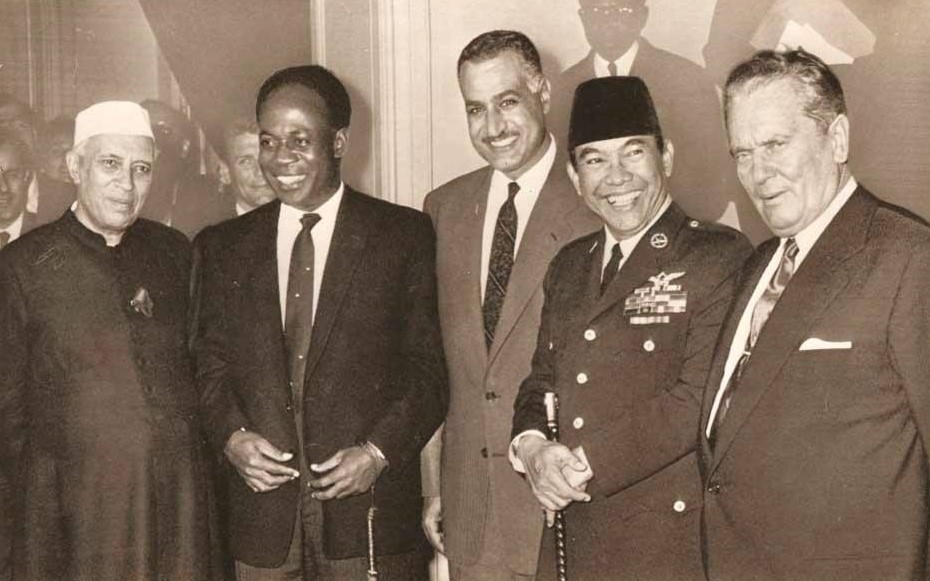
Tito, Nehru, Nasser, Sukarno, and Kwame Nkrumah (President of Ghana) met in the Yugoslav mission to the UN in New York in 1960. All those present, except Tito, had already participated in Bandung in 1955. Ghana might not appear to be a major factor, but it should be noted that under Nkrumah’s leadership, it had ambitions to develop an atomic bomb.
For the further development of relations among these countries, Tito’s overseas travels were of great importance, as he visited fellow leaders in their home countries. The symbol of these journeys was his yacht “Galeb,” which is still undergoing renovation today. Hosting the president of a European country was undoubtedly refreshing for leaders in those regions. Tito visited Nehru in 1954, Nasser in 1956 and 1959, Sukarno in 1958, and Sirimavo Bandaranaike (Prime Minister of Sri Lanka, then Ceylon) in 1959, among others. These discussions were constructive, and they reveal the curiosity of foreign leaders about the Yugoslav situation. For instance, Nehru was concerned that Yugoslavia had entered the Balkan Pact with Greece and Turkey, both NATO members, fearing this could undermine non-alignment.
The connection among non-aligned states continued to strengthen and culminated in the First Conference held in Belgrade in 1961. The decision to hold the conference there was far from simple. Yugoslav diplomat Aleš Bebler and ambassador to India Dušan Kveder even traveled to persuade Nehru to ensure India’s participation.
There were multiple reasons for the reluctance of some states to attend the conference in Belgrade. Firstly, it could be questioned why the meeting should take place in Europe, which had only one member state in the Movement, rather than in Africa or Asia, which constituted its majority. Sukarno could have justifiably argued for Indonesia based on Bandung’s legacy, while Nehru could have pointed to India’s population size.
Although Yugoslavia had no colonial past, many states might have opposed traveling to Belgrade due to distrust toward Europeans as former colonizers. Decolonized countries were particularly sensitive to Yugoslavia’s tendency, after 1948, to equate Western imperialism with Soviet hegemonism. It was not easy for them to accept equal distancing from countries like Britain and France, compared to the USSR, under whose rule they had never been.
However, Yugoslavia had one decisive advantage: its geographical position between NATO and the Warsaw Pact. This spatial reality symbolized precisely what non-aligned countries sought to achieve.
Yugoslavia’s Significant Role in the Movement
Thus, Belgrade hosted an unprecedented gathering of leaders from regions that were considered exotic in this part of the world. Yugoslavia was open to absorbing cultures from distant countries, as evidenced by the Museum of African Art. This museum is unique in that its African artifacts were not acquired through colonial plunder, as in Western countries, but through donations.
Interestingly, even before this became official policy, there was already an impulse in Yugoslavia toward empathy and support for African nations. For instance, writer Branko Ćopić had written the anti-colonial ballad “Lalaj Bao.”
Once support for oppressed nations became an official narrative, Yugoslavia adhered to it even at the expense of realpolitik gains. For example, the Brijuni Declaration of 1956 explicitly supported the Algerian National Liberation Front (FLN) in its struggle for independence from France. This meant that Yugoslavia took a clear stance early in a war that ended only in 1962. In doing so, it potentially undermined France’s possible accession to the Movement—an idea that was not unrealistic, given that in 1966 Charles de Gaulle withdrew France from NATO’s military command.
Yugoslavia’s influence continued to grow after the Belgrade Conference. This was partly aided by the decline in India’s reputation following the brief Sino-Indian War of 1962. Tito’s leadership role was also inspired by his experience commanding partisan forces during World War II, which were the largest in Europe.
Yugoslavia also illustrated a broader phenomenon: not all NAM members interpreted non-alignment in the same way. For Yugoslavia, balancing relations between the USSR and the United States was a constant priority. The Movement allowed it to articulate such positions globally. In contrast, Cuba, another NAM member, was openly aligned against the United States, as seen during the Cuban Missile Crisis in 1962.
Conclusion
It can be concluded that the Non-Aligned Movement did not originate from a single center but emerged from multiple starting points. Its beginnings can be traced to the Bandung Conference in 1955. The Brijuni meeting in 1956 marked the first step in integrating Yugoslavia into the Movement. Tito’s travels aboard the “Galeb” strengthened ties with African and Asian states. These processes culminated in the First Conference of heads of state and government of the Non-Aligned Movement in Belgrade in 1961.
Thus, the only European member of the Movement successfully used its geographical position to present itself as a bridge between East and West. Non-alignment became a way for Yugoslavia to gain global recognition. Interestingly, its expulsion from the Soviet bloc—initially perceived as a diplomatic defeat—ultimately resulted in a foreign policy breakthrough.
Finally, during the period analyzed in this article, the Non-Aligned Movement began to shine ever more brightly on the geopolitical stage. However, since it was shaped by specific historical forces such as decolonization and bloc division, which no longer exist in the same form, it has not retained that same level of prominence today. Nevertheless, in its early years, the Movement was relatively cohesive despite the diversity of its members.