By Matija Šerić
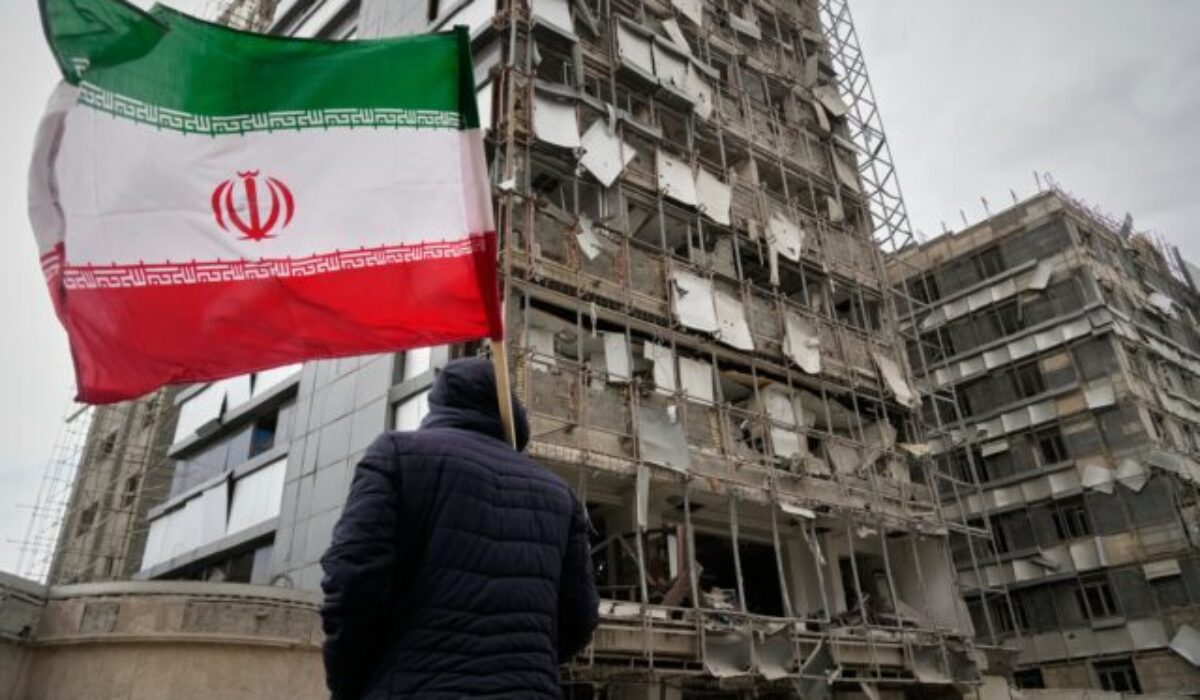
The brutal aggression of the United States and the State of Israel against the Islamic Republic of Iran has opened a new chapter in the geopolitics of the Middle East—and the world. On February 28, the Rubicon was crossed, and the die has been cast. One thing is certain: there is no turning back. Both the Zionist and Islamist regimes have manifested their hostility in the ongoing war, which poses a serious threat to global security. Oil and gas prices have skyrocketed on world markets, likely leading to inflation and potential shortages of consumer goods. Most citizens of the Middle East, and indeed humanity as a whole, hope that the Iran-Israel-U.S. war will end as soon as possible. The conflict will eventually conclude, but the question is how. Below, based on current facts, we present forecasts and the most likely outcomes of the Iran war.
Scenario 1 – Replay of the 12-Day War
Last June, a 12-day war occurred that closely resembled the current conflict. Both wars share the objective of Israel and the U.S.: eliminating Iran’s nuclear and military capabilities. However, the key difference is that in the current round, Washington and Tel Aviv aim to change the Iranian regime. This is evident from the assassination of Supreme Leader Ali Khamenei—an objective Israel had also pursued last year, but was vetoed by Trump.
Although last year’s war was bloody, costly, and shocking (33 Israelis killed, over 3,000 wounded, and more than 1,000 Iranians killed with 5,000 wounded), it was short-lived and produced no spectacular outcomes. The war ended with a ceasefire, with both sides claiming victory. Iran’s nuclear and ballistic programs, while damaged, survived and continued. The conflict revealed Iran’s military weaknesses, particularly in the air, but the regime did not collapse. The Shiite theocracy remained intact, while internal issues such as water shortages, scarcity of consumer goods, and currency inflation surfaced.
Many experts believe that despite Trump’s grandiose rhetoric about regime change, the U.S. and Israel may withdraw after achieving their military objectives, even if Iran refuses to capitulate. Trump and Netanyahu would declare victory, while the surviving Islamist regime, possibly under a new Ayatollah, would continue quietly developing its nuclear program. Iran would remain isolated, similar to North Korea, but would survive.
Proponents of this scenario highlight the limited U.S. capacity for ammunition and equipment, as well as the inflationary impact on the American economy. It is an election year in the U.S., with midterms in November. American voters may decide based on the state of the economy, so a swift victory—even a superficial one—is in Trump’s interest. This scenario has a high probability of occurring.
Scenario 2 – The Venezuelan Model
Although Trump has made chaotic statements about Iran, he has recently suggested that the U.S. might need to intervene in selecting a new Iranian Supreme Leader, noting that Mojtaba Khamenei (son of the late Supreme Leader) is unsuitable. This would be comical if not tragic. Trump appears to realize that the Iranian regime will not collapse quickly and that some form of negotiated settlement may be necessary. The U.S. could allow the Shiite clerics to remain in power in exchange for surrendering their military and nuclear arsenal, while American oil companies gain access to Iranian oil fields. Former moderate president Hassan Rouhani has been suggested as a potential collaborator.
This scenario mirrors Venezuela, where Nicolás Maduro remained in power but his deputy, Delcy Rodriguez, cooperated with the U.S. “Change the leader and negotiate” could summarize Trump’s policy. However, Iran is very different from Venezuela—a theocracy in which the Supreme Leader is also the spiritual leader of Shiite Muslims worldwide. A new leader cannot be a U.S. puppet. Therefore, this scenario is highly unlikely.
Scenario 3 – Rapid Total Collapse of the Shiite Regime
A week into the war, Iran still maintains full control of the country. All Israeli-American air, drone, and missile strikes have not triggered a popular uprising, despite significant opposition earlier in the year. While some groups could mobilize with foreign air support, a rapid collapse of the regime remains unlikely. The Islamic Republic has existed for almost half a century, with loyal forces such as the Revolutionary Guard (IRGC) and Basij militia able to sustain long-term resistance. Approximately 20 million Iranians fervently support the regime out of 90+ million, demonstrating the revolution’s durability.
Scenario 4 – Civil War
A more plausible scenario is an Iranian civil war. Secular Iranians wishing to end the theocracy could organize and, with American support, establish a military force controlling parts of the country. They might claim legitimacy as Iran’s true government and gain recognition from the U.S. and Western countries, while the nation descends into an unpredictable civil war. Iran’s multiethnic composition, including Kurds, Azeris, and Balochis, could complicate matters. The U.S. has already encouraged Kurds in Iraq to attack Iranian territory, possibly aiming for autonomy or a future Kurdistan. This scenario resembles events in Libya and Syria, making civil war moderately likely if the conflict persists.
Scenario 5 – Regional War
The conflict could escalate into a regional war. Formally, a regional war is already underway: Hezbollah, Yemeni Houthis, Iraqi Shiite militias, and Palestinian radicals support Iran, targeting Israeli and U.S. positions and attempting to disrupt shipping through the Strait of Hormuz. However, the war could worsen, potentially involving Lebanon, Iraq, Saudi Arabia, Syria, and Turkey, turning their territories into battlefields. Kurdish groups might exploit Iran’s weakening to strengthen their positions, and tensions between Pakistan and Afghanistan or even India could exacerbate the regional conflict. While possible, this scenario is less likely.
Scenario 6 – Increased Terrorism
Terrorist attacks in Europe and the U.S. by Iran or other Islamist actors could occur as a direct consequence of the Iran war. The conflict has revived tensions between the Western Judeo-Christian and Islamic worlds. Although Iranians are Persians, not Arabs, many Muslims sympathize with Iran, seeing the war as an attack on Islam itself. While most Muslims are Sunni, Iran’s Shiite revolution is seen by some as a model. Frequent terrorist acts in the West would intensify global tensions, potentially benefiting Iran strategically.
The outcomes of the Iran war are numerous and difficult to predict. What is certain is that the situation is extremely dangerous. Whatever scenario unfolds, it will likely bring long-term instability to Iran, the region, and the world. The hope now is to control the damage until a resolution can be achieved.