By Matija Šerić
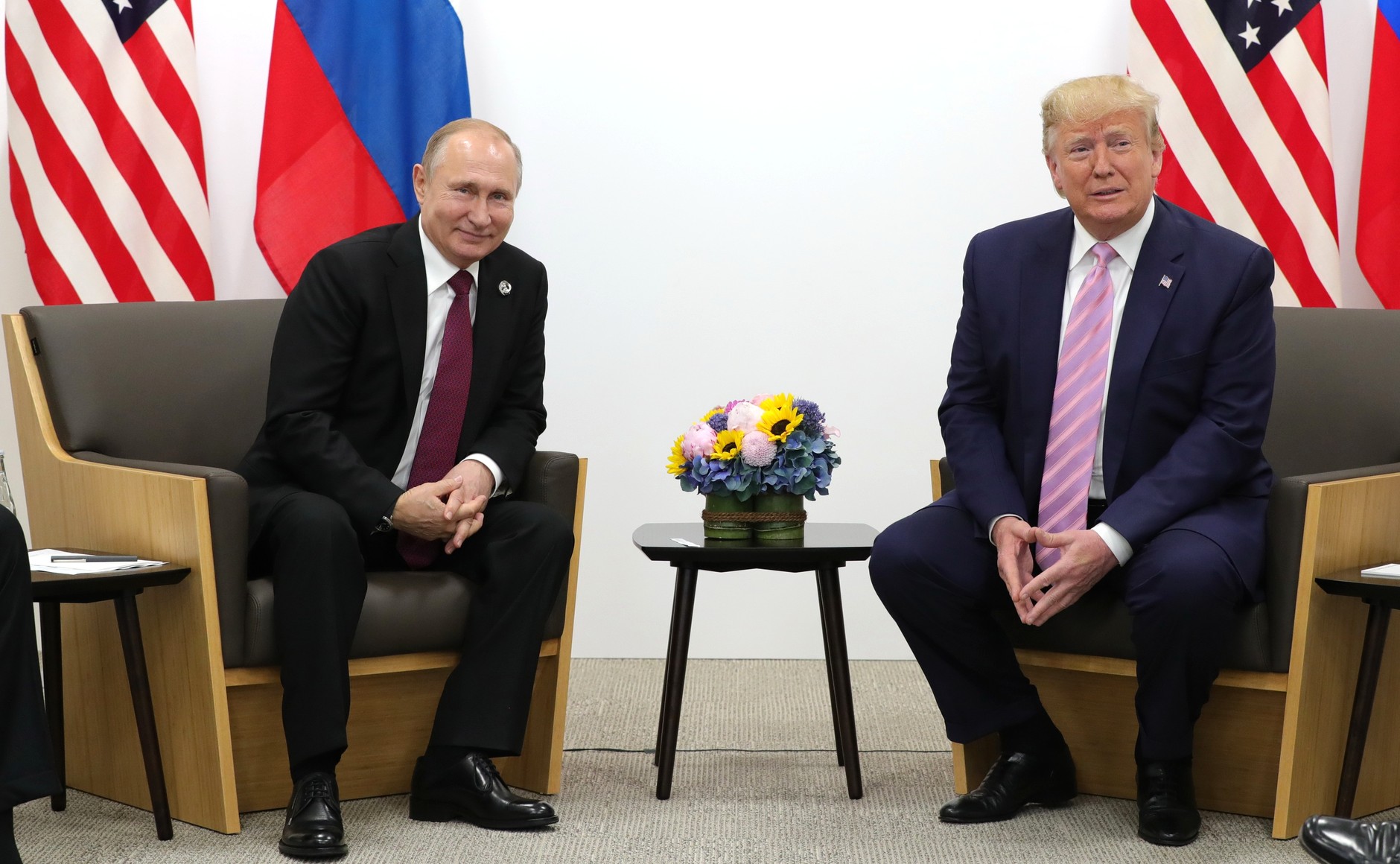
Within both blocs there are internal fractures that could potentially break them apart. Although neither the Russians nor the Chinese are satisfied with a world order in which the United States continues to seek primacy, their goals are not necessarily identical. During the first Cold War, the two countries clashed over ideology and foreign-policy prestige, even though both belonged to the socialist camp. In the current era, it is American hegemony—linked to issues such as oil prices, sanctions, NATO expansion, and the U.S. presence in the Western Pacific—that has pushed China and Russia into a cordial partnership. Russia needs China as an export market, while China needs Russia for supplies of oil, gas, and weapons.
Potential challenges in China–Russia relations
Nevertheless, the greatest challenge to the partnership between Beijing and Moscow is their territorial proximity and China’s New Silk Road, which represents the largest trade initiative in history. It is an open secret that China would like to control Siberia, a region rich in oil, gas, precious stones, and other resources that would be extremely valuable to China. The Chinese population in the area is growing, and border disputes remain unresolved. Moreover, China is about ten times more populous than Russia, which would be a major advantage in any potential conflict. China’s demographic and economic potential seems limitless, while Russia’s does not. Russia has failed to fully diversify its economy, which poses a serious challenge.
Possible rifts within the Western bloc
The U.S.–EU axis is also not solid, as within the European Union there are several states that do not support the policy of sanctions and isolation of Russia. These are countries governed by illiberal or anti-establishment governments, such as Hungary, Slovakia, and Bulgaria. Even in major European states like Germany and Italy, there is significant disagreement with anti-Russian rhetoric. Anti-Russian sanctions are exhausting the economies of large European countries, particularly harming small and medium-sized enterprises, while Europe is becoming dependent on non-Russian energy sources that are not easy to secure. The United Kingdom’s exit from the EU in 2020 demonstrated that the EU itself can disintegrate, which could undermine the leading position of the United States in Europe. It is widely acknowledged that the EU is, to a large extent, an American project.
Hybrid warfare
Cold War II differs from the original Cold War in that threats involving weapons of mass destruction are no longer as prominent. Admittedly, nuclear capabilities still exist and continue to develop, as do hypersonic weapons and robotic systems, but states now primarily wage war through information, cyber, and hybrid means.
Western media and security services accuse Russian media of spreading disinformation, carrying out cyberattacks on sensitive websites, and interfering in domestic political processes, such as alleged Russian involvement in the 2016 U.S. presidential elections. Similar accusations are made in the opposite direction. Russians and Chinese have accused the Americans of interfering in anti-government protests in Russia, Ukraine, and Hong Kong.
Mass media on both sides are often biased, as they portray only the misdeeds of the opposing side. In the case of the Battle of Aleppo, Western media showed only the suffering of rebel-held parts of the city caused by government and Russian forces, while Eastern media showed only the hardships in government-controlled areas caused by so-called “moderate rebels” supported by the U.S. government.
Military bases – symbols of hard power
This Cold War is also marked by arms sales and the stationing of military troops in various parts of the world. The United States and Russia are the world’s largest arms exporters and earn significant profits from this trade: the U.S. $120 billion and Russia $15 billion in 2025. The U.S. military operates around 800 bases in some 70 countries worldwide. In recent years, the Americans have strengthened their presence in Eastern Europe and the Far East, to the anger of Russia and China. For these and other reasons, China has so far established three military bases—in Djibouti, Cambodia, and Tajikistan.
Russia has militarily fortified its enclave of Kaliningrad with nuclear-capable Iskander-M missile systems and S-300 and S-400 air defense shields. Russian bases exist throughout the former USSR, including Kazakhstan, Armenia, Belarus, Georgia, and Kyrgyzstan. The Russian military has also entrenched itself permanently in several African countries such as Mali, Niger, Burkina Faso, and the Central African Republic. There are announcements that Russian military bases could also be established in Vietnam, and that Moscow’s anti-terrorist interventions could follow in Libya and Yemen if local authorities request them. Clearly, boots on the ground remain important even in the modern era, regardless of the development of unconventional warfare, and intercontinental ballistic missiles from Russia can strike U.S. territory—and vice versa.
The goal of the United States
The goal of Cold War 2.0 is the creation of a new world order that would redefine geopolitical relations. The American objective would be to ensure that no other nation challenges U.S. visions on a global scale. Russia and China would be expected to accept American dominance, willingly or by force. This is similar to how major NATO countries such as Germany and France have accepted it: although still powerful, they acknowledge that they cannot be equal to the United States in shaping world politics. On the other hand, the fate of Iraq, Libya, and Syria—countries that resisted U.S. foreign policy—is well known.
American politicians and ideologues believe in American superiority, or exceptionalism—the idea that the United States should lead the democratic and liberal world. According to these principles, political and social values of Western civilization and the American Revolution should prevail in every country: democratic governance, laissez-faire economics, individualism, and egalitarianism.
The goals of China and Russia
The goal of Russia and China would be a world in which both are equal partners with the United States and other powers within a global multipolar order. Current Russian foreign policy is guided by the ideas of Alexander Dugin, namely Eurasianism, while Chinese policy is guided by President Xi’s “Chinese Dream.” However, China has far greater ambitions than Russia and believes it can lead the world due to its economic, demographic, territorial, and increasingly military and political power. Objectively speaking, Russia has far weaker capacities than China, as it is significantly weaker economically and demographically. China has a nominal GDP of over $20 trillion, while Russia’s is just over $2.5 trillion. China’s population is more than ten times larger than Russia’s, and so on.
Both would welcome the dismantling of NATO, the EU, and the G8, as well as the stronger promotion of BRICS, the Shanghai Cooperation Organisation, the G20, and similar bodies. These changes would also include redefining the United Nations, with additional countries such as India and Brazil becoming permanent members of the Security Council.
There will be no clear winner in Cold War 2.0
In Cold War II there will be no crystal-clear winners (unless a state experiences internal collapse, as the USSR did). Of course, the balance of power among great powers can always change—China, for example, could surpass the brilliance of the United States and Russia. The question then arises: what is the point of Cold War confrontation if neither Washington, Beijing, nor Moscow can achieve a clear victory? The purpose is to expand a country’s influence and significance as far beyond its home territory as possible, in order to gain greater prestige and power, as well as economic, social, and other benefits. Spheres of influence have always existed and will continue to exist.
Primarily due to mutually assured destruction, the deep interconnection of the global economy, and greater social awareness, there will be no doomsday scenario involving devastating weapons, nor a Third World War. However, there will be peaks of Cold War tensions, periodic escalations, as well as détente and relaxation. Great powers will continue to wage proxy wars, organize revolutions and coups, engage in information warfare, and conduct propaganda campaigns against one another—but they will not cross the line that would mean the twilight of humanity.
Dialogue – the best solution
To overcome Cold War tensions, it is necessary to negotiate as much as possible and to listen to the other side—their fears and hopes. Cold wars between major powers give smaller states opportunities to maneuver between blocs in order to extract maximum benefit. For the world as a whole, it is important that there be multiple strong states rather than just one. The world needs a strong United States, Russia, and China, as well as other powers, in a contemporary and highly complex world troubled by terrorism, climate change, disease, poverty, and other challenges.