By Matija Šerić
In recent weeks, one of the most important geopolitical stories has been the fiery bilateral confrontation between the United States and the Bolivarian Republic of Venezuela. Although relations between the two nations have been strained for the past two decades, the situation has worsened since Donald Trump began his second term in January this year. Threats, insults, and sanctions between Washington and Caracas have become an almost daily occurrence. After Trump began deploying the U.S. Navy to the Caribbean at the end of August, the situation grew even more complicated. It seems that a war between Uncle Sam and the Land of Grace—as Christopher Columbus called the region of modern-day Venezuela in 1498—might actually follow.
Bush–Obama–Biden–Trump: All Against Socialist Venezuela
Although U.S.–Venezuelan relations have been poor since the legendary Hugo Chávez came to power at the beginning of the 21st century, they deteriorated even further under his successor Nicolás Maduro. As Venezuela’s economic situation worsened due to low oil prices and the flaws of “21st-century socialism,” the U.S. increased sanctions on the South American country year after year. The U.S. approach toward Venezuela remained hostile regardless of who occupied the Oval Office—George W. Bush, Barack Obama, Donald Trump, or Joe Biden.
Maduro’s Victory – A Trigger for New Tensions
After Maduro won his third presidential term in the summer of 2024, relations reached a new low. Washington—along with most Western nations and part of the Organization of American States (OAS)—refused to recognize Maduro’s victory. The united opposition claimed that its candidate, Edmundo González, had won by a two-thirds margin, presenting some evidence to support the claim. Although mass protests with casualties broke out in the second half of 2024, Chávez’s successor nevertheless secured a third term at the start of this year.
US Navy shifts resources from the Pacific and Middle East to the Caribbean
Maduro as a “Narco-Terrorist”
During his campaign last year, Trump eagerly embraced the claim that Maduro was the head of the criminal organization Tren de Aragua, allegedly responsible for exporting cocaine to the U.S. Interestingly, that thesis was first put forward by Maduro’s fierce opponent, opposition politician María Corina Machado, who recently won the Nobel Peace Prize (notably, she supports both potential foreign military intervention in Venezuela and Israel’s offensive in Gaza). There is, however, no solid evidence for these claims.
In reality, the ties between Venezuela’s most powerful criminal organization and state structures are rather loose. Although some cooperation has occurred, the idea that Maduro controls the entire group is false. It is not a state-run entity. Upon taking office, the Trump administration repeatedly blocked the entry of Venezuelan migrants into the U.S. and deported those already in the country, claiming they were drug traffickers. For example, on March 17, 200 Venezuelans—alleged gang members—were deported under the authority of the ancient Alien and Sedition Acts of 1798.
“A Bounty on Maduro’s Head”
On August 7, U.S. Attorney General Pam Bondi, acting under Trump’s direction (who called Maduro “one of the biggest drug traffickers in the world”), offered a $50 million reward for information leading to Maduro’s arrest. Such a move is almost unheard of in diplomacy. The U.S. had previously offered $25 million, and the doubling of the bounty followed allegations that Maduro was aiding various gangs and drug cartels and carrying out domestic repression. It is worth noting that U.S. laws enacted in the 1970s, during the Ford and Carter administrations, prohibit the assassination of foreign leaders. If Trump were to pursue such action, it would constitute grounds for impeachment by Congress.
The Beginning of an American “Invasion” of the Caribbean
In the second half of August 2025, the U.S. began deploying warships and military personnel to the Caribbean, justifying the move as part of an anti–drug cartel operation, even though it is well known that most fentanyl entering the U.S. comes overland from Mexico and is produced in Colombia.
On August 20, Trump ordered three naval vessels to head toward the coast of South America. By August 29, there were seven U.S. warships and one nuclear attack submarine in the southern Caribbean, with more than 4,500 Navy and Marine personnel stationed in the area. The CIA joined the campaign, all under the guise of fighting “narco-terrorism” against Tren de Aragua and the Colombian Marxist guerrilla group National Liberation Army (ELN). The Venezuelan government responded by announcing the mobilization of more than four million soldiers.
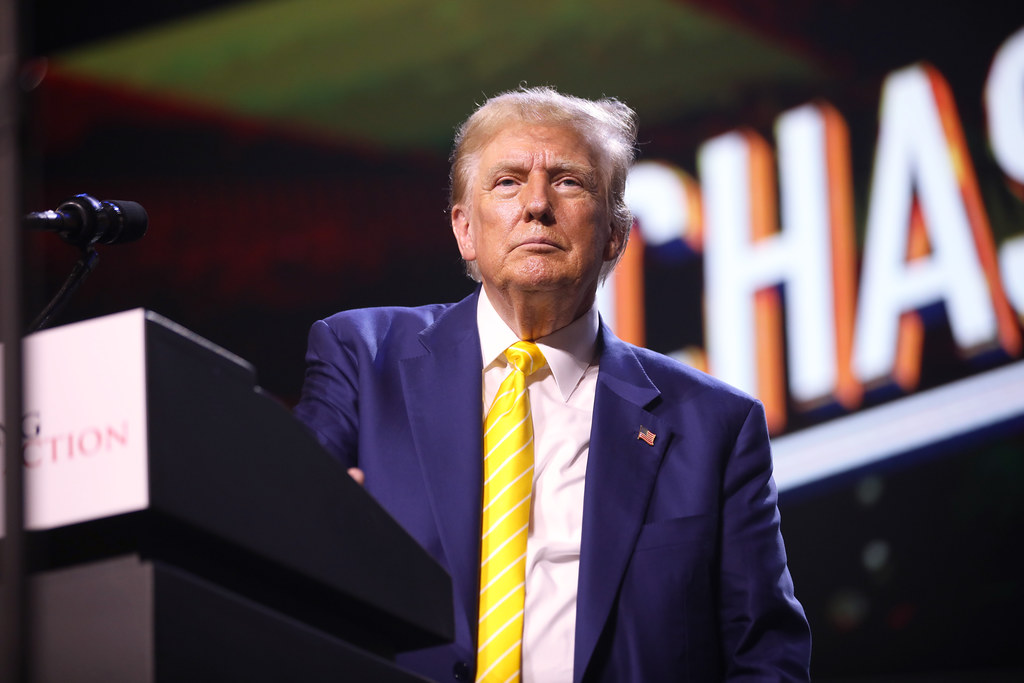
Trump threatens Venezuela
Trump Crosses the Rubicon
The first military operation in the U.S. campaign took place on September 2, when a vessel coming from Venezuela was sunk. According to U.S. sources, the ship carried members of Tren de Aragua involved in drug trafficking. Eleven people were killed in the attack. U.S. Defense Secretary Pete Hegseth said the operations would continue, while Secretary of State Marco Rubio hinted at further strikes.
U.S. forces were deployed in nearby Puerto Rico, and subsequent airstrikes destroyed several vessels suspected of trafficking drugs, including some linked to Colombia’s ELN. The Dominican Navy launched a rescue operation and recovered a shipment of drugs from the wreckage of one of the destroyed vessels. During October, U.S. attacks on “suspicious” vessels from Venezuela and other Latin American countries expanded to the eastern Pacific. The number of U.S. personnel in the southern Caribbean, eastern Pacific, and Puerto Rico exceeded 10,000. As of October 28, at least 57 people had been killed in 14 attacks (eight in the Caribbean and six in the Pacific).
Legally Illegitimate U.S. Naval Strikes
On October 1, Trump officially notified Congress that the United States was engaged in a “non-international armed conflict” with “unlawful combatants.” This was a deliberate attempt to justify attacks on vessels that posed no real threat. Most legal experts argue that the U.S. strikes violate international law. Moreover, Trump’s administration is breaching fundamental provisions of international maritime law. Although the U.S. has not signed the UN Convention on the Law of the Sea, its policy had long been to “act in accordance with its provisions.” States are not permitted to interfere with vessels in international waters except in cases of “hot pursuit” originating within their own territorial waters.
Additionally, the attacks violate the U.S. Constitution, as only Congress can authorize such strikes. Trump’s use of the term “narco-terrorists” to justify armed action—a concept developed after the 9/11 attacks—is also weak. The U.S. branch of Amnesty International has described the strikes as extrajudicial killings. Colombian President Gustavo Petro and Brazil’s Luiz Inácio Lula da Silva similarly condemned the attacks, comparing them to “killings without trial.” Interestingly, about 70 percent of the U.S. public supports the naval operations—apparently alarmed by the influx of illegal drugs into the country.
Drugs – An Unconvincing Excuse
Although drug smuggling into the U.S. is indeed a major problem, it is clear that this is merely a pretext masking political motives. As already noted, most drugs enter the U.S. via Mexico. According to U.S. federal data, from fiscal year 2018 to 2024, more than 92% of all fentanyl seizures occurred at official border crossings or inspection points—showing that the drug primarily enters overland, not by sea. Furthermore, between 2019 and 2024, 80% of people caught smuggling fentanyl at border crossings were U.S. citizens, not Latin Americans.
The Real Goal of Trump’s Caribbean Aggression
The deployment of U.S. forces clearly aims to bring about regime change in Venezuela—to accelerate that process by any means. This has been acknowledged by opposition figures both in the U.S. and Venezuela. The true goal is to apply intense pressure on the Chavista regime in hopes of triggering internal collapse.
The bounty on Maduro’s head could encourage factions within his regime to overthrow him or spark an internal rebellion. Some top officials may fear for their own safety near Venezuelan shores and decide to turn against Maduro to save themselves from future indictments. It is not inconceivable that the U.S. might soon launch drone or missile strikes inside Venezuela, nominally targeting “narco-terrorists” but actually aiming to eliminate or intimidate Maduro’s supporters.
As Latin American history shows, Maduro and the Chavistas will remain in power as long as they retain the loyalty of the armed forces, police, and intelligence services. But that loyalty is not unconditional.
Maduro threatens Trump
Maduro’s Response
On October 24, Nicolás Maduro stated that Trump’s government was “inventing a new eternal war,” as the world’s largest aircraft carrier, the nuclear-powered USS Gerald R. Ford—capable of carrying up to 90 aircraft and strike helicopters—approached Venezuela. Maduro revealed that U.S. pressure intensified after he began proceedings to revoke the Venezuelan citizenship of opposition figure Leopoldo López, who has lived in exile in Spain for five years. Maduro asked the Supreme Court to strip López of citizenship for supporting U.S. military actions in the Pacific and Atlantic, as well as the potential invasion of Venezuela. He has already raised the combat readiness of the Bolivarian Armed Forces.
Media Spins
Recently, the media reported claims from a former Trump administration official that the Venezuelan government had allegedly offered Maduro’s resignation in exchange for normalized relations with the U.S. Under this supposed plan, Vice President Delcy Rodríguez would serve out his term until 2031, after which free elections would be held—with Rodríguez not running. Allegedly, the Trump administration rejected the proposal. Both Rodríguez and Maduro publicly mocked the story, which appears to be a media fabrication.
Trump responded with an equally bizarre move: on October 22, he announced that he had already authorized CIA operations in Venezuela—something Maduro ridiculed, noting that the CIA has operated there for decades. “Reinventing the wheel” merely to heat up tensions.
A U.S. Invasion Is Unlikely
In the end, is another American invasion likely? Considering that U.S. forces near Venezuela number just over 10,000 troops, that is insufficient for a successful offensive. Much more manpower, weaponry, and equipment would be needed. Although B-52 and B-1 bombers, F-35 multirole fighters, and the USS Gerald R. Ford aircraft carrier have been sighted near Venezuelan airspace and waters, that is not enough to justify a full-scale war.
Potential aggressors would need several tens of thousands—likely over 100,000—troops, given Venezuela’s size of 916,000 square kilometers, along with massive amphibious and air capabilities in both quality and quantity. Even though Venezuelan forces are not in great condition, they would likely resist fiercely with advanced Russian, Iranian, and Chinese weaponry. The entire region would probably side with Venezuela, given widespread opposition to U.S. imperialism. The country could easily become a new Afghanistan for the United States.
Moreover, Trump cannot authorize an attack on Venezuela without congressional approval. It is doubtful he would obtain it, even with Republicans holding a narrow majority—and after next year’s midterms, Democrats could regain control of one or both chambers. Some might argue that this uncertainty could drive Trump to attempt a military showdown with Venezuela. In reality, a full-scale war is highly unlikely—but with Trump, one can never be sure. He is a politician prone to bizarre and reckless moves that carry unpredictable dangers.
References:
https://www.americanimmigrationcouncil.org/fact-sheet/fentanyl-smuggling/
https://www.cato.org/blog/us-citizens-were-80-crossers-fentanyl-ports-entry-2019-2024
https://apnews.com/article/venezuela-warship-maduro-uss-gerald-ford-21cc3ac03f755a657c0541667246c007
https://apnews.com/article/trump-venezuela-maduro-exit-plan-1218510e67a90c136eba23a961597e55
https://thehill.com/policy/defense/5575511-trump-venezuela-military-pressure-maduro/
https://www.cbsnews.com/news/nicolas-maduro-venezuela-power-60-minutes/