By Bruno Rukavina
Diplomatic negotiation is a process in which states or international actors communicate through their representatives (diplomats) to reach agreements on issues of common interest or to resolve disagreements and conflicts. It is a fundamental function of diplomacy and a key mechanism for the peaceful resolution of disputes in international relations. Joseph Nye (2004) adds that negotiation is one of the key instruments for exercising soft power, while Raymond Cohen (1997) emphasizes the cultural and symbolic aspects of negotiation, especially in interactions between different civilizations.
The Role of Diplomatic Negotiation in Foreign Policy
Diplomatic negotiation represents a formalized form of the negotiation process conducted exclusively through authorized representatives of states, such as ambassadors, special envoys, and professional negotiators, operating within a clearly defined institutional and legal framework. It possesses a pronounced protocol and ceremonial dimension, consistently adhering to the norms and rules defined by the 1961 Vienna Convention on Diplomatic Relations, which ensures the legal legitimacy and status of actors in international relations. Unlike the classical concept of negotiation, diplomatic negotiation does not always imply reaching a compromise; it is more often based on seeking alignment of diverse interests within politically and strategically acceptable boundaries.
The negotiation process unfolds in stages, including preparation, presentation and exchange of positions, drafting agreements, and finalization. Negotiations may be either public or secret, depending on the political sensitivity of the subject matter and the needs of strategic communication with domestic and international audiences. Diplomatic negotiations are therefore a key instrument of foreign policy and shape international relations through the institutionalized interaction of states and other international actors.
Classification of Diplomatic Negotiations
Types of diplomatic negotiations can be classified according to various criteria reflecting the complexity of international relations and the dynamics of communication among actors. By the number of participants, negotiations are divided into bilateral, involving two parties (for example, Croatia and Slovenia’s border negotiations), and multilateral, involving multiple states or actors (such as negotiations within the UN, WTO, or the European Union).
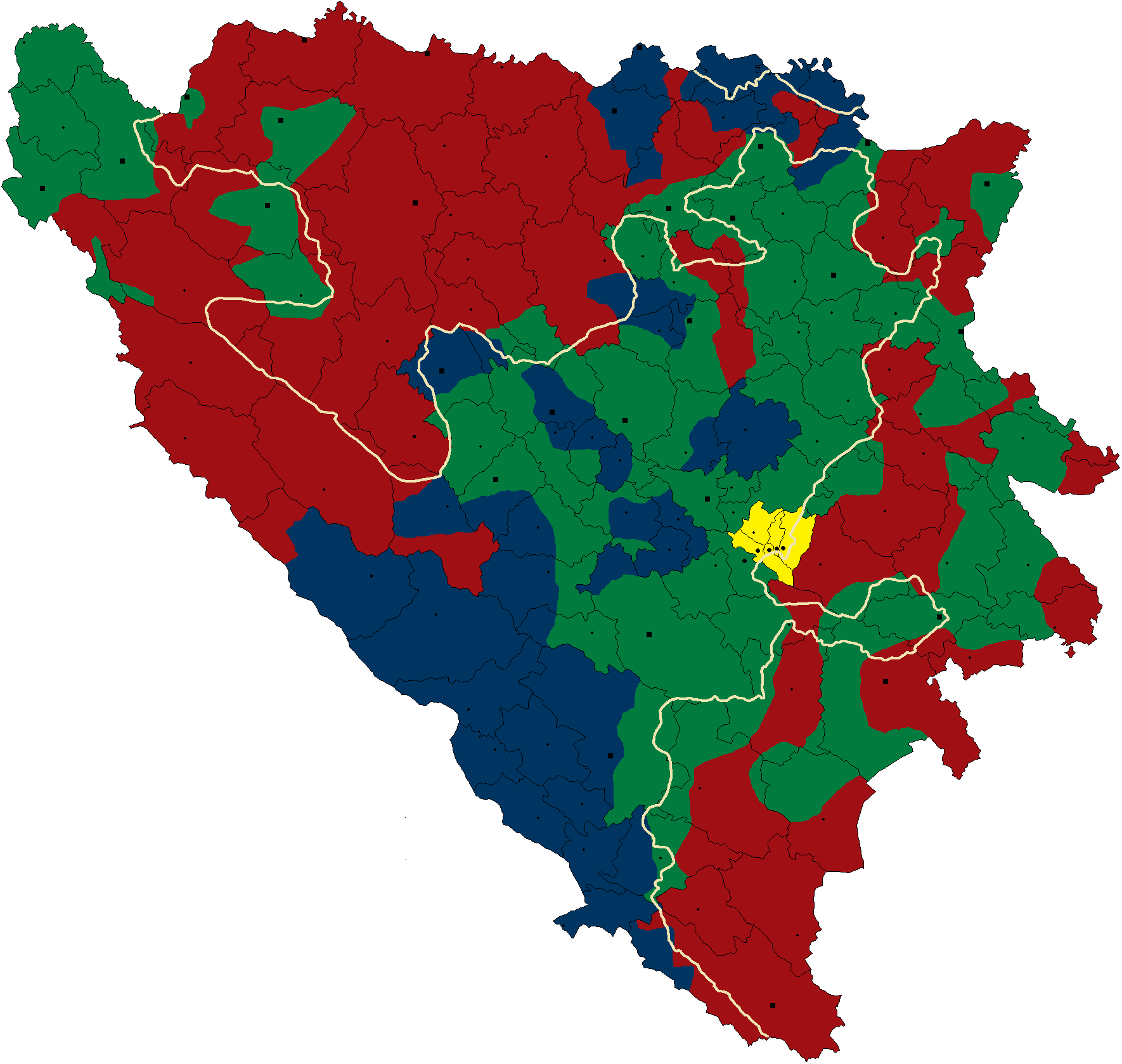
Depending on the goal, there are negotiations aimed at conflict resolution (e.g., the Dayton Agreement), those focused on establishing cooperation (in areas such as trade, transport, or security), and negotiations on status-related issues such as sovereignty, borders, and territories. Negotiation styles also vary, ranging from cooperative negotiations seeking mutual gain (win-win), to confrontational negotiations based on opposing interests (zero-sum), and tactical negotiations used solely for testing positions or gaining time. Regarding formality, negotiations can be formal, with clearly defined protocols and legal effects, or informal, conducted through unofficial channels.
Moreover, the dynamics and context of negotiations allow distinguishing between preventive negotiations (aimed at conflict prevention), reactive negotiations (during or immediately after a conflict), and post-conflict negotiations, which focus on peacebuilding and mitigating the consequences of conflict. This typology enables a deeper understanding of strategic choices and modalities of diplomatic action in the contemporary international system.
Diplomatic negotiation is thus a sophisticated form of political communication and a key instrument for international cooperation and stability. Its success depends on the skills of negotiators, the context of the conflict, the level of mutual trust, and willingness to compromise. In an era of (de)globalization and multipolar multilateralism, negotiation is becoming increasingly complex, requiring intercultural competence, legal knowledge, and psychological insight into the interests of other actors. In complex situations, tools such as preventive diplomacy, multilateral conference negotiations, “alibi diplomacy,” or shuttle diplomacy are employed, depending on the context, objectives, and available instruments.
What is the BATNA?
The Concept of BATNA
Special attention in the literature is given to the concept of BATNA (an acronym for Best Alternative to a Negotiated Agreement), which strongly affects negotiating power. This concept was developed by Roger Fisher together with William Ury and Bruce Patton as part of the Harvard principled negotiation model, presented in the book Getting to Yes (1981). BATNA represents the best option a party can achieve if negotiations fail and no agreement is reached. It does not represent the minimum a party will accept; rather, it serves as a reference point for decision-making: is the proposed agreement better than my BATNA? In other words, BATNA is a decision-making standard: if the offer on the table is better than the BATNA, the agreement is accepted; if not, the party withdraws and pursues its best alternative.
As the most favorable alternative to a possible agreement, BATNA increases a negotiator’s power by allowing rejection of an unfavorable deal without serious consequences, acting as a protective mechanism against pressure and coercion. Furthermore, it enables rational and informed decision-making, helping negotiators know when to persist and when to withdraw. Establishing a BATNA involves identifying realistic options if negotiations fail, elaborating the most feasible alternative, evaluating its value in concrete terms (e.g., economic, political, security), and comparing it to the current offer on the negotiation table. BATNA thus represents not only a backup strategy but also a framework for evaluating every aspect of a proposed agreement.
In international relations and diplomatic practice, a negotiator with a clear and well-developed BATNA approaches negotiations with greater confidence, reduced dependence on the other party, and an increased likelihood of achieving a favorable outcome. Therefore, BATNA is rightly considered a fundamental source of negotiating power.
Russian BATNA
In the context of Russian-Ukrainian negotiations, the concept of BATNA (Best Alternative to a Negotiated Agreement) allows for an analysis of the real negotiating power and maneuvering space of both sides. From Russia’s perspective, the BATNA is based on several strategic alternatives that the Kremlin can use as leverage without necessarily agreeing to a compromise. The continuation of the military campaign and the retention of occupied territories, as well as the potential creation of a “frozen conflict” (which is currently not in Russia’s interest, as it does not want Minsk 3 but a final peace and a new security architecture in Europe), enable Russia to destabilize Ukraine in the long term and prevent its integration into Euro-Atlantic institutions (EU/NATO). Additionally, domestic political consolidation through mobilizing public opinion against an external enemy, as well as strengthening alliances with China, Iran, and other anti-Western actors, serve as additional BATNA levers. Russia also uses Europe’s energy dependence as a pressure instrument, alongside surviving successive new rounds of sanctions. Therefore, Russia’s BATNA does not require a successful negotiation outcome, but allows it to maintain control and dominance through alternative geopolitical and military mechanisms.
Ukrainian BATNA
On the other hand, Ukraine’s BATNA is based on the willingness to continue military resistance with the support of Western allies, particularly the U.S. and the EU, who provide Ukraine with military, financial, and political support. A key aspect of Kyiv’s BATNA includes international mobilization to further isolate Russia and strengthen the sanctions regime. Ukraine seeks to preserve internal cohesion and national mobilization through a constructive identity narrative and resistance to Russia. In the long term, its goal is integration into Euro-Atlantic structures (EU/NATO), which further strengthens its position and motivation to be part of the world’s most developed bloc. In short, Ukraine’s BATNA enables it to persist in maximalist negotiating goals, including the return of all occupied territories, as long as it enjoys stable and sustainable international support.
BATNA as an obstacle to Russian-Ukrainian reconciliation
However, it is precisely the strength of these BATNAs on both sides that makes compromise difficult. Conflicting negotiating goals—on one side, Russia insisting on the recognition of territorial gains, neutrality, and demilitarization of Ukraine, and on the other side, Ukraine’s demands for full territorial restoration and Euro-Atlantic integration—make an agreement nearly impossible. The global geopolitical context further polarizes the negotiating framework, with the West supporting Ukraine while Russia relies on the international community’s fatigue. Symbolic stakes, such as national pride, sovereignty, personal prestige, and political legitimacy, prevent negotiating flexibility and adaptability. In such an environment, BATNA acts as a blocking mechanism that freezes the negotiation process, as both sides consider the continuation of the conflict, however destructive, currently more advantageous than a possible compromise that could appear as a defeat.
Russia and Ukraine can’t settle their conflict
Why Russians and Ukrainians cannot reach an agreement
This analysis of Russian-Ukrainian negotiations reveals deeply rooted obstacles that prevent a sustainable solution or ceasefire, despite numerous diplomatic efforts. The fundamental reason lies in the irreconcilability of strategic goals: Ukraine, relying on international support, insists on defending territorial integrity and Euro-Atlantic orientation, while Russia demands recognition of territorial gains and permanent neutrality/demilitarization of Ukraine. This situation produces a negotiating framework of rigid positions and ultimatums, in which neither side demonstrates the flexibility necessary for compromise. An additional layer of the problem is deep mistrust: Ukraine doubts Russia’s ability and willingness to honor agreed commitments, while Russia persistently asserts that the West has used Ukraine as a tool for its own strategic goals, thereby undermining Russian security.
The geopolitical dimension of negotiations
The role of external actors further complicates the negotiating dynamics. Initiatives from China, Africa, or Latin America are perceived as politically biased or insufficiently effective, while the West refuses to negotiate without Ukraine’s direct involvement, upholding the principle of sovereignty. Negotiations are therefore increasingly used tactically: by Russia as a way to prolong the conflict and exhaust the enemy, and by Ukraine to strengthen international support and diplomatically isolate Russia. The dominant presence of constructed historical and identity narratives, combined with global geopolitical tensions, further distances the parties from consensus.
When diplomatic negotiations become a tool of war
A key lesson from this situation is that negotiations, without a clear willingness to compromise and without a realistic redefinition of minimum goals in accordance with international law and humanitarian principles, risk becoming instruments for prolonging the conflict rather than resolving it. Diplomacy without flexibility and strategic vision remains limited in its scope. It should not be forgotten that diplomacy is primarily the implementation of foreign policy determined by the political-economic elites of individual states, and diplomats are specialized officials executing those policies.
In this sense, the Russian-Ukrainian case raises the question: can diplomacy succeed in a world where both sides’ BATNAs are structured around maintaining a protracted conflict rather than ending it and achieving at least a ceasefire, if not peace? The answer to this question will ultimately be determined on the battlefield, as war is the continuation of (foreign) policy by other means, with soldiers acting as implementers of that policy instead of diplomats. “Diplomacy can save thousands of lives, only if there is political will to implement diplomatic solutions” (Rukavina, 2024: 60).
Specialist in Political Science and Diplomacy and PhD candidate at the Faculty of Political Science, University of Zagreb
Literature:
Bečka konvencija o diplomatskim odnosima (1961). Dostupno: https://narodne-novine.nn.hr/clanci/medunarodni/2017_06_4_20.html (Pristupljeno: 25.7.2025.)
Cohen, R. (1997). Negotiating Across Cultures. Washington: United Stated Institute of Peace Press.
Nicolson, H. (1939). Diplomacy. London.
Nye, J. (2004). Soft Power. New York: Public Affairs.
Roger, F. (1981). Getting to Yes. New York: Penguin Books.
Rukavina, B. (2024). Vanjska politika Ruske Federacije i sukob u istočnoj Ukrajini (2014.-2022.). Završni specijalistički rad, Fakultet političkih znanosti – Sveučilište u Zagrebu. Accessible: https://repozitorij.fpzg.unizg.hr/islandora/object/fpzg:2538 (Pristupljeno: 25.7.2025.)