We present the second part of an excellent and highly insightful interview with Dr. Petar Popović, an expert in international relations and diplomacy and an associate professor at the Faculty of Political Science in Zagreb.
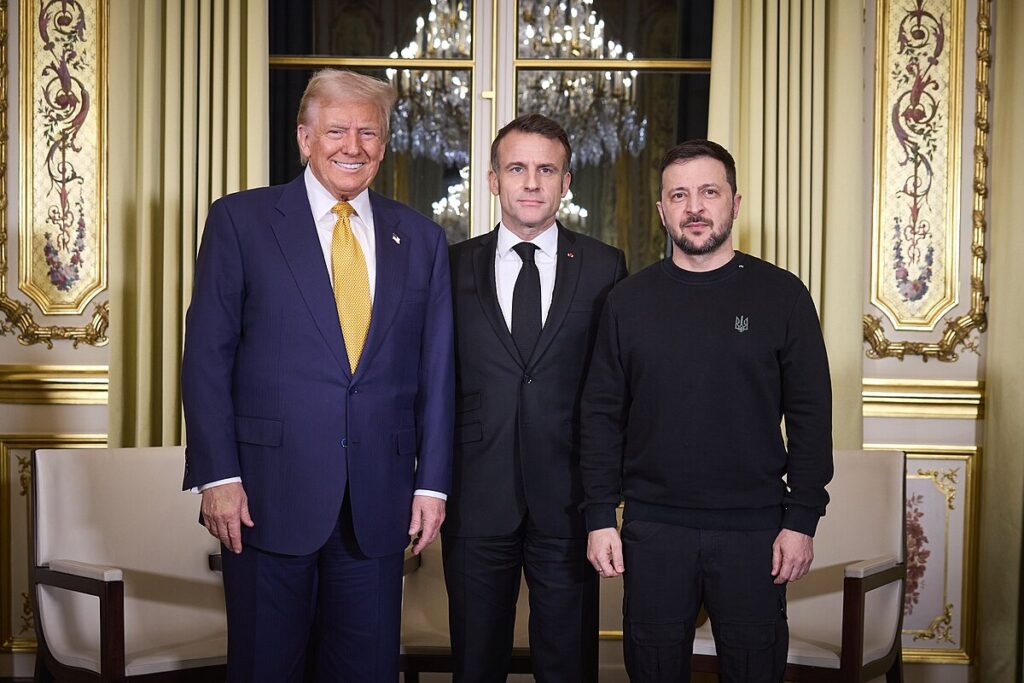
– Could the European army proposed by Emmanuel Macron be a desirable and effective alternative to NATO?
There are several reasons why the idea of a “European army” is increasingly discussed, even though such a project is essentially unfeasible. Primarily, it is a political slogan promoted by French President Macron and some other leaders with the aim of strengthening the concept of European strategic autonomy. However, Western European leaders are aware that this would require abolishing unanimity in EU decision-making, which Central and Eastern European countries (such as Poland, the Czech Republic, and the Baltic states), traditionally aligned with the United States, will never accept.
On the other hand, the US uses the argument of an EU army as a potential alternative to NATO, although it is unclear why a unified European army, as opposed to 23 national armies, would automatically mean a break in alliance with the US. The answer, between the lines, lies in the previously mentioned enormous defense expenditures alongside relatively weak European defense capabilities. The American stance is, in fact, motivated by the interests of its own military-industrial complex. Initiatives such as PESCO and the European Defence Fund (EDF) are seen as a threat that could close off the European market to American companies. This is indirectly confirmed by Mario Draghi’s report, according to which between June 2022 and June 2023, as much as 78% of EU member states’ defense orders went outside the Union—of that, 63% went to American manufacturers. In other words, the US profits from the fragmented common defense and security policy of the EU, which also explains why Trump insists on the 5% threshold.
In the current geopolitical circumstances, fragmented common defense is disastrous for the security of the EU. A unified EU defense would allow for more efficient procurement through consolidated orders, which, due to economies of scale, would mean lower costs per unit, instead of each country purchasing small quantities at higher prices and adjusting different procurement procedures. Furthermore, joint investment in research and development (R&D) through the EDF and similar programs would enable greater innovation and reduce dependence on external technologies. In other words, the EU would become competitive with American manufacturers. Additionally, interoperability would be improved. Today, Europe uses hundreds of different weapon systems that are difficult to integrate with each other, whereas a unified defense would allow for standardization, saving time, money, and logistical capacity.
Finally, European reliance on the American military-industrial complex results in strong military-technological dependence on the US. This equipment comes with conditions such as software updates, spare parts, and satellite support, all managed by the US government and companies. Therefore, there is a legitimate “kill-switch” risk that the US could disable the functionality of this equipment, further highlighting the political insignificance and strategic subordination, if not vassal status, of Europe. Thus, emphasizing the EU army as an alternative to NATO serves solely to divert attention from the burning issues of European defense in order to maintain the profitable business and political dominance of the US.
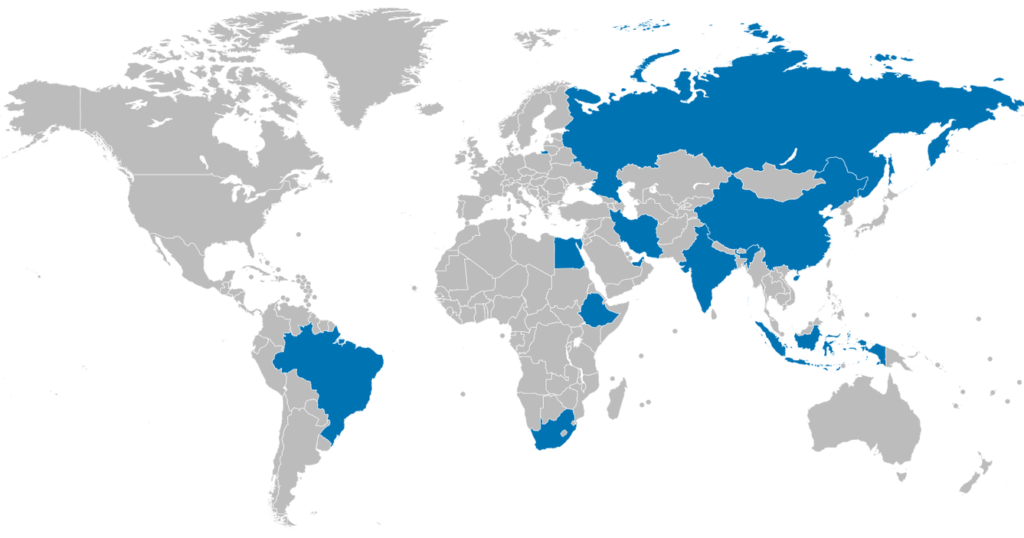
– Do you believe that Russia, China, Iran, Brazil, India, North Korea, and other BRICS states and partners could, in the future, form a kind of anti-Western NATO? We see that BRICS is primarily an economic pact since neither Russia nor China provided military aid to Iran in its conflict with Israel and the US.
A BRICS military alliance is unrealistic for several reasons. First and foremost, it is a heterogeneous group of countries bound solely by their resistance to American hegemony. If their true goal is the de-dollarization of the global economy, then the key to success lies in pragmatic inaction. The greatest blows to the dollar as the global reserve currency are dealt by the US itself, whether through Biden’s policy of rampant imposition of economic sanctions (which currently affect one in four countries globally) or Trump’s tariff wars. Any initiatives for deeper integration, especially military ones, would be counterproductive.
It is enough to look at the last BRICS summit in Kazan at the end of 2024, where a declarative stance was taken on reducing dependence on the dollar through local currencies and new payment platforms, but without any decision on an alternative joint currency. Furthermore, BRICS countries not only have different military capabilities but also different strategic interests. If BRICS were to integrate militarily and economically like the US and Europe, it would inevitably lead to Chinese hegemony. India, for instance, would never agree to a military alliance with China, adhering to its traditional policy of rejecting formal military alliances. Even within the Quad format with the US, Australia, and Japan, India insists that it is not a military alliance but a platform for cooperation in security and economic areas.
In this context, the absence of support for Iran during the “twelve-day war” should also be understood. For example, the strategic partnership agreement between Russia and Iran does not contain a mutual defense clause. Admittedly, it is questionable whether Russia could even help Iran given its exhaustion in the war in Ukraine (we know it could not help Armenia or the Assad regime). China supplies Iran with materials for ballistic missiles, but in this case, the American attack served Beijing as additional confirmation of its accusations that the US is an irresponsible power and a disruptive force in the international community.
However, an important fact is often overlooked in public: Iran never requested military assistance. I believe that this shows Tehran’s strategic independence and a conscious decision to avoid dependence on Russia and China. Tehran sees itself as the regional leader of the “Axis of Resistance” and refuses intermediary military support. Even the current negotiations on the purchase of the Chinese HQ-9 air defense system, in which Tehran is very interested, should be taken with caution. If China were to militarily equip Iran, the country would fall into the same military-technological dependence on China that Europe has on the US. The political implications of such dependence are obvious. China certainly does not view Iran’s nuclear program favorably, as it poses a security risk to the entire Middle Eastern region on which the Chinese economy heavily depends for oil.
– Are we living in a multipolar world today? Some geopolitical experts claim that the US remains the only true superpower, while others list the US, Russia, and China as three superpowers vying for global dominance. In any case, the power and influence of the US have significantly diminished since September 11, 2001, while Russian and Chinese influence has increased.
Not only are we not living in a new multipolar system, but it is also questionable whether the American unipolar order ever truly existed in the proper sense of the term. The US would indeed have achieved global hegemony after the Cold War if it had managed to integrate Russia, China, the Middle East, and North Africa (specifically, oil-rich countries under sanctions like Iraq, Iran, and Libya) into the international liberal-democratic system. The democratization of these countries, whether through military force and regime change as in Iraq and Libya, or through integration into the market economy as with China’s membership in the World Trade Organization, proved to be a historic failure of the neoliberal project. The consequences of this failure are felt today, but that does not automatically mean we have entered a new multipolar world.
The concept of polarity presupposes territorially defined hegemony, as during the Cold War when bipolarity meant unquestionable dominance of the US and the Soviet Union in their spheres of influence, whose dividing lines cut through cities (e.g., Berlin), countries (e.g., North and South Korea), and entire continents (e.g., Europe). In the circumstances of the failed post-Cold War unipolarity, it is precisely the struggle to delineate the boundaries of new spheres of influence that constitutes the harsh reality of today in Eastern Europe, the Middle East, and Southeast Asia.
Although these three regions are the main hotspots, the expansion of influence is taking place globally through a specific deterritorialized logic of hybrid warfare, disinformation campaigns, and the weaponization of economic interdependence for political leverage. For example, while China’s immediate interest lies in controlling Southeast Asia, its influence is spreading along the Belt and Road Initiative corridor. China dominates in Africa, is asserting itself in the Arctic region, and has a presence in Latin America, which has traditionally been considered an American sphere of influence of particular importance. This explains Trump’s ambitions regarding Panama, Canada, and Greenland, as well as speculation about potential military interventions in Venezuela and Mexico.
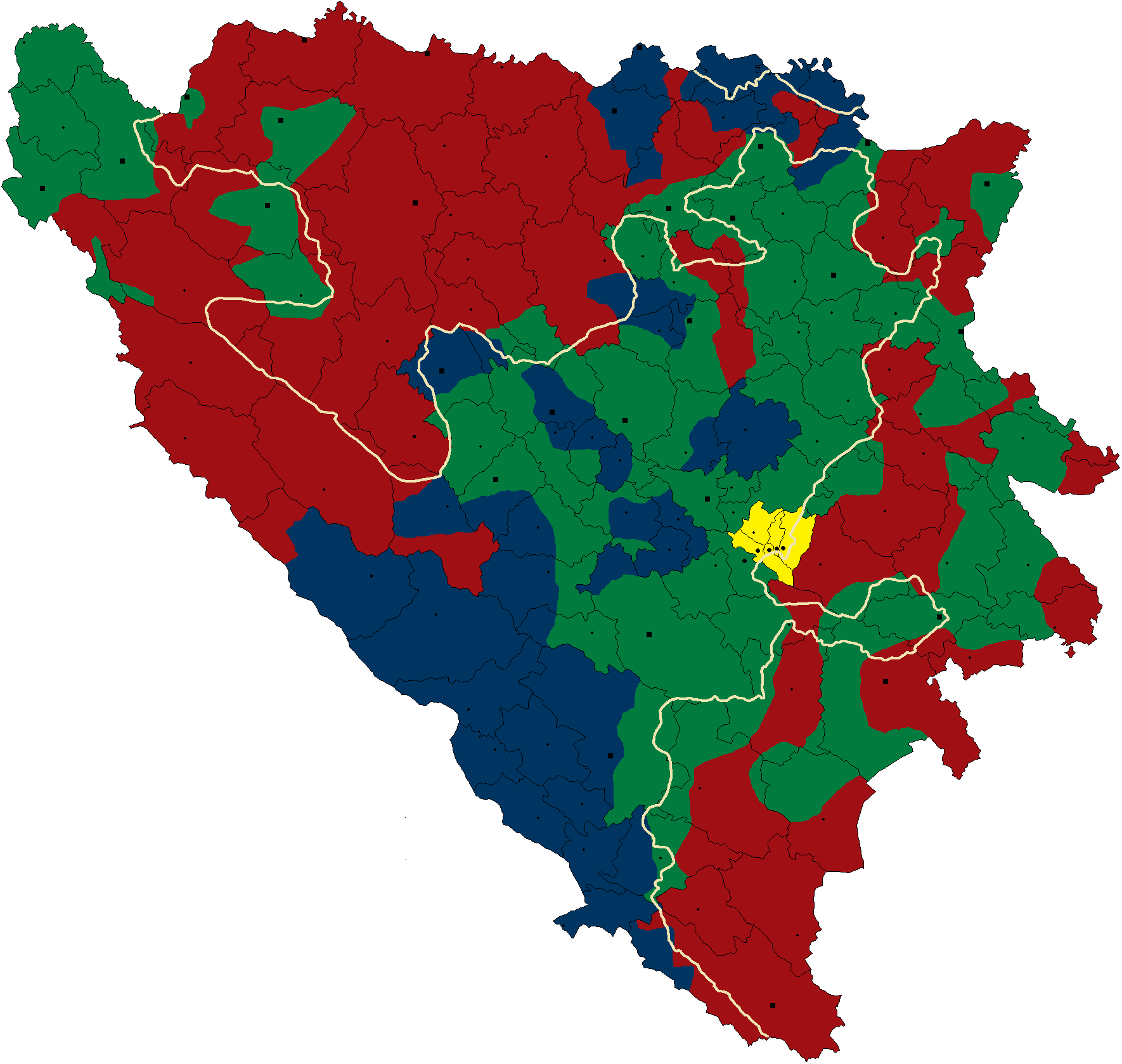
A good example illustrating the current situation is our immediate neighborhood, the Western Balkans. In this region, the interests of the EU, Russia, Germany, Britain, France, Hungary, Turkey, the United States, and China intersect. However, what is particularly notable in the case of the Western Balkans, as well as in other contested regions, is the diversity of means by which the great powers seek to achieve dominance. Some pursue this through direct investments or grants; others through ideological propaganda and disinformation campaigns; some by exporting desperately needed resources, while others foster military-technological dependence.
While Cold War bipolarity was territorially defined by ideology and the monopoly over nuclear weapons, today’s system is heterogeneous and multidimensional. Instead of multipolarity, contemporary structures are, as described by Indian professor Amitav Acharya, “multiplex.” Even if future multipolarity emerges, the uniform form of hegemony by a specific pole over a given space (in terms of ideological, cultural, economic, and political compactness) appears impossible.
Interview conducted by Matija Šerić.