By Matija Šerić
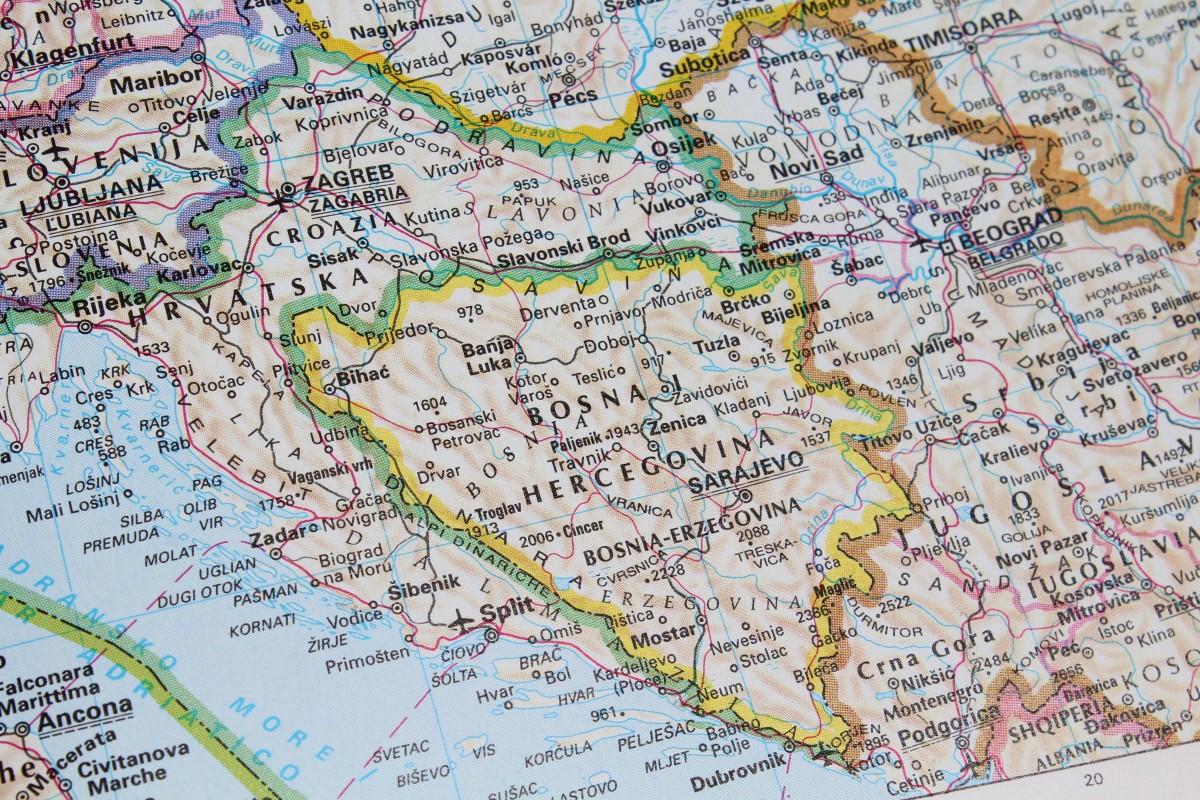
Store boycotts that began earlier this year in the Republic of Croatia and other Southeast European countries (Serbia, Bosnia and Herzegovina, Montenegro, Slovenia, North Macedonia, Kosovo, Bulgaria, Romania, etc.) are an interesting development that had not occurred before. These boycotts were sparked by rising prices of basic goods, monopolies of large corporations, and increasing everyday living costs.
Citizens replaced grumbling with concrete actions. On several Fridays, many refused to buy anything and criticized those who continued shopping. Many believed that revolutionary change was on the horizon as “the people took matters into their own hands.” However, it soon became clear that the boycott lost momentum and that shopping resumed more or less as usual. Still, there was some short-term change.
The failed Southeast European boycott
Large retail corporations temporarily lowered the prices of various products on store shelves, and national governments froze the prices of certain basic necessities (although government-set prices were often higher than those in stores). However, several months after the start of the boycott, it can be said that this act of civil disobedience failed. Prices of many consumer goods have reached record highs (dairy products, vegetable oils, butter, sugar, coffee), inflation persists, and everyone must find their own way to cope. As many economic experts claimed from the outset: store boycotts, however attractive they may appear to ordinary consumers at first glance, are not an effective solution. There are many reasons for this, ranging from common sense to technical economic arguments.
The origin of the word “boycott”
It is worth looking at the origin of the word “boycott.” The term comes from the name of the infamous English land agent, Captain Charles Boycott, who, during the Irish Land War in the 1880s, attempted to evict farmers who could not pay their rent. In response, the community completely isolated him, his workers and servants left, and his crops were left to rot. According to the Croatian Encyclopedia, a boycott is “the cessation of economic or all relations with a person, organization, or state to exert economic, political, moral, or other pressure to force certain concessions.”
The impossibility of abstaining from basic needs
First and foremost, the idea of boycotting the purchase of food and beverages sounds rather absurd. People may not need to go on summer or winter vacations, buy cars, phones, clothes, or shoes, but they must eat and drink every day to survive. Thus, enforcing a ban on the purchase of oil, flour, sugar, butter, or milk makes no sense. Consumers may refrain from buying for one day, but they will have to compensate on another day. Otherwise, they would face hunger. Since most people rely on the formal retail system, this is simply unfeasible.
The lack of alternatives
The absence of clear alternatives is another reason why boycotts fail. An alternative might exist if there were a well-developed network of family farms and other sellers outside official stores who could legally or illegally supply consumers, but this is unrealistic in most countries. Even if such alternatives existed, governments would likely intervene and impose fines for participating in the grey economy. Some suggested cross-border shopping in neighboring countries as an alternative, but this is an option available only to a small portion of the population. Shopping abroad requires owning a car and covering travel costs, which many outside border areas cannot manage. In the case of Croatia, perhaps only 5-10% of the population could opt for shopping in Slovenia, Hungary, or Italy. Bringing food from Bosnia and Herzegovina is not allowed due to Schengen regulations.
Croatian consumers launch a boycott of major retailers
Unclear goals
A third important reason why boycotts do not yield results is the lack of clear goals. In other words, boycotts are often poorly organized. Organizations leading boycotts want consumers to stop shopping, but they do not have a plan for what comes next. A boycott may be successful for a day, but without a clear vision and strategy, it loses momentum over time. Without concrete demands and a plan to achieve them, a boycott becomes a symbolic act without real impact.
Low public interest
The fourth reason is the short-lived public interest. Although people may initially be enthusiastic about a boycott, their motivation fades over time, especially when they see no concrete results. Consumers ask themselves: what is the point of my sacrifice? They boycott and refrain from shopping on certain days, yet prices remain the same. People are strong with words (especially on social media) but much weaker in action. Many who publicly support the boycott continue to shop at the same stores, while others who support the boycott are not the primary shoppers in their households. Everyday, ingrained habits and comfort typically outweigh ideals, further weakening the boycott’s sustainability.
Small businesses suffer while large corporations escape unscathed
The fifth reason why boycotts fail is the minimal damage inflicted on the targeted stores. This is especially true for large corporations that can easily absorb one day’s losses. After all, consumers will still need to purchase food and beverages another day. It is a vicious cycle. The only ones who might feel negative consequences are small stores that depend on daily foot traffic. A lack of revenue could lead to layoffs or reduced operating hours, which indirectly harms ordinary consumers who lose access to their favorite neighborhood shops.
Good advertising destroys boycotts
The sixth reason that neutralizes the effect of boycotts is the countermeasures taken by retail companies. Retailers can easily respond by lowering prices on certain products and promoting discounts through effective marketing campaigns. Good marketing sells everything. While this may sound like a cliché, it is absolutely true. If an advertisement triggers strong emotions in viewers, there is a high likelihood they will become buyers. Retailers know that creating desire or a sense of need is enough to make even those who intended to boycott return to shopping.
Canadians boycott US products
Exceptions
Boycotts can be effective in some cases, primarily when consumers are urged to avoid specific retail chains (e.g., McDonald’s) or to exclusively buy domestic products while boycotting foreign goods. In the 1990s, activists Helen Steel and Dave Morris brought global attention to McDonald’s poor labor conditions, environmental practices, and health concerns through a prolonged legal battle, ultimately forcing the company to implement changes.
Economist Brayden King also argues that boycotts do not harm companies financially as much as they damage their reputations. His research shows that the most successful boycotts are those that attract the most media attention, typically targeting a single high-profile company. Such boycotts, which make headlines across news portals and newspapers, tend to lead to significant stock price drops and increase the likelihood of companies changing their behavior. Research also indicates that boycotts are more effective in sectors like tourism and fashion due to the specific nature of these industries.
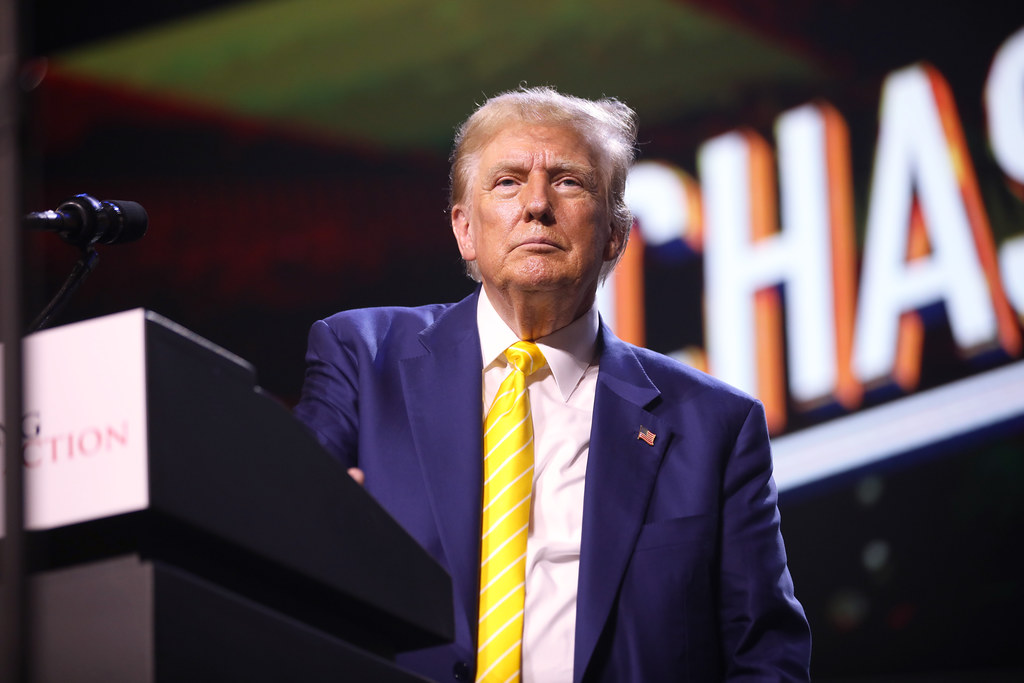
A current boycott in Canada urging Canadians to buy Canadian rather than American goods has been relatively successful. Stores have even labeled Canadian products on their shelves to distinguish them from goods from their southern neighbor. Canadians have also been urged not to travel to the United States, and surprisingly, many are complying. The root of this Canadian boycott is, of course, Trump’s tariff policies.
The Solution – The State as an Arbiter
If boycotts don’t work, then what actually does? Or rather, who can prevent consumer goods prices from skyrocketing? The answer is clear and the only correct one: national governments. States, meaning their governments, set the rules of the game and behavior in the world of the economy, as well as in other areas. The government can and must determine which prices are realistic based on world market prices, procurement costs, raw materials, parts, and the average citizen’s budget. The state must act as a judge and prevent price-fixing and inflation that large corporations might impose. Any other solution is unrealistic. The problem is that many governments are influenced by large multinational corporations and, due to corruption, pass laws that do not benefit their citizens. This is a phenomenon of the strengthening of the private sector at the expense of state actors. But that is a topic for another analysis.