By Matija Šerić
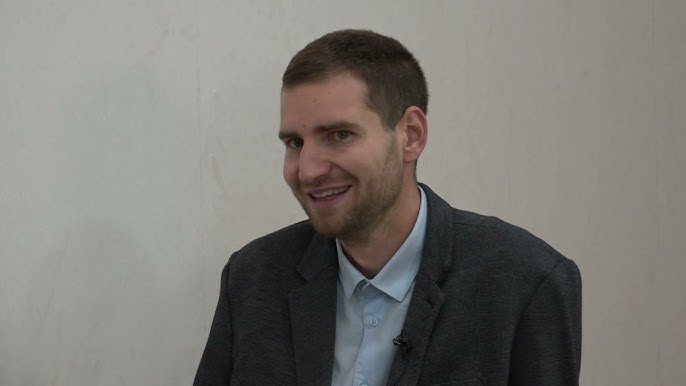
On Sunday, March 29, the media reported news that was hardly surprising, but rather an expected conclusion: Igor Tudor is no longer the manager of Tottenham Hotspur. After a turbulent 44 days at the helm of the struggling North London club, the Croatian coach’s tenure has come to an end. There’s no doubt Tudor would likely have been dismissed soon after the home defeat to Nottingham Forest on March 22, but the passing of his father inevitably delayed the decision (rumors of his dismissal had already begun circulating at the end of February). Tudor’s contract was mutually terminated, and he leaves London without compensation. The question remains: should the coach have stayed or left? We attempt to answer this below.
Poor Results
If results define a coach, as many football experts including Pep Guardiola claim, then Tudor’s tenure was one of horror and despair. Specifically, in seven matches across all competitions, Spurs recorded five losses, one draw, and only a single win. In the Premier League, they lost four matches (Arsenal 1-4, Fulham 1-2, Crystal Palace 1-3, Nottingham Forest 0-3) and drew one at Anfield (1-1). Out of 15 possible points, they earned just one. Tudor’s home league win percentage stands at zero — the worst in the club’s last two decades.
In the Champions League, the Lilywhites made a slightly better impression. They lost 5-2 to Atletico Madrid in the first leg in Wanda Metropolitano but won 3-2 at home. Anyone who watched the second leg could see Tottenham lacked luck in finishing, barely missing extra time. Across all competitions, Tudor’s win rate was 14.3%. Is such a poor record worthy of dismissal? Some would say yes; others, no.
Injuries and Suspensions
Objectively, Tudor arrived at a hornet’s nest with problems most managers could not solve. Over ten key players were injured (Betancur, Odobert, Kulusevski, Kudus, Porro, Danso, Udogie, Maddison, Bissouma, Bergvall…). Although the squad is strong enough to compete for titles in all leagues except England, even bigger clubs could not handle so many absences. Injuries lasted throughout the season, and as soon as one player returned, another got injured or suspended. Very unlucky.
Star Players Underperforming
Another key issue was the lack of effort from star players, or their oversized egos. Micky van de Ven, Cristian Romero, Djed Spence, Kolo Muani, and Vicario often appeared overconfident, showing little team spirit or willingness to execute the tasks assigned by Tudor or his predecessor Thomas Frank. Some even claim van de Ven and others may have intentionally sabotaged Tudor with mistakes such as missteps, passing to opponents, and poor finishing to push for his dismissal. While unproven, it’s a fact that the performances of stars like van de Ven and Xavi Simons were often inexplicably weak.
Management with Questionable Intentions
A third problem was the club’s management. After long-time chairman Daniel Levy departed in September 2025, Peter Charrington became chairman. He holds a non-executive title while operational control is in the hands of CEO Vinai Venkatesham. Clearly, the duo struggled in their new roles, failing to create a positive environment at Tottenham. A major failure was the lack of a clear transfer strategy and delayed decision-making, leaving the squad without depth.
This is evident in the lack of genuine chemistry among otherwise top-level players. Everyone seems to play for themselves, and team spirit has disappeared. Many analysts and fans believe the club’s real goal is to generate revenue from ticket sales and broadcasting rights (Tottenham Hotspur Stadium is one of the most advanced in England), with results being secondary. The club is seen more as a corporation than a sporting franchise aiming to win trophies — a problem also present under Levy.
Tudor as a Motivator
All of these issues are unrelated to Igor Tudor. They existed before him and remain after his departure. Tudor is known as a coach who motivates and builds strong relationships with players, as he demonstrated at Hajduk, Verona, Marseille, and Juventus. He established himself as an expert who steps in at the last moment to save a club from relegation or to secure desperate European qualification. Why he couldn’t lift the Spurs’ locker room remains a mystery, likely to stay so for some time.
Adjustments and Tactical Experiments Didn’t Work
Regarding gameplay, Tudor experimented with various formations and tactics, but none yielded lasting results. He tried 3-5-2, 4-4-2, 3-4-3, 4-2-3-1, patient counterattacking, long-ball play, and high-intensity pressing — all in vain. The biggest problems were weak defense resembling Swiss cheese, lack of intensity and decisiveness in duels, inability to maintain possession in the opponent’s half, and individual mistakes in defense and attack.
Tudor also experimented with player positions. For instance, van de Ven played left-back in the last match, Spence played right-back, midfielder Palhinha occasionally played as a center-back, and central midfielders Conor Gallagher, Lucas Bergvall, and Xavi Simons were used on the flanks. Archie Gray played both left and right-back, despite naturally being a midfielder.
To Be or Not to Be for Spurs
Whoever becomes Tottenham’s new manager (all signs point to Italian coach Roberto De Zerbi) will face a monumental task. After 31 games, Spurs sit 17th in the Premier League with 30 points — just one above the 18th place relegation spot, currently held by West Ham. Their last win was away at Crystal Palace on December 28 (0-1), and they haven’t won at home since December 6 against Brentford (2-0). The clock is ticking.
Igor Tudor has left, though he might have been given another chance to improve the team. Whether this was the right decision will only become clear after 38 rounds, when we will know if Tottenham will play in the Premier League or the Championship next season.