Every region has its role and significance in the world. The world is interconnected, and this is the logic of international relations – the law of connected vessels. Despite this, Latin America is one of the regions that is often consciously or unconsciously marginalized. Neglecting the importance of a region with more than 650 million people is immature. Latin America is important to the world politically, economically, demographically, climatically, and in every other respect. We spoke with Dr. Lidija Kos-Stanišić, a professor at the Faculty of Political Science in Zagreb, about the history, international significance of the region, and the political struggles between the left and the right.
– Do you agree with the assertion of some historians and political analysts that Latin (or South) America is a forgotten or lonely continent? This is, for example, argued by the British journalist Michael Reid in his excellent book on the topic. The main arguments he and other experts put forward are geographic isolation from major global centers of industry and technology, political and economic instability, and a lack of political influence on the rest of the world.
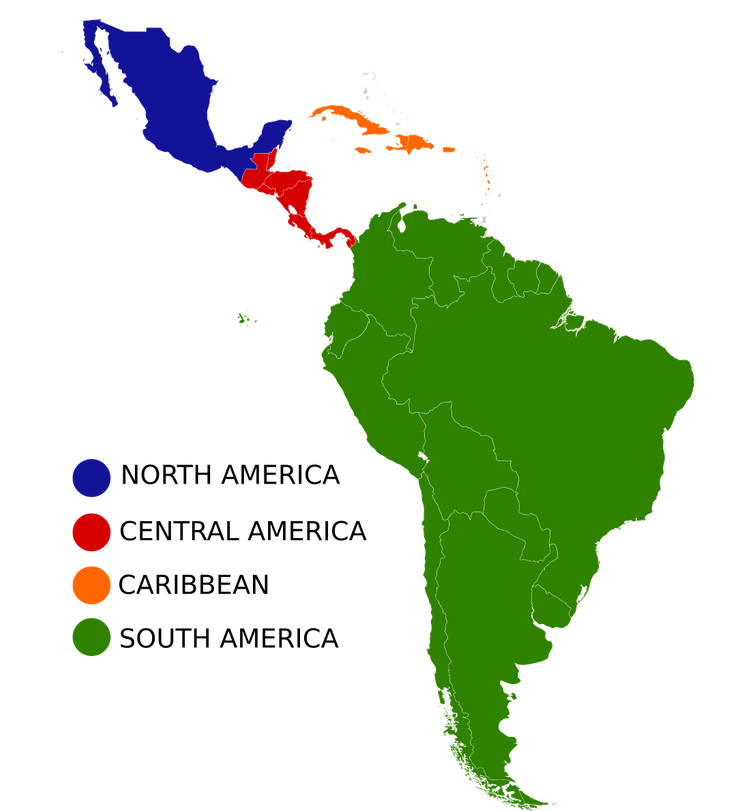
In our public discourse, even within the academic community, there is often a misunderstanding of the difference between the terms Latin America and South America. These terms are not synonymous. Not all countries in South America are part of Latin America. The term Latin America was first used by the French in the early 19th century to legitimize their policy towards the American continent south of the United States, and it referred to all countries in the “Latin,” i.e., Romance language-speaking area. Latin America includes sovereign states of the South American continent, Central and North America (Mexico), and the Caribbean islands where Romance languages (Spanish, Portuguese, and French) are official languages. Latin America comprises 18 Spanish American countries that were ruled by Spain (Argentina, Bolivia, Chile, the Dominican Republic, Ecuador, El Salvador, Guatemala, Honduras, Colombia, Costa Rica, Cuba, Mexico, Nicaragua, Panama, Paraguay, Peru, Uruguay, and Venezuela), one Portuguese American country (Brazil), and Haiti, a former French colony. However, in South America, there are also sovereign states where Dutch is spoken—Suriname—and English—Guyana—as well as the French overseas department French Guiana.
It is a fact that due to its geographical position, Latin America did not play an important role in international relations. From a realist perspective, Latin America has been and remains a place of great power rivalry. Thus, realism explains Latin America’s international position in the 19th and early 20th centuries, especially the U.S. policy toward the region. Since the Monroe Doctrine was proclaimed in 1823, the United States considered Latin America as its backyard, justifying interventions not only against threats but against any possible challenges. Dependency theory strongly influenced the perspective from which Latin America was viewed. The main proponent of this theory until the 1980s was ECLAC (Economic Commission for Latin America and the Caribbean), led by Raúl Prebisch. The basic theses of dependency theory were that underdeveloped peoples are satellites of developed peoples and that the international capitalist economy is divided into core countries that exploit the cheap labor and raw materials of peripheral countries.
Dependency theorists provided empirical evidence that the structure of the international trade and monetary system was unfavorable to Latin American states and criticized modernization and development models as ethnocentric models of the U.S. and Western capitalist countries. They argue that Latin America had limited opportunities to participate in international affairs due to manipulation and exploitation by Western capitalist countries, especially the U.S.
While dependency theorists emphasize the one-way effect of dependency, interdependence theorists emphasize its two-way nature, i.e., interdependence. They argue that contemporary Latin America must be placed in the context of a globalized and interdependent world. Although sovereign states remain the primary actors in international relations, other governmental and non-governmental actors play a very significant role in shaping foreign policy and international relations. In the case of Latin America, the change in the Catholic Church’s stance was particularly important. In an interdependent world, the central theme is economic relations, but issues such as social justice, migration, human rights, and ecology are becoming increasingly important.
In the 21st century, Latin America is no longer “anyone’s backyard,” and an increasing number of countries in the region are opposing U.S. policy. China’s growing economic influence and Russia’s desire to assert its status as a global power are becoming more significant in the region. Therefore, the U.S. has lost its status as the “sole player” in the hemisphere, especially during Donald Trump’s presidency, who in his first term—and even more so in his second—has been extremely aggressive and dismissive toward the region.
– Personally, I believe that the thesis about the region’s insignificance is wrong. Latin America should be important to the world because of its huge population, national and cultural identities, vast natural resources, important role in combating climate change (especially through the Amazon rainforest), and growing geopolitical significance in the context of the rise of multipolarity. Is this view correct?
From my perspective, Latin America is by no means an insignificant region. Latin America possesses significant natural resources such as oil, lithium, and abundant agricultural products. The region has a strategic geographical position with access to both the Pacific and Atlantic Oceans, and one of the important maritime channels (the Panama Canal), which is extremely important for global trade. Political dynamics in Latin America often reflect broader geopolitical struggles among major powers such as the USA, China, and Russia. The region also cooperates with the European Union, with which it has numerous agreements. Migration, security issues, especially the fight against drug trafficking, connect Latin America with global challenges. Latin America has a growing role in the fight against climate change, particularly through the preservation of the Amazon rainforest. One must not forget the importance of Brazil, the most populous country and the largest economy in Latin America, a member of BRICS, which represents an important bloc of Global South countries aiming for a multipolar world order and greater influence in world politics.
– In your opinion, what is the main cause of the region’s underdevelopment? Surely the Spanish and Portuguese colonial administrations, which focused on resource extraction rather than balanced development, played a big role. However, it has been about 200 years since independence from the European conquistadors, and the region still does not use its potentials. For example, at the beginning of the 20th century, in 1913, Argentina was among the 10 richest countries in the world by GDP per capita, ahead of most European countries, but in the following decades it stagnated. Similar is true for some other countries. What do you think are the main reasons for this anomaly of not utilizing the region’s potentials?
The Latin American colonial experience was shaped by Iberian values, strict central control, a rigid hierarchical structure, and paternalism. In Latin America, gaining independence meant breaking ties with colonial rulers but not transforming the social order. The feudal pyramid remained in place, with white Creole landowners at the top, mestizos in the middle, and indigenous peoples at the bottom. Independence did not bring freedom and prosperity to the newly founded republics but rather decades of civil wars. A weak tradition of representative government, the Spanish value system, lack of governance experience, and the absence of legitimacy for the new states were the main causes of numerous failed attempts to establish republics. Failures led to militarization of these new states, where officers started playing the role of political arbiters.
During the 19th century, most Spanish American countries experienced alternating dictatorships and revolutionary governments. By the end of the century, the industrial revolution stimulated changes in the region. Production and cultivation of one or two agricultural products began, making these countries dependent on world market demand and price fluctuations. Despite promises of legal equality and land redistribution, none of this was implemented, and inequality and injustice persisted as in colonial times.
Between 1930 and 1960, military officers mostly held power and became the main political force. Latin America began state-led industrial production (Import Substitution Industrialization – ISI), which led to social changes. Industrialists and workers gained importance, threatening the dominance of landowners. Most of the region was hit by economic and political crises in the 1960s, with frequent military coups establishing repressive regimes (Brazil, Argentina, Chile) that stimulated investment and planned economies. During the debt crises of the 1980s, the indebted region was unable to service foreign loans, leading to neoliberal structural reforms as a condition for new credits. The military returned to barracks, and the third wave of democratization swept the region (1974-1990).
Despite significant differences among countries (e.g., geographic location, demographics, urbanization), they share many similarities. Most are producers and exporters of raw materials dependent on international market prices and subject to external constraints. Their economic growth and GDP depend on commodity exports, which leads to structural inequality, inflation, and unemployment. They share three common features affecting their identity: extreme financial vulnerability, asymmetries in national policies, and massive social problems.
– As a consequence of Latin America’s political, social, and economic problems, the so-called “Pink Tide” emerged in the early 2000s, with leftist governments taking power in most countries promoting 21st-century socialism and anti-Americanism. During the 2010s, a conservative wave followed, and then at the end of the 2010s and beginning of the 2020s, a new left wave emerged. How do you interpret this phenomenon, and do you think it has brought more good or harm, considering Venezuela’s economic collapse and the fact that Venezuela, Cuba, and Nicaragua remain communist dictatorships?
Latin America is a living laboratory of social and political changes. Another proof of this is the phenomenon of the Latin American return of the “new left.” We must distinguish three left waves. The first was during the Cold War, the second in the first decade of the 21st century, and the third wave began in the early 2020s. The second wave started in Venezuela in 1998 when Hugo Chavez came to power in free and fair elections. Leftist political forces reached their peak in 2008, controlling the governments of eleven out of twenty countries in the region.
The rise of the second left wave in Latin America was explained by voters’ dissatisfaction with the quality of democracy, increasing poverty and inequality, disappointment in democratic institutions, lack of adequate mechanisms of participation, representation, accountability, as well as the internal and foreign policy consequences of globalization, and the fact that two decades of following the Washington Consensus failed to bring expected results.
The second wave’s leftist policies differed from the first wave and older leftists like the Castro brothers, Salvador Allende, or the Sandinistas. Analysts distinguished “good” and “bad,” “social-democratic” and “populist,” or “moderate” and “radical” left. The new radical left included Venezuela under Chavez, Bolivia under Evo Morales, Ecuador under Rafael Correa, and Nicaragua under Daniel Ortega. Examples of moderate left were Chile under Michelle Bachelet, Brazil under Lula da Silva, and Uruguay under Tabaré Vázquez. Argentina was seen by some as radical, by others as moderate, and by some as centrist. Due to reduced funding and unmet promises, dissatisfaction with the second wave leftist governments increased in the 2010s, and center-right options gained ground.
Politics and economics often repeat in cycles: voters give a chance to one political option which disappoints them (left), then they vote against it and give a chance to another (right), then get disappointed again and consider giving the first another chance (left).
Currently, leftist governments in Mexico, Bolivia, Colombia, and Honduras do not belong to the new third wave but rather resemble the second wave in character. Social justice and promoting equality have always been key leftist goals, but in these countries it is not pursued fully within the framework of representative liberal democracy.
While Cuba represents the first wave left, with some changes to its policy, Nicaragua and Venezuela represent the radical second wave left that constantly clash with “enemies” — political opponents, entrepreneurs, and the US government. All three are autocracies with dictatorial governance.
Every year new young voters enter the electorate who feel politically unrepresented because “old” politicians have outdated agendas. This trend of new faces emerging is seen in Latin America as in the West. Young middle-class generations live worse than their parents and see no chance for upward mobility or even maintaining their social status. They emphasize human rights, indigenous peoples, environment, gender equality, and believe the state should intervene more in the economy. This defines the newest Latin American left — the third wave — which started with Chile and the new president, Gabriel Boric, who self-identifies as a “libertarian socialist.” Boric’s campaign emphasized social equality, feminist, and green agendas. He belongs to the millennial socialist left (à la Alexandria Ocasio-Cortez) and condemned dictatorships in Venezuela, Nicaragua, and Cuba, as well as Russia’s invasion of Ukraine and Israeli human rights violations in Gaza. This was expected given his emphasis on democracy and human rights.
Unfortunately, Chileans are not satisfied with his governance, and his public approval rating has been declining every year in office, currently standing at only 27%. It is increasingly likely that the third wave of the left will end with Boric, with whom it also began.

– The successor of Hugo Chávez, Nicolás Maduro, has proven to be inept in managing economic issues, and Venezuela fell into a humanitarian crisis, which, however, has improved in recent years. Were you surprised that Maduro managed to maintain the regime? He has shown himself to be a true master of political survival. Can a socialist leader bring progress to Venezuela, considering he began his third term earlier this year, which many in the West dispute?
Maduro is a dictator who rigged multiple elections, and for the most recent presidential election, the opposition even has material evidence of their victory. However, he still has the support of the military and state institutions filled with his Chavistas, but that will not last forever. Even longer-lasting dictators have fallen; he will fall too, hopefully in the near future, and Venezuela will become a democracy again.
– How successful have regional multilateral organizations like MERCOSUR, CELAC, and UNASUR been in strengthening political and economic cooperation among Latin American countries? Could they serve as a foundation for a joint regional presence on the global stage in the future?
Among these organizations, the most significant is CELAC, which was created with the goal of establishing comprehensive regional integration that would include all Latin American and Caribbean (LAC) countries, while excluding the USA and Canada — a proposal accepted by representatives of 32 (out of 33) countries in the region by acclamation. CELAC is also the main forum for cooperation between the LAC and the European Union and China.
In any case, the practical “modular regionalism” or “institutional elasticity” of the LAC has allowed countries in the region to choose the grouping that best suits their preferences and strategies.
Interview conducted by Matija Šerić.