By Matija Šerić
The end of last year and the beginning of the current one were marked by mass street protests in Iran. The trigger for the protests is the dire situation in which the Islamic Republic finds itself after the 12-day war with Israel: high inflation, the collapse of the national currency—the Iranian rial—shortages of goods, problems with water, gas, and electricity, and more. However, the motive of many protesters is not only the desire to resolve everyday hardships, but also a change of government. This is evident from the fact that the protests have not remained peaceful but have turned violent. There has even been gunfire.
According to current data from Iranian authorities, 5,000 people have been killed, including 500 members of state security forces. It seems that the theocratic order has been seriously shaken, but it has not fallen. Why? Because despite all the problems, it still enjoys strong support from large segments of the population. How is that possible, some observers may ask. The answer lies in history. This is an ideal moment to recall how the contemporary Islamic Republic of Iran was established.
The Shah’s Iran – a Loyal American Ally
In the 1970s, the Cold War was reaching its peak, especially in the Third World: Latin America, Africa, and Asia. It was also a decade in which the foundations of both American and Soviet hegemony began to be questioned. The Iranian Revolution of 1978–1979 represented a break with the already familiar pattern in which revolutionary uprisings against existing orders were launched by Marxist-oriented leftists. For the first time, something entirely different occurred. The overthrow of Shah Mohammad Reza Pahlavi was not carried out by leftists, but by revolutionaries who sought inspiration in the Qur’an, the Prophet Muhammad, and God.
Since the overthrow of Iranian Prime Minister Mohammad Mossadegh in 1953 with American support, Iran had become the closest and most powerful U.S. ally in the Middle East. The regime of the Iranian autocrat and monarch Reza Pahlavi did everything to ensure the continuation of critically important Iranian oil supplies to the West. In return, American assistance in arms and training enabled the shah to develop the most modern military machine in the region. Through cooperation with the United States and Great Britain, the shah’s regime became a guarantor of the security of smaller conservative states in the region and of the maritime routes connecting the Arabian Peninsula with Western oil markets.
By the early 1970s, Iran had grown into a key regional ally of the United States and had become one of the regimes—alongside Brazil, South Africa, and Indonesia—that the administration of U.S. President Richard Nixon viewed as crucial to preventing the Third World from turning toward socialism. However, the shah’s key objectives were not limited primarily to foreign policy.
Reza Pahlavi Looks to America for Inspiration
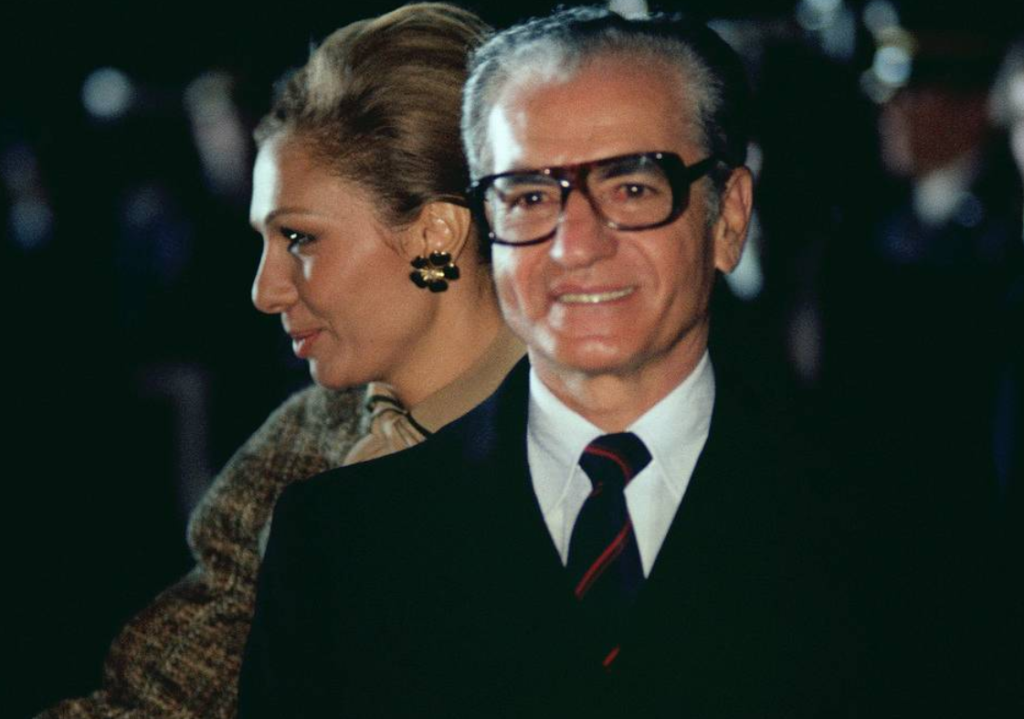
Having experienced foreign interventions and the partitioning of his country into various zones of influence as a young man—appropriated by foreign governments and their oil companies—Mohammad Reza was determined to rebuild Iran from the ground up as a modern state, ensure economic growth, and establish strong armed forces. The shah’s inspiration was America, which after the election of John F. Kennedy embraced Iran as one of the key countries successfully carrying out a process of modernization. The United States decided to assist Iran by launching special support programs in the civilian sector and by providing aid to the military.
“Over the past months, the shah has launched and firmly and decisively implemented a program of reforms, thereby drastically and permanently changing the political situation and future developments in Iran,” reported William Brubeck, Executive Secretary of the State Department, in January 1963. “A large part of the previous context and atmosphere in which Iranian political life took place has been removed and has disappeared, and political processes have flowed into a new web of connections and relationships in which new forces operate alongside new partners.”
The White Revolution
The shah’s “White Revolution” was one of the most ambitious attempts at non-communist modernization in the Third World. Plans developed with the help of Western economists and social science experts emphasized the construction of large heavy-industry facilities and power plants. Great attention was paid to launching export-oriented industrial branches, especially Iran’s textile industry; importing new technologies; and opening the economy to foreign investment. In agriculture—the sector in which the majority of the working population was still employed—the White Revolution promised better conditions, mainly through government irrigation programs and the import of quality seeds and fertilizers.
However, through land reform, education, literacy campaigns, and the emancipation of women, the shah also sought to bring about dramatic changes in the social position of the peasantry. The transformation of society was as important a goal of the revolution as economic progress.
American Support
Both the Kennedy and Johnson administrations welcomed such messages from the shah because they aligned perfectly with American values. After members of the Islamic clergy protested against these reforms in the summer of 1963, Kennedy sent a personal letter to the shah:
“I share the sorrow you must feel over the loss of life connected with the recent misguided attempts to halt your reform program. However, when your people come to understand the importance of the measures you are taking to establish social justice and to create conditions in which every Iranian will be given an equal opportunity, I am confident that such manifestations will gradually disappear. I also know that you will agree that a strong and growing economy can serve as the best foundation for the program of fundamental reforms you have begun.”
Kennedy then continued to preach about the virtues of the American economic model.
However, neither JFK nor Johnson heeded warnings that the modernization program was isolating the shah from his former conservative supporters and the Islamic community. “The shah now speaks on behalf of an even smaller portion of the ruling elite than was the case two years ago,” reported William R. Polk of the State Department’s Policy Planning Staff after visiting Tehran in December 1963. “I do not believe we are in a better position today than we were two years ago. On the contrary, I believe we may be in a much worse position.”
Resistance of Muslim Leaders
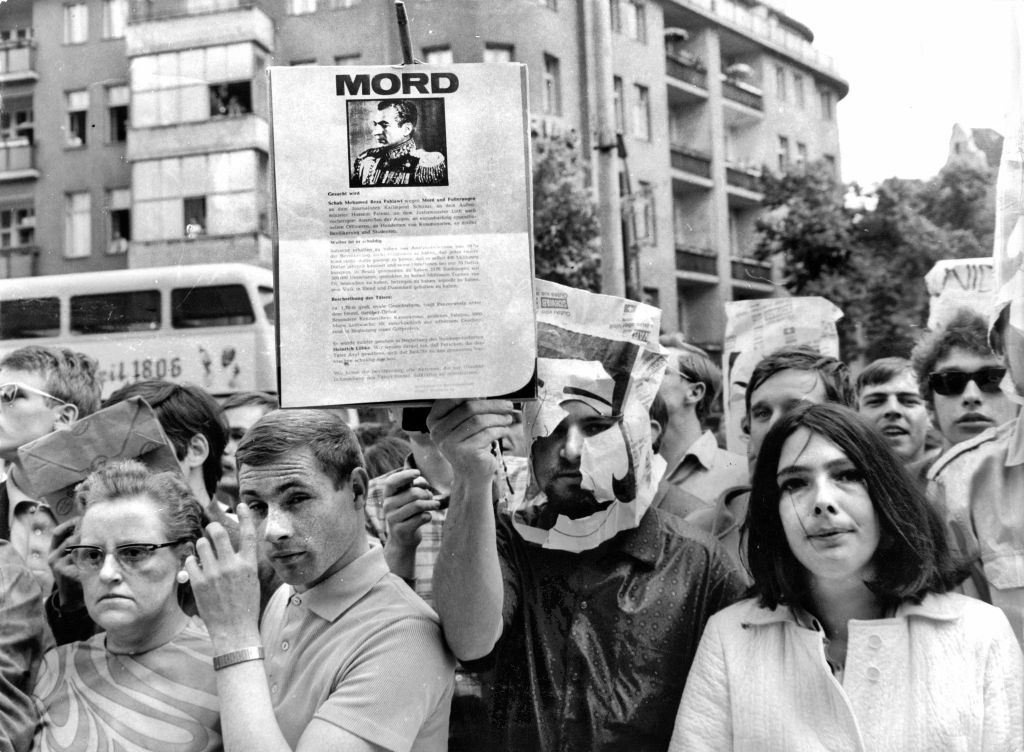
Recognizing this weak point as early as the launch of the White Revolution in 1963, Islamic religious leaders felt strong enough to begin speaking out against the shah. Although Shiite clerics had little or no contact with Islamist thought, most nevertheless believed that their leading figures—the ayatollahs—should influence the shaping of state policy. Moreover, the impression arose that the shah’s White Revolution was a direct challenge to the influence and beliefs of Islam.
One of the ayatollahs, the 63-year-old Ruhollah Khomeini, began during the 1963 uprising to publicly warn the shah that he was compromising Islam and Iranian sovereignty:
“Wretched, miserable man, forty-five years of your life have already passed. Is it not time for you to think and look back, to reflect on where all this is leading you? … You cannot be sure that one day the situation will not change, nor that those who surround you will remain your friends. They are friends of the dollar. There is no faith in them, no loyalty.”
Ayatollah Khomeini Becomes an Icon of the Opposition
For this lesson delivered to the shah, Khomeini was rewarded with 14 years of exile, first in Turkey and ultimately in France. During his time in exile, the ayatollah became an advocate of political Islam, drawing inspiration from Islam as a faith while adopting organizational ideas promoted by the leftist opposition to the shah. By the early 1970s, Khomeini concluded that Iran needed a revolutionary movement whose goal would be the overthrow of the monarchy and the establishment of an Islamic republic based on Sharia—or Islamic law—led by religious scholars.
“The fundamental difference between Islamic governance and constitutional monarchy or a republic is the following: while in (constitutional) regimes the representatives of the people or the monarch engage in legislation, in Islam legislative authority and the power to enact laws belong exclusively to Almighty God,” Khomeini preached. In other words, for Muslim countries, acceptance of a secular state (any secular state) meant sacrilege and could, under certain conditions, inevitably impose the need to launch a holy war—jihad—against unbelievers in order to liberate Muslims.
For Khomeini and his followers, the shah’s ties with the United States proved the impossibility of implementing his reforms. In a final salvo fired at the monarch before his expulsion from Iran, the ayatollah asked:
“What use are American soldiers and military advisers to you? … I do not know where this ‘white’ revolution that is so loudly proclaimed has gone. God knows that I am aware (and this awareness causes me pain) of remote villages, the hunger of our people, and the disorder among our agricultural classes … Let the American president know that in the eyes of the Iranian people, because of the injustice he has imposed on our Muslim land, he is today the most despicable member of the human race.”
Iran – America’s Most Important Regional Ally in the 1970s
Neither the shah nor the Americans paid heed to Khomeini’s warnings. By the early 1970s, Iran had become the most important regional ally of the United States—more important even than Israel, with whose government the shah began coordinating his resistance to Arab states. The main target of American–Iranian–Israeli cooperation was the Iraqi Ba’athist regime led by Ahmad al-Bakr and Saddam Hussein—that is, Iraq’s secular leftist government linked to the Soviet Union.
During a visit to Tehran on his return from a meeting in Moscow in late May 1972, President Nixon explained to the shah that the United States would seek to tilt the balance of power in the region in its favor by “demonstrating that neither Arab radicalism nor Soviet weapons can achieve Arab objectives.”
Iraqi Kurds Between the Shah’s Iran and Ba’athist Iraq
Kurdish separatists in northern Iraq, led by Mustafa Barzani’s Kurdistan Democratic Party, trained and armed by Iran, the United States, and Israel (often with Soviet weapons captured by the Israeli army from Egypt during the 1973 war), were meant to serve as the main pillar for implementing these plans and as a means of destabilizing the Iraqi regime. However, a counteroffensive launched by the Iraqis with Soviet support in late 1974 proved too much for the Kurds. In 1975, the shah opted instead for a deal with Baghdad, whereby in exchange for abandoning the Kurds he obtained certain territorial concessions and a promise that Iraq would restrict the activities of Iranian exiles such as Ayatollah Khomeini.
After the Iranian border was closed, Iraqi Kurds faced catastrophe. “Through general silence, our movement and our people are being destroyed in an unbelievable way,” Barzani wrote to Henry Kissinger. Desperate appeals for help to the CIA, which had otherwise supported him, went unanswered because the U.S. administration was fully focused on Indochina and did not want to betray the shah.
The White Revolution in Serious Trouble
By late 1976, it had become clear that the shah’s White Revolution was running into difficulties. The government had led the country through astonishing economic growth based on the surge in oil prices in the early 1970s. But while between 1972 and 1976 the share of total GDP unrelated to oil had doubled, GDP per capita had tripled, and public spending had increased sevenfold, the goals of the 1973–1978 development plan had to be continually expanded to match new estimates of oil revenues.
More money and investment were pumped into the economy than Iran could absorb. As a result, by around 1975 inflation spiraled out of control, corruption and economic inequality increased, and land speculation undermined the effects of land reform. When even enormous oil revenues could not satisfy the shah’s needs for state investment and programs, taxes were raised and foreign borrowing resumed on a scale greater than ever before.
The economic situation worsened further due to falling oil prices and fluctuations in oil consumption in the West—an additional shock for an Iranian economy that had grown rapidly since the early 1950s primarily due to oil exports and derivatives. At the same time, the government introduced minimum wages to prevent labor unrest, imposed price controls as part of a campaign against the “irresponsibility of the wealthy or the parasites of our country,” and launched a crackdown on members of the middle classes who evaded taxes.
Repression of the Shah’s Regime
Alongside growing economic problems, repression under Reza Pahlavi’s regime intensified during the turbulent 1970s. Opportunities for political pluralism were extremely limited. Opposition parties such as the National Front (a loose coalition of nationalists, Muslim religious leaders, and non-communist leftist parties) and the pro-Soviet Communist Tudeh Party were marginalized and outlawed. Social and political opposition to the authorities was met with censorship, surveillance, violence, illegal detention, or torture.
Many came to support the idea that Iran’s experiments with parliamentary democracy, Westernization, and communism had failed and that the country must return to its natural Islamic roots. Naturally, such thinkers and intellectuals were brutally sanctioned by the shah’s regime.
A Large Number of the Shah’s Enemies
Through new measures, the shah’s state—like the revolution it represented—maximized the number of its enemies. By the late 1970s, it was not only the left, Muslim leaders, and large landowners who viewed the Iranian state as exploitative, but also the new middle class, small traders, and industrialists. Members of the National Front, the Communist Tudeh Party, and other political groups joined Khomeini in a broad opposition against the shah’s regime.
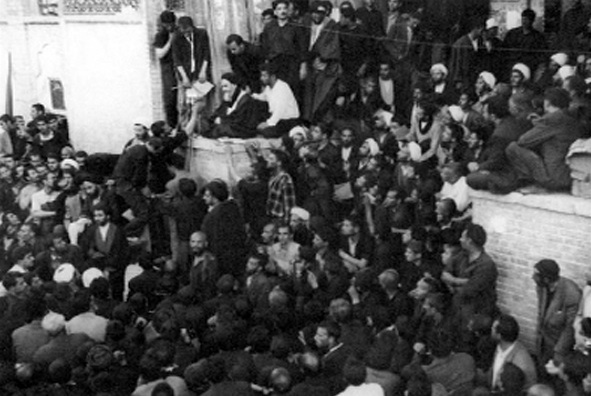
From exile, Khomeini continued to preach against the evil and corrupt Pahlavi, accusing the shah of irreligiosity and subservience to foreign powers. Thousands of cassette tapes and printed copies of Khomeini’s speeches were smuggled into Iran. His speeches found fertile ground and emboldened unemployed and poorly paid Iranians—especially those who had moved from villages to cities.
Recession and Public Discontent
In mid-1977, the shah finally heeded the advice of Washington and his Western-educated advisers and began to slow economic growth. But when oil prices soon stabilized, the reduction in government spending triggered a sharp recession that hit all Iranian social strata. Many younger members of the middle class felt betrayed by a state that had educated them for public-sector jobs that were now disappearing.
As unemployment rose, public criticism of the repressive regime intensified, and the monarch’s attempts to buy off his opponents through political and judicial reforms no longer had any effect.
By late 1977, Mohammad Reza—already seriously ill with cancer—faced the greatest crisis of his reign since the time when Mossadegh became prime minister in the early 1950s. The shah’s dependence on the United States, his close ties with Israel (which at the time had extremely hostile relations with many Arab states), and poor economic policy all contributed fundamentally to widespread popular discontent.
Carter’s Strategy
The new administration of Jimmy Carter became acutely aware of the crisis in Iran. Elected a year after the fall of Saigon in the autumn of 1976, President Carter emphasized America’s responsibility to spread liberal democracy and the American system of values, but without the overt forms of interventionism practiced by his Democratic predecessors. As a result, the new administration’s policy toward the Third World was chaotic from the outset.
Although Carter believed that the United States must oppose the spread of communism, he imposed behavioral conditions on countries seeking American weapons or loans. More precisely, Carter wanted countries in Asia, Africa, and Latin America to embrace American ideals of freedom, democracy, and human rights.
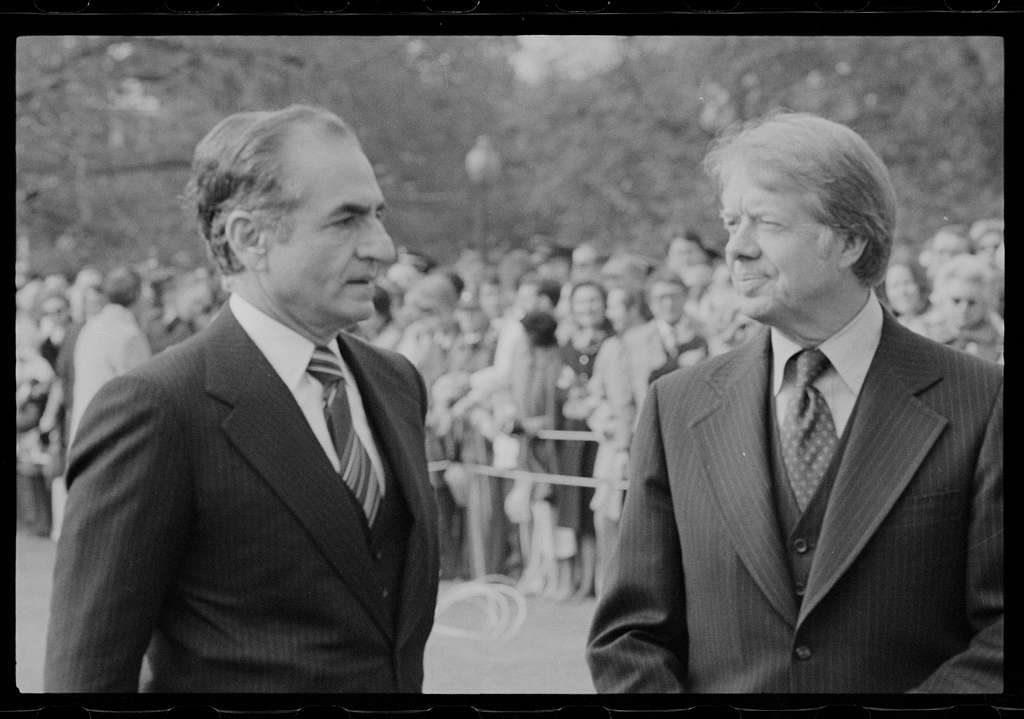
The former governor of Georgia, who had no prior foreign-policy experience (his 1975 visit to Japan was nearly canceled because almost none of his aides had passports), lectured the shah in November 1977 on the need for further reforms. The shah—who had met every American president since Roosevelt—realized that American support for a planned crackdown on the Iranian opposition would not be forthcoming.
Carter in Tehran
The decision to pay a return visit to the shah in January 1978 may have been Carter’s greatest mistake. Allegedly, the trip was undertaken at the urging of the president’s wife, who thought it would be nice to spend the New Year in the company of new friends—the Shahanshah (King of Kings) and his Shahbanou. It was probably the worst possible moment for a presidential visit.
Just as the shah needed to bolster his nationalist credentials to confront the opposition, the American president landed in Tehran and began praising Mohammad Reza as a leader and emphasizing the “respect, admiration, and love” that Iranians felt for their ruler.