By Matija Šerić
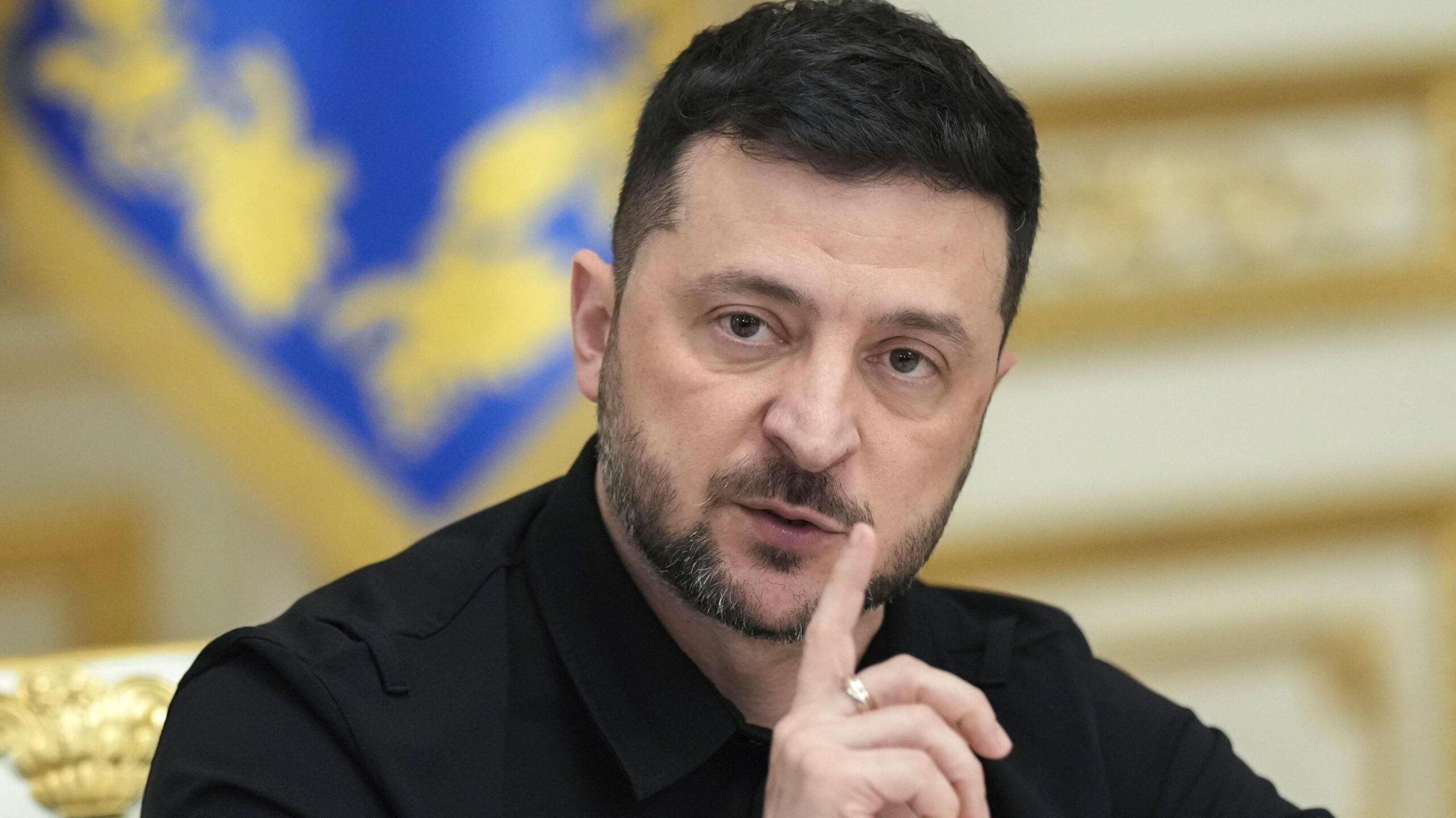
“Ukraine has never been and never will be an obstacle to peace. Russian missiles, Russian Shahed drones, and Russian attempts to destroy Ukraine clearly prove that Russia is not interested in any kind of agreement,” Volodymyr Zelensky stated on January 15. The Ukrainian leader was responding to Donald Trump, who had previously asserted that Zelensky himself was the main saboteur of peace between Ukraine and Russia.
Although Trump is a politician and statesman who shows little concern for international law and who tends to start new wars rather than end them, in the case of Ukrainian-Russian peace negotiations he was not wrong. Although it is unpopular to say so, and although many will claim that this represents a Russian narrative, it must be stated clearly and loudly: Zelensky is the main obstacle (though not the only one) to achieving a ceasefire and lasting peace between Moscow and Kyiv. The facts are indisputable.
Zelensky’s Peacetime Failures
Zelensky bears a certain share of responsibility for the outbreak of the full-scale war in 2022. Since taking office in 2019, he has not always made prudent decisions. On the contrary. He failed to take concrete steps to de-escalate the war in Donbas, i.e., he did not implement the Minsk I and Minsk II agreements, which were legally binding. Moreover, the conflict in eastern Ukraine intensified, increasing the suffering of people living in separatist-controlled territories (providing Russia with a key argument for invasion).
Most disastrously, he embraced the idea of Ukraine’s accession to NATO, something Moscow vehemently opposed. Nevertheless, Zelensky is not the primary culprit for the outbreak of the Russian-Ukrainian war in 2022. The main culprits are the Russians. However, the role of Zelensky, his government, and the Verkhovna Rada—controlled by his Servant of the People party—in contributing to the outbreak of war is far from negligible.
A Strong Stance at the Beginning of the War
To be fair, at the start of the Russian invasion in February 2022, Zelensky acted courageously and refused to leave Kyiv, despite many suggestions to do so, including from the Americans and Turks. He deserves credit for Ukraine’s successful defense during the first wave of Russian aggression in the spring of 2022. His personal example of fearlessness provided a strong boost to defensive efforts. However, after this initial correct reaction, Zelensky’s wartime leadership has remained below the level required of a true wartime president.
Ukraine in Agony
Today, almost four years after the start of the Russian invasion, the situation in Ukraine is dramatic—indeed, bleak. The country is deeply mired in a bloody war. Infrastructure and the economy have been devastated, an energy crisis is raging, the country’s best human potential has scattered across the world (millions have emigrated), leading to a demographic collapse (declining birth rates and rising mortality), while bribery and corruption have become entrenched in daily life. There is no end to the war in sight.
Grandiose announcements of major Ukrainian offensives that would bring Ukrainian forces to Russia’s borders collapsed at the Surovikin Line (despite Western aid worth approximately USD 360 billion). Russian forces continue to capture Ukrainian territory little by little each year. Despite all these problems (and there are many more), Zelensky consistently and persistently rejects every proposal for a ceasefire and peace agreement.
Zelensky Rejects One Peace Plan After Another
The impragmatism of Zelensky’s wartime diplomacy is evident in the sheer number of peace initiatives he has rejected. The first was the Istanbul agreement of March 2022. According to this document, Ukraine would have renounced Crimea and NATO membership, but could have survived within its borders as a neutral state. Ukrainians accepted the plan, but in April British Prime Minister Boris Johnson arrived in Kyiv and undermined its signing.
Next came China’s 12-point peace plan in February 2023. Under this plan, Ukraine would remain a sovereign and independent state in accordance with the UN Charter, followed by a ceasefire and political negotiations. Although Zelensky initially accepted the plan in principle, he ultimately sabotaged it because it did not call for the withdrawal of Russian troops.
In March 2023, Brazilian President Lula da Silva proposed that Ukraine give up Crimea in exchange for Russia’s withdrawal from Ukraine. Zelensky rejected this as well. He similarly dismissed the African peace initiative of June 2023, again demanding unconditional Russian withdrawal from all Ukrainian territory. That same month, Indonesian Defense Minister Prabowo Subianto proposed a peace plan involving the freezing of front lines and the creation of a demilitarized zone under UN peacekeeping supervision. Zelensky and his associates, such as Oleksii Reznikov and Dmytro Kuleba, rejected all such third-party proposals, claiming that China, Brazil, South Africa, Indonesia, and others were acting on Russia’s behalf.
Throughout the war, Vatican diplomacy worked behind the scenes toward a peace agreement, but without success. The Biden administration offered no concrete compromise solutions for Ukraine and aligned itself with Zelensky’s approach, which aimed at restoring 100 percent of Ukraine’s pre-2014 territory and even securing NATO membership. The EU followed the same line.
Trump’s Plan Changes the Course of the Game
Trump’s return to power in 2025 introduced a new dynamic. In November last year, the Trump administration presented a 28-point plan. In its key outlines, the plan stipulates that Russia would retain Crimea, Luhansk, and Donetsk, while the battle lines in Zaporizhzhia and Kherson would become de facto state borders. Ukraine would renounce its ambition to join NATO; Ukraine and Russia would sign a non-aggression pact; all sanctions against Russia would be lifted; Ukraine would receive security guarantees for its new borders; and its armed forces would be limited to 600,000 troops. Zelensky, unsurprisingly, rejected this plan as well.
Maximalism – Zelensky’s Defining Trait
Zelensky’s maximalism is also evident in his own proposals: the 10-point plan from November 2022 and the 20-point plan from December 2025. These envisage Ukraine being recognized as a sovereign and independent state with the possibility of joining the EU at some point, while receiving NATO-like security guarantees from Western states; a Ukrainian military capped at 800,000 troops; frozen front lines in the four disputed regions overseen by international forces; the establishment of free economic zones in those territories; a non-aggression pact between the two states; and the Zaporizhzhia nuclear power plant managed by the IAEA with electricity shared equally.
In other words, Zelensky refuses to make any serious compromises and continues to insist on the 2014 borders, while not abandoning NATO membership or Crimea. Although neither is explicitly mentioned in his plan, his stance remains clearly pro-war.
Russia Has Irreversibly Violated International Law
It is noteworthy that Zelensky rejects both temporary and permanent ceasefires, insisting that a peace agreement must come first and a ceasefire second. This contradicts basic logic, as wars traditionally begin with ceasefires and only later lead to peace treaties. Zelensky’s supporters argue that he adheres to Ukraine’s constitution and international law, under which Ukraine had rightful claims to Crimea and Donbas. However, wartime realities have irreversibly altered these conditions.
Russia, as a superpower, albeit clumsily, has carried out aggression against Ukraine and seized about 20 percent of its territory. No one can persuade a nuclear power like Russia to relinquish these areas voluntarily, and Ukraine lacks the military capacity to reclaim them despite extensive Western assistance. Politics is the art of the possible, and the complete liberation of Ukrainian territory is not realistically achievable. Furthermore, Zelensky’s democratic legitimacy is highly questionable, as his mandate expired in April 2024, but elections were not held due to the war.
A Pragmatic Ukrainian Policy Could Save the Country
The ideal solution would be a ceasefire between Russia and Ukraine, the freezing of front lines, and the holding of new elections in which Zelensky could run. If he wins, he could begin his second term and negotiations. Ultimately, any peace plan should be accepted or rejected by the Ukrainian parliament, and if approved, put to a referendum.
In fact, alongside elections, the best solution would be an immediate referendum on a peace plan involving territorial concessions to Russia in some form. The war could end tomorrow if Zelensky accepted a simple formula: de facto transfer of Crimea, Donbas, Zaporizhzhia, and Kherson to Russia; Ukraine becoming a permanently neutral state without NATO membership; and security guarantees from Western powers. Vladimir Putin would immediately agree. Neither Russia, the US, nor others demand that Ukraine formally recognize the territorial transfer de jure. Perhaps in the future a new Ukrainian leader could attempt to reclaim these territories, or perhaps a future Russian leader might return them.
Zelensky Resembles History’s Greatest Saboteurs of Peace
The world has rarely seen a political actor so persistently reject peace proposals one after another. Some historical parallels do exist. Zelensky’s behavior strongly resembles that of Adolf Hitler, who rejected all peace offers during World War II and promised to fight until the destruction of Bolshevism and ultimate victory—ending with Germany in ruins and total defeat.
Another parallel is North Korean leader Kim Il-sung, who in the early 1950s rejected all compromises to end the Korean War until forced by the Soviets and Chinese to sign an armistice—freezing, but not formally ending, the war. This condemned tens of millions of North Koreans to decades of permanent military readiness and poverty.
In the 1990s, a comparable figure was Alija Izetbegović, who rejected several peace plans (Cutileiro, Vance–Owen, Owen–Stoltenberg) and selectively implemented those he accepted under strong US pressure (Washington and Dayton Accords). Had he accepted the Cutileiro plan, Bosnia and Herzegovina might today be an imperfect but functional state; instead, it is a semi-collapsed protectorate without prospects.
Zelensky Is Turning Ukraine into a Permanent Land of Pain and Suffering
Zelensky behaves impragmatically for two reasons. First, he believes he must pursue maximalist goals to enter history as a great wartime leader and Ukrainian hero. As long as the war continues, he wields enormous powers he would not have in peacetime, and it is uncertain whether he would even win elections.
The second reason is external. He clearly enjoys support from military lobbies within European states (the UK, France, etc.) and the American military-industrial complex, which benefits from the war. If Western financial flows and arms deliveries were halted, Zelensky would be more willing to negotiate—though he might turn to arms procurement from third countries or smuggling. Diplomacy is the only logical option, yet the Ukrainian president continues to play the war card. The question is for how long.
In 2025 alone, 2,514 civilians were killed and more than 12,000 wounded. Russian troops continue to seize land, while Ukrainians freeze as Russia destroys energy infrastructure. None of this would have happened if someone else were sitting in the Mariinsky Palace in Kyiv. Although giving up parts of one’s territory is painful, war is far worse. Ukraine’s future is deeply uncertain—and growing darker by the day.