By Matija Šerić
Brzezinski devoted special attention to the so-called “Russian question.” The Russian question in the Grand Chessboard theory is complex. Brzezinski presents several different concerns about the Russian state after the fall of the communist regime in 1991. Russians are uncertain about what Russia actually is, what it means to be Russian, and where exactly Russia is geographically located. In the 1990s, Russia went through many changes after numerous former Soviet republics, such as Ukraine, Belarus, and Georgia, declared independence, while Russia itself experienced a complicated transformation from socialism to capitalism.
“The Russian Question” – The Question of All Questions
The issues that arose after Russian independence and demanded answers were:
- how Russia wants to connect with the West;
- how concerned the United States is about the future of the Russian state;
- how U.S.–Russian relations could be improved; and
- how to restrain Russia’s potential expansionist ambitions.
Brzezinski was not clear in defining the precise obstacles Russia must overcome to become a powerful state in the future. The U.S. should be highly concerned about Russia’s future. Brzezinski argues that the Russian state seeks to regain control over Central Asia, which poses a threat to American interests. He points out that Russia has three new schools of thought regarding international relations:
- a mature strategic partnership with the U.S.;
- emphasis on the “near abroad” as the center of Russian interests; and
- a counter-alliance against America and its interests.
It is clearly in America’s best interest to ensure cordial dialogue and cooperation between the two great powers.
Conflict Becomes a Constant in U.S.–Russian Relations
Brzezinski prophetically emphasized that there is a high likelihood of war between Russia and the U.S. as long as Russia continues to maintain its authoritarian system and projects power in many parts of the world, such as Ukraine and the Middle East. He gives several examples of how the U.S. and Russia tried to improve relations. The U.S. initiated a “mature strategic partnership” with Russia that replaced former rivalry. Immediately after the end of the Cold War, U.S.–Russian relations significantly improved.
President George W. Bush made his first visit to Russia to meet with his Russian counterpart Vladimir Putin. The U.S. and Russia experienced positive moments in the post-Cold War period, such as their joint opposition to terrorism, but disagreements always persisted over Chechnya. Both Washington and Moscow should work together to make Russia a successful democratic state. Later developments, however, showed that constant conflict and confrontation took precedence over cooperation and partnership, which was left for some future time.
Zbigniew Brzezinski on America, Iran and China
Ukraine – The Pivot Point of U.S. Strategic Interests
Unlike the potential development of U.S.–Russian relations, according to the Grand Chessboard theory Brzezinski argues that the U.S. can in certain ways keep Russia within its limited sphere of influence. Russians were displeased when, in the 2000s, American troops were stationed in Central Asia under the banner of the war on terrorism in Afghanistan, but they nevertheless agreed to temporary U.S. military bases.
Brzezinski emphasizes that Ukraine is the pivot point that links Russia by land to Western Europe. As long as Ukraine resists Russian access to its territory, Russia has no direct route to Western Europe. Geographically, Ukraine lies between the northern part of the Middle East, to the east of the EU and NATO, and to the west of Russia. For these reasons, Ukraine is one of the most important pivot points for American interests on the Eurasian “world island.” It should be added that Ukraine is equally, if not more, important for Russian interests in the same region—which is precisely why conflicts arise.
Brzezinski prophetically foresaw the 2014 Ukrainian crisis and the U.S.–Russia conflict over that country. Today Ukraine is in turmoil, with an uncertain political future. The Ukrainian crisis and the Russo-Ukrainian war have demonstrated how great Ukraine’s role in geopolitics truly is.
The Outcome of American Hegemony Depends on the Eurasian Chessboard
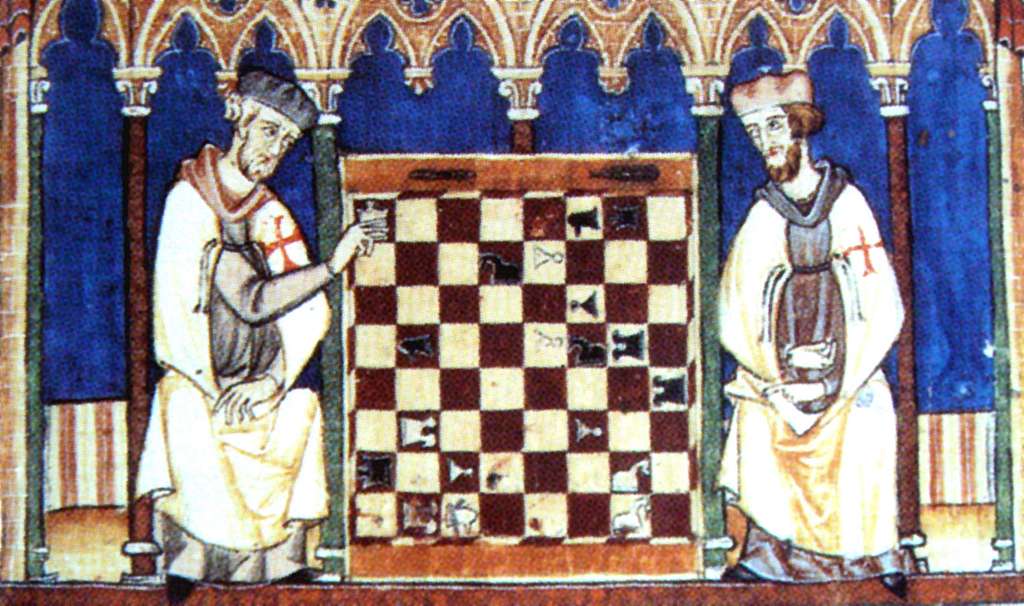
The remainder of the theory also focuses on other important parts of the world, such as the Baltics, Southwest Asia, the Middle East, and the Central Asian republics. However, Eurasia—what British geostrategist Halford Mackinder called the Heartland—is, according to Brzezinski, the most crucial area of the world. Again prophetically, he described a very worrisome situation in the years to come if the United States does not establish lasting dominance over vast regions of the globe.
“This vast, oddly shaped Eurasian chessboard—extending from Lisbon to Vladivostok—provides the setting for the ‘game.’ If the middle space can be drawn ever more deeply into the expanding orbit of the West (where America preponderates), if the southern region is not subjected to the domination of a single power, and if the East is not unified in a way that excludes America from its offshore bases, then one can conclude that America prevails. But if the middle space rejects the West, becomes an assertive unified entity, or gains control over the South, or forms an alliance with a major Eastern player, then America’s primacy in Eurasia shrinks dramatically.”
The Theory’s Relevance Today
Brzezinski’s Grand Chessboard theory is certainly accurate and well-thought-out (since whoever controls Eurasia controls the world), and it was adopted and implemented in U.S. foreign policy by Bill Clinton and all subsequent presidents up to Donald Trump. The Polish-born American strategist succeeded in his aim and once again refocused the American public on global issues.
How moral or justified such a theory is in practice can be debated, but the U.S. remains the world’s leading power. Since Russia and China have risen in Eurasia, it can be said that the theory has not been fully realized, yet it remains relevant in U.S. foreign policy nearly 30 years after its initial publication and even after its author passed away in 2017. Whether American hegemony will endure or other powers will prevail—time will tell.