By Matija Šerić
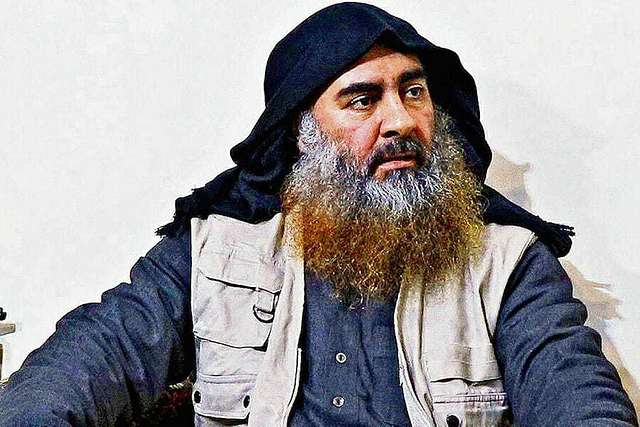
When the Islamic State of Iraq and the Levant was established in the summer of 2014, its spokesperson Abu Mohammed al-Adnani demanded that all jihadist organizations recognize the new caliph al-Baghdadi as the sole legitimate leader, which led to a split with Al-Qaeda and Al-Nusra. The same demand was made to all Muslims worldwide. Of course, such recognition did not follow. No Islamic religious community or nation-state recognized ISIS as a legal political or religious organization. ISIS remained an illegal paratheological and parapolitical organization (the term “so-called Islamic State” is entirely justified), but this did not stop its existence.
Religious and Political Rigidity
The fanaticism of its followers was not shaken. The millenarian ideology of ISIS has, as its practical goal, the elimination of nationalist and Islamist competition in the Middle East and beyond. In the internal civil war between ISIS and other jihadist organizations, thousands of Muslims were killed, and monstrous war crimes were committed, such as beheadings, mass rapes, and crucifixions. ISIS fighters consider themselves the only authentic jihadists, viewing all others as frauds and traitors.
The Islamic State seeks to cleanse the territory under its control of all “heretics” and “heretical customs,” even when it comes to certain practices within Sunni Islam. ISIS was the first jihadist movement to attempt this “cleansing” in the areas it controlled in Iraq and Syria. Numerous cultural and historical landmarks were destroyed, and many non-Muslim peoples, such as Iraqi Yazidis, Arab Christians, Kurds, Jews, and Muslims (both Sunnis and Shiites) who did not recognize the authority of the Islamic State, were expelled.
At the end of 2014, ISIS published a pamphlet justifying the enslavement of non-Muslim women and children. The genocide against the Yazidis was committed from 2014 to 2017, marked by massacres, rapes, and forced conversions to Islam. The United Nations reported that the Islamic State killed around 5,000 Yazidis and trafficked around 10,800 Yazidi women and girls in a forced conversion campaign across Iraq. ISIS beheaded prisoners and posted images of their bodies on social media to attract international attention.
Building a State Organization
Uninformed observers often believe there is no significant difference between the Islamic State and other Sunni jihadist organizations such as Al-Qaeda, Al-Nusra, and Boko Haram. However, they are mistaken. ISIS is a specific organization in its ability to build a state structure and in its acceptance of pan-Islamist principles. Although it is a terrorist organization that applies brutality to all its opponents, it simultaneously demonstrates the capacity to effectively govern the territory and population it controls.
The Islamic State established its own army, police, executive, legislative, and judicial authorities, launched the issuance of identity cards, organized educational and healthcare systems, founded consumer protection agencies, waste collection services, and more. All these public services operated according to Sharia law. By the end of 2015, the organization controlled 12 million people. However, in the following years, due to a series of military defeats, by 2019 its territory was reduced to isolated pockets. In the past few years, ISIS has consolidated and expanded its territorial control. By the end of 2024, the Islamic State controlled scattered parts of Syria, Iraq, Afghanistan, West Africa, the Sahara, Somalia, Mozambique, the Democratic Republic of the Congo, and Mali.
ISIL Triumphs Due to the Fear of Muslims
In these areas, Sunni Muslims have no problems with the law as long as they submit to Sharia regulations. Sunni communities in the Middle East and beyond provide shelter to ISIL fighters not because they support their ideology but because they have suffered greatly under previous regimes and because they fear them. Sunni communities in Syria and Iraq viewed the emergence of this organization as a logical consequence of the collapse of state systems there. As long as ISIL can organize state governance over the areas it controls, it will continue to resurge, as seen in its recent revival in Syria and Mali.
Unlike ISIL, Al-Qaeda has never effectively controlled territory and populations, nor has it had an administrative apparatus worth mentioning; it never intended to create its own state. ISIL does this, even though its state resembles medieval Arabia. Additionally, unlike Al-Qaeda, ISIS has engaged in conventional warfare with other armed groups over territorial control.
ISIL tactics on exporting terror abroad
Fanatical Embrace of Pan-Islamism
Another distinctive feature of the Islamic State is its insistence on the concept of pan-Islamism. According to the Croatian Encyclopedia, pan-Islamism is “a movement that seeks cooperation and unity among all Muslim peoples and states. Pan-Islamism expresses the idea of religious-political unity of Muslims, which, according to the teachings of the Quran on the Islamic community, is founded on the unity of religion and state governance. It emerged in the 19th century as a reaction to the policies of European powers, who imposed not only political dominance but also European culture and civilization on Islamic peoples.”
In practice, the Islamic State rejects the national borders in the Middle East and Africa that were drawn by European colonizers to divide Muslim states. A prime example is the 1916 Sykes-Picot Agreement between Britain and France, which divided the territories of the Ottoman Empire and established the borders of modern nation-states such as Syria, Iraq, Lebanon, Jordan, and Palestine. Baghdadi and his associates clearly stated that they intended to redraw these colonial borders and replace them with a large pan-Islamic state. For example, after capturing Mosul in the summer of 2014, they destroyed the border between Iraq and Syria.
The Islamic State’s insistence on eliminating borders established by European powers has opened a public discussion on this issue. However, insisting on pan-Islamism is merely one major phase, not the ultimate goal—the creation of a global Islamic state. The Caliph of the Islamic State seeks to be the caliph of all Muslims (a position abolished by Turkey in 1924) and ultimately the leader of all humanity.
Conclusion
The Islamic State represents one of the most dangerous phenomena of the modern world. It has become synonymous with extremism and terror in the name of Islam. Its ideology and worldview are rooted in the theocratic concept of the caliphate and a radical interpretation of early Islamic texts. Through brutal methods, such as mass and public executions, ISIL conducts a campaign of terror in the territories it controls. Its persecution of minorities, such as Christians, Shiites, and Yazidis, illustrates its intolerance toward anything that does not align with its Salafi-Wahhabi ideology.
The Islamic State uses the internet and social media as tools for recruiting new fighters and spreading its propaganda, which further amplifies its global threat. Although military interventions aimed at the Islamic State have weakened its power, the long-term solution lies in addressing the roots of extremism and promoting tolerance and coexistence among different national and religious communities.