By Ivo Kokić
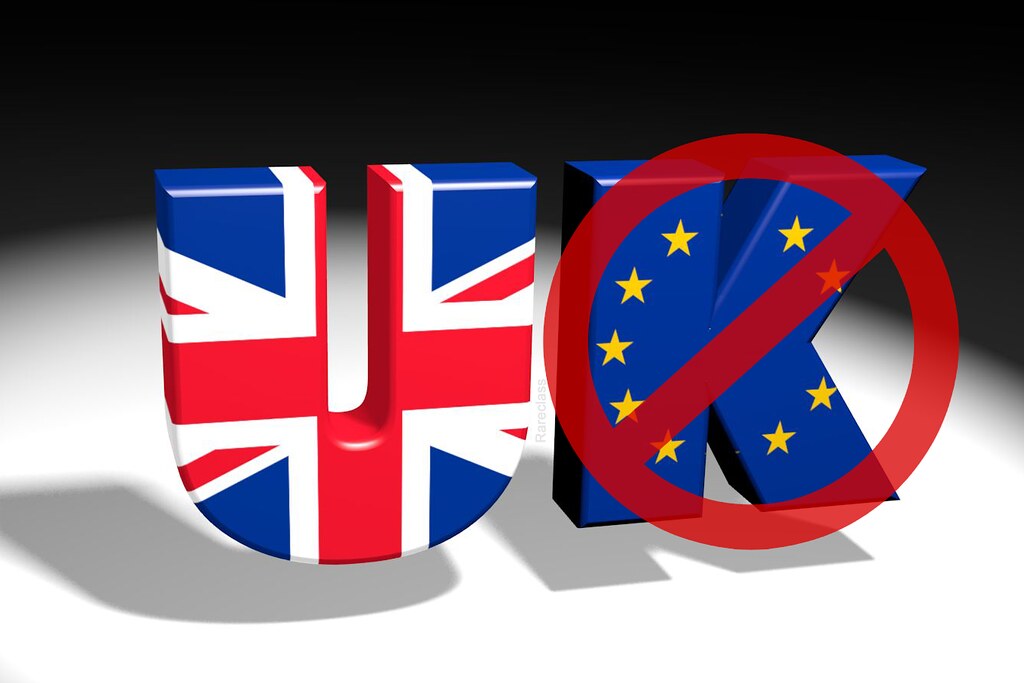
By leaving the EU, Britain rejected the hegemony of supranational institutions that possess decision-making powers which must be implemented in all member states. Namely, many decisions in EU member states are not made by their governments, but are automatically adopted once a decision is made by the European Commission, the European Parliament, or a similar body. Moreover, politicians in Brussels (who lack direct electoral legitimacy for the specific functions they perform) have the power to determine what governments of member states may or may not do.
Britain’s Exit from the EU
In order to better understand what the EU represents—namely, what Britain exited—it is possible to draw an interesting parallel that is practically completely absent from political analyses. The EU represents a space of a single market, largely a common currency, and de facto a common territory in which state borders exist only formally. All of this strongly resembles what the ultimate political goal in Islam is. Islam advocates the creation of a global transnational and supranational community called the ummah (umm – Arabic for “mother”). In the idea of the ummah, real state borders do not exist, nor is there room for the concept of different nations possessing sovereignty in relation to the ummah. The ummah stands above every national identity (Britannica.com).
As we can see, the ultimate goal of the EU and political Islam is in fact very similar. The dismantling of nation-states, the erasing of borders, and the merging of different nations into one large community—this is the objective in both cases. Admittedly, there are differences, the main one being that the ummah is based on a shared faith in Allah, while the EU is based on a fictional connection through a common European identity that has never been formed. Nor can it be formed, because the vast majority of EU states do not share a common history that would bind them together. For example, nothing connects Portugal, Bulgaria, the Czech Republic, Luxembourg, or Estonia.
Britain exited such a type of community and, in the mentioned areas (economy, borders, etc.), regained that segment of independence. However, if we look at British foreign policy, it has not substantively diverged from the one pursued by the EU, although it is no longer formally dictated from Brussels.
The Current State of Freedom of Speech in Britain
If we were to ask people who voted for Brexit why they did so, they would likely respond that they voted for freedom. Considering the primary goal of Brexit, they indeed gained freedom from the EU. However, did they become an island of freedom as a result—that is, does the British people live in freedom today? A state may not be a member of any supranational organization and may be free from other countries, yet its people can live under a dictatorship. Therefore, it is necessary to examine not whether Britain is free as a state, but whether the British people are free from their own government.
Many people are not aware of what has been happening in Britain in recent years. According to data from the European Parliament from 2025, British police arrest more than 30 people every day for something they said, wrote, or posted online (Europaparl.europa.eu, 2025). Annually, around 12,000 people in Britain are arrested due to online posts (Moore, 2025). In August 2025, the U.S. State Department published a report on the situation in Britain, emphasizing that the state of human rights has significantly deteriorated and that Britain is implementing extensive restrictions on freedom of expression. It was also noted that many people face criminal prosecution or the threat of it as a method of intimidation intended to silence their views (State.gov, 2024). Several examples of such cases will be presented below.
British politician George Galloway is the president of the Workers Party of Britain. He is over 70 years old and has been elected to the British Parliament seven times. His anti-war views do not align with British foreign policy. He has personally experienced the treatment faced by genuine opposition in the country. This refers to an incident from September 2025, when he returned from Moscow. British police detained him at a London airport under the Counter-Terrorism and Border Security Act of 2019. According to its provisions, British police have the right to stop, question, and search any person at the border, even if there are no indications that they have committed a criminal offense, but merely to determine whether they are connected to hostile state activity. For this reason, it is not referred to as an arrest, but as detention. In this specific case, Galloway was detained for questioning for nine hours, during which his mobile phone and laptop were confiscated (News.sky.com, 2025).
The next case concerns John Dunn. He is a veteran of British special military units and is now a political, legal, and religious activist. Dunn was arrested on several occasions for reading passages from the Bible relating to teachings on homosexuality. However, it should be noted that these cases were dismissed in court, and his acquittals demonstrate that legal victories are still possible (Christianconcern.com, 2020).
The attack on freedom of speech has not been carried out only in relation to serious topics such as geopolitics, criticism of the government, and religious freedom. The option of mocking everything the system deems desirable has also been strongly suppressed. This has led to enormous problems for comedians, as numerous topics are no longer allowed to be the subject of humor. This issue is frequently highlighted by the famous British actor Rowan Atkinson (best known for his role as Mr. Bean) (Glasp.co, 2021).
All these cases fall into a category that cannot truly be described as a consequence of Brexit in the strict sense of the word. A consequence denotes something that results from a previous action. The suppression of freedom of speech in Britain can rather be seen as the absence of a consequence of Brexit. In other words, the people did not gain the freedom one might have expected them to gain by leaving the EU. If all the aforementioned cases had occurred in an EU member state, that would be entirely understandable and expected. However, here Britain failed to distance itself from such policies. More precisely, Britain exited a structure that philosopher Hrvoje Jurić justifiably calls neo-totalitarian, but the democratic nature of the system itself did not improve as a result.
Conclusion
In June 2016, the British voted in a referendum to leave the EU. Many factors influenced such an outcome, and it should be noted that throughout history Britain’s relationship with Europe has been far more specific than that of other European states with territorial continuity on the continent. Brexit is not the only example of a country rejecting EU policies, but it is the first case of a member state leaving the organization.
Former British Prime Minister David Cameron promised a Brexit referendum in the hope that it would fail. After the referendum succeeded, he resigned. He was succeeded by Theresa May, and then by Boris Johnson, who led the country out of the EU. The success of the referendum also gave momentum to Donald Trump in the 2016 U.S. presidential elections.
A large part of the losing side did not accept the will of the majority of the people, so millions protested with the aim of preventing the British Parliament from ratifying the referendum result. Many EU officials behaved similarly, showing little concern for what the people had chosen and focusing only on which legal options existed to block such an outcome. This was not the first time the EU demonstrated disrespect for the will of the people when it did not suit its interests, as evidenced by its treatment of the Tsipras government after Syriza’s victory in Greece.
In these cases, one can point to the true character of the EU when someone opposes it. Such an analysis is complex due to the intricacy of the EU system. Namely, it is very easy to politically analyze Saudi Arabia, which is the only country in the world without a parliament. If a country does not even formally have a parliament, no reasonable person will dispute that it is a dictatorship. However, the EU has successfully wrapped its true anti-democratic nature in the cellophane of numerous democratic institutions (e.g., the European Parliament).
The process of Britain’s exit from the EU was prolonged. The country officially left the EU on the last day of January 2020, and the transition period ended on January 1, 2021. It sounds incredible, but the process of independence of states emerging from collapsing communist countries (regardless of whether it was peaceful or accompanied by war, as in the Croatian case) progressed much faster than Britain’s exit from the EU.
Britain’s departure from the EU manifests itself in numerous aspects. The single market was abandoned, former border controls were reintroduced, financial contributions to the common EU budget ceased, there is no British representation in the European Parliament, and the state is no longer subject to decisions of EU institutions, etc. As for foreign policy, all British governments (regardless of party affiliation) continue to pursue a policy identical to that of the EU. A similar situation exists with the right to freedom of speech, where Britain has made no improvement compared to the previous period.
So far, no other state has followed Britain’s example. Nevertheless, it should be noted that many previous artificial structures that appeared indestructible have collapsed. The Roman Empire did not last forever, nor did Austria-Hungary, the Soviet Union, or Yugoslavia—and the EU will not last forever either. Moreover, there has never been a unified Europe in history in which all states were connected. There have been many powerful European states (France, Britain, etc.), but never Europe as a whole. A new identity cannot be artificially created and imposed on half a billion people living in nations that have been formed over.