By Matija Šerić
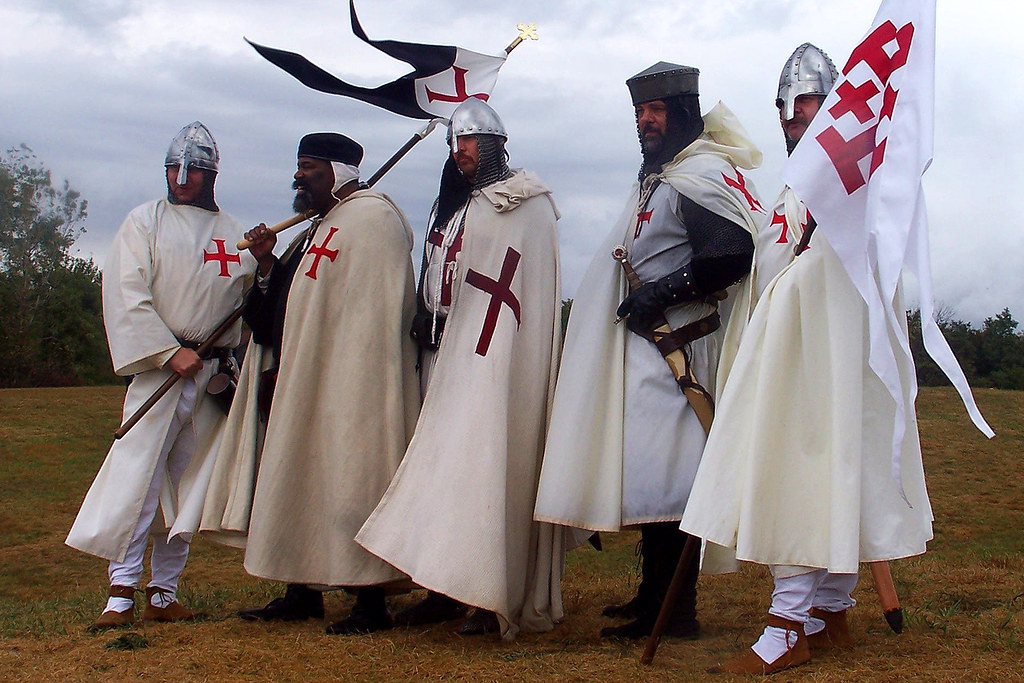
The Order of the Knights Templar, officially known as the Poor Fellow-Soldiers of Christ and of the Temple of Solomon, is one of the most famous and powerful knightly orders in all of history. The role of the Templars in the Crusades, politics, and the economy—along with the many legends associated with them—has left an indelible mark on European historical and cultural heritage. Although the Templar Order was active for only two centuries, its influence extends far beyond that period, shaping modern mythology and popular culture.
Origins
The Order of the Templars was founded in 1119, at a time when European Christians, inspired by papal calls, embarked on a series of military campaigns known as the Crusades. These wars aimed to seize control of the Holy Land, particularly Jerusalem, which was under Muslim rule. Following the success of the First Crusade (1096–1099), the Crusaders captured Jerusalem and established several Crusader states, but it soon became clear that these newly conquered territories were under constant threat from Muslim forces.
The route to Jerusalem, frequently used by pilgrims from Europe, was extremely dangerous. Along the journey—especially on perilous stretches between the Mediterranean coast and Jerusalem—bands of robbers and attackers often lay in wait. Pilgrims, who traveled with the hope of visiting holy sites, were unprotected and frequently robbed or killed. As a result, the need arose to protect Christian pilgrims.
In the Service of Defending Christianity
Hugh of Payens, a French nobleman, and eight other knights decided to respond to this need by founding the Templar Order. They took vows to defend Christian pilgrims. Initially, they operated as a small and modest order based in Jerusalem, specifically near the ruins of the Temple of Solomon (the Jewish Temple), from which they derived their name. Over time, however, the military and political role of the Templars grew significantly.
At first, the Order was poor and possessed very limited resources, relying heavily on donations from nobles and the Church. Despite this, the Templars gained the support of King Baldwin II of Jerusalem, who granted them part of the royal palace within the Temple complex itself, giving them considerable symbolic importance. A crucial moment came at the Council of Troyes in 1129, when the Templars received official recognition and blessing from the Catholic Church. Following this, European monarchs and nobles began to financially support the Order, providing the resources necessary to defend Christian territories in the Middle East.
From that point on, their power and influence grew rapidly. Support from the Pope, monarchs, and nobles enabled the Templars to become one of the most powerful military orders in Europe. Thanks to their discipline, military skill, and religious devotion, the Templars established themselves as key defenders of Christianity in the Middle East and throughout Europe.
Military Role
The Knights Templar became renowned for their training, military organization, and exceptional combat abilities. They were ahead of their time. The knights underwent rigorous training that included not only military skills but also theological and ethical preparation. This comprehensive training ensured that the Templars were not only skilled warriors but also devoted guardians of Christian tradition.
Their combat techniques included horseback riding, sword fighting, and the use of weapons such as lances and bows. In battle, they employed strategy and took advantage of terrain and weather conditions. In open combat, they formed infantry units that fought in tight formations, using heavy armor and shields. They also made extensive use of cavalry, allowing them to execute rapid attacks and maneuver effectively on the battlefield.
As elite soldiers of the “dark” Middle Ages, they fought on the front lines, defending Christian territories and leading counterattacks. Their courage and dedication were often admired but also feared by their enemies. They were known for fighting to the death, refusing to retreat even in nearly hopeless situations—according to their knightly code. The Templars played a crucial role in many battles during the Crusades, such as the Battle of Montgisard (1177) and the Battle of La Forbie (1244), where they demonstrated exceptional bravery but also suffered heavy losses.
Civil Role
The Templars were not only soldiers. Their role in administering Crusader territories was equally important, a position they achieved thanks to the Church. In 1139, Pope Innocent II issued the papal bull Omne Datum Optimum, which granted the Templars extraordinary privileges. The bull made the Templars independent from all secular and ecclesiastical authorities except the Pope himself.
They were exempt from paying taxes, which was a significant advantage, and they were granted the right to build their own churches, enabling them to become administratively independent. This autonomy meant they could manage their landholdings, property, and military operations without interference from local bishops or secular rulers. The Templars became major landowners, controlling vast agricultural estates that provided them with a steady flow of income. As a result, they evolved into a supranational power, with strong structures that transcended state borders.
The Templars took control of numerous fortresses and trading posts throughout the Middle East and Europe. They built an impressive network of fortifications and castles that served both as defenses against Muslim attacks and as logistical hubs. Templar fortresses—such as the famous Krak des Chevaliers in Syria, as well as Belvoir and Acre in present-day Israel—became symbols of power and invincibility. These strongholds were crucial in maintaining a Christian presence in the Holy Land and functioned as both military and civil centers.
The network of fortresses was essential for sustaining the Crusader states, and Templar fortifications were so well constructed that some remained unconquered even during brutal Muslim sieges.
The Most Successful Medieval Bankers
In the economic sphere, the Templars achieved their greatest success in banking. Thanks to their network of fortresses, strategically located along major trade routes, the Templars created the first international banking system. Their ability to secure the transfer of funds across the continent allowed pilgrims and merchants to travel safely without carrying cash.
Travelers could deposit their money at one Templar house and withdraw the same amount at another house elsewhere in Europe or the Middle East. This was an exceptionally sophisticated system for its time and revolutionized the way transactions and travel were conducted in the Middle Ages.
The Templars also began lending money to European kings and nobles, becoming major creditors to many powerful figures. Their economic power peaked when they became financial advisers and chief bankers to European monarchs. Due to their reputation as honest and incorruptible guardians of wealth, the Templars became key financial partners of many European states, including France and England.