By Matija Šerić
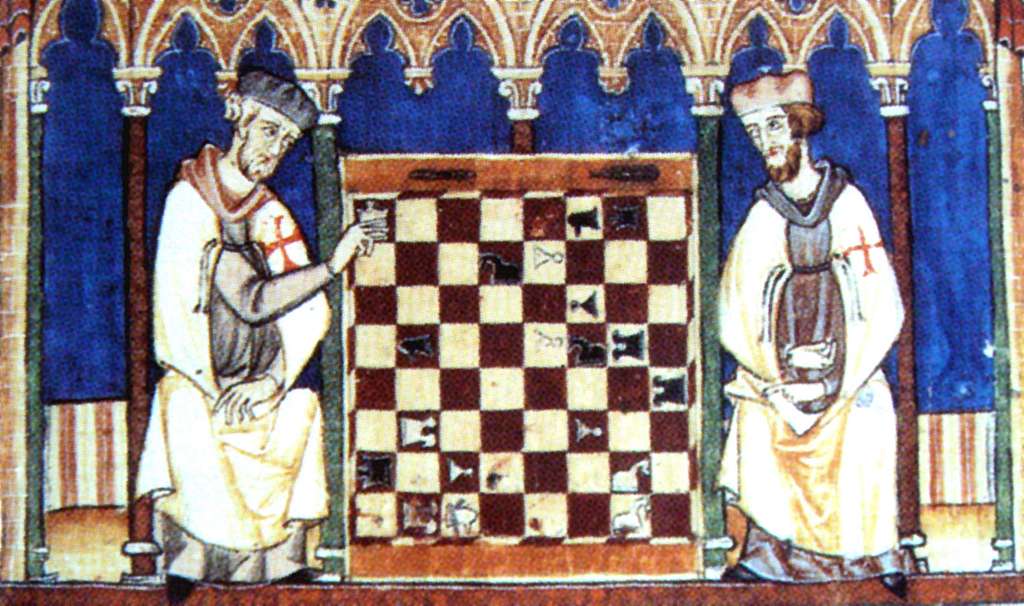
Given their very significant military and economic power, the Templars gained considerable political influence on the Old Continent. Kings, nobles, and church officials sought their services in various advisory and diplomatic roles. The Templars enjoyed unique access to the highest levels of authority and made full use of it.
Political Influence
Their loyalty to the Pope made them ideal intermediaries in matters concerning relations between secular authorities and the Church. Their own international network and military resources enabled them to forge alliances with various kingdoms, further securing their status as powerful players on the geopolitical stage. They were involved in key political events of their time, including the Crusades, European wars, and political conflicts within the Christian world.
Religious Influence
In addition to their military and civil roles, the Templars became a symbol of chivalry, spiritual devotion, and Christian morality. They emerged as bearers of the Christian faith and missionary activity. Their dedication to religious ideals and the chivalric code became a model for other knightly orders that later emerged. Alongside their military role, the Templars also supported the Church’s mission, spreading Christianity and defending the Church from its enemies.
Decline
Although the rise of the Templars during the Crusades of the 12th and 13th centuries was meteoric, over time the Crusades began to lose momentum, and the Templars were forced to adapt to new circumstances. They made many enemies. Their end, however, was sudden, tragic, and bloody at the beginning of the 14th century. One of the key reasons for the fall of the Templars was their enormous economic influence. Over the years, thanks to large donations, banking operations, and the management of vast estates, the Templars became one of the wealthiest non-state entities in Europe. This troubled some European rulers, such as King Philip IV of France, known as Philip the Fair.
The French king faced serious financial difficulties due to wars and wasteful policies and had gone into debt to the Templars, which further increased his hostility. Philip IV saw the Templars not only as a threat to his political power but also as a wealthy institution whose riches could help solve his financial problems.
The Fateful Friday the 13th
A key event in the fall of the Templars occurred on Friday, October 13, 1307, when Philip IV ordered the arrest of all Templars in France. This sudden attack on the order was carried out under accusations of heresy, idolatry, sodomy, and other moral crimes. Although the charges were shocking, it is now known that they were politically motivated and that Philip exploited the then-sensitive state of church–secular relations to eliminate the Templars as competitors and seize their property.
The accusations claimed that the Templars had renounced Jesus Christ, worshipped pagan idols (such as the mysterious head known as Baphomet), participated in secret rituals, and violated Christian moral rules. Although the charges were contradictory and unsupported by evidence, the arrests led to the torture of many Templars to extract confessions. Under brutal torture, many knights confessed to crimes they had not committed, which allowed the king to justify his actions before the public and the Church.
Dissolution of the Order
Pope Clement V found himself in an unenviable position. On the one hand, he was reluctantly drawn into the conflict with the Templars, as they were under the direct protection of the Church; on the other, Philip IV exerted strong influence over the Pope, especially since Clement was subject to French political power. After the arrests, the king pressured the Pope to take formal ecclesiastical action against the Templars. Clement V ultimately agreed and initiated his own investigation. Although he initially hesitated, under pressure he decided in 1312, at the Council of Vienne, to formally dissolve the Order of the Templars. Although papal investigations did not provide evidence of heresy, the pressure from Philip IV and fear of further political unrest led to the official suppression of the order.
The End
The last Grand Master of the Templars, Jacques de Molay, became a symbol of their downfall. After years of trials and imprisonment, de Molay was sentenced to death by burning in 1314 on charges of heresy. His death marked the symbolic end of the Templar Order. After the formal dissolution, Templar property was divided among various European kingdoms and church institutions. Although it was officially stated that most of their property would pass to the Hospitallers (the Knights of St. John), a large portion of the wealth in France ended up in the hands of Philip IV and his supporters. Philip’s goal—financially exhausting the Templars and seizing their assets—was successfully achieved.
According to legend, before his death, de Molay cursed Philip IV and Clement V, predicting their imminent deaths. Interestingly, both died just months after his execution, which further fueled legends about the Templars. De Molay’s death at the stake ended the Templars as a formal order, but their legacy lived on for centuries. In other parts of Europe, the Templars met different fates. In Spain and Portugal, where the order played a significant role in the fight against the Moors, many Templars were integrated into other knightly orders along with their property. In these regions, the Templars were not destroyed but simply renamed, allowing their influence to be preserved to some extent.
Mystical Legends of the Holy Grail
Although the Templar Order formally disappeared, its legacy has endured to this day. The Templars became synonymous with secret organizations, giving rise to numerous conspiracy theories and romantic legends. The most famous myths include the quest for the Holy Grail, hidden treasure, and alleged connections to secret societies such as the Freemasons. The Holy Grail, according to Christian tradition, was the cup used by Jesus at the Last Supper and is believed to possess miraculous powers. The legend of the Holy Grail became popular in the Middle Ages, especially through stories of King Arthur and the Knights of the Round Table, and was soon linked to the Templars. According to some theories, during their campaigns in the Holy Land the Templars came into possession of the Grail and hid it to protect it from enemies, allegedly bringing it back to Europe and guarding it in one of their fortresses. Searches for this object continue to this day.
The Legend of the Great Treasure
Because of their immense power and wealth, many believed the Templars hid a great treasure before their dissolution. According to this theory, before Philip IV struck, the Templars managed to conceal their riches, which were never found. Some theories also claim they hid relics from the Temple of Jerusalem, including fragments of the cross on which Jesus was crucified.
Alleged Worship of Baphomet
One of the most enigmatic elements of the accusations against the Templars was their alleged worship of Baphomet. According to charges presented during the trials, the Templars supposedly participated in secret rituals in which they worshipped Baphomet, a mysterious head or idol. These accusations were central to their conviction for heresy, yet historical sources provide no clear evidence of the true nature of such rituals. Over the centuries, the name Baphomet became associated with various occult symbols.
The secrecy surrounding their rituals also contributed to the Templars’ mystical image. As warrior-monks, the Templars lived under strict discipline and practiced their own religious rites, but the nature of these rites remained unknown. After the dissolution of the order, numerous theories emerged suggesting that part of the Templars survived and continued operating in secret, eventually giving rise to the Freemasons. Although historical evidence does not support a direct connection between the Templars and the Freemasons, the idea became popular due to the mystique surrounding both orders.
Conclusion
Although the Templars ceased to exist as a historical force at the beginning of the 14th century, their legacy continues through history, legends, and mystical tales. Associations with treasure, the Holy Grail, secret rituals, and occult symbols have made them an inexhaustible source of inspiration for history enthusiasts. Friday the 13th became a symbol of bad luck precisely because of the Templars. In the modern era, the Templars have experienced a kind of “resurrection” through books and films such as The Da Vinci Code, or video games like the Assassin’s Creed series. Their mystique has secured them a place in history as one of the most enigmatic and fascinating groups of medieval Europe.